

.png)


Key Takeaways
- A core-update rank loss and an AI Overview that eats the click leave nearly identical traces in Search Console, so each one needs its own repair.
- We brought Locus's organic clicks back from a 6,000 trough toward 9,200 a month in two quarters by running GEO, SEO, and CRO together, while its organic pipeline hit $1.7M against an $841K target.
- We grew Saras Analytics' blog traffic 237% across 15 months by auditing 778 pages, cutting 197, and rebuilding nine clusters, which lifted domain rating from 45 to 56.
- We repaired FlowForma's listicle trust penalty with a six-part rebuild, moving self-ranking "best" lists to criteria-based comparisons an AI engine can quote.
- Core updates now decide AI visibility too: on one security account, a single page fed Google's AI answer 273 times in 90 days and was never named in it.
- A Google core update recovery usually lands across one to two update cycles and rarely just one, so the honest timeline is the thing most teams want from you first.
Why Google Core Updates Still Blindside Great Teams
Did your organic traffic slide after the last core update, and Search Console won't tell you which pages it docked or why?
We've run that diagnosis enough times to know the dashboard hides as much as it shows.
For one cybersecurity client, for instance, a single troubleshooting page fed Google's AI answer 273 times in 90 days and was never named in the response, which credited Microsoft 365, Google Workspace, and Zoho instead.
Google traffic recovery starts with naming what changed, because Google never says it outright. The May 2026 core update closed on June 2 after 11 volatile days, and our core update tracker logged the same scramble it logs every cycle.
To recover traffic after a Google update, line your drop dates up against the cycles first: the March 2025 core update, the August 2025 spam update, and the December 2025 core update.
The May 2026 core update is the freshest, so check your drop against those windows before you touch a page.
There's a second drain a rank tracker never shows you, because when an AI summary sits on top of the results, the same position earns far fewer clicks.
Pew Research measured clicks to a standard result falling to 8% with a summary present, against 15% without one.
So a page can hold its ranking and still lose half its traffic, which is the whole reason guessing gets expensive. The diagnosis below comes first, then the recovery system, with three client recoveries carrying the numbers the whole way.
Before You Change Anything, Run This Diagnosis
Diagnose the drop before you write a single brief, because the cure for a ranking loss does nothing for a page bleeding clicks to an AI summary, and naming the cause first saves you a quarter of wasted effort.
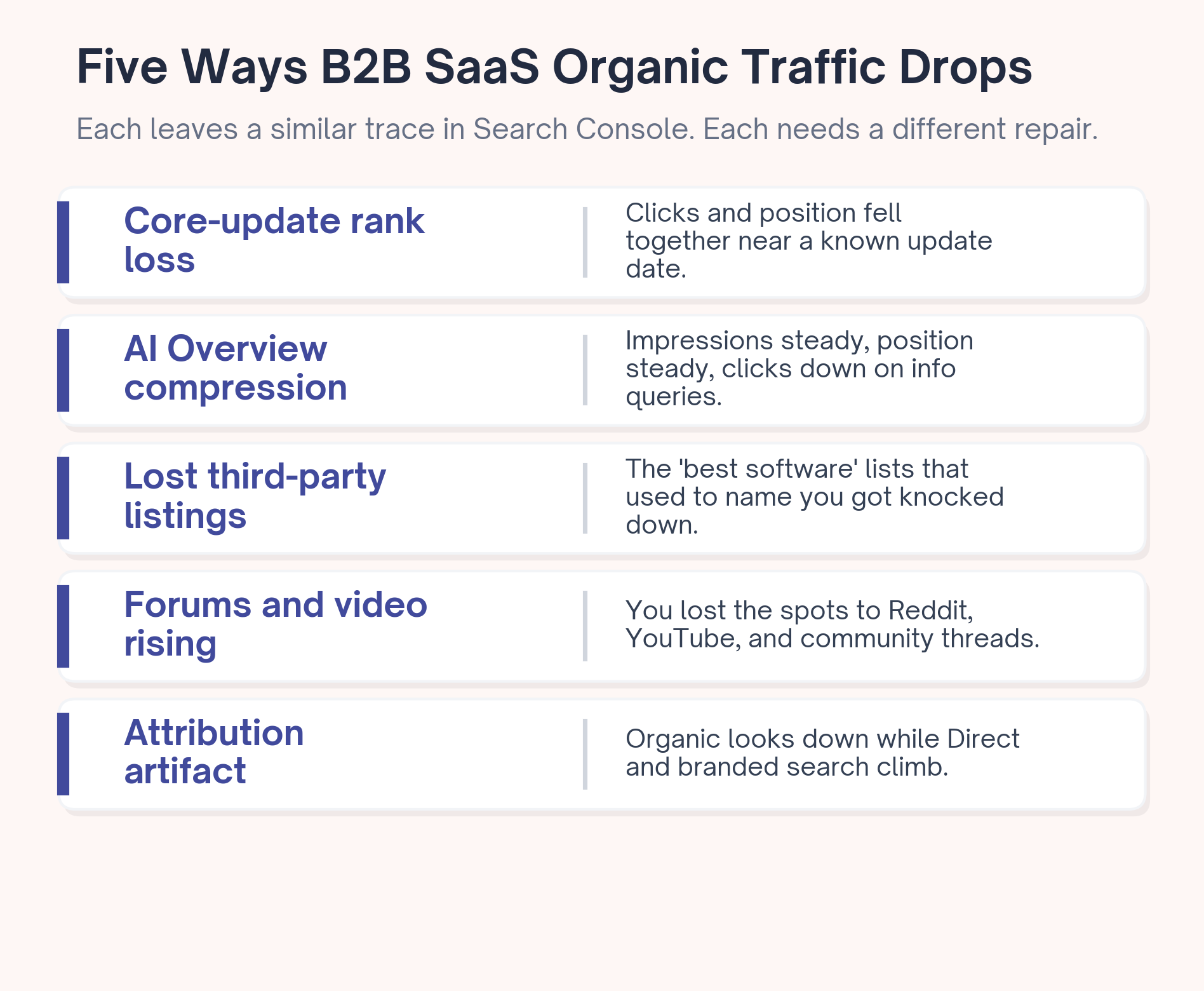
You're probably feeling more than one cause at once, so treat the checks below as a list that can flag several, and aim to end with one page that names the split: this much rank loss, this much AI compression, this much measurement artifact.
Step 1: Confirm the Drop Is Algorithm-Driven
Cross-reference your drop dates with Google's update calendar first, because a clean overlap with a known core update window is your strongest early signal.
Check Search Console for a manual action, and remember the absence of one doesn't mean you're safe, since most core-update damage carries no manual action at all.
Then rule out the boring causes by reading the Coverage report and inspecting a few URLs, because a page Google can't index can't rank, and that has nothing to do with quality.
Step 2: Map the Drop by Page Type and Keyword Cluster
Segment the affected pages by type before you generalize, across informational posts, commercial landing pages, comparison pages, and product pages, because the pattern across those types is the diagnosis.
Then split the loss two ways, comparing branded against non-branded queries and clicks against impressions. Branded holding steady while non-branded informational falls points to AI Overview compression and rules out a site-wide penalty.
With Locus, which you'll meet later, this map showed the loss spread across every page type instead of one slice, with non-branded CTR softening, which is what told us to work the whole spectrum at once.
Map the query types too, because that decides visibility more than volume does.
In one enterprise analytics account we track, "best self-service analytics that embed into Salesforce and ServiceNow" earned 27 brand mentions in AI answers over 90 days, while "business analytics software" earned 11 and "data visualization tools" earned 3.
The long, loaded, switching queries win the mention, so the head terms a keyword tool loves are the ones blurring you into the crowd.
This is where you separate an answer engine optimization problem from a ranking one, because the repairs are different.
Step 3: Score Each Page for Quality Signals
Score every affected page on the signals core updates reward. Five problems show up again and again when we audit an incoming site after an SEO traffic drop:
- Thin content under 700 words with no original depth
- Generic AI-written sections with no first-hand data or insight
- Missing author credentials or a missing byline
- Duplicate-intent pages competing for the same query
- Outdated statistics or claims a reader can spot in seconds
When we scored FlowForma later in this guide, that sheet lit up on self-promotional "best" lists that ranked the company's own product first, year-stamped titles with no updates underneath, and AggregateRating schema applied to ordinary blog listicles.
Watch the objection the model keeps repeating about you, since that is a quality signal too. On the security account, pricing drew 161 negative mentions in a single quarter, and price was the one theme where the negatives won outright, which handed us the content brief.
Build a simple scoring sheet so the work is ranked instead of guessed, and copy the structure below into your own spreadsheet, filling a row per affected page.
The priority column is the bridge into the recovery work, because a high-traffic, high-value page with a quality problem you can repair is where the first week goes.
The Five-Step Recovery Framework We Run After a Core Update
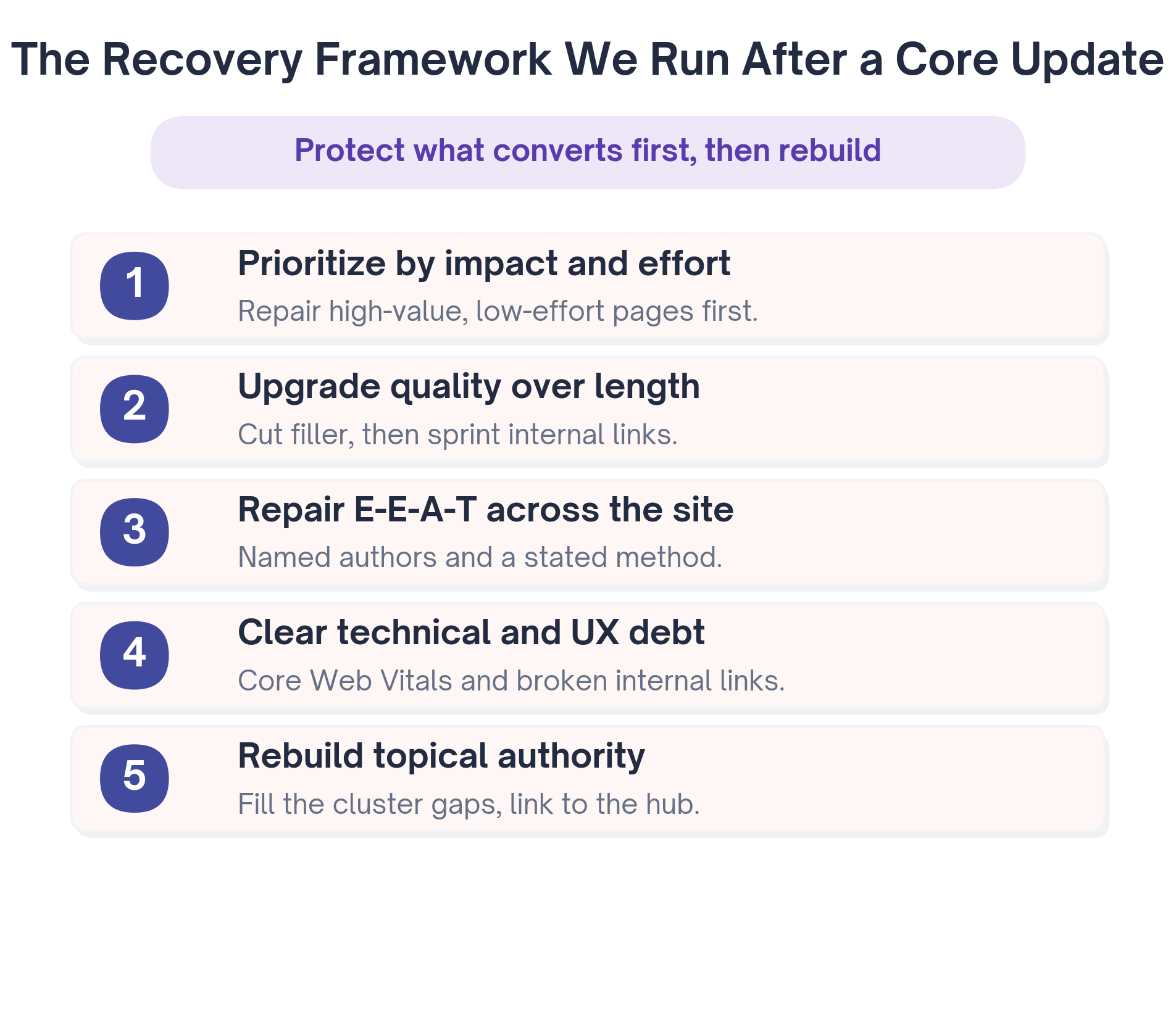
Once the diagnosis names the split, we run the same five-step system every time, in an order that protects revenue before it chases anything new. The diagnosis above is step zero, and the five steps below are the rebuild.
Step 1: Prioritize Pages by Impact and Effort
Not every dropped page deserves equal attention, so score each one on traffic value, measured by revenue or lead volume, against the effort to repair it.
Weight by money instead of raw traffic, because a page that lost clicks but kept converting beats a high-traffic page that never did.
With FlowForma, we tiered the listicles by three factors: how badly each one promoted the company's own product, how much traffic it still pulled, and whether the core was worth saving.
The highest-risk, highest-traffic pages went through full re-engineering, the middling ones got targeted repairs, and the thin, low-traffic pages were pruned.
Lock down the pages still bringing in pipeline before you chase anything new, because bottom-of-funnel pages hold up best against AI Overviews and carry the higher-intent clicks that survive the answer.
Step 2: Upgrade Content Quality Over Length
Add original research or first-person client insight no competitor has, and cut the filler sections that exist only to hit a word count.
One recovery in our work came from the opposite instinct, where we trimmed bloated long-form pages down to tight, specific answers and the traffic returned once a supporting internal-linking sprint pointed authority at them.
A few moves we apply on every page we rebuild:
- Replace generic stock advice with specific examples, screenshots, or before-and-after numbers
- Add a named expert author with credentials where a page has none
- Bring in supporting media like charts, comparison tables, and annotated screenshots
- Pair the rewrite with an internal-linking sprint so the upgraded page inherits authority from its neighbors
That internal-linking sprint keeps earning its place. When a competitor displaced one client on a commercial term, a targeted sprint to the page reclaimed the position faster than new backlinks would have.
Quality holds even when AI helps write the draft. On Saras Analytics, an AI-assisted post on Amazon ROAS has held page one for over 12 months with zero updates since publication, in a category with a 71.88% keyword difficulty, because the structure, depth, and data were there.
Step 3: Repair E-E-A-T Signals Across the Site
Audit author bios across the whole blog, because Google discounts domains with thin authorship, then add bylines where they're missing and link author names to a credible author page or LinkedIn profile.
These E-E-A-T signals carry most quality recoveries, so add the trust markers a reader and a model both register, like a stated methodology and a visible update date.
FlowForma swapped anonymous "best" lists for named reviewer attribution and a published evaluation method. Saras Analytics added author profiles with roles and photos, G2 review references, and YouTube embeds at the point each article needed proof.
Locus went off-site for trust, enhancing 20-plus software-aggregator profiles and earning recognition as a G2 Momentum Leader and Enterprise Leader in the Winter 2026 reports. We also published an original US and UK survey as a citable data asset.
Promote reviews and testimonials, embed the LinkedIn posts where customers vouch for you, and add a community section to your core listicle pages.
Then earn links to the recovered pages from credible publications, because outside validation is the signal you can't manufacture from inside your own CMS.
Step 4: Clear Technical and UX Debt
Resolve Core Web Vitals issues on your highest-traffic pages first, working through LCP, CLS, and INP in that order of reader impact, then repair the broken internal links pointing to and from the affected pages.
Consolidate near-duplicate pages with canonical tags or 301 redirects so they stop competing, and verify the page is crawlable and indexable instead of assuming it.
Saras Analytics is the clean example, where we carried 231 of 234 connector pages across and restructured 27 service pages and seven dashboard pages entirely, so nothing ranked against itself afterward.
Sound technical SEO won't reverse a quality drop on its own, and skipping it leaves a ceiling on everything else.
Step 5: Rebuild Topical Authority in the Hit Cluster
When a whole topic cluster drops, that tells you the coverage was thin across the topic, so one rewrite won't lift it. Find the keyword gaps, publish two or three supporting articles around the hub, and link them back to the page you're recovering.
Saras Analytics rebuilt nine clusters this way, from ecommerce analytics and customer segmentation to ETL and data pipelines, on a hub-and-spoke structure where every supporting post fed the one above it. That is most of why 487 keywords now sit in its top three.
Locus built authority by coverage instead, publishing more than 250 localized pages by country and city plus persona pages, which became its single biggest lead source.
Teams that build topical authority like this recover more durably than teams polishing one page in isolation, and it's the slow work that holds through the next update.
Three Recovery Stories From Our Clients
You've already seen these three turn up in the diagnosis and the framework, so here they are in full, drawn from our client case studies.
Locus: Recovering a 40% Click Drop
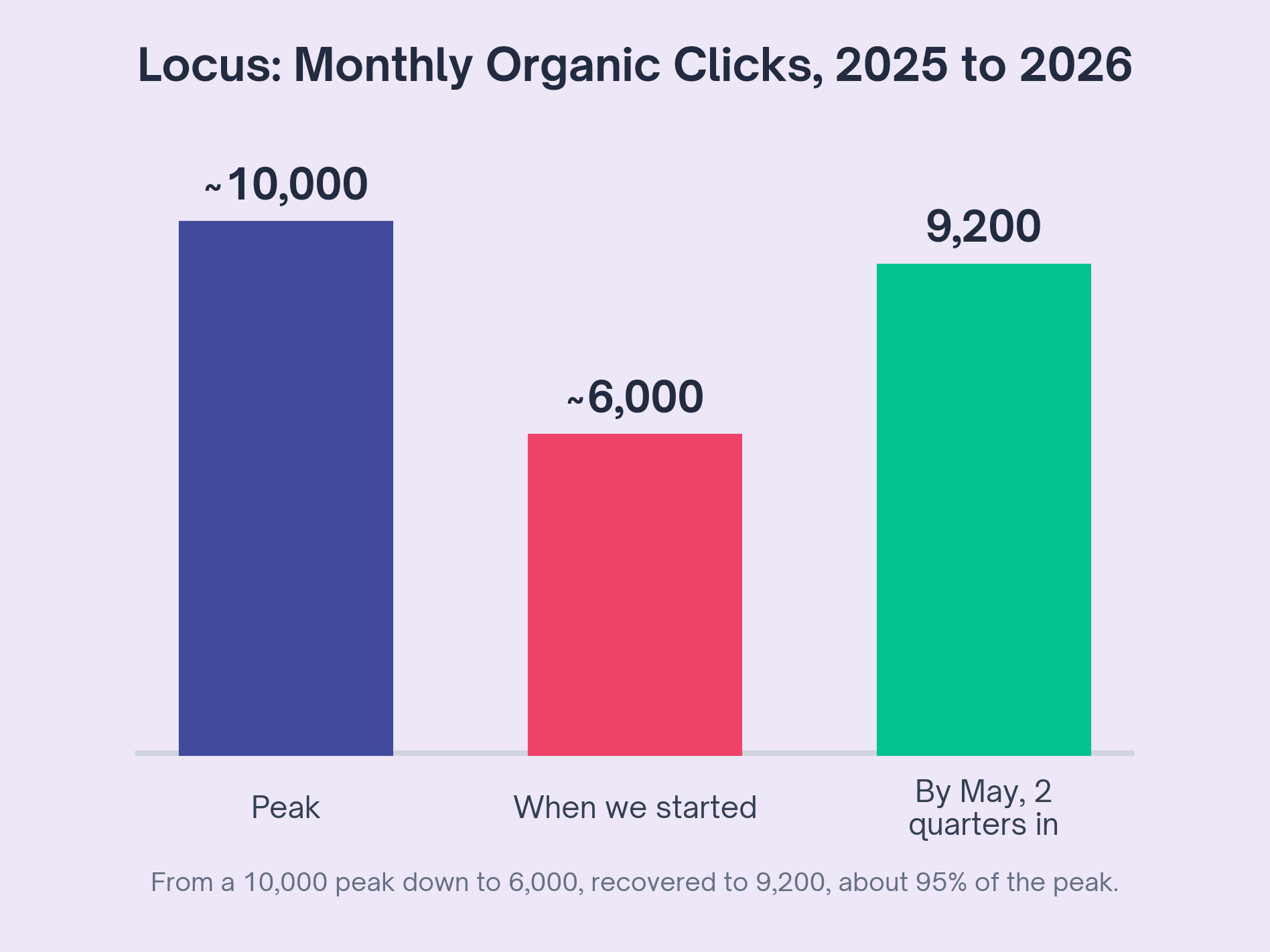
Locus came to us mid-decline, with organic clicks down from a peak near 10,000 a month to about 6,000, and flatlined at the trough for months.
Visibility was leaking across the whole spectrum instead of from one bad page, with thin bottom-funnel coverage and softening non-branded CTR.
We ran the recovery on three tracks at once, GEO, SEO, and CRO. On GEO, we enhanced the software-aggregator profiles and tuned the industry pages for how AI engines read them.
On SEO, we published persona pages and 250-plus localized pages so the site signalled clearly to Google and the answer engines alike.
On CRO, we ran exit-intent and banner campaigns that added 30 to 35 influenced leads a month, while the localization pages alone drove more than two dozen qualified leads a month.
A single courier-management post sourced a $250K enterprise RFP, the kind of bottom-of-funnel pickup a generic blog never produces.
Saras Analytics: A Migration That Reset Growth
Saras Analytics carried a quieter problem: a quality and cannibalization drag that capped it well below competitors.
Close to 800 pages produced a fraction of the organic traffic its rivals pulled, and the gap was stark on the metrics that decide trust.
A platform migration gave us the rare mandate to reset. We audited all 778 pages before mapping a single redirect, then made every call deliberately.
We split the site by intent into editorial, how-to, and glossary sections, built nine topic clusters on a hub-and-spoke structure, and mixed editorial with well-built AI-assisted content.
Results:
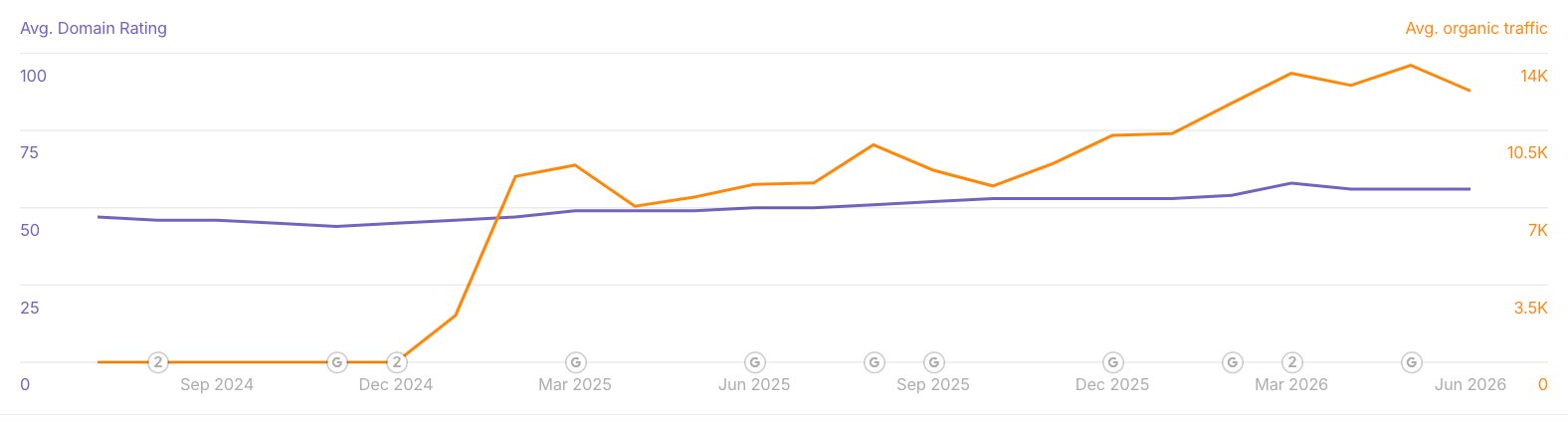
Embedding original data in the editorial earned organic backlinks, which added 226 referring domains in the final period alone.
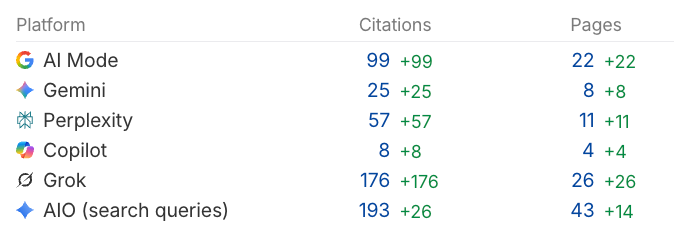
The AI-search work showed up in the citation data, with new pickups in Google AI Mode and 176 fresh Grok citations once the clusters matured, even as Perplexity and ChatGPT stayed in flux.
FlowForma: Repairing a Listicle Trust Penalty
FlowForma had built much of its footprint on "best-of" listicles, and the format itself was fine.
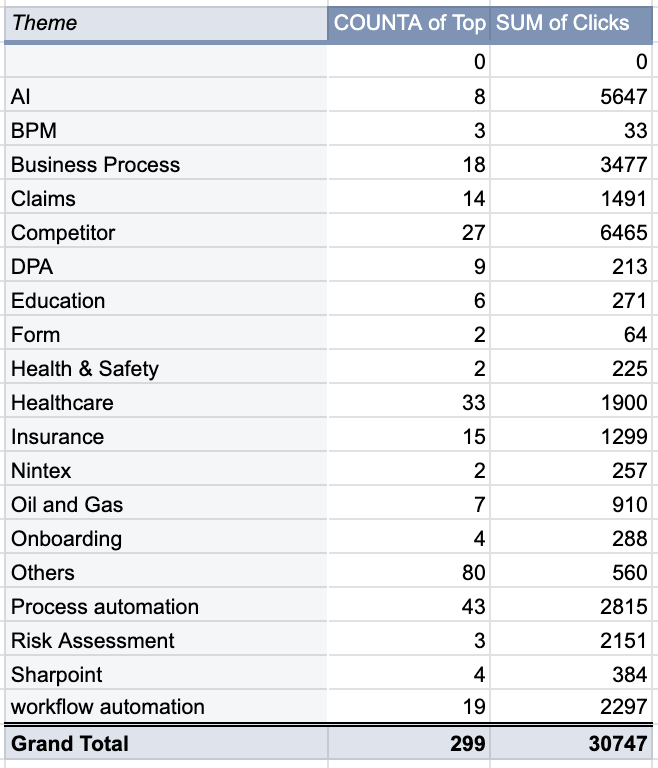
The trouble sat in the content, where the pages ranked the company's own product at the top, leaned on year-stamped titles with no material updates, and carried no review method. So when Google tightened its quality signals on review content, the whole category started to slide.
We organized the recovery around six parts, with one aim: move the content from self-serving to genuinely useful while keeping the asset base intact.
The prioritization carried the work, so high-risk pages where the company ranked itself first went through full re-engineering, while low-value, low-traffic pages were pruned to tighten the footprint.
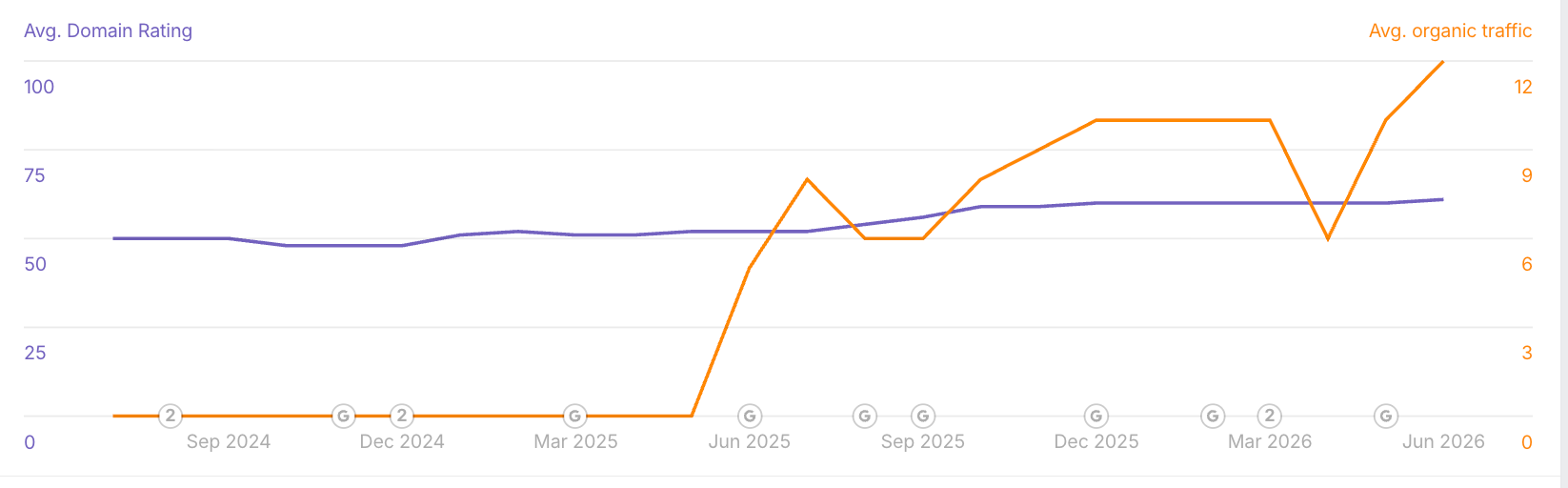
Here’s an example of how the pages started to improve traffic post the optimizations:
Tools We Use to Diagnose and Track Recovery
Three tools cover the parts of a drop a rank tracker misses, and we want all three open before we write a recovery brief, because each answers a question the others can't.
Slate for Tracking and Automation
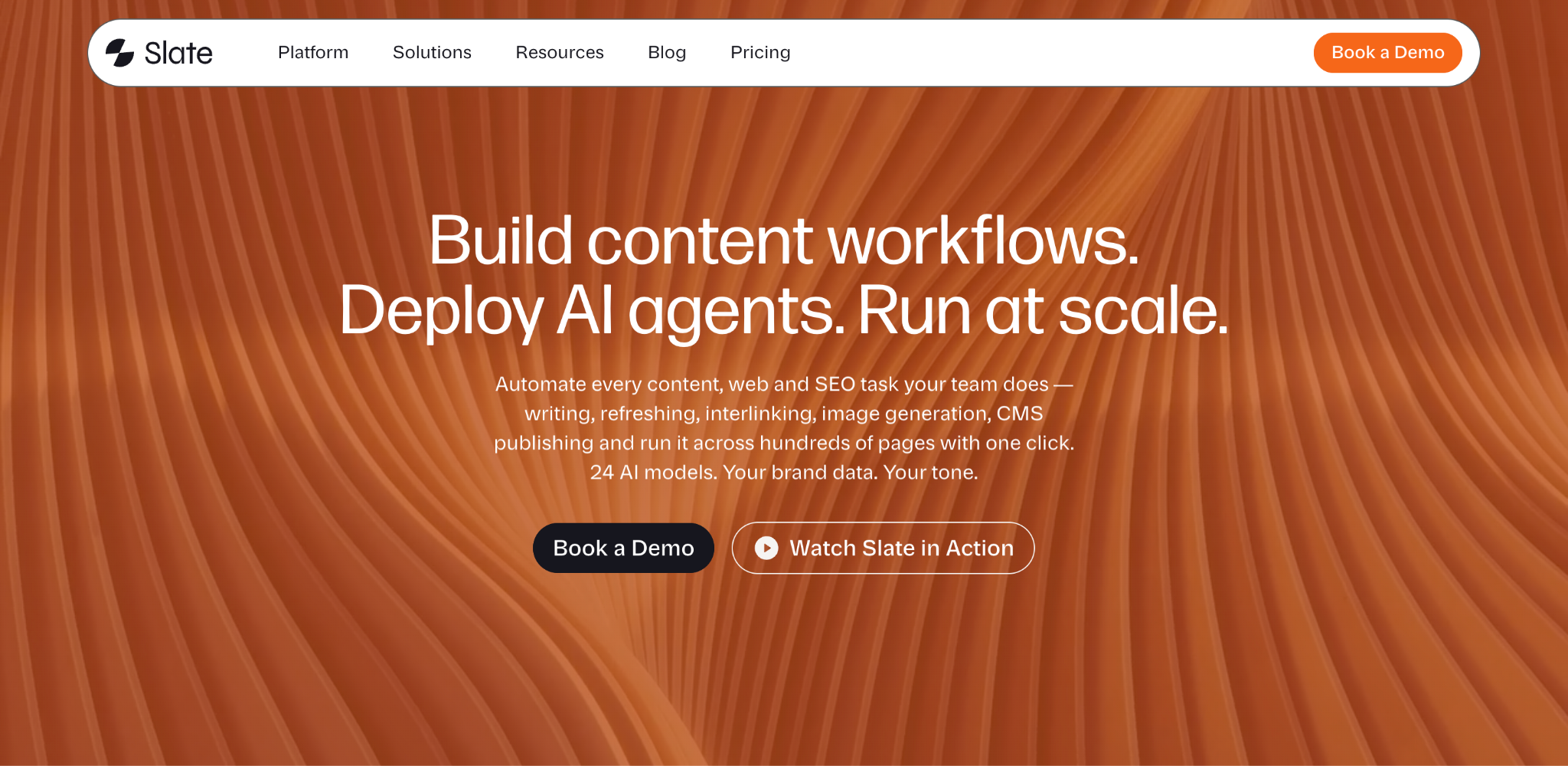
Slate reaches the layer a rank tracker can't, tracking keyword and traffic movements alongside AI citation signals in one place.
The 273-citations-zero-mentions gap on the security account, and the enterprise analytics platform pulling 20 to 27 mentions while supplying only 2 to 6 of the citations behind them, both came from this kind of tracking.
In a recovery, two views earn their keep, where the content performance tracker shows which rebuilt pages are regaining ground and the cluster view shows whether a whole topic is climbing or just one page.
With Locus, that cluster view is where we watched the route-planning topic climb back week by week.
Marie Haynes Update Analyzer to Be Up-to-date
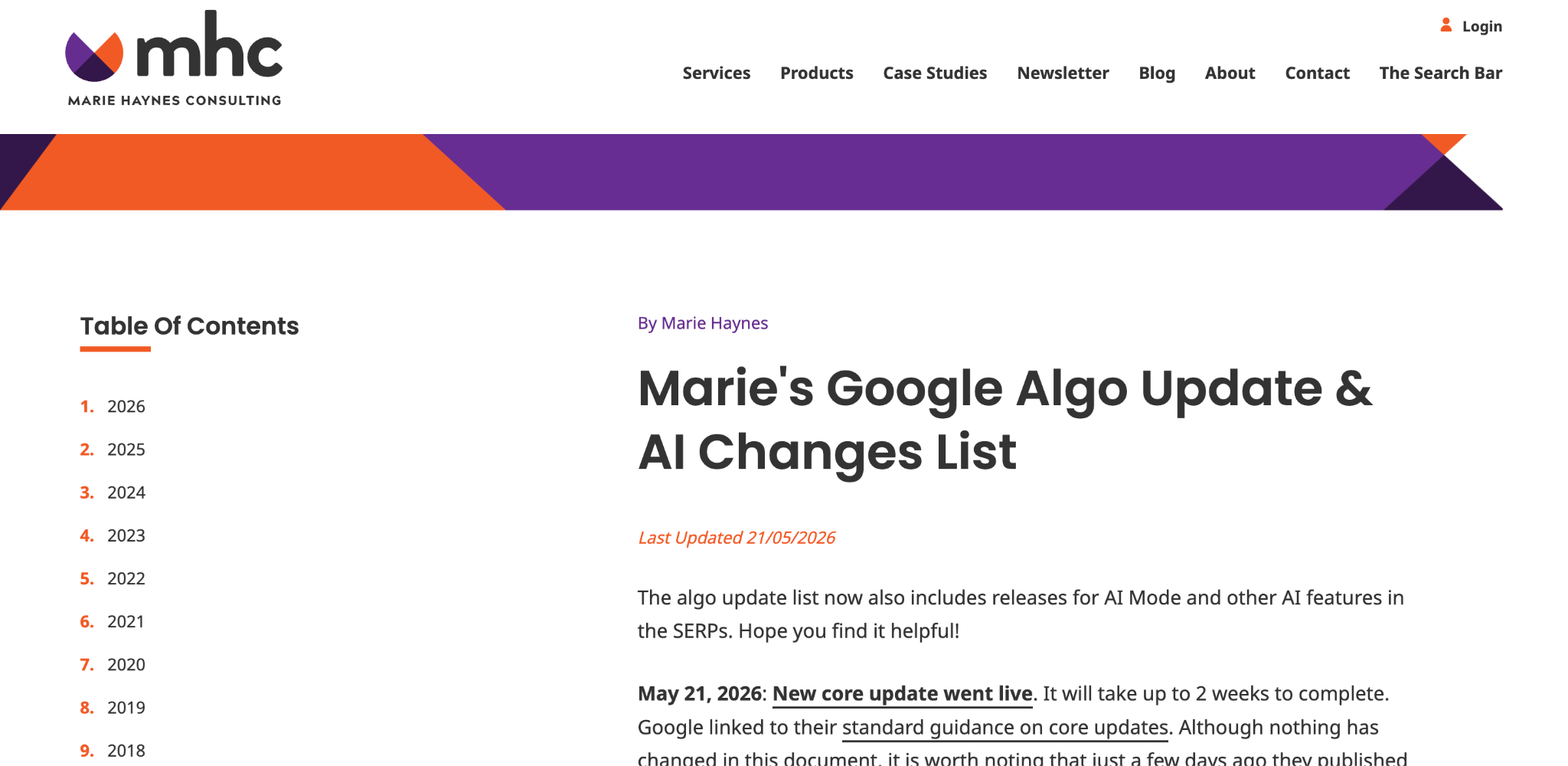
The Marie Haynes Consulting custom GPT is the gut check, since it reads a traffic export from Ahrefs or Search Console and cross-references it against documented Google update timelines.
We feed it a client's pre and post-update keyword data and ask it to surface patterns that line up with known update signals, like E-E-A-T weakness or a site-quality problem, so it tells a genuine quality hit from noise before a quarter goes to the wrong repair.
Ahrefs for Drop Analysis
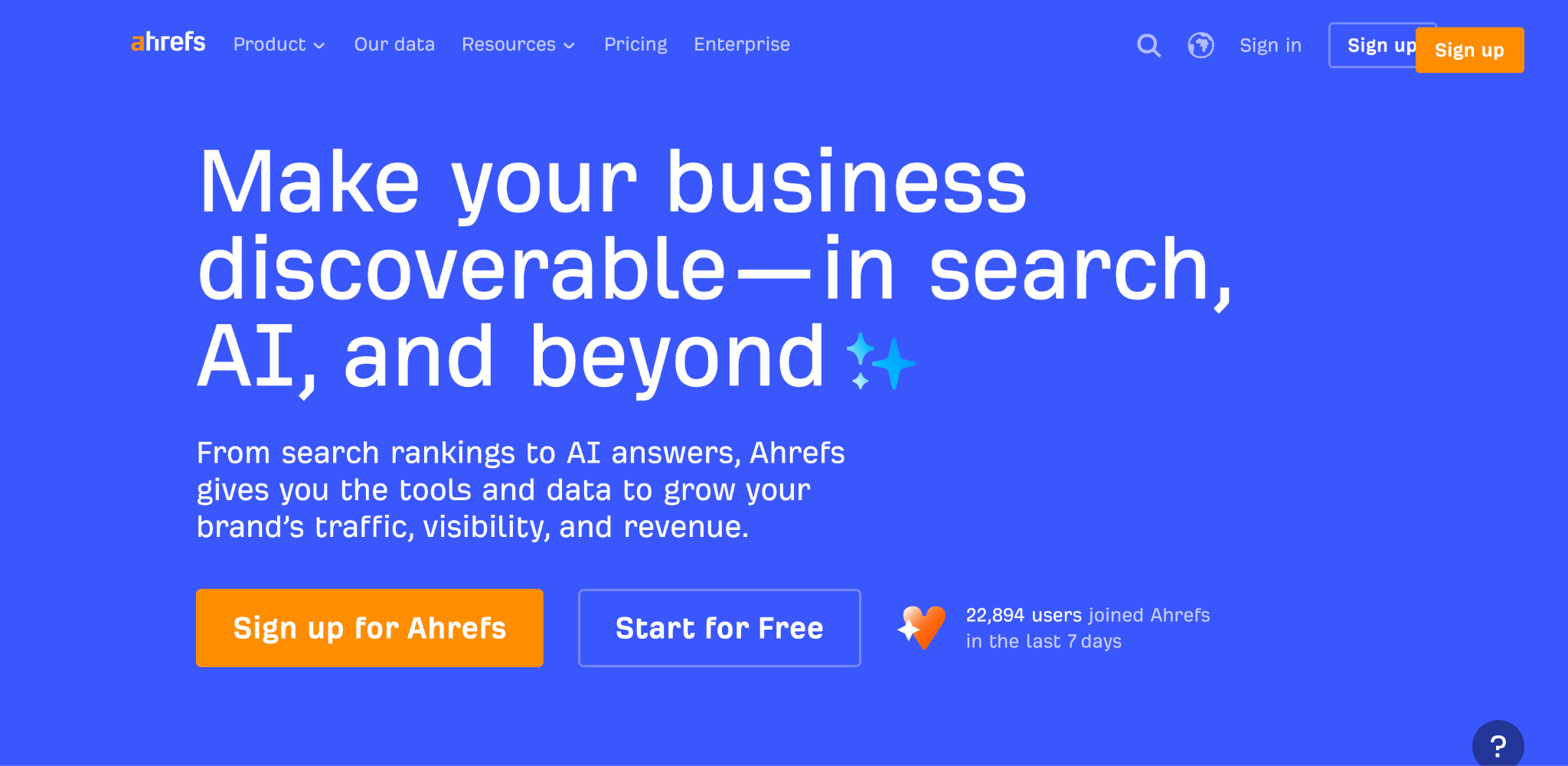
Ahrefs is where the diagnosis starts, where we use the Organic Research overview to compare traffic before and after a named update date and to flag which terms now trigger an AI Overview.
Two more reports carry the diagnosis, since the Organic Competitors report shows which domains took your rankings and the Backlinks report shows whether lost positions line up with lost referring domains. Run it alongside the other two tools instead of on its own.
What a Realistic Recovery Timeline Looks Like
Organic traffic recovery rarely runs in a straight line, and setting that expectation is half the job, because some pages come back in 4 to 6 weeks while others take two or three core-update cycles. Say that to your team before you start.
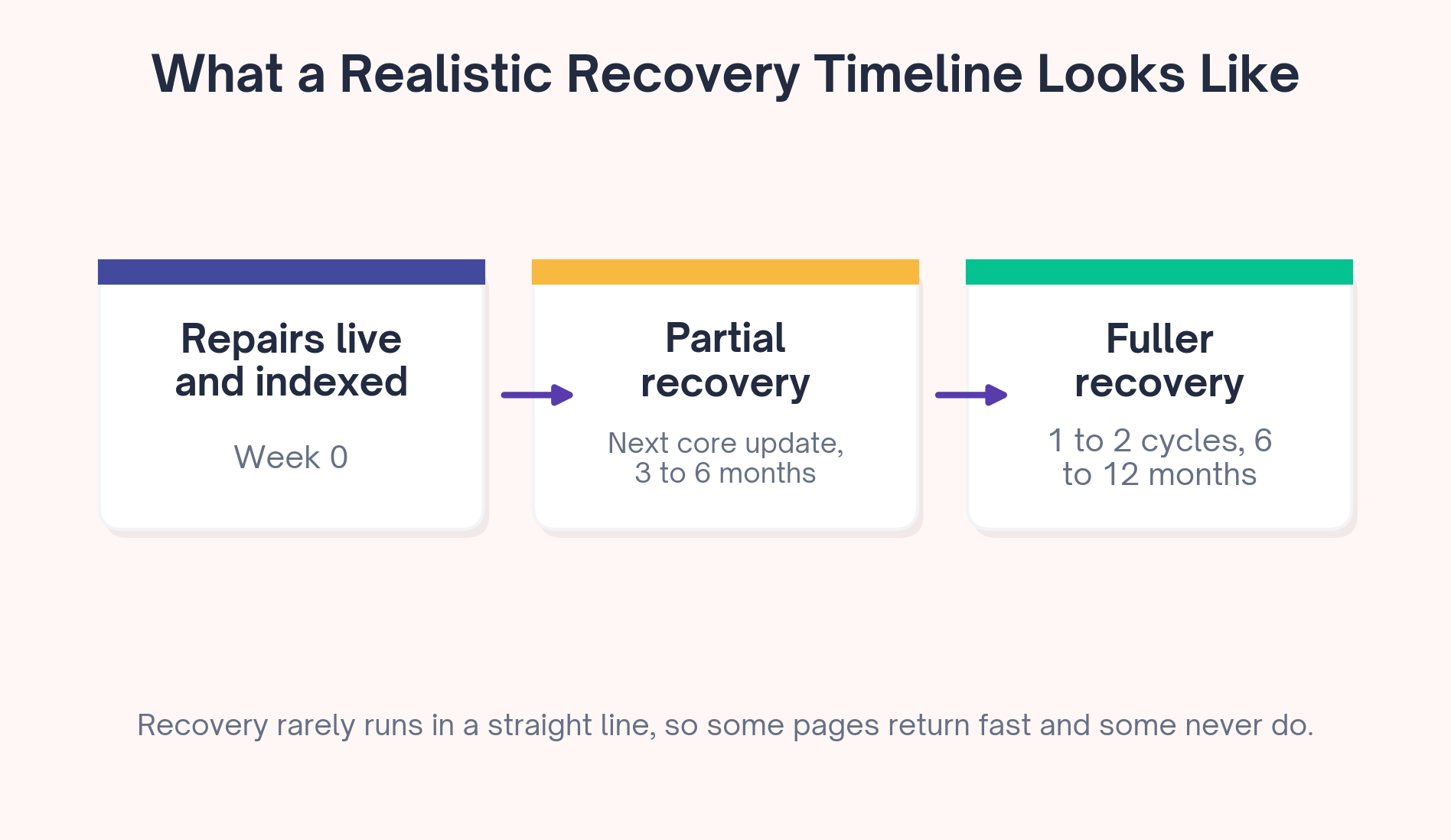
The mechanic is simple, since core updates reassess content-quality signals on a schedule, so if your repairs are live and indexed before the next assessment window, the improved signals get picked up then.
That's why a partial recovery usually shows at the next core update and a fuller one one to two cycles later.
Google's own core update guidance says recovery tends to arrive with a later update, with nothing specific to remediate beyond genuine quality.
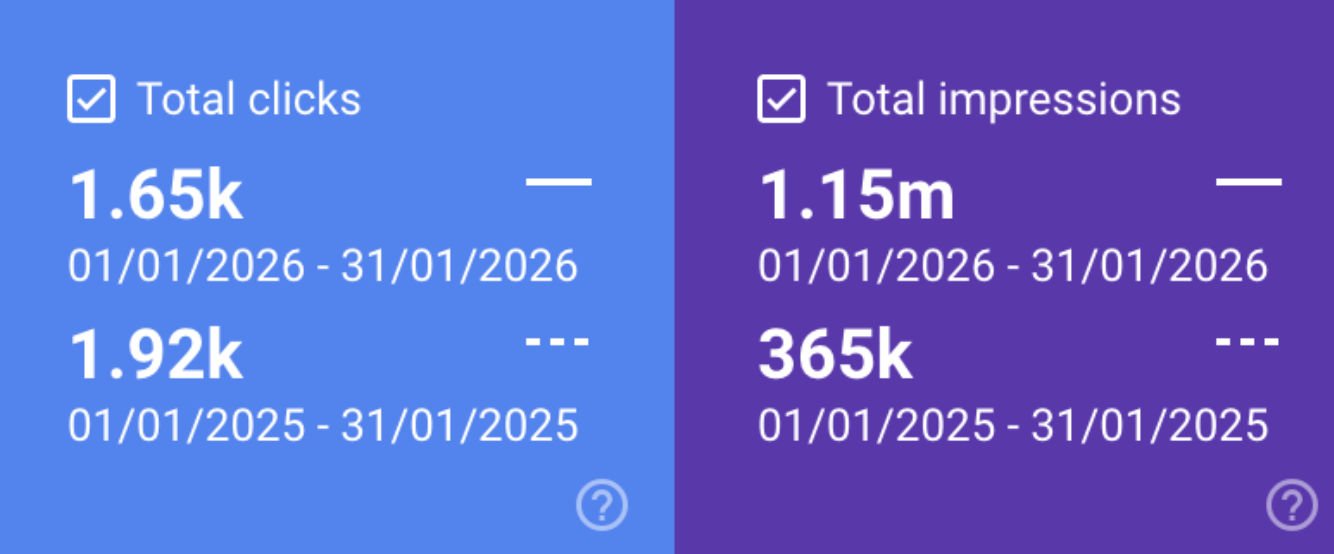
Our own cases bracket that arc. Locus took about two quarters to claw back most of its clicks, while the Saras rebuild ran 15 months from 1,357 to 4,567 monthly blog users.
Watching weekly pays off because the slide is gradual.
On one content-strong account, AI visibility drifted from a 14.9% peak to 9.4% in a quarter, with its average answer position sliding from 3.1 to 3.7, which is the kind of drift you catch in weeks if you're measuring and miss for two quarters if you're not.
What We See After Core-Update Recoveries
Partial recovery usually lands within one core-update cycle, roughly 3 to 6 months.
Full recovery, or a gain past the old baseline, tends to arrive 1 to 2 cycles later.
In the accounts we track, bottom-of-funnel pages hold 20% to 40% more of their clicks through an AI Overview than pure-definition pages do.
Be honest about that last row, because some pages won't come back, especially where Google has moved its preference toward forums and large-authority domains.
For those queries the move is a different page type, tracked against the March 2025 core update baseline so you know what you're measuring against.
Five Recovery Mistakes That Make a Drop Worse
The counterweight to the framework is the set of moves that deepen the hole, and each one here comes from a client conversation or a pattern we keep seeing in audits.
1. Publishing More Before Repairing What You Have
Volume can't offset quality signals, so pushing out new posts while the existing pages still read as thin tells Google there's more of the same to discount.
Saras Analytics carried 481 unsorted posts before we cut 145 of them, and the traffic only moved once the weak pages were gone. Run a content audit guide pass first.
2. Mass-Editing Title Tags With No Content Change
Cosmetic title and meta rewrites at scale leave quality signals untouched, and the nuance teams miss is that intent is what moves them.
When one client's titles and H1s were realigned to a search intent that had moved, the CTR-driven loss came back, so intent-aligned title work helps where blind mass rewrites change nothing.
3. Deleting Pages Instead of Consolidating Them
Mass deletion can read as another quality signal, and a deleted page that still held authority deepens the hole, so prune only the genuinely thin.
The Saras reset removed 197 pages, a 25% cut, but every one was a deliberate call, which is the opposite of wiping a section to look decisive.
4. Chasing the Competitors Who Gained
The domains that took your rankings may have gained on circumstantial authority instead of better content, so reverse-engineering their backlink profile sends you down a path that doesn't address your own quality problem.
On one commercial term, an internal-linking sprint beat the instinct to buy more links.
5. Waiting It Out Instead of Diagnosing
Algorithmic drops need active recovery, since passive waiting and feedback forms do nothing on their own, while the documented recoveries credit the boring work of pruning to the strongest pages and repairing authorship before growing brand search off-search.
Core Updates Now Decide Your AI Visibility Too
A core update reaches past your blue-link rankings now, because it decides whether your content gets cited in AI Overviews and pulled into answer-engine results, as Google keeps cleaning the corpus its generative layer draws from.
The gap this opens is the one we keep finding.
The security page that fed Google's AI answer 273 times for one error query, with zero brand mentions, is the clearest case: the model took the explanation, credited the mailbox providers a buyer already trusts, and left the URL in a footnote.
Where you are absent, platform docs and sharp newcomers win the answer. In one analytics category, a single AI-native startup site was cited 538 times while G2 sat at 41, so a directory listing earns far less than docs-grade content the model can lift.
Google's AI surfaces decide most of this, not ChatGPT. In one mid-market account, Google AI Mode held 34.3% of visibility and AI Overview 29.3%, while ChatGPT sat at 16.4%, and on a content-heavy security account ChatGPT dropped to 3.1%.
Cloudflare crawl data shows how lopsided the exchange has become, with search-driven AI crawling taking far more than it sends back.
The actions that help here are the ones the framework already covers, like clear heading hierarchy, cited statistics, named authorship, and schema markup.
FlowForma's rewrite of verdict-based intros into criteria-based, quotable explanations is the move that earns the citation, and Saras Analytics shows the upside, with new citations landing in Google AI Mode and Grok once its clusters matured.
A page that deserves to rank in AI Overviews reads as a clean, self-contained answer first and a sales page second.
Recovery Is a System You Operate Every Quarter
A Google algorithm update recovery runs as a sequence, where you diagnose first, protect what converts second, and rebuild quality and authority third, with patience built into the plan from the start.
The clients who came back, Locus, Saras Analytics, and FlowForma, shared one habit, which was that they stopped guessing and started measuring.
We run this work for B2B SaaS teams as a managed engagement, the same SaaS SEO services that produced the recoveries here, built on a systemized playbook instead of a one-off audit.
If your organic traffic dropped after a core update, the first move costs you an afternoon of diagnosis.
When you want to know which pattern hit your site and what it'll take to come back, book a recovery audit and we'll run the diagnosis on your data.
Frequently Asked Questions
How long does Google traffic recovery take in 2026?
Organic traffic recovery time depends on the cause. For an AI Overview compression problem, you can win back visibility in 8 to 16 weeks by rebuilding for the queries that get pages cited.
A core-update rank loss is slower and partial, tied to the next core cycle, and most hit sites recover only a share of the old traffic, so work out which one you have before you promise a date.
Is Google AI Overview the reason my organic traffic dropped?
It can be, though rarely on its own. AI Overview compression has a specific tell, with impressions flat or up, average position steady, and clicks down on informational queries.
If your average position fell at the same time, a core update is the likelier cause, and the repair is different.
Why are my rankings stable but my clicks down?
On queries that trigger an AI Overview, the answer sits above the results, so a steady position can still lose clicks.
Pew Research measured clicks to a standard result falling to 8% with a summary present, against 15% without one, so check whether the affected terms trigger a summary before you change the page.
How do I recover from a Google core update without a manual action?
Treat it as a quality problem, because a core update carries no manual action to clear. Score your affected pages for thin content, weak authorship, duplicate-intent pages, and stale claims.
Repair the highest-value ones first, then wait for the next cycle to reassess, since the diagnosis has to come before any edit.
Does deleting low-quality pages help recovery?
Only for genuinely thin pages with no value, because mass deletion can read as a further quality signal and removing a page that still holds authority deepens the hole. On the Saras reset we cut 197 of 778 pages, but every call was deliberate.
Consolidate or upgrade anything with a salvageable core, and prune only the weakest.
How does E-E-A-T affect core update recovery?
E-E-A-T signals carry most quality recoveries, where named authors with credentials, a stated methodology, and visible update dates tell Google a domain is trustworthy.
Thin authorship across a blog is one of the most common patterns we find when we audit a site after a drop.
Should B2B SaaS focus on ChatGPT or Google AI search for recovery?
Google first. Across the accounts we track, Google AI Mode and AI Overviews are the top two surfaces for visibility, while ChatGPT comes in lowest, sometimes near 3% on content-heavy accounts.
ChatGPT is worth building toward, and it's the wrong place to start when you're trying to win demand back.
What should I measure instead of organic sessions?
Track citation share, mention rate, and recommendation rate alongside branded search and pipeline from the pages that held.
These come apart in the data now, and a single organic-sessions number hides all of them, so if a page gets used as a source but never named, that's a gap worth closing.
.webp)



.webp)









.webp)




.webp)

.webp)
.png)




%20(1).png)


.webp)
.webp)
.webp)




%20Ads%20for%20SaaS%202026_%20Types%2C%20Strategies%20%26%20Best%20Practices%20(1).webp)




.webp)








.webp)





![Creating an Enterprise SaaS Marketing Strategy [Based on Industry Insights and Trends in 2026]](https://cdn.prod.website-files.com/632b673b055f4310bdb8637d/6a218bacea463474377dfd32_34%20-%20Creating%20an%20Enterprise%20SaaS%20Marketing%20Strategy.png)







































.webp)







%20Agencies%20for%20B2B%20SaaS%20Compared%20(2026).webp)

.webp)
%20with%20Hubspot.webp)


_%20Expert%20Reviews%20%26%20Comparisons.png)






.webp)





_%20Comparison%2C%20Strengths%2C%20and%20How%20to%20Choose.png)











.webp)




.webp)



.webp)





















%20Tools%20in%202026_%20Vetted%20List.webp)



![How to Measure AEO Success: 12 Metrics Beyond Clicks [2026 Framework]](https://cdn.prod.website-files.com/632b673b055f4310bdb8637d/6a0d664b326187e99b3d5960_6%20-%20The%20Ultimate%20Guide%20to%20Measuring%20AEO%20Success%20in%202026.png)
![7-Step Workflow for AEO-Ready Content [2026 Framework]](https://cdn.prod.website-files.com/632b673b055f4310bdb8637d/6a0d55ea88913ede1d3a7123_5%20-%20Workflows%20for%20Optimized%20AEO-Ready%20Content%20Creation.png)
.png)
![How to Structure Content for AEO and GEO [With Templates]](https://cdn.prod.website-files.com/632b673b055f4310bdb8637d/6a0c6a56eb700472e635ff33_1%20-%20How%20to%20Structure%20%20Content%20for%20AEO%20and%20GEO%20%20Summaries%20(2026).png)






.png)
.png)













.webp)

%20Agencies%20in%202027.webp)
.webp)
![Top 9 AI SEO Content Generators for 2026 [Ranked & Reviewed]](https://cdn.prod.website-files.com/632b673b055f4310bdb8637d/6a2a3e3105bc1a127aae4e8e_34%20-%20Top%209%20AI%20SEO%20Content%20Generators%20for%202026%20%5BRanked%20%26%20Reviewed%5D.webp)
































.avif)