You're a B2B SaaS marketer. You've got a content calendar, a growing keyword list, and a dozen tabs open comparing tools that all claim to "do AI SEO."
The problem isn't a lack of options. It's that most tools still stop at showing you dashboards. They track numbers but don't help you act on them.
Meanwhile, AI Overviews show up for about 21% of Google keywords, and 60% of searches now end without a click. The game has changed, and your toolstack needs to keep up.
We've researched, trialed, and stress-tested over 50 AI SEO tools across our portfolio of B2B SaaS clients. This guide breaks down the 10 that earned a spot: what each one does well, where it falls short, and how it fits into a modern AI SEO strategy.
Let's get into it.
How is AI changing the way SEO works in 2026?
AI has moved SEO from manual tracking to automated execution across content, technical audits, and AI search visibility. If your team is serious about organic growth, AI-native tools aren't optional anymore.
How do AI tools optimize content?
Tools like Slate and Jasper are changing content creation workflows. They don't replace human creativity, but once you set them up with context (brand voice, target keywords, audience data), they handle end-to-end content lifecycles.
They generate ideas quickly, draft outlines, and suggest titles and meta descriptions that follow both SEO and GEO best practices from the start. That frees you up to focus on the strategic side: keyword alignment, search intent, and so on.
How does AI streamline technical SEO?
Technical SEO is where AI has quietly made the biggest dent. Advanced tools now automate site audits, flag broken links, optimize site speed, and analyze mobile responsiveness.
They identify complex issues and recommend specific fixes, like schema markup improvements or better site structure. For a deeper dive, see our guide on technical SEO for SaaS.
One thing to watch for: hallucinations (AI confidently giving you wrong information), misread search intent, and over-optimization. These are real risks, not edge cases.
Agency Data Insight
Across our portfolio of 40+ B2B SaaS accounts, AI-driven SEO workflows have reduced content optimization time by 40%, enabling teams to publish high-performing pages 2x faster while maintaining top-quartile organic rankings.
How can you use AI for SEO day-to-day?
SEO isn't a one-size-fits-all strategy, and neither are AI SEO tools. Each stage of the process, from keyword research to content creation to on-page optimization, benefits from a different set of AI capabilities.
How can AI enhance keyword research?
Keyword research is the foundation of your organic visibility. The best AI SEO tools for keyword research and clustering go beyond basic volume data. Many now include "SERP Gap Analyzers" that surface easy-to-rank terms in your niche and identify where competitors are getting cited but you aren't.
For teams focused on answer engine optimization, the right tool also flags which queries trigger AI Overviews. That way, you can prioritize content that captures both traditional and AI-driven traffic.
How do AI tools assist in content creation?
Creating SEO-friendly content takes time. AI content generator tools for blog posts help by suggesting ideas, creating outlines, and writing full drafts. Writers can use these as starting points to produce faster, SEO-optimized blogs without staring at a blank page.
Worth noting: AI needs context, style guidelines, and a structured process to produce anything usable. For more on this, check our take on AI-generated vs. AI-assisted content.
How do AI tools handle on-page SEO?
AI SEO tools automate on-page SEO by generating recommendations for headers, keywords, and internal linking. They analyze top-ranking pages and give you specific guidelines on optimizing each element.
Following these recommendations boosts your content's relevance and ranking potential, making it easier for search engines and AI platforms to recognize its value.
A Reddit user in r/DigitalMarketing summed it up well: "Tools like ChatGPT, Claude, and Perplexity are solid for research and drafting. Ahrefs and Semrush for keyword data. But the 'success' part isn't the tool — it's the workflow."
What are the top 10 AI SEO tools for 2026?
Here's a quick-reference comparison of the 10 AI SEO platforms we recommend, covering what each does best and how users rate them.
How did we evaluate these AI SEO tools?
We went beyond feature lists and marketing pages, evaluating over 50 tools using a weighted framework built around five criteria.
- AI-native functionality (30%): Highest weight went to tools with capabilities purpose-built for AI search: AEO scoring, LLM citation tracking, and generative engine optimization.
- Verified user reviews and satisfaction (25%): We cross-referenced ratings on G2, Capterra, and Trustpilot, focusing on output accuracy, onboarding experience, and tangible ranking improvements.
- Workflow integration and scalability (20%): We assessed CMS compatibility, API access, and how well each platform fits into existing content or technical SEO workflows.
- Pricing accessibility and transparency (15%): We looked at how fast costs scale with usage or team size, and whether a free trial exists for teams to validate fit.
- Specialization depth over feature breadth (10%): Higher scores for platforms that go deep on a specific SEO problem and solve it better than generalist alternatives.
What does each of the top 10 AI SEO tools offer?
Below is a detailed walkthrough of each tool: what makes it different, who it's for, and where it falls short.
1. Slate
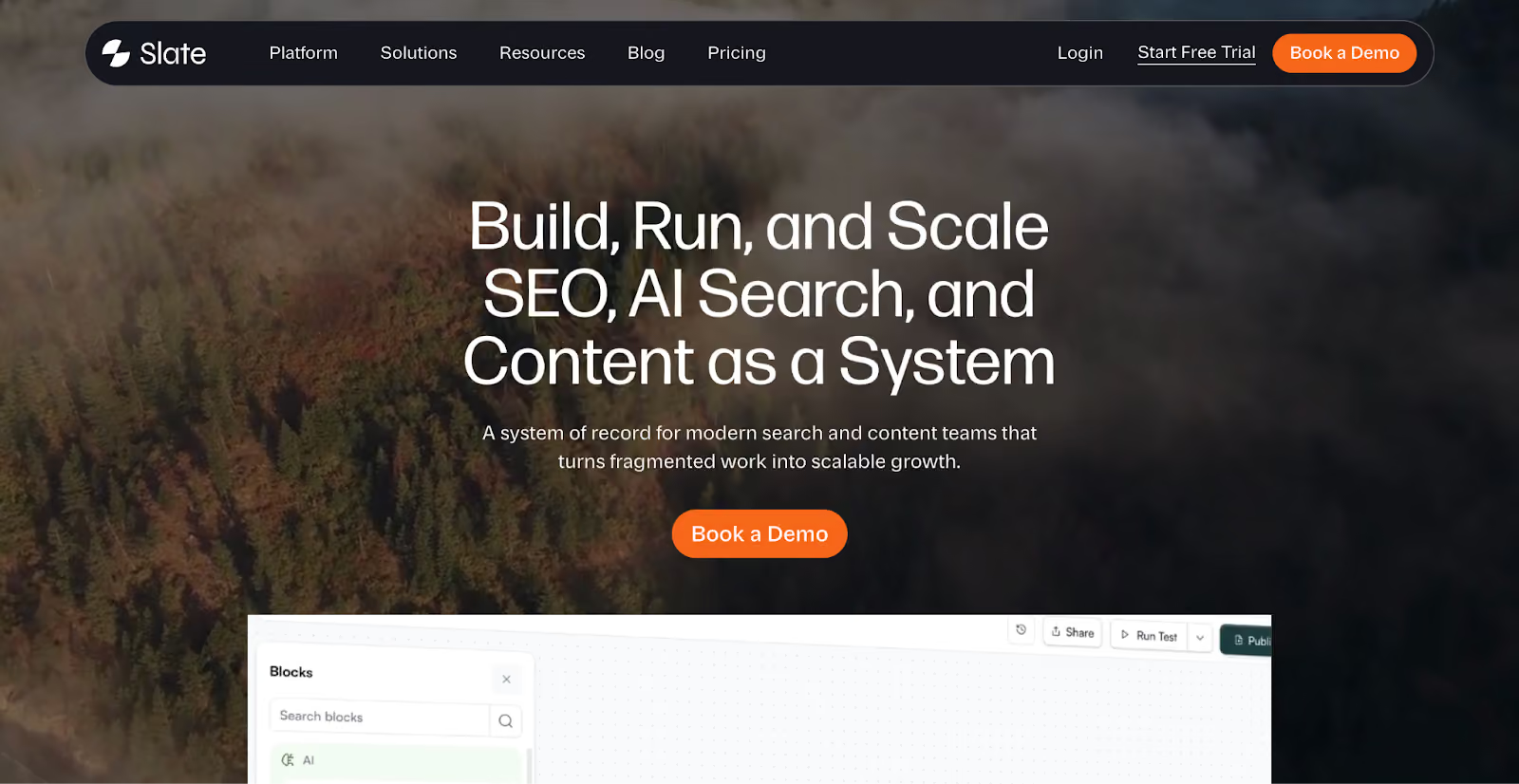
Slate is built around one idea: most teams can monitor AI visibility but can't act on it fast enough. Slate closes that gap by connecting what you track to what you publish, automatically.
When it detects a competitor being cited for a topic you should own, or a page in your library losing freshness signals, it kicks off a workflow: research, rewrite, optimize, and push to your CMS.
Slate tracks your brand's share of voice across ChatGPT, Perplexity, Gemini, and Claude, and scores each page with an AEO (Answer Engine Optimization) scorecard. Its "Power Sheets" interface lets teams bulk-refresh or programmatically create thousands of pages in a spreadsheet-style view. The visual Workflow Builder lets you string custom research-write-publish pipelines with drag-and-drop steps.
Best for: B2B teams managing large content libraries who need to scale AI search visibility without expanding headcount.
Pros:
- Moves from AI visibility data to automated content execution in a single loop
- Drag-and-drop workflow builder for custom multi-step automations
- AEO scorecards give page-level visibility into AI-readiness
Cons:
- English-only at the moment, limiting multilingual content programs
- Setup typically takes a day
Pricing: Custom pricing. A 14-day free trial is available.
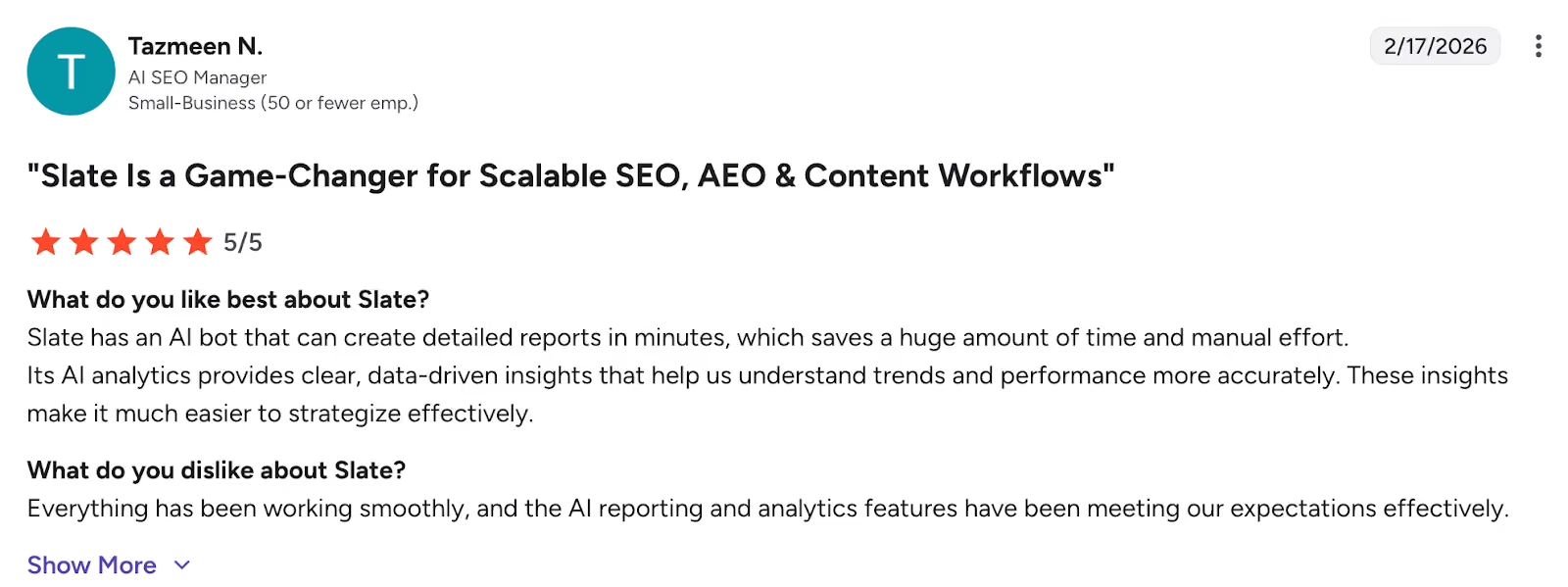
Ratings: 5/5 on G2
2. ChatGPT
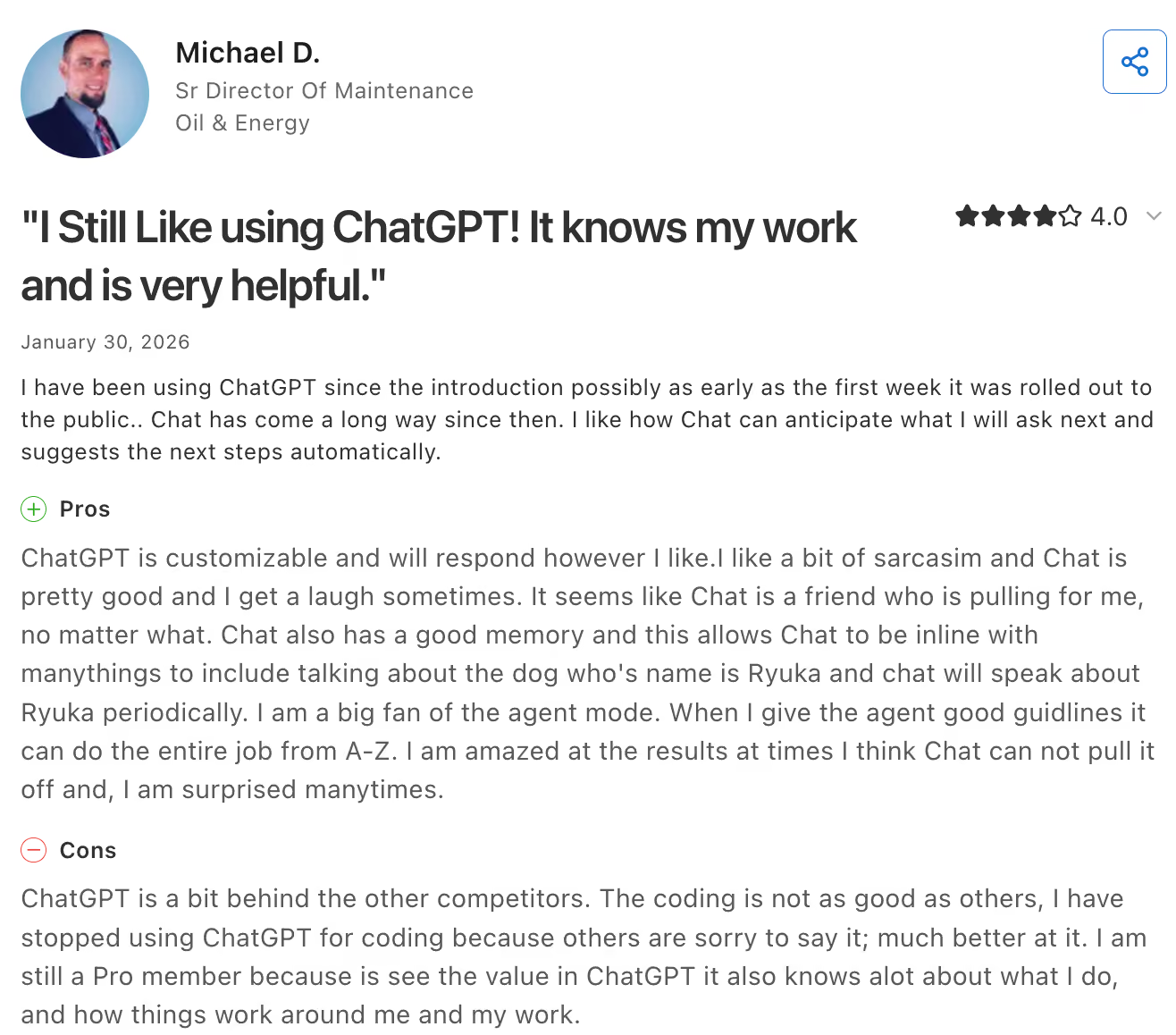
ChatGPT sits in a unique position on this list. It's one of the AI platforms SEOs are trying to get cited in, and it's also a tool you can use to do that work.
The most relevant AI SEO capability here is generating content that mirrors the conversational, question-answer format LLMs prefer. You can use it to draft FAQ content, structure topical clusters, and write in a style more likely to be cited by generative engines. The Deep Research feature goes further, autonomously synthesizing information from across the web.
Where ChatGPT really pulls ahead is Custom GPTs. You can build a reusable SEO assistant trained on your own workflows, brand guidelines, and client instructions, then share it across your team. For more on this, see our guide on how to rank on ChatGPT.
Best for: Content teams and SEO professionals who want a low-cost, flexible AI to build custom SEO and GEO workflows.
Pros:
- Custom GPTs let you build dedicated SEO assistants tailored to specific workflows
- Deep Research synthesizes multi-source competitive and content gap analysis
- Widest range of prompt resources and SEO-specific community knowledge
Cons:
- No native keyword data, rank tracking, or traffic metrics; always needs a dedicated SEO tool for data inputs
- Outputs can confidently state outdated or inaccurate information
- Message limits on Plus and Team plans
Pricing: Free plan available. Plus at $20/month, Pro at $200/month, Team at $25-30/user/month. Enterprise is custom.
Ratings: 4.5/5 on Capterra
3. Surfer SEO
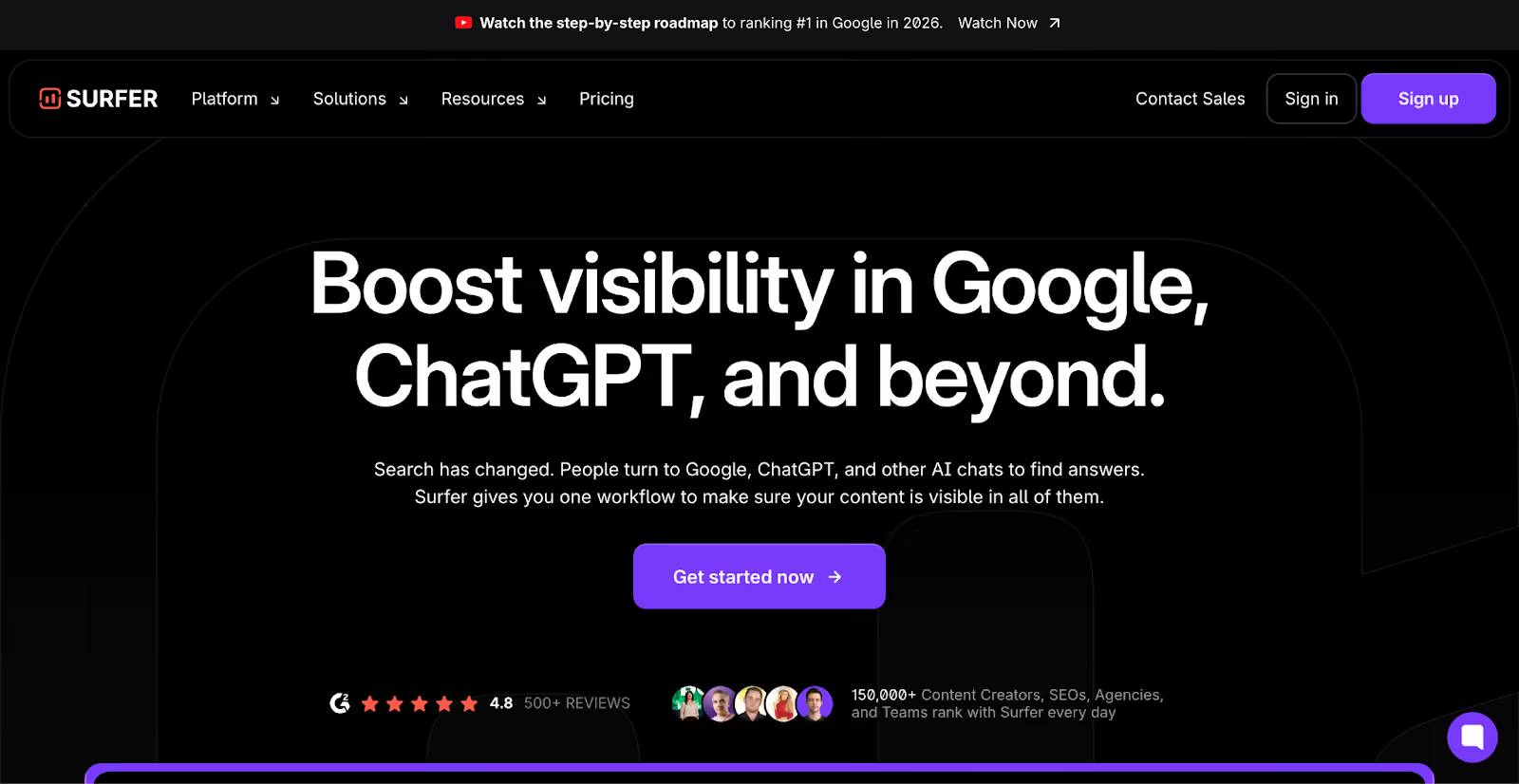
Surfer SEO has been the go-to for on-page optimization for a while now, and its recent updates make it relevant for AI search too. The Content Editor analyzes 500+ on-page signals from top-ranking SERP competitors and assigns a real-time "Content Score."
Surfer's Topical Map connects to your Google Search Console data and visualizes your content clusters, showing what's covered, what's thin, and where you're losing ground to AI citations. The AI Tracker gives you prompt-level visibility into ChatGPT Search. And Surfy, the in-editor AI assistant, helps you rewrite or restructure sections without breaking your content score.
As one Reddit user in r/AiForSmallBusiness noted: "Tools like ChatGPT for structuring, Surfer for on-page alignment and Ahrefs or Semrush for keyword data anchor the workflow."
Best for: Content-heavy B2B SaaS teams and SEO agencies scaling blog production who want NLP optimization, topical planning, and AI search visibility in one platform.
Pros:
- AI Tracker gives prompt-level visibility into ChatGPT Search
- Topical Map with GSC integration identifies content gaps and cannibalization
- Auto-Optimize and Coverage Booster reduce manual effort at scale
Cons:
- SERP Analyzer surfaces hundreds of variables with limited prioritization guidance
- Keyword research functionality is lighter than dedicated tools
- AI-generated articles often need heavy post-editing for tone and accuracy
Pricing: Standard at $99/month, Pro at $182/month, Peace of Mind at $299/month, Enterprise custom.
Ratings: 4.6/5 on G2
Daniel Henderson, Glean
"TripleDart is a super helpful team, tremendously aiding in SEO enhancements from blog topics to technical recommendations."
Read the full Glean case study →
4. Jasper AI
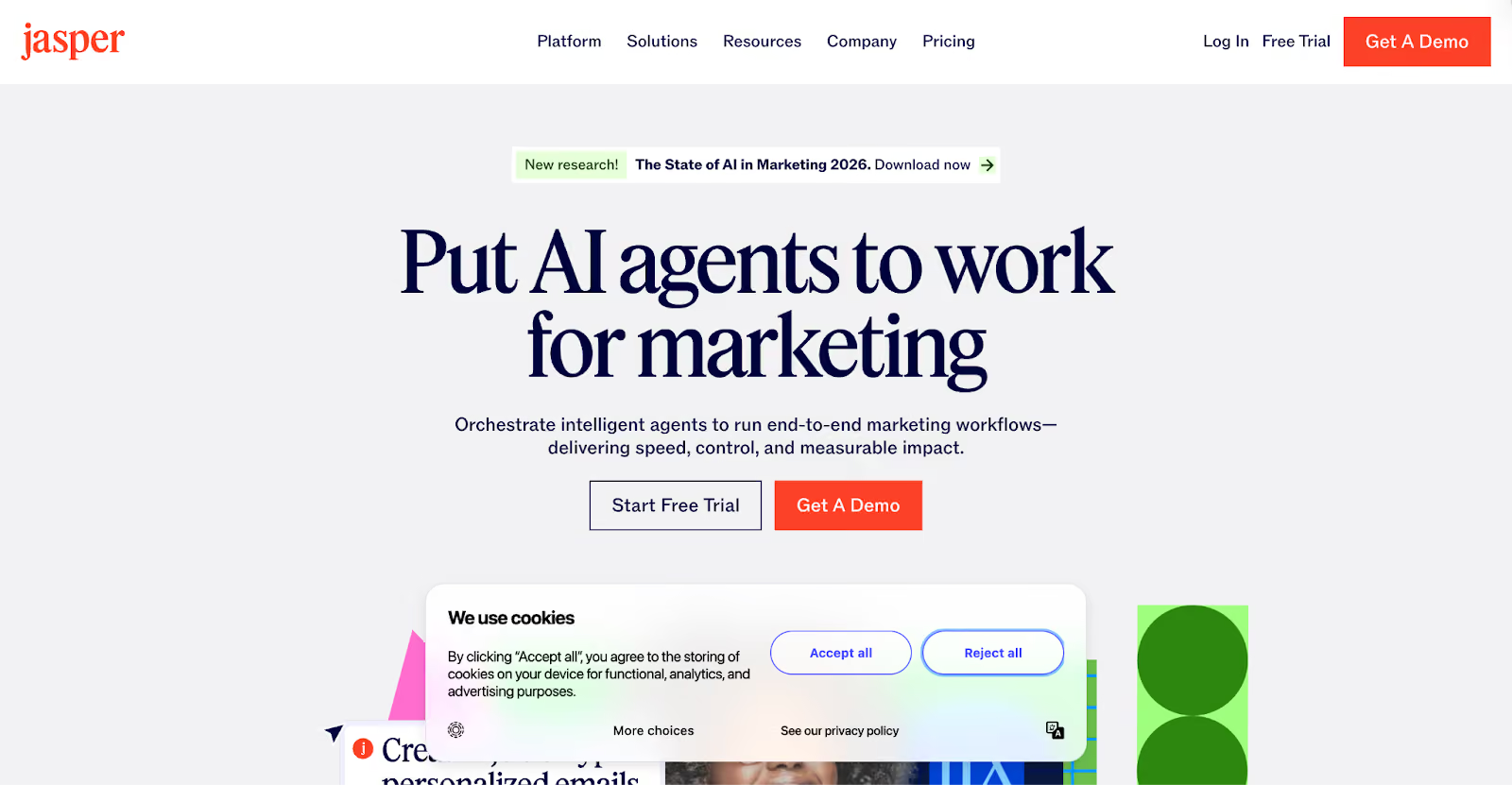
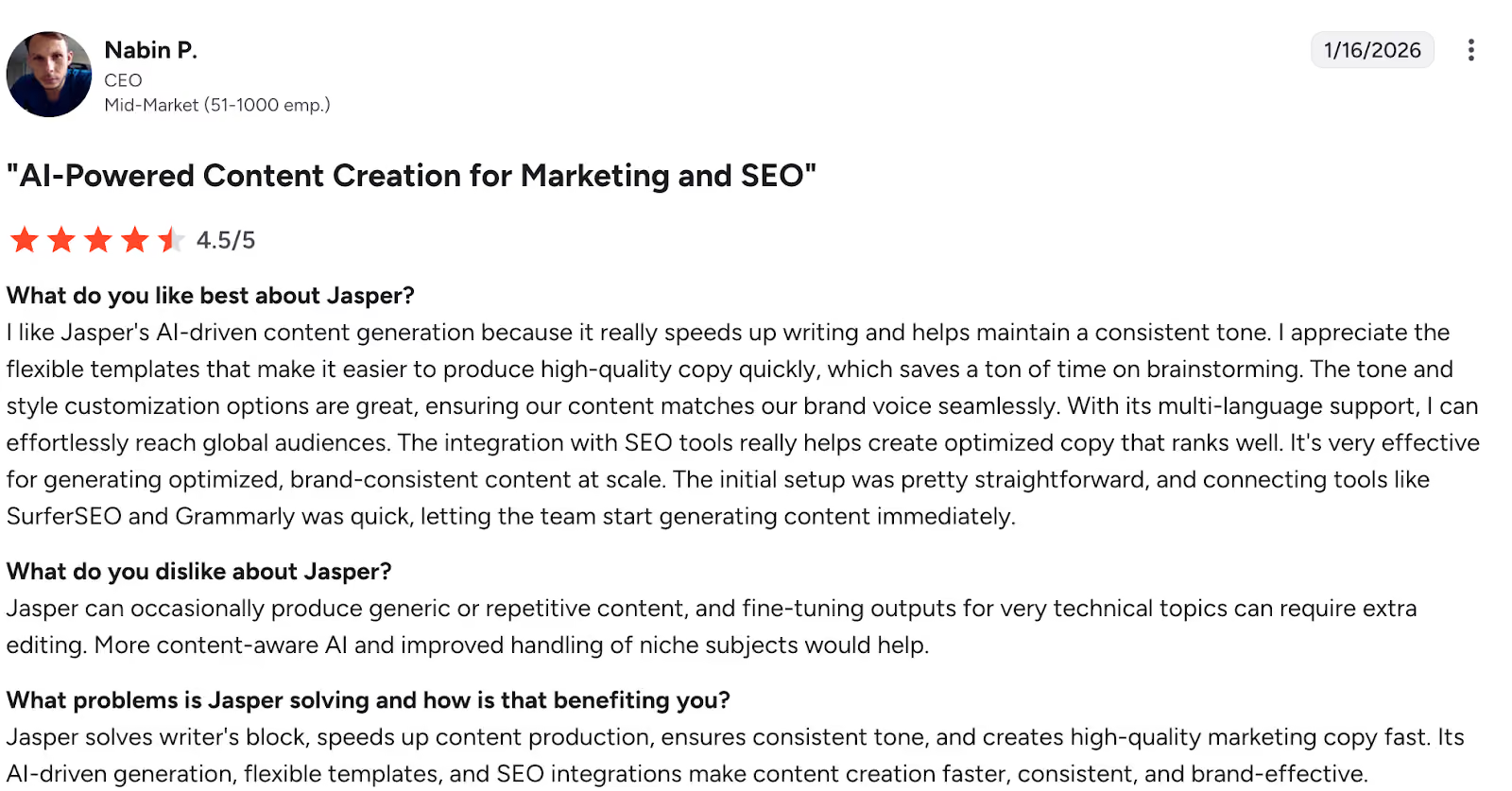
Jasper earns its spot as one of the few AI content platforms built specifically for the move from traditional SEO to AI search. Their AEO/GEO/SEO Rewriter takes existing content and rewrites it to improve visibility across AI Overviews, Perplexity, and other generative search surfaces.
The Optimization Agent connects to your Semrush data, pulls in keyword and competitor insights, and uses those to generate or refresh pages in bulk. Jasper Grid, a spreadsheet-style interface, lets teams generate and optimize automated content creation for search engines at scale.
Beyond individual features, Jasper's no-code Studio lets marketing teams build custom AI apps tailored to their exact SEO workflows.
Best for: Mid-to-large marketing teams managing high-volume AI SEO content programs across traditional search, AI Overviews, and GEO surfaces.
Pros:
- AEO/GEO/SEO Rewriter built specifically for generative search
- Direct Semrush integration within the Optimization Agent
- No-code Jasper Studio for fully custom SEO workflows
Cons:
- Native SEO analysis is limited; core optimization depends on third-party add-ons
- Output can feel generic and typically needs editorial refinement
- Pricing scales up quickly for teams
Pricing: Pro at $59/month, Business custom.
Ratings: 4.7/5 on G2
5. SE Ranking
SE Ranking is a full-stack AI SEO platform that's gained strong traction among marketing teams who want competitive analysis, rank tracking, and AI Overview monitoring in one dashboard. It tracks whether your pages appear in AI Overviews and provides AI-powered content recommendations based on SERP analysis.
What sets it apart for teams comparing AI SEO software is its balance of depth and usability. The platform covers keyword research, site audits, backlink monitoring, and content optimization, all with AI-assisted suggestions.
A Reddit user in r/GrowthHacking called it "probably the most well-rounded AI SEO checking tool I've used so far."
Best for: SMB and mid-market SaaS teams that need an all-in-one SEO platform with AI search tracking at a competitive price point.
Pros:
- Tracks AI Overview appearances alongside traditional rankings
- Site audit with AI-powered fix recommendations
- Competitive pricing compared to Ahrefs and Semrush
Cons:
- AI content generation features are less mature than Jasper or Surfer
- Backlink database is smaller than Ahrefs
- No dedicated GEO or LLM citation tracking
Pricing: Starts at $65/month. 14-day free trial available.
Ratings: 4.7/5 on G2
Agency Data Insight
Agency data shows PPC campaigns for SEO service keywords achieve 25% higher CTR when paired with AI-optimized landing pages, as quality scores rise above 8/10 consistently. This pattern holds across Google Ads benchmarks where impression share increases by 15% for accounts using predictive analytics.
6. NitroPack
NitroPack takes a different angle. Instead of helping you create content, it makes sure your existing pages are technically fast enough to get crawled, indexed, and surfaced by AI search engines.
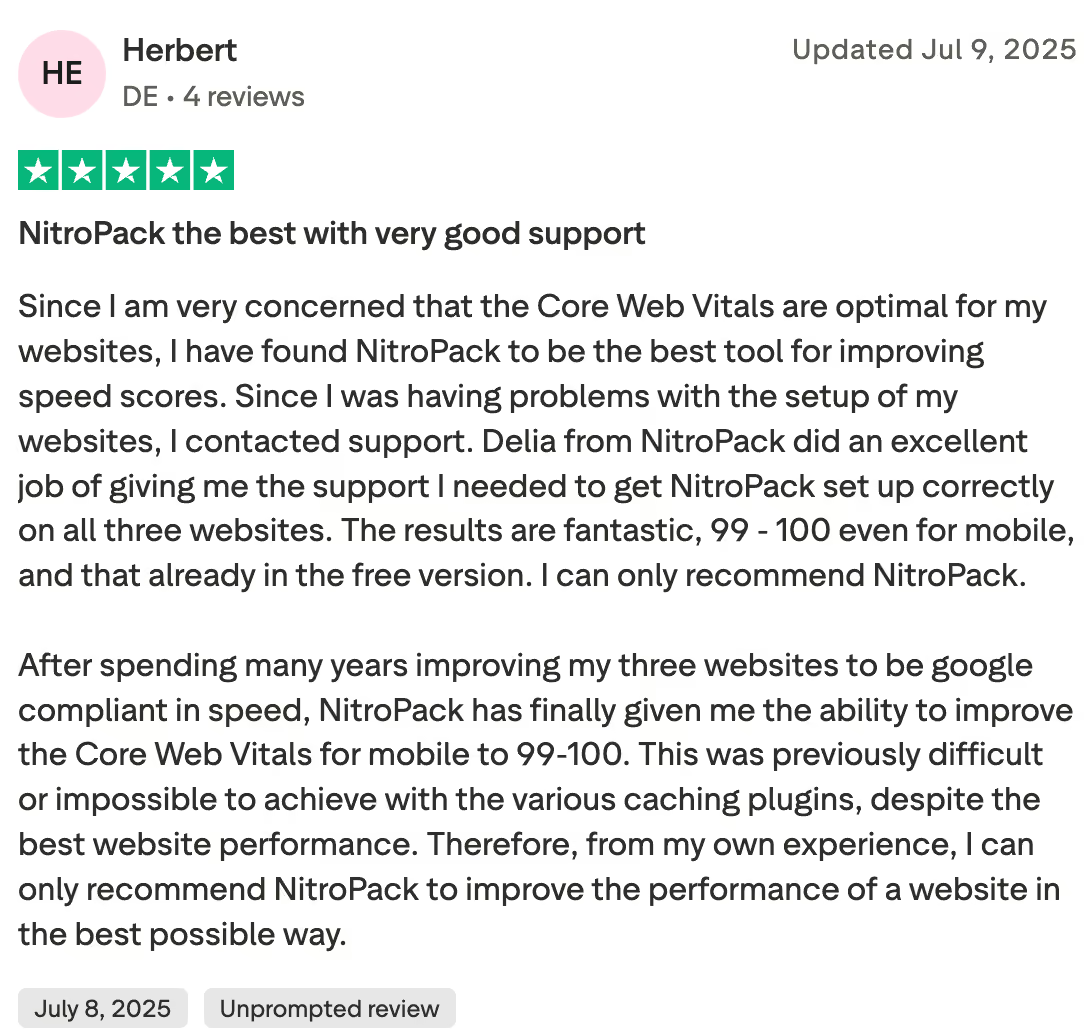
NitroPack automates the full technical performance stack: caching, image optimization, code minification, and CDN delivery, all without touching a line of code. It runs as a cloud-based layer over your CMS, so optimizations happen at the infrastructure level rather than the plugin level.
Best for: WordPress and WooCommerce site owners who want to improve crawlability and Core Web Vitals without developer involvement.
Pros:
- Highest Core Web Vitals pass rate among optimization tools (52%)
- Cloud-based architecture for infrastructure-level performance
- Official co-development relationship with Google
Cons:
- PageSpeed lab scores can diverge from real-world field data
- JavaScript-heavy or highly customized sites may experience layout conflicts
- Locked to WordPress and WooCommerce
Pricing: Starts at $7/month. Plus at $18/month, Pro at $83/month, agency plans custom.
Ratings: 4.9/5 on Trustpilot
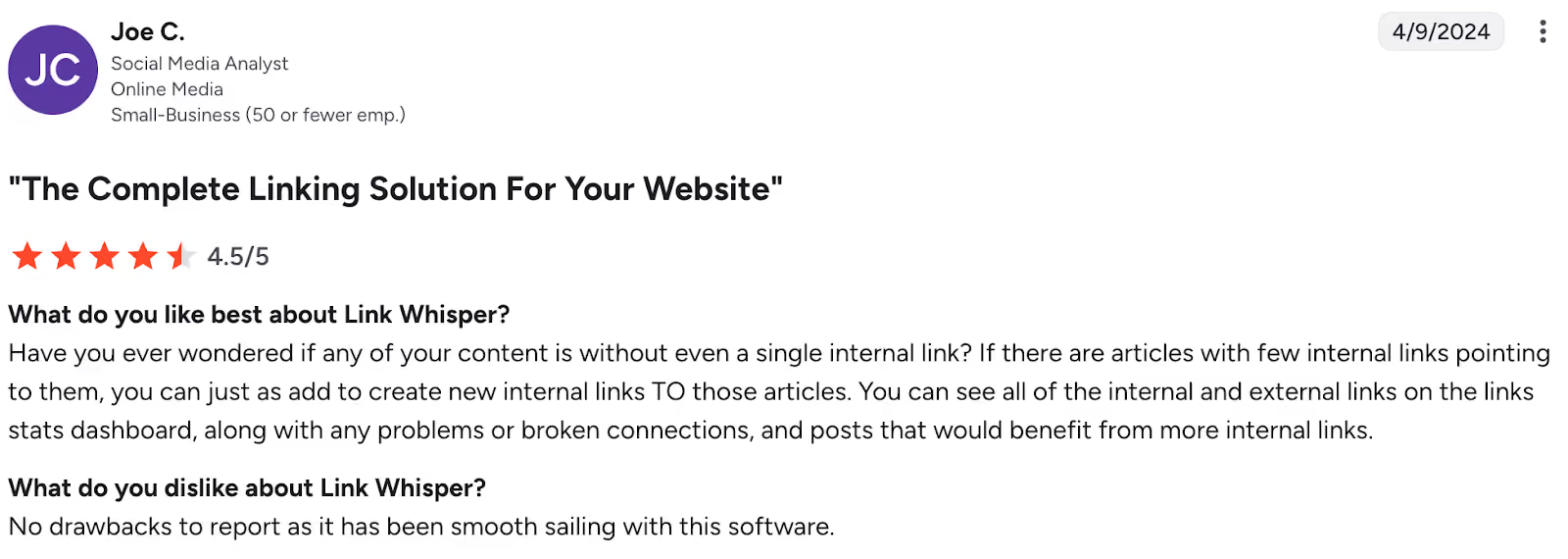
7. Link Whisper
Link Whisper sits in a narrow but high-value category: AI-powered internal linking. It surfaces link suggestions inline, right inside the WordPress editor as you write, scanning your content in real time and recommending pages to link to based on context and topical relevance.
Its AI doesn't just find the target page. It selects the anchor text by pulling the most semantically appropriate phrase from your existing sentence. The One-Click Setup can auto-deploy internal links across thousands of posts simultaneously, and its GSC integration connects link placement decisions to ranking data.
Best for: WordPress-based content sites with large post archives looking to systematically redistribute link equity.
Pros:
- Inline anchor text AI selects the exact phrase from your existing copy
- GSC integration connects link placement to ranking and traffic data
- One-Click Setup scales deployment across thousands of posts
Cons:
- Exclusively a WordPress plugin
- AI suggestions optimized for English
- Suggestion quality can be inconsistent
Pricing: $97/year for single-site. Multi-site plans at $197/year (3 sites), $297/year (10 sites), agency at $497/year.
Ratings: 4.5/5 on G2
8. Alli AI
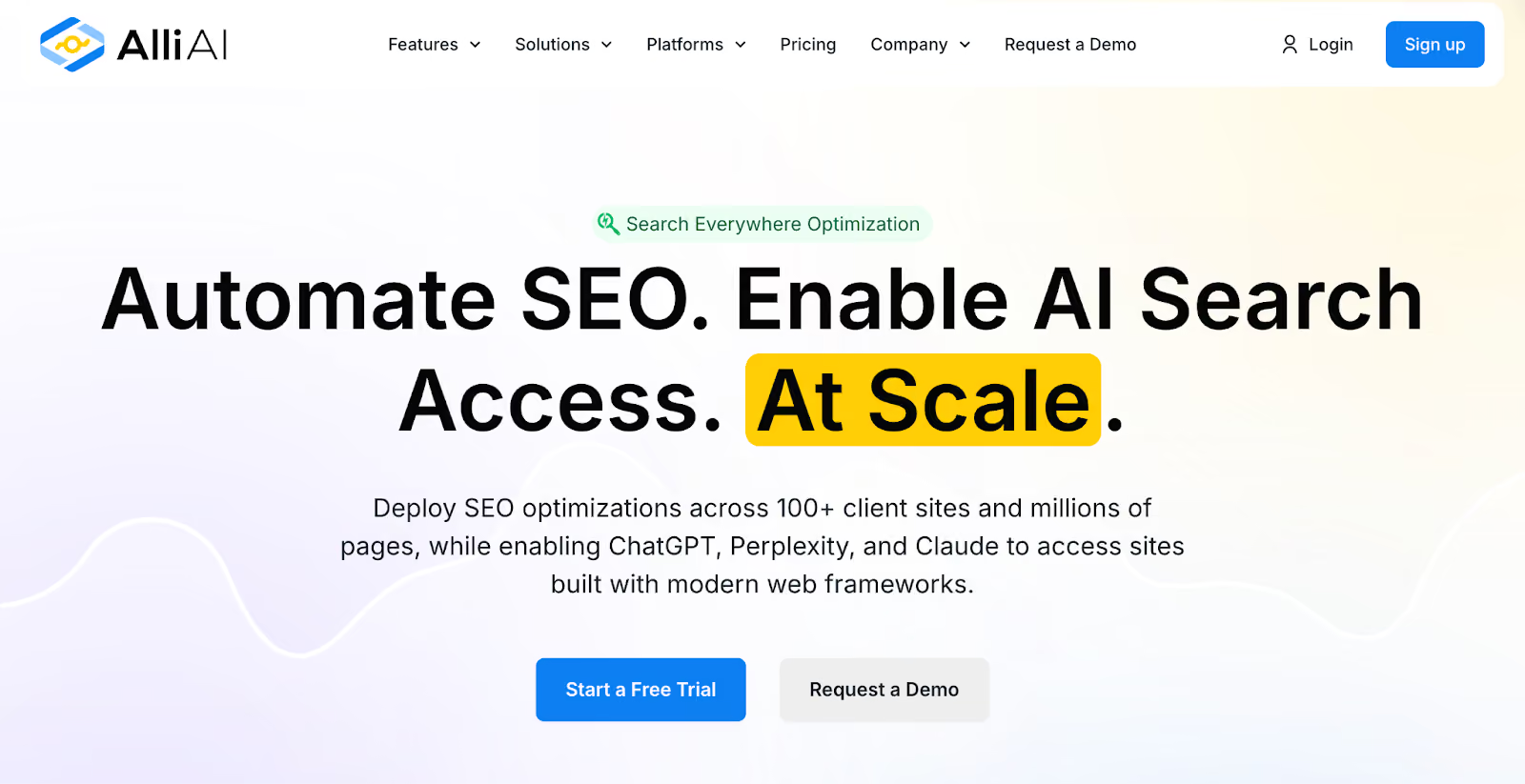
Alli AI is part on-page automation engine, part AI search readiness tool. You install a JavaScript snippet, and the platform pushes on-page changes, meta tags, schema markup, and internal links across thousands of pages without touching your CMS.
What makes it relevant for AI SEO specifically is its server-side rendering infrastructure. Sites built on React, Vue, Next.js, or Angular are typically invisible to AI crawlers because the content doesn't render as plain HTML. Alli AI pre-renders these pages specifically for bots from ChatGPT, Perplexity, Claude, and 50+ other AI platforms.
Best for: Agencies and enterprise SEO teams managing large multi-site portfolios that need to deploy optimizations at scale.
Pros:
- Server-side rendering makes JavaScript-heavy sites readable to 50+ AI crawlers
- Portfolio-wide rule-based deployment across hundreds of sites
- AI-powered SEO A/B testing for title tags
Cons:
- All optimizations are delivered via JavaScript overlay; changes disappear if you cancel
- Mixed ratings on customer support responsiveness
- Starting price puts it out of reach for solo practitioners
Pricing: Business plan at $299/month (5 sites, 500 keywords). Agency and enterprise tiers scale up.
Ratings: 3.9/5 on Capterra
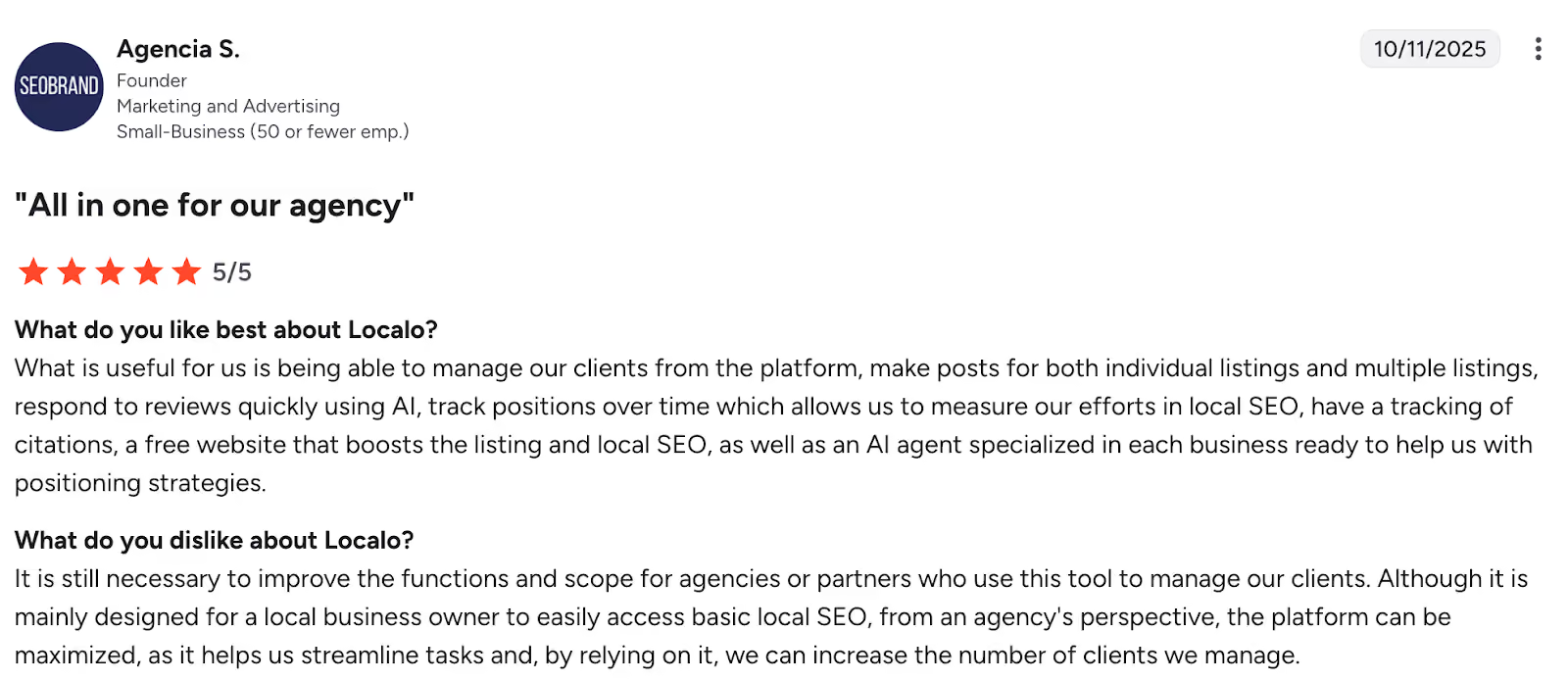
9. Localo
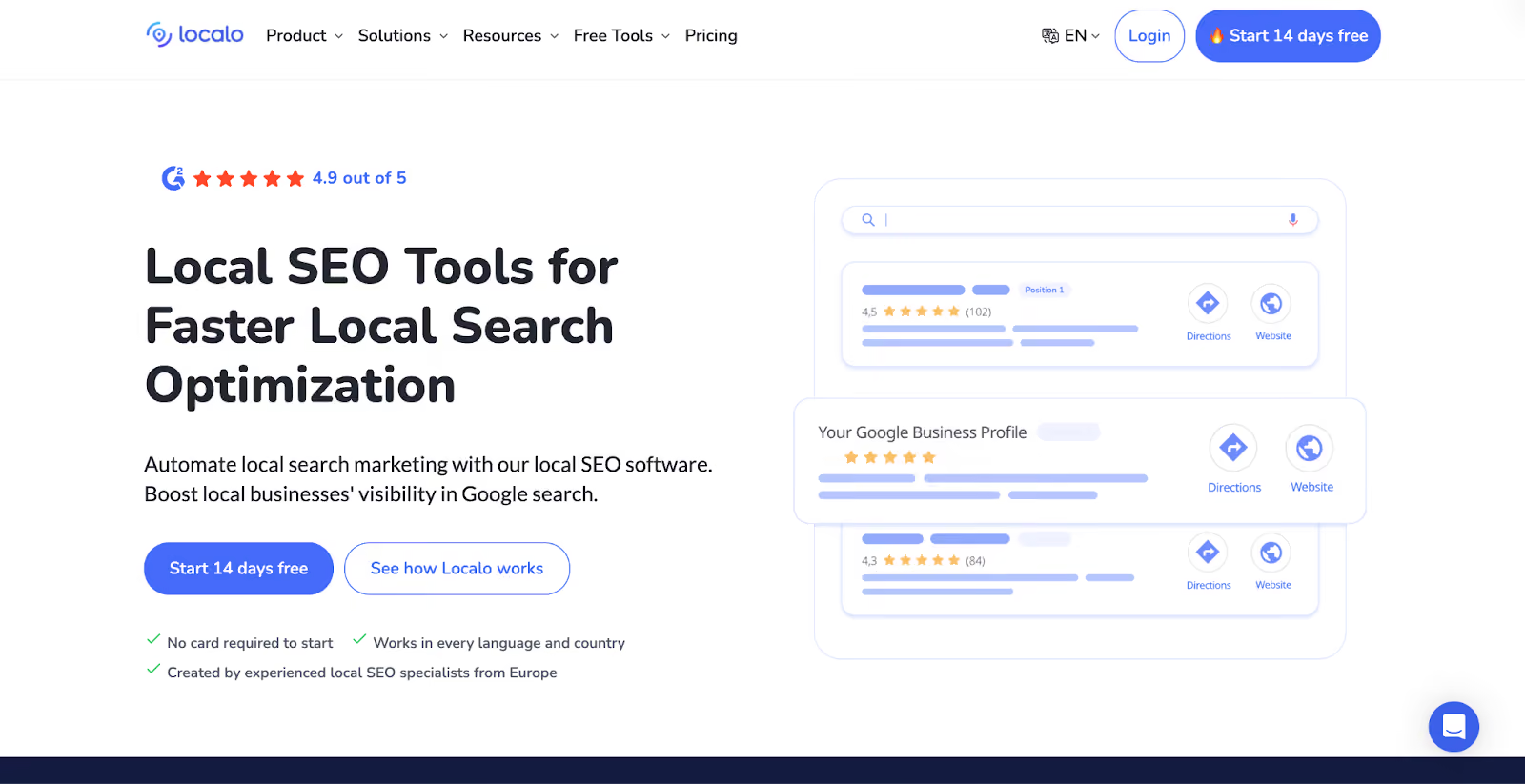
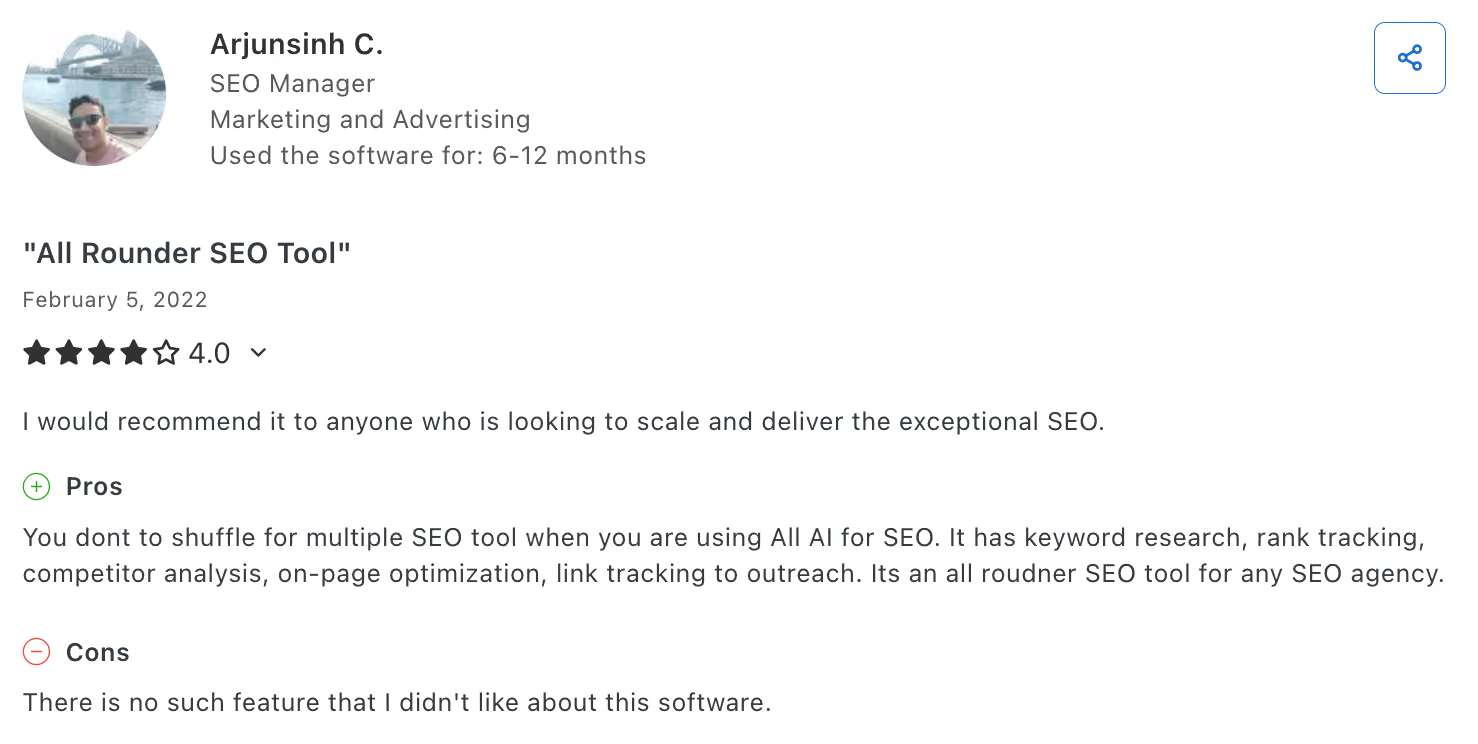
Localo focuses entirely on Google Business Profile optimization for local search. The Localo AI Agent plugs directly into your GBP to pull real-time data on your business, competitors, and local market trends, then generates a tailored set of optimization tasks ranked by impact.
For agencies, there's a seat-based system that lets you monitor a large pool of client profiles and selectively activate optimization on priority ones.
Best for: Local businesses and agencies managing Google Business Profiles across multiple locations.
Pros:
- AI Agent generates business-specific optimization tasks from GBP and competitor data
- Agencies can monitor unlimited profiles while only paying to actively optimize priority ones
- AI-generated content adapts to your brand voice
Cons:
- Focused exclusively on Google Business Profile
- AI-generated posts occasionally need manual editing
- No native integrations with other marketing or reporting tools
Pricing: $28/month for single businesses, $56/month for agencies.
Ratings: 4.9/5 on G2
10. Search Atlas
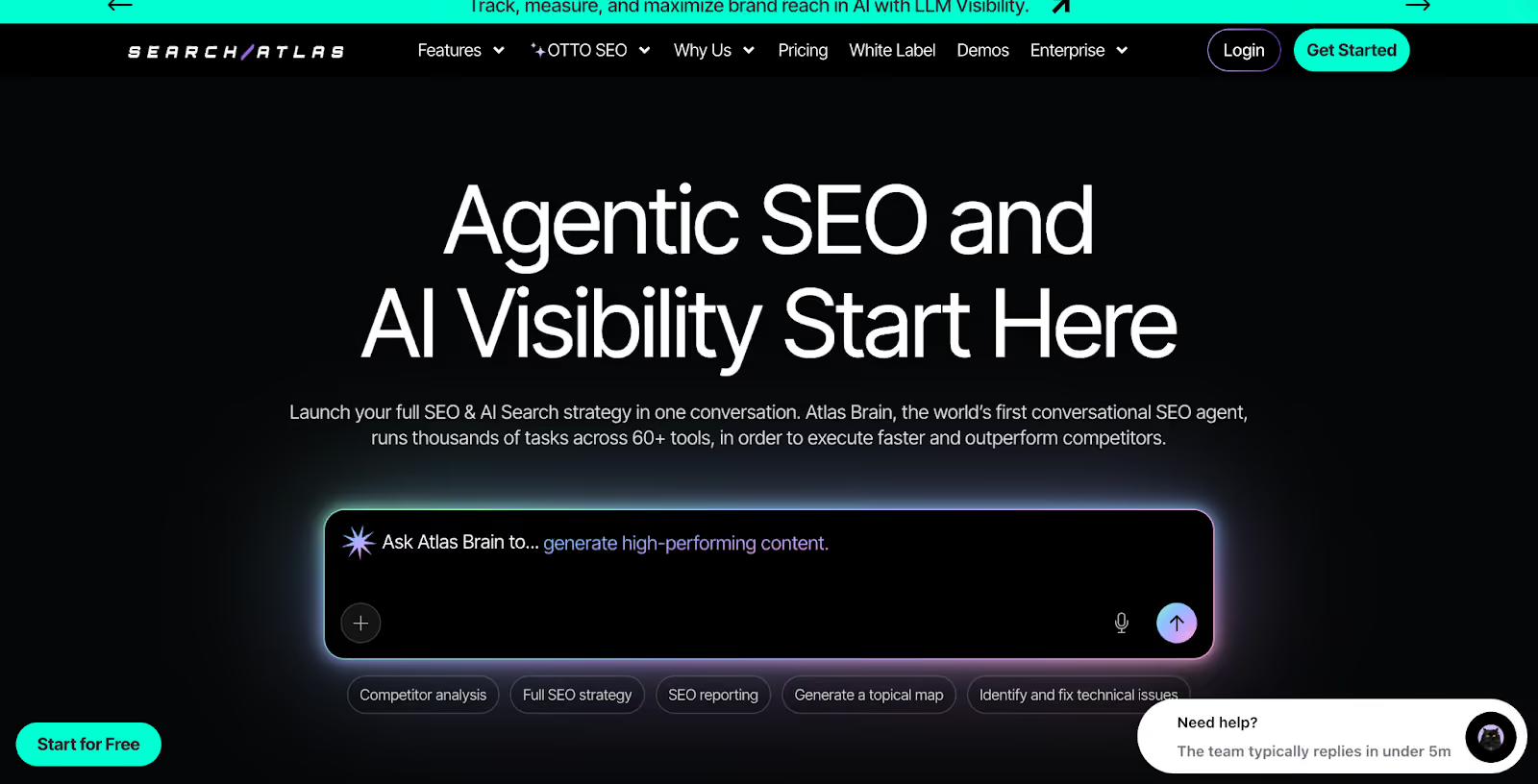
Search Atlas connects to your site via a pixel or server-side installation and deploys on-page fixes, content updates, internal link adjustments, and technical corrections using OTTO SEO, its AI automation engine.
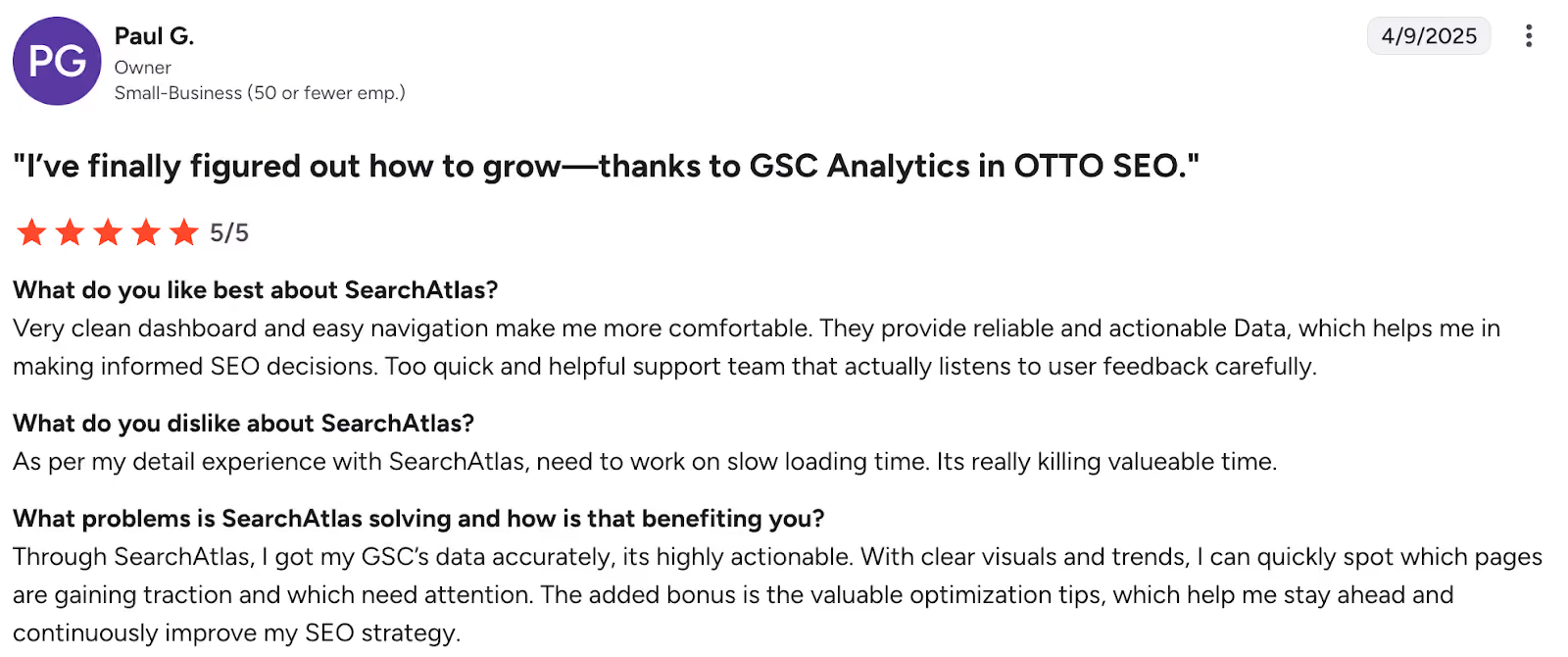
Before OTTO starts making changes, you feed it context about your brand. It then uses live Google Search Console data to prioritize optimizations based on real ranking signals. OTTO Agent goes further by letting you direct changes through natural language. LLM Visibility tracking across four major AI platforms is bundled into all plans.
Best for: SEO agencies and in-house teams managing multiple websites that want to consolidate technical execution, content creation, and AI visibility monitoring.
Pros:
- OTTO deploys fixes directly to the site after approval
- LLM Visibility tracking bundled into all plans
- Optimizations informed by your specific brand context and live GSC data
Cons:
- Depth of OTTO creates a real learning curve
- Some users report difficulty canceling subscriptions
- OTTO project quotas on lower-tier plans can constrain agencies
Pricing: Starts at $99/month, scaling to $999/month for agencies. 7-day free trial included.
Ratings: 4.6/5 on G2
FlowForma
"FlowForma improved AI-attributed traffic by 5.5x within 9 months through strategic GEO implementation and achieved consistent visibility in process automation recommendations across AI platforms like ChatGPT, Perplexity, and Gemini."
Read the full FlowForma case study →
What should you look for when choosing an AI SEO tool?
The right tool depends on your specific workflow gaps, not the longest feature list. Here's what matters most when you're ready to commit.
1. Budget vs. value. Free AI writing tools for blog posts exist (ChatGPT's free tier, for example), but mid-range tools start around $99/month (Surfer, SE Ranking) and enterprise platforms begin at $299/month (Alli AI). Always validate fit with a free trial before committing.
2. User-friendliness. A steep learning curve kills adoption. Go for tools with intuitive interfaces, especially if your team isn't deeply technical.
3. Functionality match. Identify your specific gaps. Need keyword research? On-page optimization? AI visibility tracking? Choose a tool that goes deep on your priority rather than one that does everything at a surface level.
4. AI search readiness. In 2026, 43% of marketers are optimizing for AI search. If your tool doesn't offer AEO scoring, LLM citation tracking, or AI Overview monitoring, it's already behind. For a broader look at SEO vs. GEO, we've covered the distinctions in detail.
5. Integration depth. Check CMS compatibility, API access, and whether the tool connects to your existing stack (GSC, Semrush, HubSpot). The best AI SEO platforms with real-time optimization are the ones that plug into your workflow without creating new silos.
Agency Data Insight
In paid social funnels, AI SEO tool promotions see 18% uplift in mid-funnel engagement from audiences researching "AI SEO tools," with conversion rates 30% above baseline for demo sign-ups. This reflects stronger resonance with technical buyers when content highlights predictive features like keyword trends and voice or visual search optimization.
How can TripleDart help you get more from AI SEO tools?
These tools are powerful on their own. They're also easy to misuse, leading to thin content, over-optimization, or wasted budget on platforms that don't fit your workflow.
At TripleDart, AI-driven SEO is a core part of how we drive pipeline for B2B SaaS companies. We don't just recommend tools. We design a strategy around them, covering SEO automation, content execution, and AI search visibility.
When you partner with us, you get our dedicated team plus access to these tools at no extra cost. That includes proprietary tools we've built specifically for B2B SaaS marketing.
Get in touch with TripleDart to see how AI can become your competitive edge.
Frequently Asked Questions
What are AI SEO tools, and how are they different from traditional SEO tools?
Traditional SEO tools track data. AI SEO tools act on it. They automate content creation, deploy technical fixes, and optimize your pages for AI search engines like ChatGPT and Perplexity, not just Google.
Does Google penalize AI-generated content?
Not by default. Google ranks content on quality and helpfulness, regardless of how it was produced. The risk is publishing unedited, low-value AI output at scale, not using AI itself. For a deeper look, read our guide on whether AI content is bad for SEO.
What is AEO, and why should I care about it?
AEO (Answer Engine Optimization) is about making your content citation-ready for AI platforms like ChatGPT, Gemini, and Perplexity. With monthly AI sessions now 56% the size of traditional search worldwide, ignoring AEO means missing a growing share of how buyers discover software.
Can a single AI SEO tool cover all my needs?
Unlikely. Most tools specialize in one area. Slate comes closest for content-heavy teams by combining AI visibility tracking, content creation, and automated publishing. For most B2B SaaS teams, a stack of two to three tools, paired with a clear strategy, delivers the best results.
How long before I see results from using AI SEO tools?
Most teams see initial improvements within four to eight weeks of consistent optimization. AI tools speed things up by removing manual bottlenecks, but SEO remains a compounding effort.
Are free AI SEO tools worth using?
Yes, for specific tasks. ChatGPT's free tier is strong for drafting and research. But for keyword data, rank tracking, and AI visibility monitoring, you'll need paid platforms. The free tools work best as complements, not replacements.
How does TripleDart help with AI SEO tool selection and strategy?
TripleDart evaluates your existing toolstack, identifies gaps, and builds a strategy that connects your AI SEO tools to measurable pipeline outcomes. We handle tool configuration, content workflows, and ongoing optimization so your team focuses on growth, not troubleshooting. Book a call to get started.