14 Best AEO Agencies in 2026 (Vetted & Ranked)
.avif)
Key Takeaways
B2B buyers have changed how they research. 45% of B2B buyers now use generative AI tools to research solutions before speaking to a single sales rep. They're asking ChatGPT which project management tool fits a remote team, querying Perplexity for the best CRM for a Series B company, and getting synthesized answers that name specific brands. If your brand isn't one of them, you're invisible at the most critical moment in the buying journey.
This is the problem that answer engine optimization (AEO) solves. Unlike traditional SEO, which fights for a blue link on a results page, AEO is about becoming the brand that AI models trust enough to recommend by name. It requires a different set of skills, different tools, and a different way of thinking about content and authority. Most agencies haven't built those capabilities yet. Some have simply relabeled their SEO services and called it a day.
We evaluated dozens of agencies to find the ones that have genuinely built AEO expertise. We looked at their methodologies, their results, their team knowledge, and their ability to connect AI visibility to real business outcomes. The 14 agencies on this list passed that bar. The ones that didn't are not here.
Whether you're a VP of Marketing at a Series B SaaS company watching your organic traffic plateau, or a CMO trying to future-proof your brand's discoverability, this guide gives you everything you need to find the right AEO partner for 2026. Let's get into it.
What is Answer Engine Optimization (AEO)?
Answer engine optimization is the practice of structuring your brand's content and digital presence so that AI-powered platforms, including ChatGPT, Google AI Overviews, Perplexity, Claude, Gemini, and Microsoft Copilot, cite, reference, and recommend your brand when users ask relevant questions.
Traditional search returns a list of links. AI answer engines synthesize a single response drawn from multiple sources, and the brand named in that response wins the interaction. The user often never visits a SERP at all.
Understanding how this works mechanically matters. Most AI answer engines use retrieval-augmented generation (RAG), a process where the model pulls relevant content from indexed sources at query time and synthesizes it into a response. The model doesn't use PageRank to decide what to cite. It uses entity recognition, source authority triangulation, factual consistency across the web, and content structure. That's a fundamentally different optimization target than traditional SEO services.
By 2028, Gartner projects that 80% of all search interactions will be powered by an AI agent or answer engine rather than a traditional query-response interface. For B2B SaaS brands, the commercial implication is direct: if your competitor is the brand AI recommends and you're not, you're losing deals before a conversation ever starts. LLM optimization is no longer optional for brands that want to maintain visibility as search behavior evolves.
What are the differences between AEO and SEO?
AEO builds on SEO fundamentals. It's not a replacement. But the two disciplines diverge in ways that matter practically. If your strategy is still optimized only for Google's blue links, you're optimizing for a shrinking share of how people find information.
Consider the same query, "best project management tool for remote teams," run through Google versus ChatGPT. Google rewards keyword-optimized pages with strong backlink profiles. ChatGPT rewards brands with strong entity recognition, consistent mentions across authoritative sources, and well-structured content that the LLM can parse and synthesize.
A good AEO agency (also called a generative engine optimization, or GEO, agency in some circles) will optimize across both paradigms simultaneously. Our deeper comparison of AEO vs SEO covers the technical distinctions in more detail.
How did we evaluate and rank these AEO agencies?
We didn't compile this list from agency websites and Google searches. Our team evaluated each agency against six specific criteria, weighted toward demonstrable AEO results and genuine depth of AI search expertise. We also excluded agencies that simply rebranded existing SEO services as AEO without building AI-specific methodologies, tools, or client results.
Evaluation Criteria
1. Demonstrated AEO expertise.
Published thought leadership on AI search, proprietary AEO methodologies, and evidence that the team understands how large language models retrieve and synthesize information. Not just a landing page that says "we do AEO."
2. Client results.
Measurable improvements in AI citations, brand mention frequency in AI answers, AI-referred traffic, or pipeline attributed to AI search visibility. Agencies that couldn't point to specific outcomes were deprioritized.
3. Service depth.
A full AEO service stack: content optimization for AI citation, schema markup and structured data, entity SEO, AI platform monitoring, and ongoing optimization. Surface-level "we'll optimize your content" doesn't qualify.
4. Team expertise.
Team members with demonstrated knowledge of LLMs, NLP, retrieval-augmented generation, and AI search behavior, evidenced through conference talks, published research, or technical writing.
5. Client portfolio relevance.
Agencies serving B2B SaaS, technology, and digital-first brands were prioritized, as these industries face the most immediate AI search disruption.
6. Transparency and reporting.
Clear reporting on AEO-specific metrics, not just traditional SEO dashboards relabeled. The agency should be able to tell you exactly how they measure AI visibility.
Who are the 14 best AEO agencies in 2026?
The following agencies represent the strongest options for brands building AI search visibility in 2026. They're presented in curated order based on our evaluation criteria, not a strict numerical ranking, since the best AEO agency for your situation depends on your goals,
budget, and industry.
1. TripleDart Digital
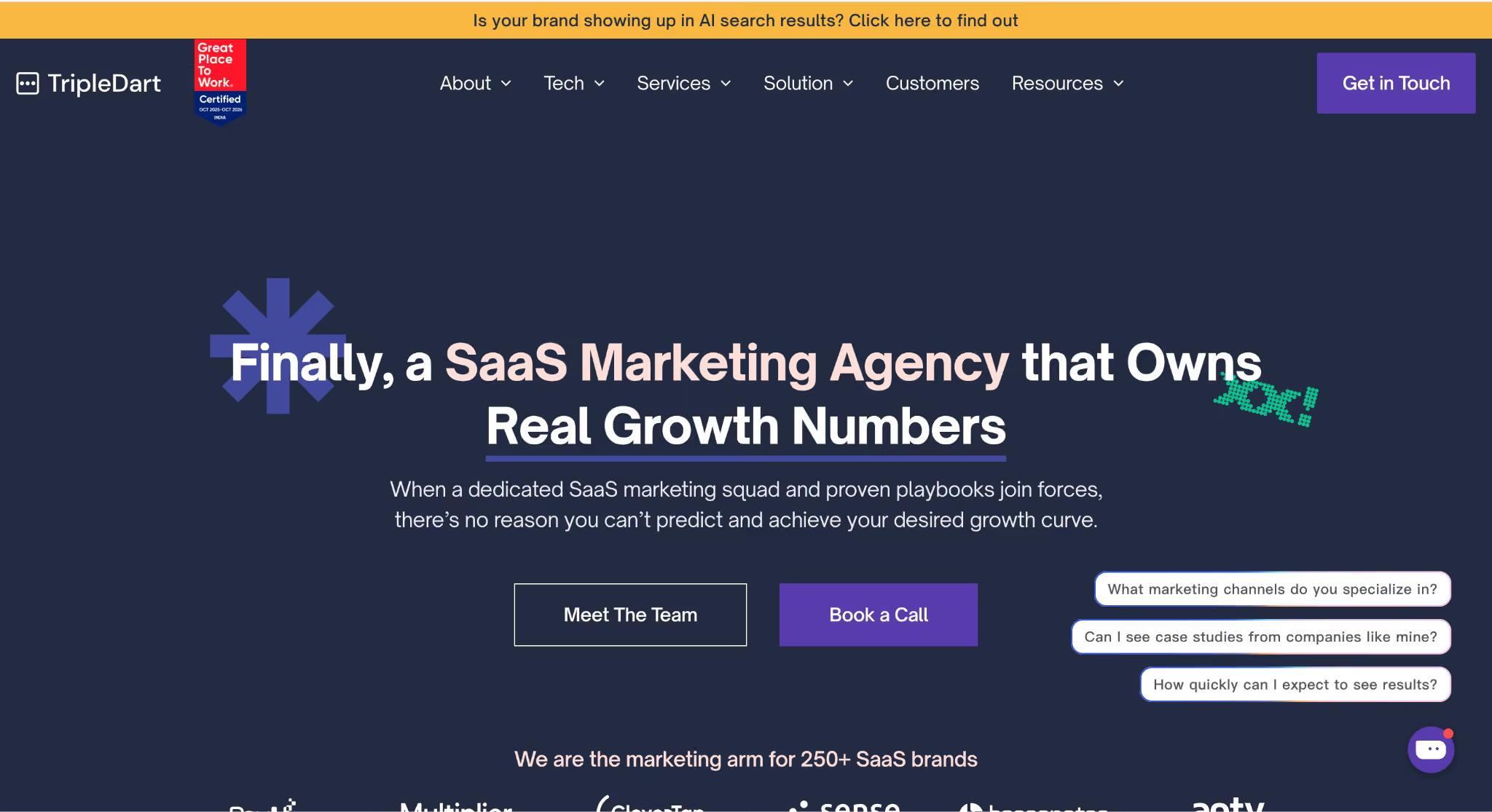
We're on this list, and we'll be direct about why. TripleDart is the only agency here that connects AEO directly to pipeline and revenue metrics, not just visibility scores or citation counts. We work as an extended GTM team for B2B SaaS companies, integrating SEO, content marketing, paid media, and demand generation into a single inbound engine. AEO is one component of that engine, not a siloed service.
That integration matters. When a prospect discovers your brand through a ChatGPT recommendation, there needs to be a conversion path waiting. We ensure there is, through retargeting, content nurture, and paid amplification that captures the demand AEO generates. Our generative engine optimization services are powered by Slate, our proprietary AI workflow platform, which enables content optimization at a scale that manual processes can't match. We've helped clients like Signeasy reach 800 monthly LLM sessions with 60-68% month-over-month growth, and FlowForma achieve 7x AI search visibility growth in six months.
Our ideal client is a Series A-C B2B SaaS company that wants AEO connected to predictable pipeline, not a vanity dashboard. Get a free AEO audit to see where your brand stands across ChatGPT, Perplexity, Google AI Overviews, and more.
2. Graphite
Graphite was founded by former HubSpot growth team members, which immediately signals credibility in the SaaS growth space. Their reputation is built on data-driven, programmatic content and SEO strategies at scale, and that programmatic approach translates powerfully to AEO. Optimizing hundreds or thousands of pages for AI citation requires systematic methodology, not one-off content tweaks. Graphite has that infrastructure.
Their work with high-growth companies like Masterclass, Robinhood, and BetterUp demonstrates they can operate at scale. Their strength in building topical authority clusters is particularly relevant for AEO, since topical authority is one of the clearest signals AI models use to decide which brands to cite consistently.
3. iPullRank
iPullRank is led by Mike King, author of "The Science of SEO" and one of the most recognized voices in technical SEO and natural language processing. That technical depth defines their AEO approach: entity optimization, knowledge graph strategies, structured data implementation, and NLP-driven content optimization. They don't just optimize content for AI. They understand the underlying mechanics of how LLMs process, retrieve, and rank information.
This makes iPullRank the go-to for enterprise-level technical AEO where the challenge isn't what content to create but how to structure your entire digital presence so AI models recognize your brand as an authoritative entity. Their proprietary tooling gives them a data advantage that most competitors lack.
4. Omniscient Digital
Founded by Alex Birkett and Allie Decker, Omniscient Digital is a content-strategy-first agency with a strong B2B SaaS track record. Their AEO approach focuses on building topical authority engines that make brands the definitive source on their core topics, which is exactly what AI models look for when deciding which brands to cite.
Their strength isn't deep technical AEO but the strategic layer: identifying which topics and entities your brand needs to own, then building the content infrastructure that makes AI models associate your brand with those topics. Their client roster (Jasper, Loom, SAP) confirms their fit for B2B SaaS companies that need content-led AI search optimization.
5. Siege Media
Siege Media's reputation is built on producing high-quality, visually rich, link-earning content. That matters for AEO because AI models evaluate source authority, and Siege Media's content earns the kind of backlink profiles that signal authority to both traditional search engines and LLMs. Their premium client roster (Zillow, Airbnb, TripAdvisor) demonstrates they can produce content that earns citations at scale.
Their visual content capabilities, including infographics and data visualizations, are also relevant: structured, data-rich content is frequently referenced in AI answers. Best for brands with budget who want best-in-class content that naturally earns AI citations over time.
6. Directive
Directive's "Customer Generation" methodology focuses on generating customers, not just leads or traffic. That philosophy extends to AEO: they don't optimize for AI citations as a vanity metric but for AI visibility that drives qualified prospects into the funnel. Their B2B tech client base (Adobe, Amazon, Uber Freight) means they understand complex buyer journeys where AI search is increasingly the first touchpoint.
Their team size and resources allow them to execute AEO at enterprise scale, making them a strong choice for mid-market to enterprise B2B tech companies that need a well-resourced partner.
7. Animalz
Animalz produces editorial-quality content: long-form, deeply researched, thought-leadership-grade writing that naturally aligns with what AI models reward. LLMs favor content that demonstrates genuine expertise, provides nuanced analysis, and goes beyond surface-level information. Animalz's editorial standards produce exactly that.
Their SaaS specialization (Airtable, Amazon, GoDaddy) means they understand how to build content that positions B2B brands as category authorities, which is the foundation of sustained AI citation. Their AEO approach is content-led rather than technical, which means they pair well with a technical SEO partner.
8. Omnius
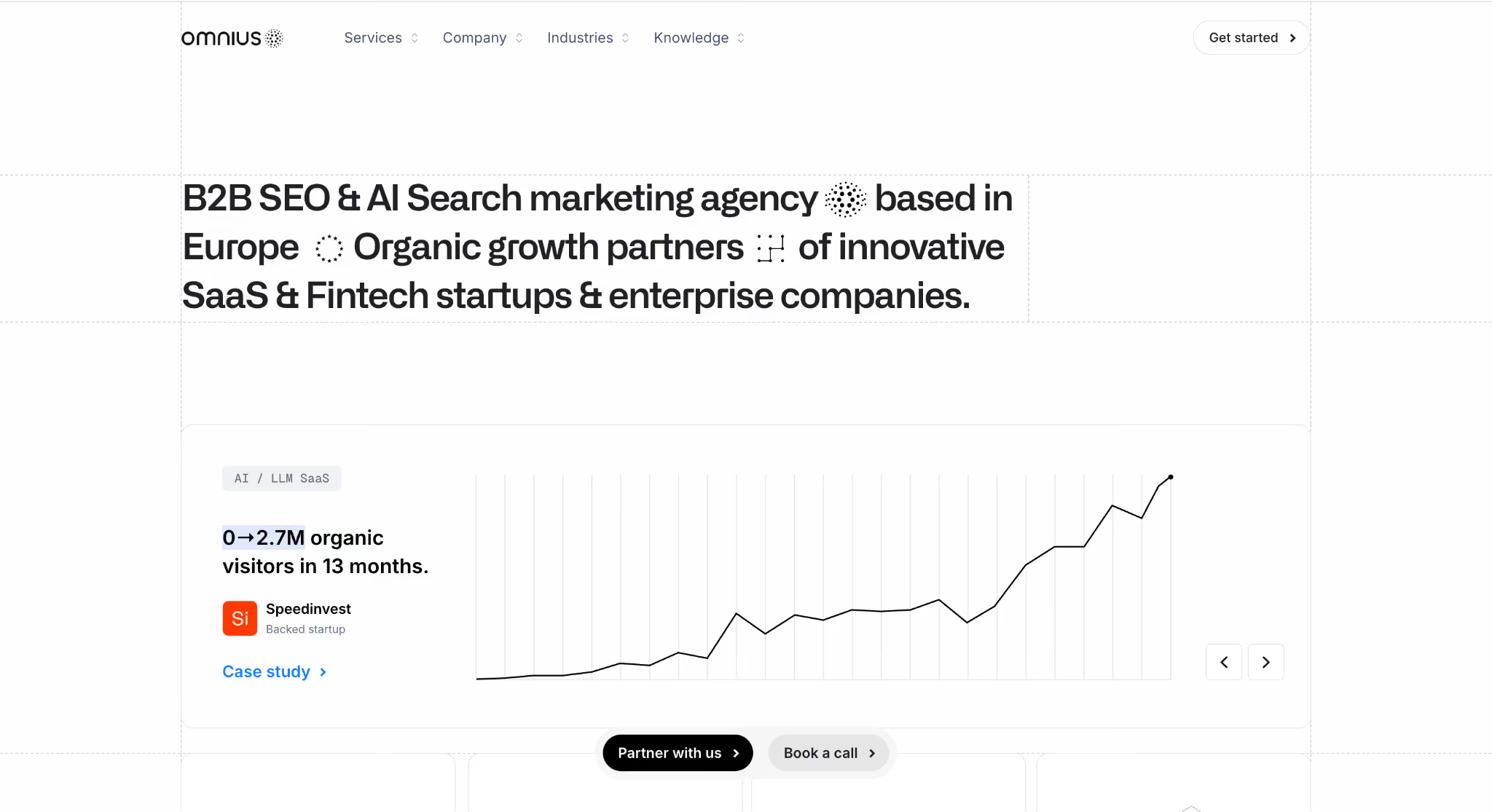
Omnius is purpose-built for AI visibility. It's their core offering, not an add-on to existing SEO services. Their dual model is unique on this list: they're both a platform (AI visibility monitoring software) and an agency (strategic AEO services). Their platform monitors brand mentions across AI search engines in real time, tracking how often and in what context AI models cite your brand. The agency layer then optimizes content and digital presence based on that data.
This combination gives them a data advantage most competitors lack. They're one of the few genuine answer engine optimization agencies where AEO is the primary offering, and their tool infrastructure reflects that focus. Best for companies that want a dedicated AEO-first partner with proprietary monitoring capabilities.
9. Go Fish Digital
Go Fish Digital sits at the intersection of technical SEO and digital PR, two capabilities that combine powerfully for AEO. Technical SEO ensures your content is structured for AI retrieval (schema, entities, structured data), while digital PR builds the brand authority and cross-web mentions that LLMs use to evaluate source credibility.
When AI models decide which brands to cite, they triangulate across multiple sources. Go Fish Digital's PR-driven approach ensures your brand is mentioned authoritatively across the web, not just on your own site. Their additional strength in reputation management has direct AEO implications: managing how AI models represent your brand is increasingly a strategic priority.
10. Single Grain
Eric Siu's personal brand and thought leadership through the Marketing School podcast give Single Grain firsthand experience with the kind of content strategy that earns AI citations. They practice what they preach: they've built a massive content footprint and understand from direct experience what makes content get referenced by AI models.
Their full-service approach (SEO, paid media, content, CRO) means AEO is integrated into a broader growth strategy rather than treated in isolation. Best for companies that want a well-known agency with a broad service offering and a founder who's actively experimenting with AI search strategies.
11. RevenueZen
RevenueZen's name signals their philosophy: every marketing activity, including AEO, is evaluated through the lens of revenue impact. Their unique integration of LinkedIn and SEO strategies is relevant to AEO because LinkedIn content increasingly gets cited by AI models as a source of professional expertise.
Their B2B focus means they understand long sales cycles and the importance of being the brand AI recommends during the research phase of a complex buying decision. Best for B2B companies in SaaS and professional services that want AEO tied directly to pipeline metrics rather than visibility scores.
12. First Page Sage
First Page Sage is known for publishing extensive SEO benchmarks, conversion rate studies, and industry data. That research-first approach gives them a unique advantage in AEO: AI models heavily favor content that contains original data, statistics, and research. Their thought leadership content strategy, helping clients publish authoritative, data-backed content, directly supports AI citation because LLMs are more likely to reference sources that contain verifiable, specific claims.
Best for companies in industries where data authority matters, including fintech, healthcare, and enterprise tech.
13. Seer Interactive
Founded by Wil Reynolds, a respected figure in the SEO community known for his data-first approach, Seer Interactive brings large-scale data analysis to AEO. Their methodology uses audience intelligence to identify AI citation opportunities: they analyze which queries AI models are answering, what sources they're citing, and where the gaps are for your brand.
Their team size and analytical capabilities make them well-suited for enterprise clients with complex, multi-product brands. Their combination of SEO, paid media, and analytics gives them a holistic view of where AI search fits in the broader acquisition picture.
14. Discovered Labs
Discovered Labs is one of the newer purpose-built agencies focused specifically on helping brands get discovered by AI models. Unlike agencies that added AEO to an existing SEO menu, Discovered Labs was built from the ground up around LLM optimization. Their methodology focuses on understanding how specific AI models (ChatGPT, Perplexity, Claude) retrieve and rank information, then optimizing your brand's digital footprint accordingly.
The trade-off is clear: they lack the track record of established agencies but offer deeper AEO-native expertise. Best for companies that want a cutting-edge, AEO-first partner and are comfortable working with a newer, more specialized agency.
Use this at-a-glance comparison to quickly narrow your shortlist. We've mapped all 14 agencies across the dimensions that matter most: specialization depth, ideal client profile, pricing, and AI platform coverage.
Pricing ranges are estimates based on publicly available information and industry benchmarks. Request a custom quote from any agency for accurate pricing based on your specific scope.
How to choose the right AEO agency for your business?
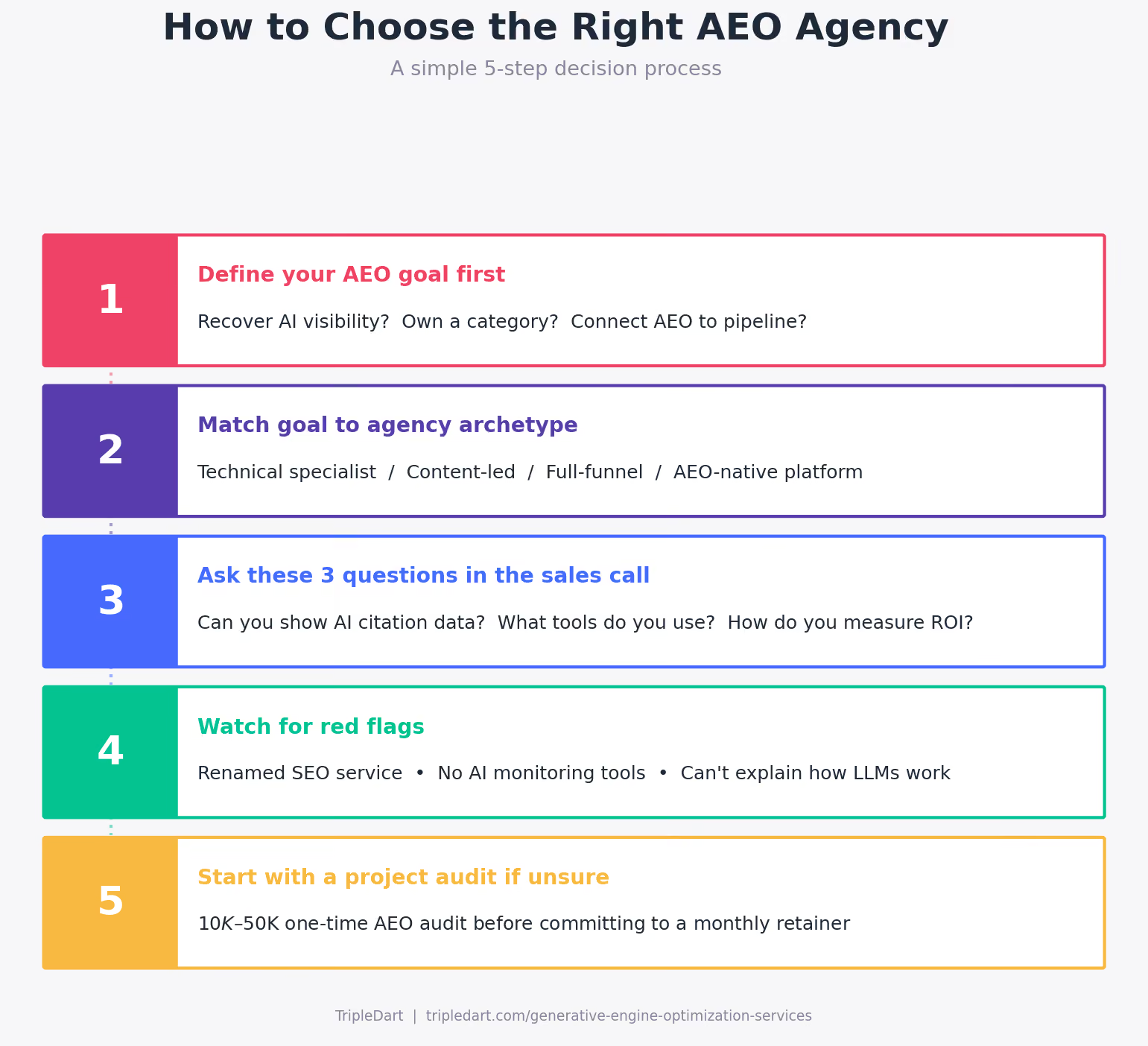
A list of agencies is useful. Knowing which one is right for your situation is what actually matters. Here's a framework for making that decision.
Define Your AEO Goals First
Before evaluating any agency, clarify what you actually need. Different AEO goals map to different types of agencies.
- "We're losing traffic to AI answers and need to recover visibility" - you need an agency with strong AI monitoring and content optimization capabilities, like Omnius or iPullRank.
- "We want our brand to be the one AI recommends in our category" - you need entity optimization and topical authority expertise, like Omniscient Digital or Graphite.
- "We need AEO integrated into our existing growth strategy" - you need a full-funnel agency, not an AEO specialist. TripleDart, Directive, or Single Grain fit here.
- "We want to understand our current AI visibility before committing" - start with a project-based AEO audit from any agency on this list.
Clarity on your primary goal narrows the field significantly before you make a single sales call.
Match Agency Strengths to Your Needs
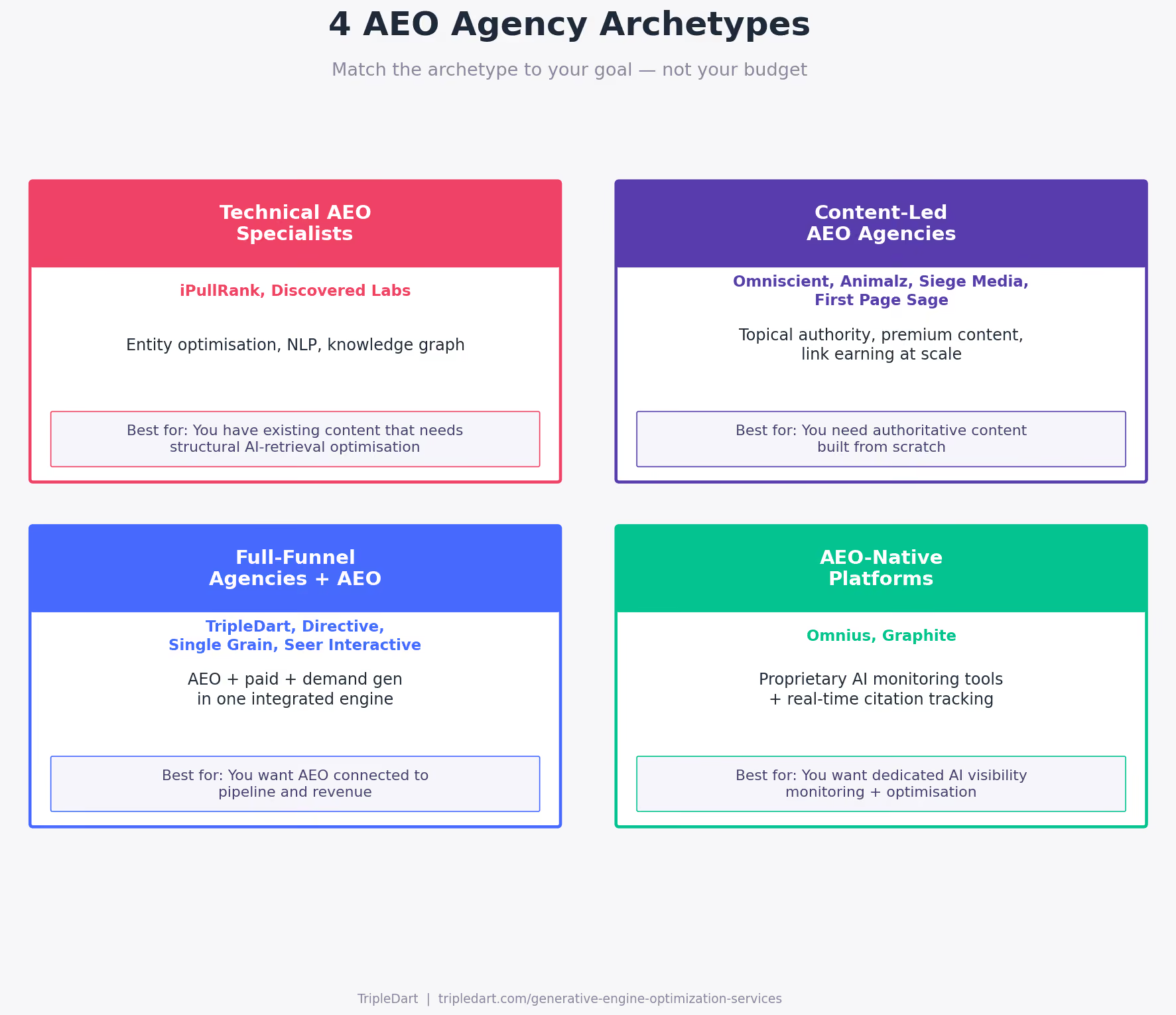
Four agency archetypes emerge from this list, each suited to a different situation.
Technical AEO specialists (iPullRank, Discovered Labs) are best for companies with existing content that needs structural optimization for AI retrieval. Content-led AEO agencies (Omniscient Digital, Animalz, Siege Media, First Page Sage) are best for companies that need to build authoritative content from scratch. Full-funnel agencies with AEO (TripleDart, Directive, Single Grain, Seer Interactive) are best for companies that want AEO connected to a broader B2B SaaS growth strategy. AEO-native platforms (Omnius) are best for companies that want dedicated AI visibility monitoring alongside optimization.
The Reddit community has been actively discussing this question. One thread on r/SaaS noted that the most common mistake is hiring a generalist agency and expecting AEO-specific results: "Look for agencies that focus on building entity presence and AI discoverability, not just traditional SEO. Check if they have case studies showing actual AI citation improvements," one commenter advised.
Questions to Ask During the Sales Process
These are AEO-specific questions that reveal whether an agency has genuine expertise or is faking it.
- "Which AI platforms do you actively monitor for brand mentions?" - Red flag: they only mention Google.
- "Can you show me before/after AI citation data for a current or past client?" - Red flag: they show SEO rankings instead.
- "How do you measure AEO ROI?" - Red flag: they can't connect AEO to business metrics.
- "What's your approach to entity optimization?" - Red flag: they don't know what entity optimization means.
- "What AEO-specific tools do you use?" - Red flag: they only mention traditional tools like Ahrefs or SEMrush with no AI monitoring tools.
- "How do you stay current with changes in how AI models retrieve information?" - Red flag: vague "we follow industry trends."
- "What's your content optimization process specifically for AI citation?" - Red flag: it's identical to their SEO content process.
- "Can you explain how retrieval-augmented generation affects your strategy?" - Red flag: they don't know what RAG is.
- "What does your reporting dashboard look like for AEO clients?" - Red flag: it's a standard SEO dashboard with no AI-specific metrics.
- "How long until we see measurable results, and what does 'measurable' mean to you?" - Red flag: they guarantee specific outcomes.
Red Flags to Watch For
The AEO space is new enough that many agencies are rebranding existing services without building real capability. A Reddit thread on r/DigitalMarketing captured this well: "Some agencies are rebranding normal SEO work as 'AI optimization'. If they're charging extra, ask them: What prompts are you tracking? Are you actually monitoring LLM outputs?"
Watch for these signs:
- They renamed their SEO service page to "AEO" but the methodology is identical
- They can't name the specific AI platforms they optimize for
- They guarantee AI citations or specific placement in AI answers
- Their case studies show SEO metrics but no AI-specific metrics
- They don't use any AI visibility monitoring tools
- They can't explain how LLMs select sources differently from Google's algorithm
- Their team has no published thought leadership on AI search
- They offer AEO as a one-time project rather than ongoing optimization
How much do AEO agencies cost?
This is the question every competitor article avoids, so we'll answer it directly. Pricing varies significantly based on scope, but here are concrete tier-based ranges.
Pricing Tiers
What Affects AEO Agency Pricing?
Several factors drive pricing up or down. Understanding them helps you estimate where your engagement would fall.
- Number of AI platforms monitored (more platforms means higher cost)
- Content volume (how many pages need optimization)
- Technical complexity (schema implementation, entity optimization depth)
- Industry competitiveness (more competitive categories require more effort)
- Reporting depth and frequency
- Contract length (longer commitments often reduce monthly cost)
- Whether content creation is included or just optimization of existing content
A reasonable ROI expectation: if your AEO agency costs $10,000 per month, you should see measurable improvements in AI citation frequency within 8-12 weeks, with clear pipeline impact within 4-6 months. If an agency can't project a timeline to ROI, that's a red flag.
68% of CMOs plan to increase investment in agencies specializing in AI search and answer engine optimization through 2026. The agencies that build this capability now will be significantly ahead of those that wait.
Should you hire an AEO agency or build in-house?
This decision deserves a genuine answer, not a sales pitch for agencies. Here's a balanced comparison.
Hire an agency if you need results within six months, you don't have internal AEO expertise, or your team is already at capacity. Build in-house if you have a strong SEO team ready to upskill, AEO is a long-term strategic priority, and you have budget for a senior hire. Go hybrid if you want strategic guidance but have a team to execute, or if you're testing AEO before committing fully.
Many companies start with an agency engagement to build their AEO foundation, then transition to a hybrid model as internal capabilities grow. We support this transition at TripleDart by training internal teams alongside delivering results, so the knowledge transfers rather than staying locked in an agency relationship.
70% of B2B SaaS marketers report that organic performance from traditional SEO has plateaued or declined since the introduction of AI overviews and answer engines. That plateau is the clearest signal that the in-house SEO playbook needs to evolve, whether through an agency partner or internal upskilling.
Get Help With Your AEO Strategy
TripleDart is an AI-native SEO agency for B2B SaaS, and we've built and run AEO programs for companies across fintech, HR tech, cybersecurity, and developer tools. Our approach connects AI search visibility directly to pipeline, not just citation counts or share-of-voice metrics. We use our proprietary Slate platform to optimize content at scale, monitor brand mentions across ChatGPT, Perplexity, Google AI Overviews, and Claude, and tie every AEO activity back to measurable business outcomes.
Our clients have seen results like 275% organic traffic growth at Glean, 7x AI search visibility growth at FlowForma in six months, and 150% AI search visibility improvement at SurveySensum. Daniel Henderson at Glean put it directly:
"TripleDart is a super helpful team, tremendously aiding in SEO enhancements from blog topics to technical recommendations."
If you're a B2B SaaS company looking for an answer engine optimization agency that connects AEO to pipeline and revenue, not just visibility metrics, we'd like to talk. Schedule a Demo to see how we approach AI search visibility for companies at your stage.
Frequently Asked Questions
1. What's the difference between AEO and SEO?
SEO focuses on ranking in traditional search results, the blue links on a Google results page. AEO focuses on getting your brand cited and recommended by AI answer engines like ChatGPT, Perplexity, and Google AI Overviews. AEO builds on SEO fundamentals but adds entity optimization, structured data for LLMs, and AI citation monitoring. The key practical difference: SEO success means ranking at position one; AEO success means your brand is named in the AI-generated answer. Think of AEO as the evolution of SEO for an AI-first search landscape.
2. How much does an AEO agency cost?
Boutique and emerging agencies typically start at $3,000-$7,000 per month. Mid-market specialists run $7,000-$15,000 per month. Premium and enterprise agencies range from $15,000-$30,000 or more per month. Project-based AEO audits typically cost $10,000-$50,000 as a one-time engagement. Pricing depends on scope, number of AI platforms monitored, content volume, and industry competitiveness.
3. How do I measure the ROI of an AEO agency?
The key AEO metrics are AI citation frequency (how often AI models mention your brand), brand mention share of voice across AI platforms, AI-referred traffic (trackable via referral sources from ChatGPT and Perplexity in GA4), and downstream pipeline attribution. The AEO analytics ecosystem is still maturing compared to traditional SEO analytics. A good agency should be transparent about what they can and cannot measure, and should be building custom tracking solutions rather than relying solely on standard SEO dashboards.
4. Can my existing SEO agency handle AEO?
Some SEO agencies are genuinely building AEO capabilities, but AEO requires specialized skills that many traditional agencies lack: understanding LLM retrieval behavior, entity optimization for knowledge graphs, AI platform monitoring tools, and content structuring for AI citation. A practical test: ask your current agency to show you your brand's AI citation data across ChatGPT, Perplexity, and Google AI Overviews. If they can't produce that data, they're not doing AEO regardless of what they call it.
5. Which AI platforms should an AEO agency optimize for?
The major platforms to cover are ChatGPT (OpenAI), Google AI Overviews, Perplexity, Claude (Anthropic), Gemini (Google), and Microsoft Copilot. A good AEO agency should monitor and optimize for multiple platforms, since user behavior is distributed and different platforms may cite different sources for the same query. Google AI Overviews is particularly important because it affects traditional search results directly. ChatGPT and Perplexity represent the fastest-growing alternative search behaviors among B2B buyers.
6. How long does it take to see results from AEO?
Initial improvements in AI citations can appear within 4-8 weeks for content optimization work, particularly when updating existing content with better structure, entity markup, and authoritative claims. Building sustained AI visibility across multiple platforms typically takes 3-6 months. AEO timelines can be faster than traditional SEO because AI models update their retrieval indexes more frequently than Google's core algorithm. Building true topical authority, becoming the brand AI models consistently recommend in your category, is a 6-12 month investment.
7. What's the difference between AEO and GEO (Generative Engine Optimization)?
AEO and GEO are largely synonymous terms used by different practitioners and agencies. AEO (Answer Engine Optimization) emphasizes optimization for AI-powered answer engines. GEO (Generative Engine Optimization) emphasizes the generative AI aspect of these platforms. In practice, the strategies, tactics, and tools overlap almost entirely. Some agencies prefer one term, some prefer the other. When evaluating agencies, don't get hung up on terminology. Focus on whether they have genuine AI search optimization expertise regardless of what they call their service. The leading generative search optimization services use both terms interchangeably.
8. Do I need AEO if I already rank well in traditional search?
Yes, and the reason matters. Strong traditional SEO rankings don't guarantee AI citation. AI models synthesize information differently, often pulling from sources that aren't ranked first in Google. They triangulate across multiple sources and favor brands with strong entity recognition, consistent factual claims across the web, and well-structured content. As more users shift to AI-powered search, traditional rankings alone capture a shrinking share of total search visibility. 62% of marketing leaders say generative AI-driven search will have a high or very high impact on their SEO strategy within the next 12-24 months. Ranking first on Google used to mean you owned the conversation. Now, if ChatGPT doesn't mention your brand, you're invisible to a growing segment of your audience.
9. How does TripleDart help with AEO?
As an AI-native SEO agency for B2B SaaS, we build and run AEO programs as part of a full-funnel inbound GTM engine. Our generative engine optimization services include AI visibility audits, content optimization for LLM citation, entity SEO, schema markup implementation, and multi-platform monitoring across ChatGPT, Perplexity, Google AI Overviews, and Claude. We use our proprietary Slate platform to operate at a scale that manual processes can't match, and we connect every AEO activity to pipeline and revenue metrics rather than vanity dashboards. Our clients have achieved results like 7x AI search visibility growth in six months and 800 monthly LLM sessions with consistent month-over-month growth. If you want to understand your current AI visibility and identify quick wins, get a free AEO audit from our team.
.avif)
summarize with ai


