
AI Overviews are already reshaping the search industry. It is no longer news that they cut into website traffic and click-through rates for most informational queries. If you are a SaaS SEO lead, you have to adapt to protect visibility and stay ahead of the pack.
Drawing on our work across 100+ B2B SaaS brands, we have rebuilt this guide for the 2026 ranking factors Gemini actually weights - passage-level answers, schema, E-E-A-T, and the Reddit plus YouTube consensus layer.
Let us get started.
What Are AI Overviews?
AI Overviews are Google's Gemini-powered answer boxes that sit above organic results, synthesizing a paragraph response from multiple cited sources. They replace the single-snippet experience with a multi-source summary, and they are now the front page of Google for most informational queries.
Our SaaS SEO practice has watched this shift play out across 100+ B2B SaaS accounts over the last two years, and the pattern is consistent: the brands that win are the ones who treat AI Overviews as a distribution channel, not a threat.
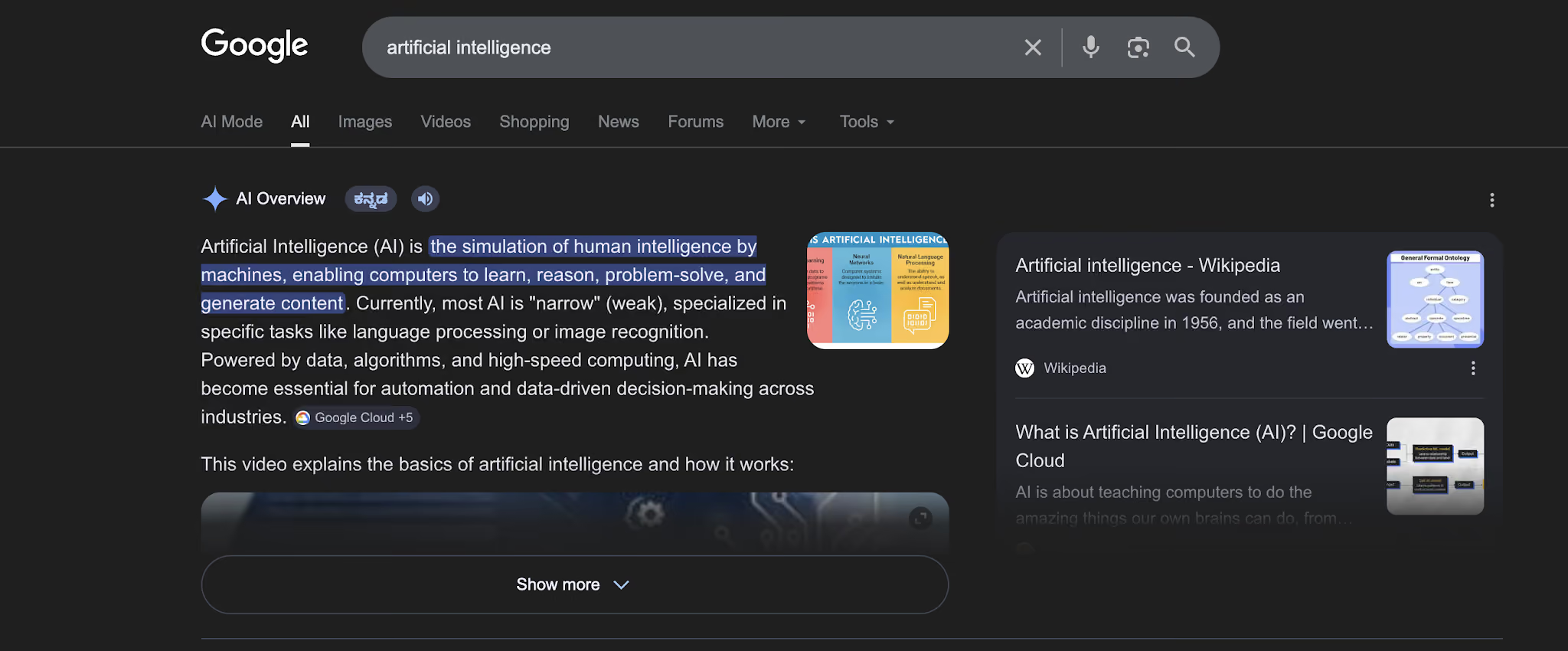
How AI Overviews Differ From Featured Snippets
Featured snippets pulled one excerpt from one page. AI Overviews generate a new paragraph from multiple pages, with clickable citation chips. The practical consequence: you are no longer competing to be "the" snippet, you are competing to be one of five to eleven sources that Gemini blends.
Across our B2B SaaS portfolio, we see the average AI Overview pull in roughly 5 to 11 citation links. That is the slot you are optimizing for.
How Do AI Overviews Work?
Natural Language Processing (NLP)
Google's AI Overviews rely on NLP to parse queries and summarize content at the passage level, not the page level. A SurferSEO analysis found that exact search query matching appears in only 5.4% of cases - Gemini prioritizes contextual understanding over literal keyword matches.
What this means operationally: stop writing for the exact-match phrase and start writing for the intent cluster. When we audit a client's BOFU listicle, we map every H2 to a distinct sub-question a buyer actually asks, not to a keyword variant.
Content Summarization
AI Overviews pull structured, scannable passages and stitch them into a natural-language answer. The passages Gemini picks are almost always the ones with a clear question-shaped H2/H3 directly above them.
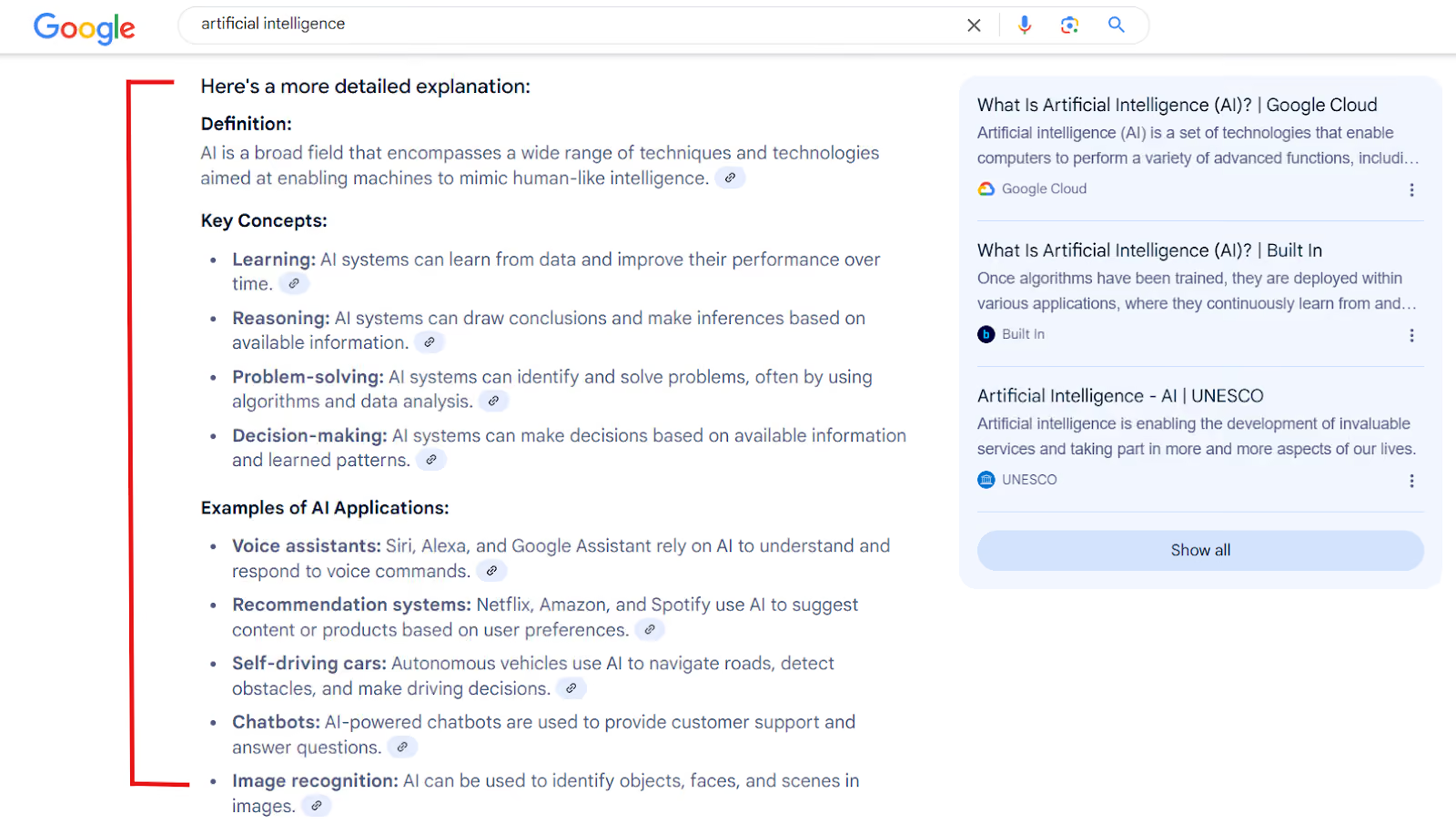
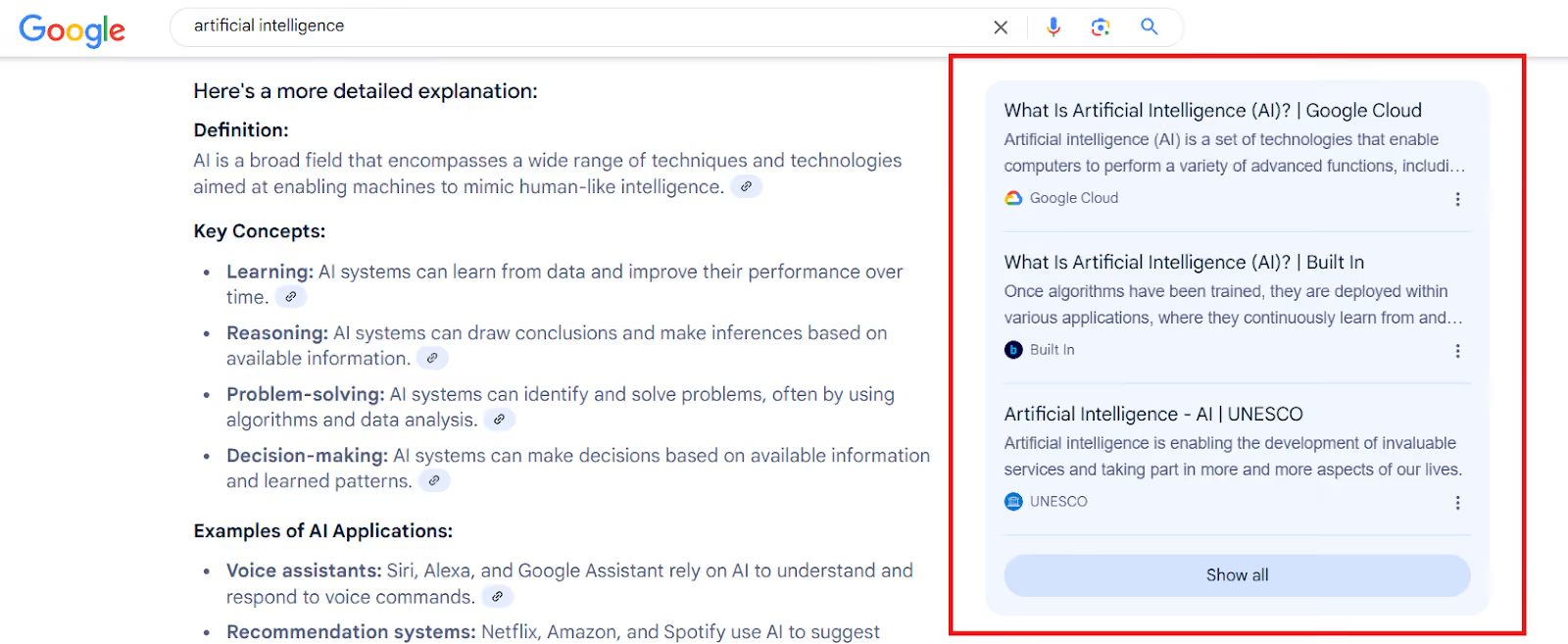
Source Attribution
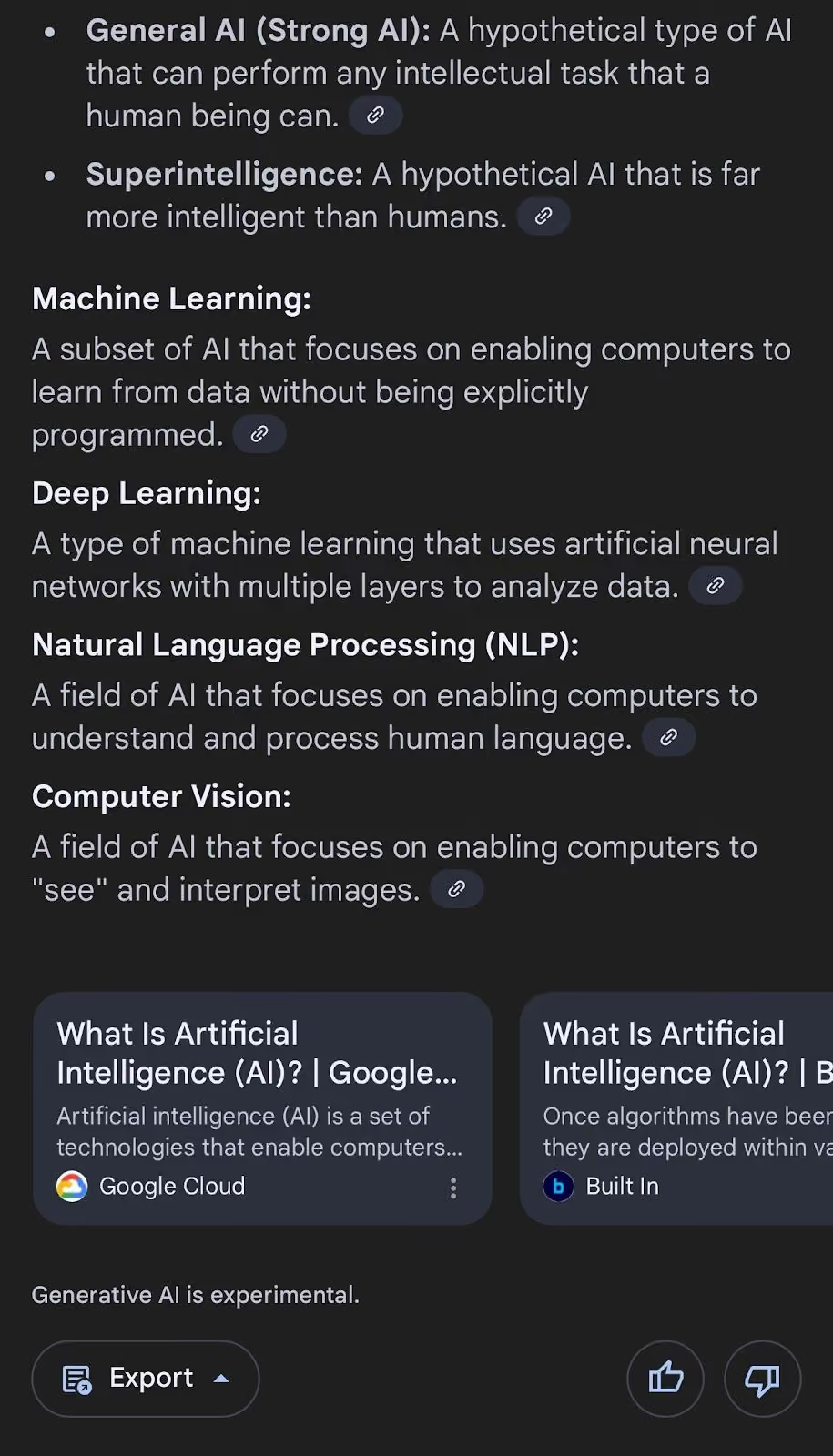
AI Overviews cite sources on desktop (right-hand side) and mobile (expandable sections). Those citation chips are the new click - they drive the 35% CTR lift cited pages see, and the 61% CTR drop non-cited pages absorb.
How Do AI Overviews Affect SEO?
Visibility and Traffic Redistribution
The best independent data we have is from Pew Research's study of 900 US adults and 68,879 Google searches. When an AI summary appeared, users clicked a traditional result 8% of the time, versus 15% without a summary - a 46.7% relative CTR decline.
A Conductor analysis of the same shift found some pages lost up to 60% of their traffic once AI Overviews entered the SERP. Across our portfolio of 100+ B2B SaaS brands, the pages that recovered were always the ones cited inside the AI Overview.
What Is the New CTR Reality?
AI Overviews do not kill traffic - they redistribute it. Dataslayer's aggregate analysis puts the organic CTR drop at 61% for queries with an AI Overview, but pages cited inside the overview see a 35% CTR lift versus their pre-AIO baseline.
Agency Data Insight
"For one of our B2B SaaS clients, we tracked a single BOFU comparison page from zero AIO citations to 14 in 90 days. Over the same window, organic sessions held flat, but cited-session conversion rate was roughly 2.1x higher than uncited sessions."
Takeaway: the citation is a trust badge that converts, even when raw clicks compress.
Steps to Rank in AI Overviews
Step #1: Align Content With AI Search Algorithms
Focus on meaning over keyword matching:
- Answer questions clearly: Provide direct responses rather than verbose explanations.
- Focus on user intent: Align content with actual user needs.
- Use conversational tone: Mimic natural human speech patterns.
- Optimize for question-based searches: Address common queries directly.
Recommended research tools include AnswerThePublic, AlsoAsked, SEMrush, and Slate for tracking which prompts pull you into AI answers. Query fanout is the new keyword research - one head term spawns ten to fifteen long-tails that AI Overviews treat as separate queries.
Optimize for voice search:
- Use natural phrasing and contractions.
- Keep sentences short and direct.
- Answer conversationally.
Step #2: Optimize Titles and Meta Descriptions for Direct Answers
- Use question-based titles aligned with AI Overviews and user intent.
- Front-load key answers within the first 50-60 characters.
- Write meta descriptions that summarize responses clearly.
- Include the target entity (your brand, product, category) in the first 10 words so Gemini has a clean citation handle.
Step #3: Implement a "Google-Friendly" Summary
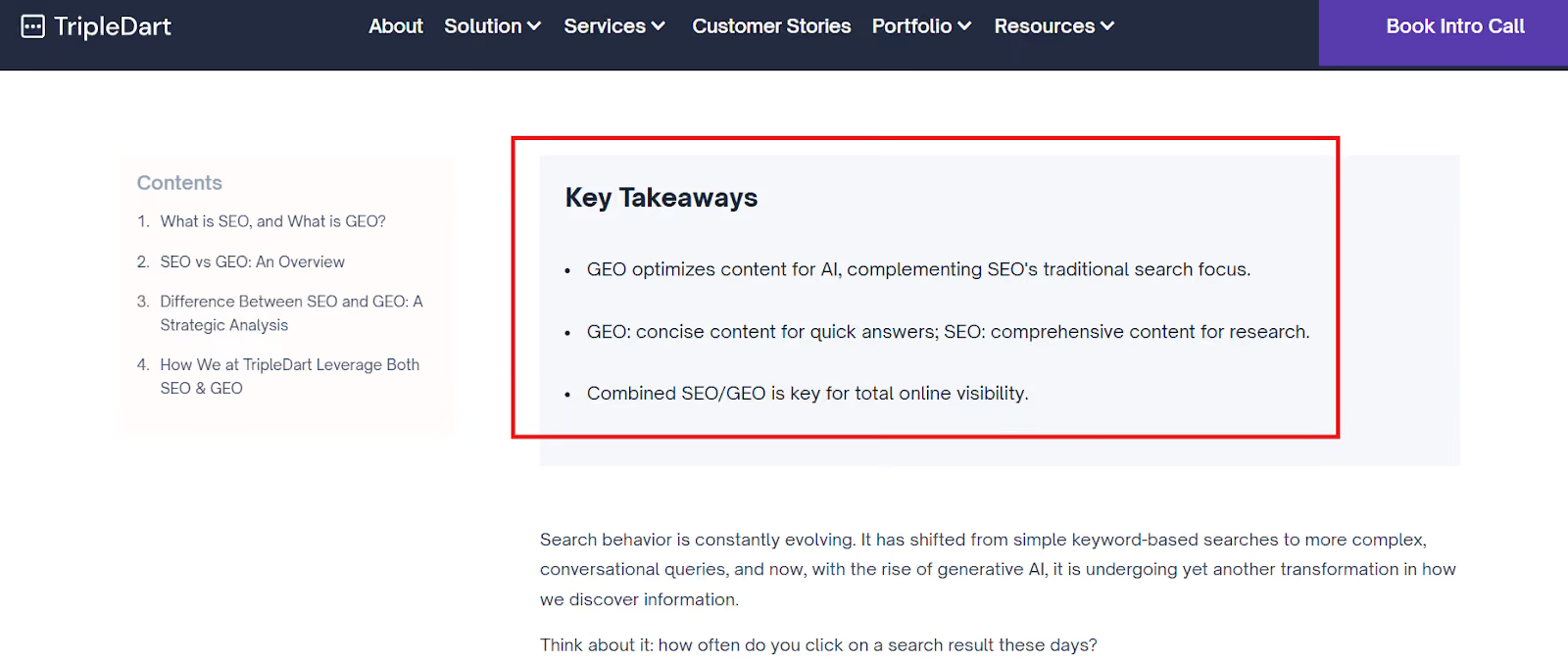
Add a Key Takeaways or TL;DR block directly under the H1. This block is the single highest-leverage change most SaaS blogs can make. Gemini treats it as the canonical summary of the page and routinely pulls the exact phrasing into the AI Overview.
Step #4: Leverage Semantic SEO and Structured Data
Use Schema Markup:
- FAQ schema for question-based queries.
- HowTo schema for step-by-step guides.
- Speakable schema for voice search optimization.
- VideoObject schema for embedded explainers - pages combining text, images, video, and structured data see up to 317% more AI citations per Ahrefs' 2025 analysis.
Optimize for Related Terms:
- Cover synonyms and keyword variations.
- Use long-tail keywords aligned with AI contextual understanding.
- Build internal topical authority so Gemini sees you as a cluster expert, not a one-page wonder.
Step #5: Strengthen E-E-A-T Signals
Sources frequently cited in AI Overviews include YouTube, Reddit, LinkedIn, Wikipedia, Healthline, Forbes, and industry publishers.
Strengthen E-E-A-T through:
- Credentialed authors with real byline + bio + LinkedIn profile.
- Cited authoritative sources - every stat links to a named third-party study.
- Trust signals such as awards, SOC 2, ISO, G2 badges, press mentions.
- Brand authority across LinkedIn, YouTube, Reddit, and Wikipedia - the off-page consensus layer.
Agency Data Insight
"Across roughly 40 B2B SaaS workspaces we monitor, pages written by a named subject-matter expert with a linked bio picked up 1.7x more AI Overview citations in the 90 days after publish than pages published under a generic 'team' byline, even when the body copy was equivalent."
Takeaway: the author bio is ranking content, not housekeeping.
Step #6: Use Data and Statistics to Boost Authority
Gemini cross-references claims against ground-truth sources before citing a page. If your stat contradicts Wikipedia, a government site, or an established study, it gets filtered out.
- Include data from reliable sources published in the last 18-24 months.
- Link every stat to the primary source, not a secondary roundup.
- Format statistics clearly: "72% of B2B SaaS marketers say content personalization increases engagement" with a linked source.
- Use structured lists or tables for data presentation.
Step #7: Optimize Content for Passage Indexing
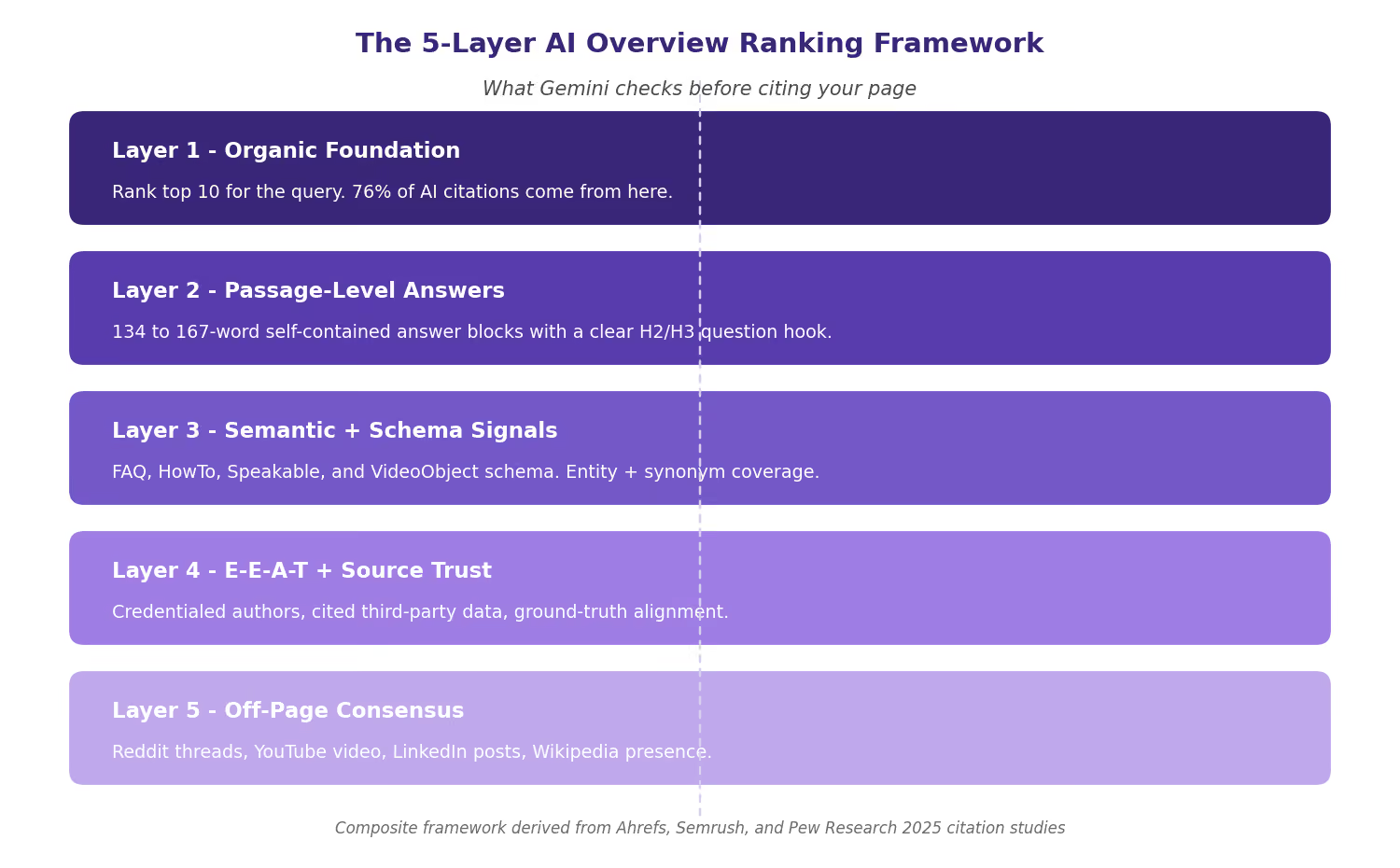
Gemini extracts 134 to 167-word self-contained passages, not whole pages. Break the article so every passage stands alone.
- Use H2/H3 headers as standalone questions: "How Does CRM Software Improve Customer Retention?".
- Start every section with a direct 2-3 sentence capsule before expanding details.
- Break content into 200-300 word blocks that answer one sub-question each.
- Use bullet points and lists for structured formatting.
- Keep one idea per passage - never bury the answer under a preamble.
Step #8: Optimize Visuals for AI Indexing
- Descriptive alt-text: Informative descriptions that explain image content.
- VideoObject schema for video content.
- Keyword-rich filenames: how-to-rank-ai-overviews-chart.png, not img-1.png.
- Compress images: Use TinyPNG or Squoosh to keep Core Web Vitals clean.
- Captions and context: Place visuals near the text they illustrate.
Step #9: Secure Mentions in AI-Priority Sources
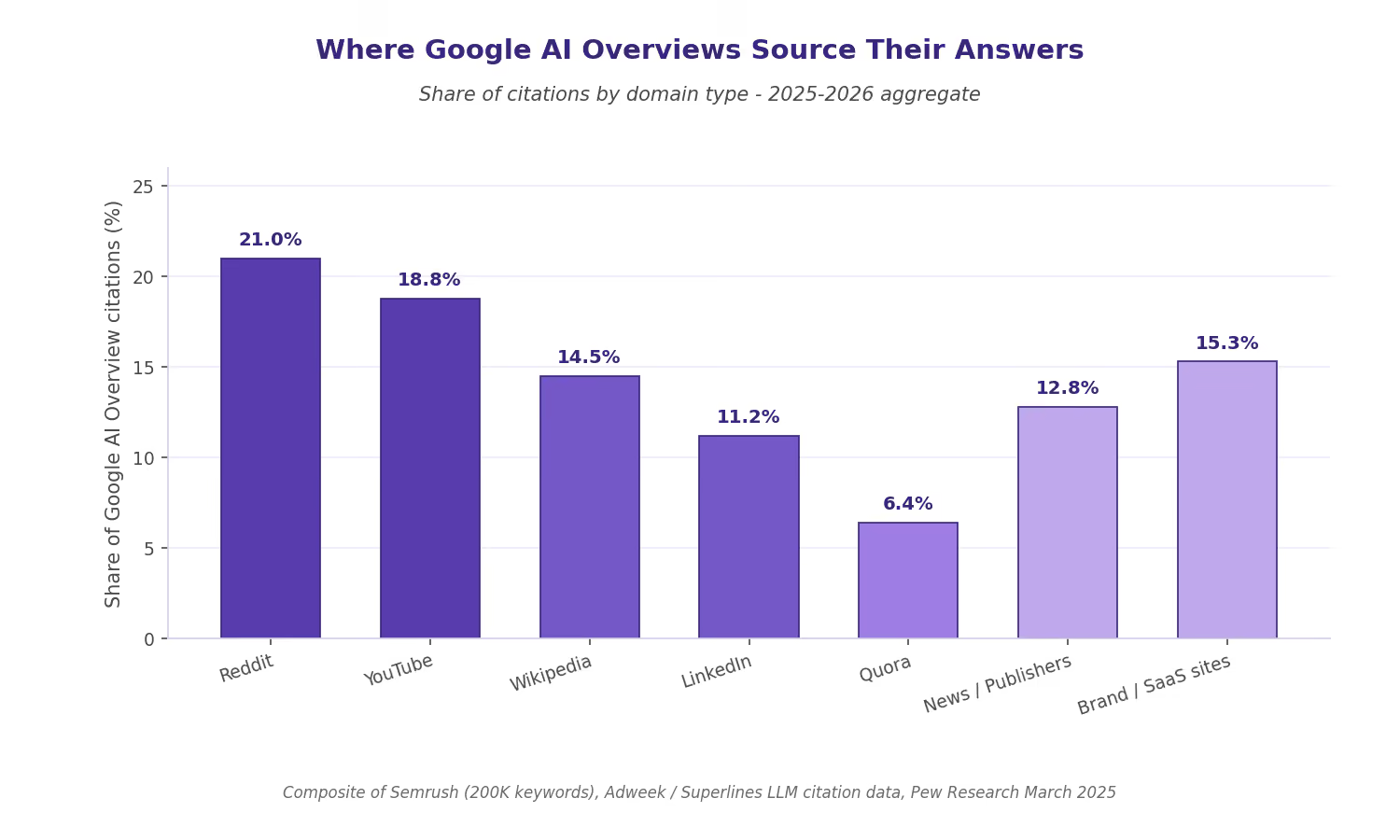
Our own data and the Adweek / Superlines LLM citation study show Reddit and YouTube are the two most-cited domains inside Google AI Overviews. An AI-ready brand plan needs to treat them as publishing surfaces, not afterthoughts.
- Get featured on Wikipedia: Contribute well-researched citations.
- Earn industry report mentions from Gartner, Forrester, and McKinsey.
- Secure press coverage: Engage with high-authority trade outlets.
- Leverage guest posting: Write for industry-leading platforms.
- Show up on Reddit and YouTube: Authentic long-form answers on the subreddits your ICP reads, and a tight YouTube channel with transcripts, will cover the Layer 5 consensus slot.
- Repurpose content on LinkedIn, Medium, and Substack.
Step #10: Monitor and Adapt to AI Trends
- Follow SEO news sources and Google updates.
- Use Google Search Console, SEMrush, and Ahrefs for tracking.
- Monitor AI Overview appearances weekly.
- Test different passage formats - tables, bulleted lists, numbered steps, definition blocks.
- Adjust strategies based on which passage types win citations for your category, not generic best practice.
Where Do AI Overviews Source Their Answers?
Google AI Overviews pull most heavily from Reddit, YouTube, Wikipedia, brand-owned blogs, and LinkedIn - in roughly that order across Semrush, Adweek, and our own portfolio observations. The single biggest mistake SaaS brands make is treating their blog as the entire strategy.
Reddit in particular is carrying disproportionate weight. Google's Reddit licensing deal has pushed threaded answers into 21% of Google AI Overview citations, per the SearchEngineLand analysis.
A Sitebulb visibility guide captures the shift bluntly: "Reddit is no longer just a nerd forum - it is an AI visibility lever."
Portfolio Benchmark
"Across our B2B SaaS portfolio, the AI Overviews picking up our client pages almost always also cite a Reddit thread or a YouTube video on the same question. Brands with zero off-Google presence rarely break into the citation set, even when they rank #1 organically."
Takeaway: winning AI Overviews is a three-surface play - blog, Reddit, YouTube.
How to Track and Measure Your AI Overview Visibility
Set Up AI Overview Tracking Systems
- Manual SERP monitoring: Weekly incognito checks on your top 30 priority queries.
- Screenshot documentation: Visual records of AI Overview appearances.
- Traffic pattern analysis: Correlate AI Overview rollouts with Search Console CTR shifts.
- Specialized tools: Ahrefs' AI Overview tracker, Semrush Sensor, and SISTRIX for market-level signals.
Key Metrics to Monitor
Implement a Feedback Loop
- Document baseline metrics before optimization.
- Track changes bi-weekly after implementing strategies.
- Compare performance across content types.
- Identify patterns in frequently cited formats.
- Refine approach based on real-world data, not opinion.
Real-World Examples and Case Studies
Meegle's LLM Content Architecture Transformation
Strategic approach for this project management SaaS:
- Rebuilt blog layouts for LLM parsing with clear hierarchies.
- Concentrated expertise on two core topics with deep coverage.
- Resolved site health issues (50 to 95) and eliminated keyword cannibalization.
Results: 134% increase in AI citations, 1,429% growth in blog traffic, and expanded from virtually no AI visibility to consistent appearances across Gemini and ChatGPT.
Case Study: Meegle
"Once the architecture work landed, every new blog post was AI-Overview-ready on day one - no retrofits required."
Read the Meegle case study
Signeasy's Existing Asset Optimization for AI Discovery
Strategic approach for this eSignature SaaS leader:
- Optimized 30 existing high-traffic pages with conversational Q&A formats.
- Created a comprehensive LLM.txt file to control crawler access.
- Built systematic online mentions through Reddit and forum engagement.
Results: 3,650% increase in LLM traffic (20 to 800 monthly sessions), expanded AI visibility from 3 to 55+ pages, and generated 98 qualified leads from AI platforms in the first two quarters.
Case Study: Signeasy
"The conversational Q&A rewrite flipped pages from 'mentioned once' to 'cited in every related AI Overview'."
Read the Signeasy case study
How TripleDart Helps You Dominate AI Overviews
Ranking in AI Overviews is essential for maintaining search visibility and driving pipeline. From answer engine optimization to E-E-A-T signal work, every detail compounds.
At TripleDart, a full-service, enterprise-capable B2B SaaS marketing agency, we help brands across the full SaaS lifecycle - bootstrapped founders through publicly traded enterprise SaaS - stay ahead with expert-driven content strategies tailored for AI-driven search. Our playbook covers the five citation layers: organic foundation, passage-level rewrites, schema, E-E-A-T, and off-page Reddit + YouTube consensus.
With AI-friendly structuring, data-backed optimization, and a repeatable AI citation engine, we position your brand for the AI-first SERP.
Want to secure your spot in AI Overviews and drive compounding pipeline? Book a strategy call.
Need Help With AI SEO?
Let TripleDart's team boost your rankings with AI-driven optimization and intelligent workflows.
Book a Call
Frequently Asked Questions
What Is Google Gemini?
Google Gemini is the multimodal AI model powering AI Overviews. It processes text, images, code, and audio simultaneously, which is why content quality, entity clarity, and multi-format coverage (text + image + video + schema) matter more than keyword density for citation.
Can AI Overviews Affect My SEO Results?
Yes, significantly. Non-cited pages lose up to 61% of their clicks on AIO-triggered queries, while cited pages see a 35% CTR lift per Dataslayer's aggregate data. The net effect is a barbell - your winners win harder, your losers disappear.
Which Funnel Stage Do AI Overviews Target?
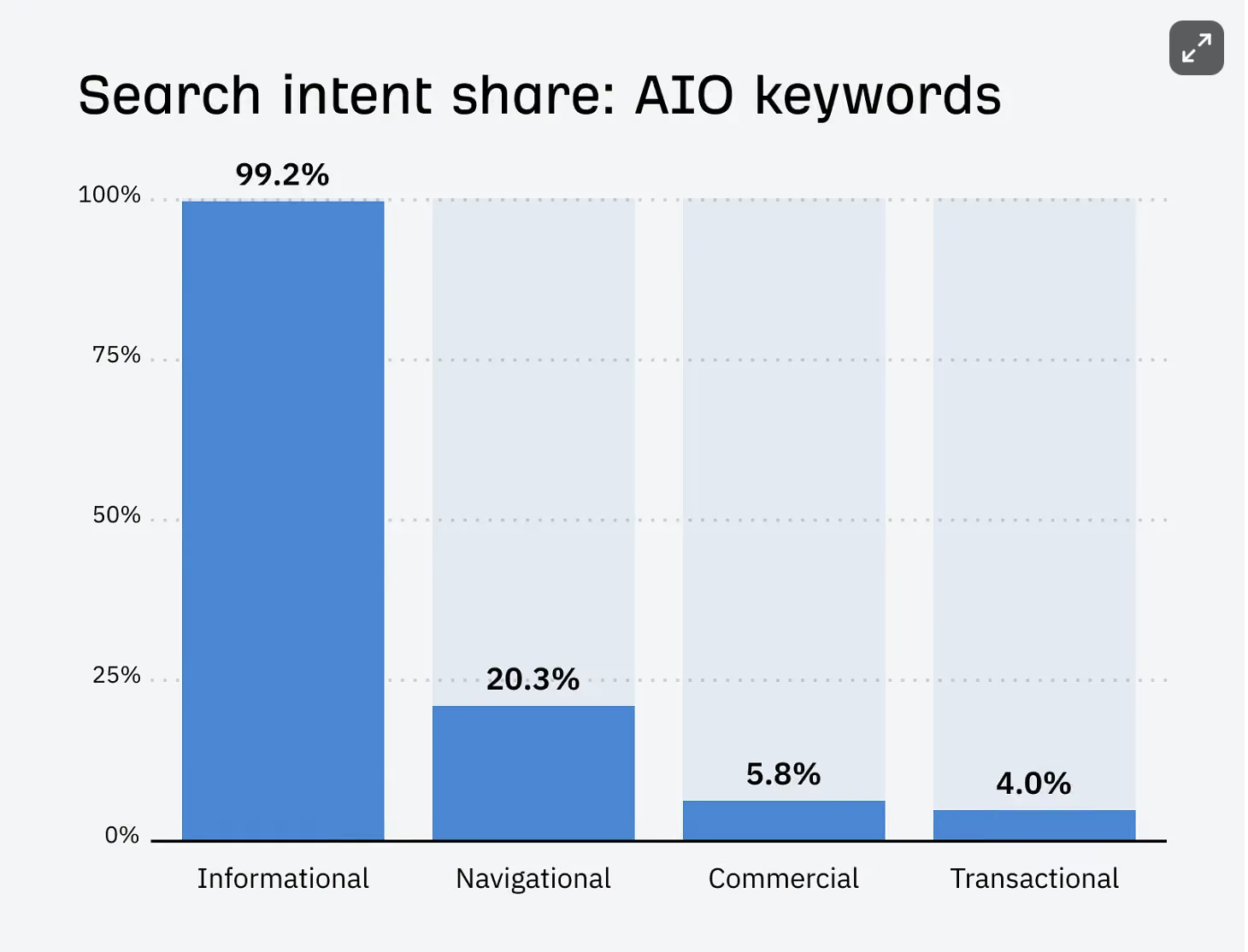
AI Overviews primarily target top and middle-funnel queries - informational and consideration-stage questions. They are most common for "how to" and "what is" searches. Bottom-funnel transactional queries typically display traditional results, which is why BOFU listicles and alternatives pages still convert from the ten blue links.
How Often Do AI Overviews Appear?
Per Semrush's 200,000-keyword study, AI Overviews appeared on roughly 15.69% of SERPs in late 2025 after peaking near 25% in July. Coverage skews heavily to informational intent (57.1% of informational queries vs 13.94% of transactional).
What Is the Median Length of an AI Overview?
Semrush's 2025 analysis puts the median AI Overview at 119 words on desktop and 91 words on mobile, with an average of 11 cited links. Your passage-level answer blocks should be in the same 120 to 170-word band to map cleanly onto what Gemini actually outputs.
How Do I Prevent My Content From Being Cited?
Implement max-snippet:0 in robots.txt or as a meta tag. However, this also prevents traditional featured snippets, which means you are choosing between zero visibility and cited visibility. We have yet to see a B2B SaaS brand benefit from opting out.
Will AI Overviews Go Away?
No. AI Overviews represent a permanent shift in search. Google's Gemini investment, the Reddit licensing deal, and the Pew behavioral data all point the same direction. Businesses should adapt the playbook, not wait for the feature to disappear.
How Does TripleDart Help With Ranking In AI Overviews?
We run the end-to-end AI Overview engine for B2B SaaS brands: content audits, passage-level rewrites, schema deployment, E-E-A-T signal work, Reddit and YouTube consensus building, and weekly citation tracking. For a walkthrough of how we would apply this to your category, our SaaS SEO services page covers the engagement model.