Walk into any SaaS marketing org with a year-old SEO program and you'll probably see the same chart every time: 200-plus posts published, decent writing, sane keyword research, nothing breaking past position 18.
We’ve noticed that the bottleneck is architectural many times.
Hub and spoke SEO is often the architecture that breaks the plateau.
We've built this model with 100+ B2B SaaS companies: it turns scattered publishing into visibility that builds, on Google and inside AI answer engines.
Below, you’ll see the framework, our 7-step build, the failure modes that recur, and the resource math behind running it.
What is Hub and Spoke SEO?
Hub and spoke SEO is a content architecture where one broad hub page links to a cluster of narrower spoke pages on related sub-topics. The hub anchors topical authority. The spokes carry depth.
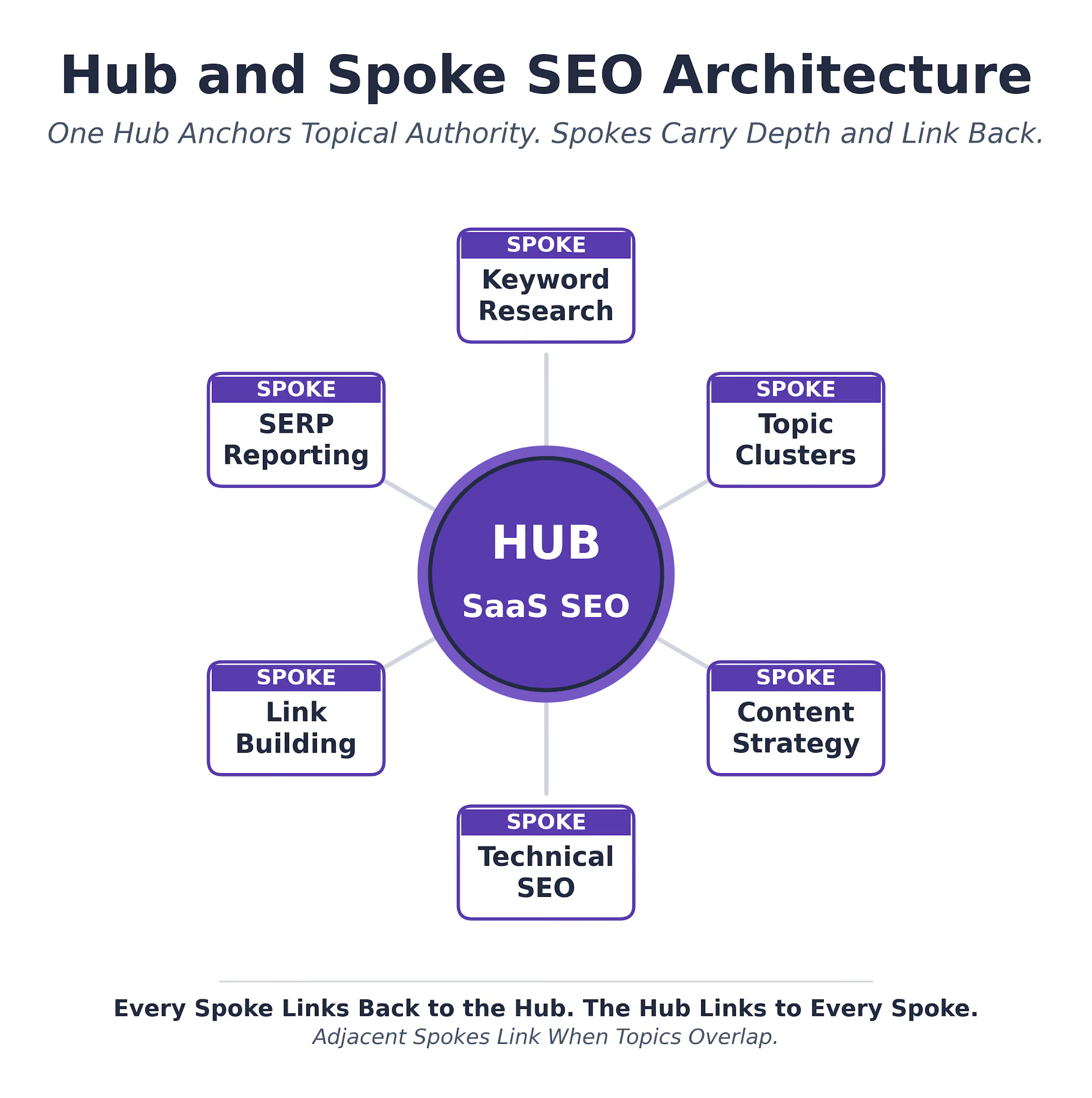
A pillar page is the type of page that usually sits at the center of a hub. The terms get used interchangeably across the industry, which adds confusion every time a team plans a content program.
Search Engine Journal's framing, for example, calls the model "hub and spoke content marketing", which shows how loose the terminology has become.
Hub and spoke is the linking architecture inside the broader idea of topic clustering. Topic clustering itself is the principle that content earns visibility through topical coverage.
The table below clears things up:
We default to this architecture for almost every SaaS SEO engagement we run.
For the longer build of how this fits a full SaaS SEO program, our topic clusters guide sits as the parent piece this article slots into.
Why Hub and Spoke Works in the AI Search Era
Hub and spoke, in fact, earns more pull in the AI search era than it did for traditional SEO. AI engines parse sites at the topic level and reward sites that show topical depth across linked pages.
The architecture that signals depth to Google signals it 10 times more clearly to ChatGPT, Perplexity, and Google AI Overviews.
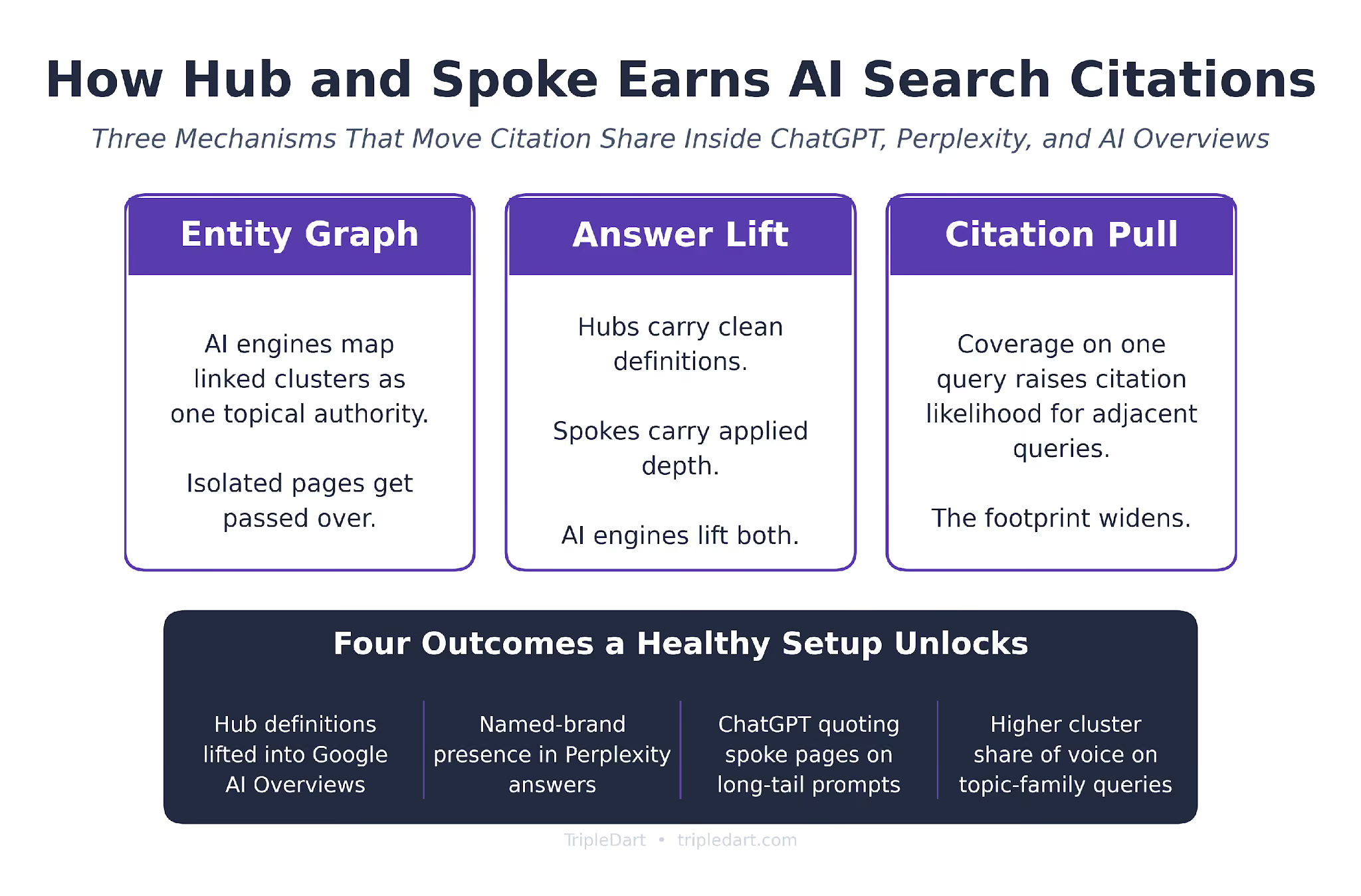
Why does this mapping hold? It comes down to how AI engines parse sites:
- AI engines build site-wide entity graphs and treat clusters of linked pages on a topic as one topical authority. They pass over a page in isolation, even when the content is strong. Hub and spoke creates the entity shape these engines reward.
- Answer-shaped extraction is the second mechanism. AI engines lift it from sites they treat as topical experts.
- Hub pages carry clean definitional content; spokes carry applied depth. The pairing produces both the high-level lift and the deeper lift from the same site.
- Citation magnetism does the rest. Brands cited for one query inside a topic family get more cited for adjacent queries.
A healthy hub and spoke setup creates the conditions for this magnetism. The citation footprint widens over time.
What TripleDart Citation Data Shows
The recurring root cause of weak Perplexity and AI Overview citation is a fragmented architecture. Hub-and-spoke restructures move citation share within 90 days even when the body copy stays largely the same.
A clean hub and spoke setup delivers four specific outcomes inside AI engines:
- Direct lift from hub-page definitions into Google AI Overviews.
- Named-brand presence in Perplexity answers across the topic family.
- ChatGPT quoting from spoke pages on long-tail prompts.
- Higher share of voice on topic-family queries, measured at the cluster level.
For the deeper view on how topical authority gets built through this kind of architecture, our topical authority guide is the next read.
When Hub and Spoke Works for SaaS (And When It Doesn't)
Hub and spoke pays off only when the operational conditions support it.
The architecture takes 12 to 18 months to mature, which means it works for SaaS teams that publish consistently and run the model with discipline.
Across the SaaS programs we run, teams that earn strong returns from the model share four traits:
- Publishing 6 to 8 pieces of content per month
- A 12 to 18 month runway for the architecture to mature
- A buyer journey with clear sub-topics worth owning
- A domain that's reached baseline authority
Hub and spoke pays off in roughly 70 to 80 percent of cases from SaaS brands we’ve audited.
The remaining 20 to 30 percent need a different sequence: foundation work, technical SEO repairs, or content velocity ramps before the architecture earns its keep.
That’s great winning odds!
Don’t go for hub and spoke in these cases:
- Very early-stage startups without a publishing cadence can't feed the model.
- Low-search-volume verticals produce hubs with no traffic to build on.
- Brand-new domains under 6 months old need to earn baseline crawl budget first.
- Single-feature products lack the sub-topic depth that spokes require.
If the basics still need work, our saas seo challenges piece covers the foundations to address first.
How We Build Hub and Spoke for SaaS Clients
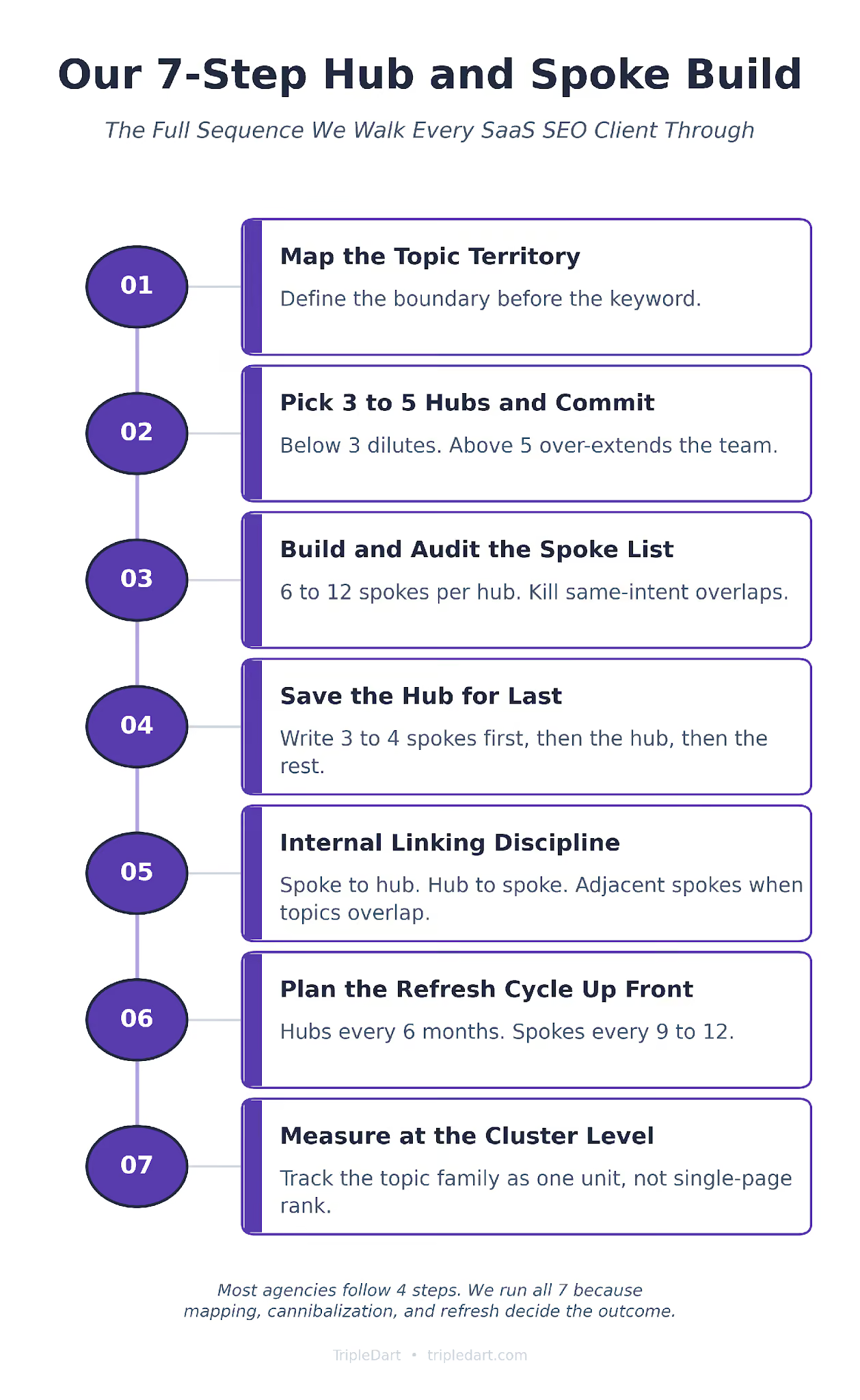
Most agencies follow a 4-step process and skip the 3 steps that move the program: topic mapping, cannibalization audit, and refresh planning. The full sequence below is the build we walk every SaaS SEO client through in the first quarter.
Start With Topic Mapping, Then Pick the Keyword
Hub-and-spoke failures start at the keyword research stage when the team picks the hub keyword before mapping the topic territory. We define the topic boundary first. Then we pick the hub keyword as the highest-yield entry point.
When we kick off a SaaS SEO engagement, the first working session is a topic-mapping workshop. Four questions drive the map:
- What's the buyer searching across this topic family?
- What adjacent searches signal the same intent but use different phrasing?
- Where does the topic overlap with other hubs we run?
- Where's the clean opportunity competitors haven't mapped?
Pick 3 to 5 Hubs and Commit
Hub count is a discipline question. The working range is 3 to 5 hubs per SaaS site.
Below 3, the architecture doesn't differentiate the brand topically. Above 5, the team can't service all hubs with the content cadence needed.
The working count generally lands at 3 to 4 hubs per site, and that aligns with what we see across the SaaS programs we've run.
Our own site runs 4 hubs: SaaS SEO, SaaS PPC, B2B Marketing, and SaaS Marketing. Each one carries enough spokes to demonstrate topical depth without spreading the team thin.
Build the Spoke List With Cannibalization in Mind
6 to 12 spokes per hub is the working range for SaaS. Below 6, the architecture reads as thin to search engines and AI engines. Above 12, spokes start competing for the same query intent and cannibalize each other.
The cannibalization audit is the step most teams skip. You need to pull every candidate spoke keyword, group by primary search intent, and kill duplicates where two spokes target the same intent. Four signals flag a cannibalization risk:
- Two candidate spokes target the same SERP intent (informational, commercial, transactional)
- Two candidates carry overlapping primary keywords with under 30 percent lexical difference
- The same People Also Ask questions appear across both candidates
- Both candidates would link to the same hub for the same reason
Skip this step and the program produces spokes that fight each other for ranking 6 months later.
Save the Hub for Last
The counterintuitive call is to build 3 to 4 foundational spokes first, then write the hub, then build the rest of the spokes.
It's one of our hard rules at TripleDart. The spokes-first sequence produces a hub that earns ranking faster, because it can reference spoke content with weight behind it.
Internal Linking Discipline
The linking architecture runs on three operational rules:
- Every spoke links to the hub with a descriptive 2-4 word anchor.
- The hub links to every spoke from the body, never only from a sidebar.
- Adjacent spokes link to each other when topics genuinely overlap, with a clear contextual reason.
Link equity flows in both directions. The hub gains authority from each spoke's backlinks; the spokes gain authority from the hub's overall traffic profile.
Botify's page-rank distribution research explains the mechanic in more depth.
What Our Internal-Linking Audits Show
Internal linking atrophies faster than teams realize. Across accounts we run, roughly half of all internal links present at launch are stale or broken within 12 months. The usual cause: new spokes published without back-linking to existing siblings.
Plan the Refresh Cycle Before Publishing
Hub and spoke content doesn't survive without a refresh cycle. SaaS teams that publish 25 pages and walk away see topic-level traffic plateau within 9 to 12 months. Content decay catches up with even strong launches.
The working cadence is hubs every 6 months, spokes every 9 to 12 months, and a full topical refresh every 18 months. The ranges hold across the SaaS programs we manage.
Measure Topical Authority at the Cluster Level
The measurement system has to change with the architecture. Tracking individual spoke rankings misses the point of building a cluster. We track the topic family as a unit and report on cluster-level metrics that show whether the architecture is paying back.
The metric set we use for SaaS SEO clients:
- Total ranked keywords across the cluster
- Average position across the cluster
- Share of voice on the topic family inside Google SERPs
- Citation share on the topic family inside Perplexity, ChatGPT, and Google AI Overviews
- Combined organic traffic across all spokes plus the hub
- Hub-level position for the head term
If the current SEO report still leads with individual page rankings, it undersells the architecture. The cumulative value of hub and spoke sits at the cluster level, which is why our saas seo strategy playbook leads with cluster-level dashboards.
A Working SaaS Example: Our Own Architecture
The SaaS SEO hub on our site is a working example. The hub at /saas-seo introduces the topic and links to 9 spokes (Strategy, What It Is, Guide, Keyword Research, Topic Clusters, Build Topical Authority, Challenges, Case Studies, and others). Each spoke pulls cluster traffic back to the hub through a parent-guide link. The architecture predates this article and validates the model in production.
For deeper SaaS-specific wins from hub-and-spoke rollouts we've run, see our saas seo case studies page.
The 5 Ways Teams Break the Hub and Spoke Model
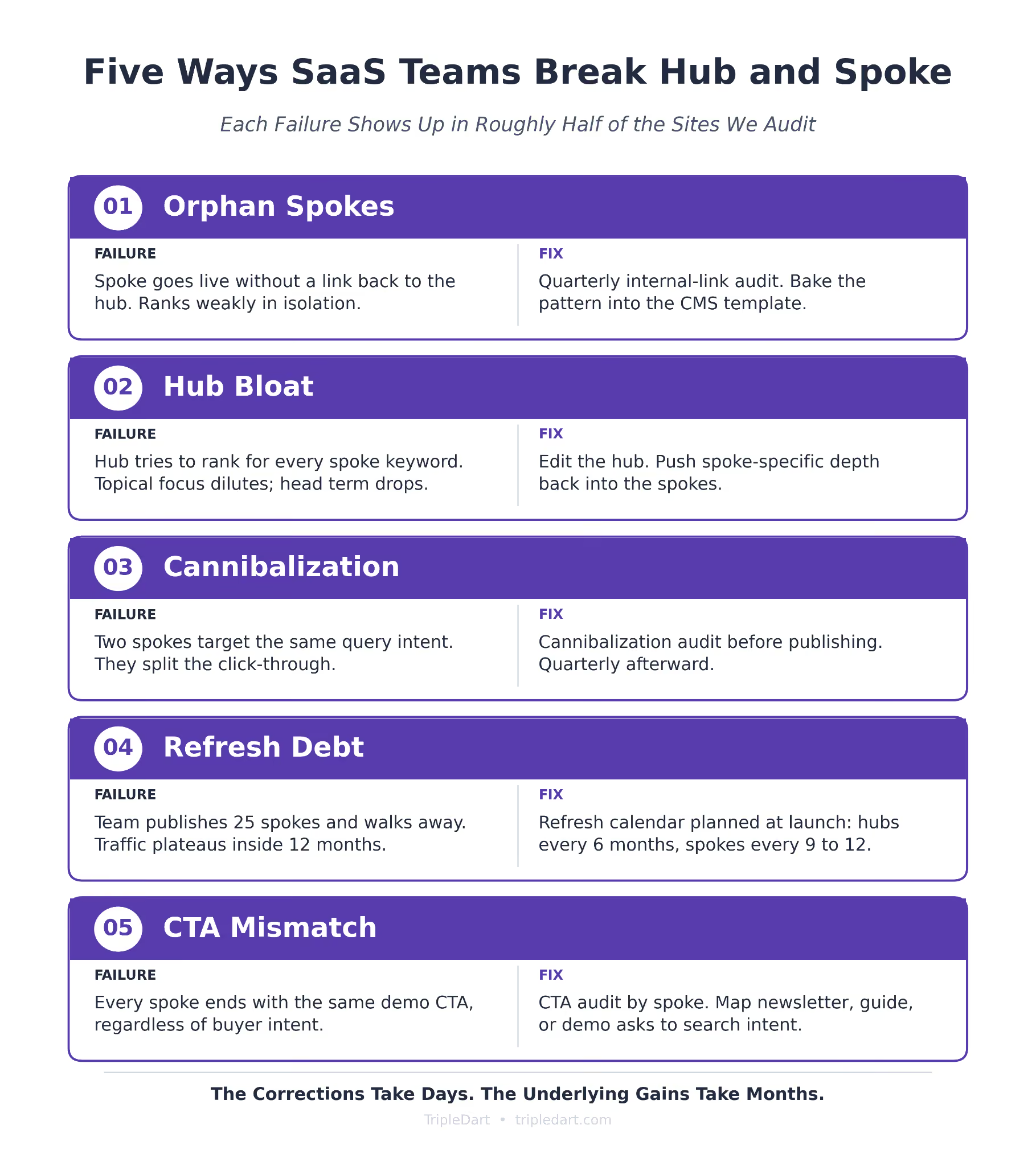
1. Orphan spokes: A spoke goes live without a link back to the hub because the writer forgot or the publishing template didn't enforce it. The spoke ranks weakly in isolation, and the hub gets no benefit from the topical signal. Run a quarterly internal-linking audit, with the linking pattern enforced inside the CMS template.
2. Hub bloat: The hub tries to rank for every spoke's keyword and balloons past 4,000 words. Topical focus dilutes; the hub stops ranking for the head term it was meant to own. Edit the hub: push spoke-specific depth back into the spokes.
3. Cannibalization between spokes: Two spokes target the same query intent, fight each other for position, and split the click-through. Run the cannibalization audit from Step 3 of the build, before publishing and then quarterly.
4. Refresh debt: The team publishes 25 spokes and walks away. 12 months later, organic traffic across the cluster plateaus because content decay catches up.
Plan the refresh calendar at launch: hubs every 6 months, spokes every 9 to 12. Our saas seo guide walks the refresh discipline in detail.
5. CTA mismatch: Every spoke ends with the same generic book-a-demo CTA, instead of CTAs mapped to the spoke-level buyer intent. Top-of-funnel spokes need newsletter or guide-download CTAs; bottom-of-funnel spokes earn the demo ask. Run a spoke-by-spoke CTA audit tied to search intent.
What It Takes to Run Hub and Spoke
The honest version of the resourcing question: hub and spoke pays back over 12 to 18 months and requires a publishing cadence the team can sustain.This is a year-long program, not a quarter.
The working numbers we see across SaaS clients sit in a tight range. The table below captures the realistic ranges for a SaaS site building from scratch.
The build-versus-buy question is where most Heads of SEO land. In-house works if the team already has SaaS-experienced SEO leadership, an editorial bench, and the patience to ride the 12 to 18 month curve. Agency works when speed, benchmark exposure across multiple SaaS programs, and execution capacity carry more weight than headcount.
Putting Hub and Spoke Into Practice
Hub and spoke SEO is the architecture SaaS teams need now more than ever, because both Google and AI engines reward topical depth over page-level tactics. The model takes 12 to 18 months to pay back, and the discipline is operational.
Teams that build the architecture and stay with it own their topic families inside 3 to 4 content cycles. The organic engine that comes out the other side becomes a primary pipeline source by the end of year 2.
We run hub and spoke SEO as a managed program for SaaS companies that want to put the architecture in place without slowing down to hire the team behind it. Across 100+ B2B SaaS engagements, the same set of decisions surfaces, and the same cadence carries the model through. Book a strategy call to put the model into motion for your category.
Frequently Asked Questions
What's the difference between hub and spoke SEO and pillar pages?
A pillar page is a page type. Hub and spoke is the content architecture that connects multiple pages through linking. The pillar page usually sits at the center of a hub-and-spoke structure as the hub itself, which is why the terms get used interchangeably.
How many hubs and spokes should a SaaS site have?
3 to 5 hubs per SaaS site, and 6 to 12 spokes per hub, is the working range for almost every B2B SaaS program. The constraint is content velocity, not topic breadth. Teams that try to run 7 or 8 hubs without the cadence to service them end up with thin coverage across all of them.
How long does hub and spoke SEO take to show results?
First meaningful traffic lift arrives in 3 to 4 months for spokes on lower-competition long-tail queries. Topic-level authority that ranks the hub itself takes 12 to 18 months. The architecture builds value over years, which is why the resource planning conversation comes before the writing starts.
Does hub and spoke SEO still work with Google AI Overviews and ChatGPT?
Yes, with more pull than for traditional SEO. AI engines parse sites at the topic level and reward clean topical clusters with citation share inside AI Overviews, Perplexity, and ChatGPT answers. The architecture creates citation magnetism, where coverage on one topic raises the likelihood of citation on adjacent topics.
Should I build hubs or spokes first?
Build 3 to 4 foundational spokes first, then the hub, then the rest of the spokes. The spokes-first sequence produces a hub that earns ranking faster, because it can reference spoke content with weight behind it.
How often should I refresh hub and spoke content?
Hubs every 6 months, spokes every 9 to 12 months, and a full topical refresh every 18 months. Refresh debt is the most common reason hub-and-spoke sites lose ground after year 1, because content decay catches up faster than teams expect.
Is hub and spoke SEO the same as topic clustering?
Hub and spoke is one specific implementation of topic clustering, focused on the linking architecture. Topic clustering is the broader principle of organizing content around topic families. Every hub-and-spoke setup is a topic cluster; some topic clusters get built without the strict hub-page-at-the-center wiring.