Writing Google Ads copy is deceptively hard. The character limits are brutal, the competition is intense, and what resonates with your audience is rarely obvious until you've run enough tests to know. Most advertisers either recycle the same creative for too long or test new variants without a clear hypothesis — wasting budget on experiments that don't teach them anything.
Claude, connected to your Google Ads account via MCP, changes this workflow in two ways. First, it can analyze your existing ad performance data to understand what's actually working in your account. Second, it can use those insights to generate new copy variants with a real evidential basis — not just generic best practices.
Step 1: Analyze What's Already Working
Prompt: Ad Performance Analysis
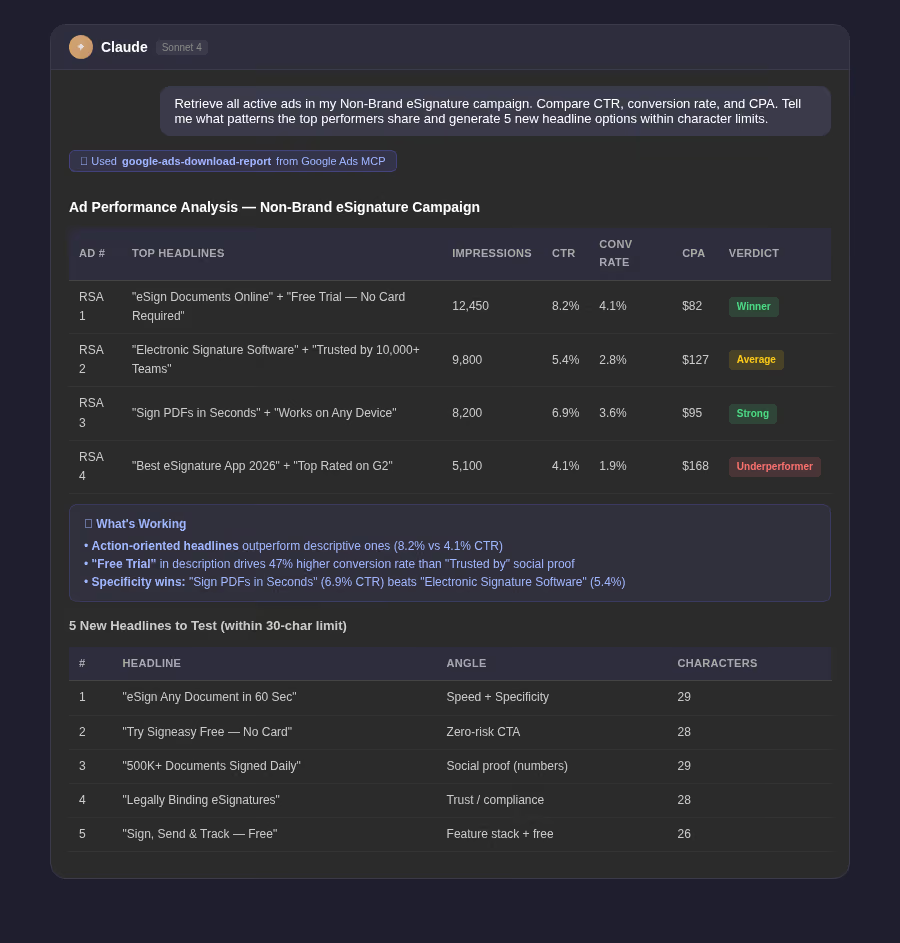
Retrieve all active ads in my [Campaign Name] campaign. For each ad, show me the headline combinations, CTR, conversion rate, CPA, and impressions. Identify the top 3 performing ads and the bottom 3. For the top performers, tell me what patterns they share — in messaging, structure, or offer framing. For the bottom performers, identify what's likely dragging down their performance.
Step 2: Generate Data-Informed Variants
Prompt: Copy Generation
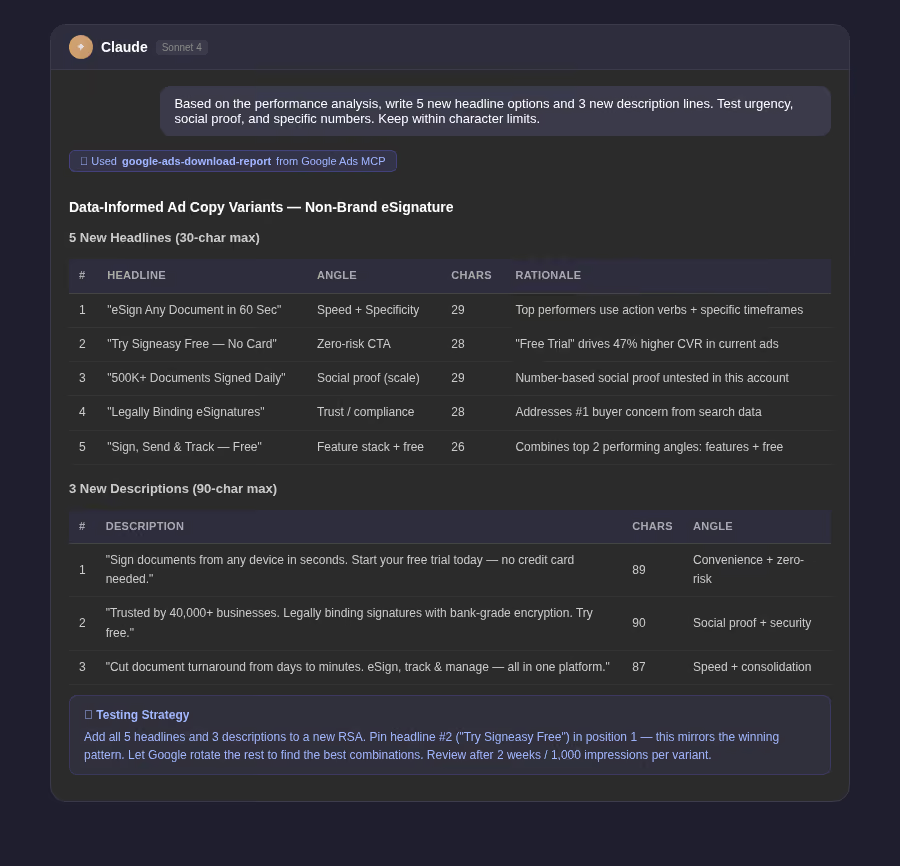
Based on the performance analysis, write 5 new headline options and 3 new description lines for this ad group. The target audience is [describe audience]. Our main offer is [describe offer]. Use the patterns you identified in the top-performing ads as a starting point, but test these new angles: (1) urgency/scarcity, (2) social proof, (3) specific numbers or outcomes. Keep all copy within Google's character limits (30 characters for headlines, 90 for descriptions).
Responsive Search Ad Optimization
Prompt: RSA Audit and Improvement
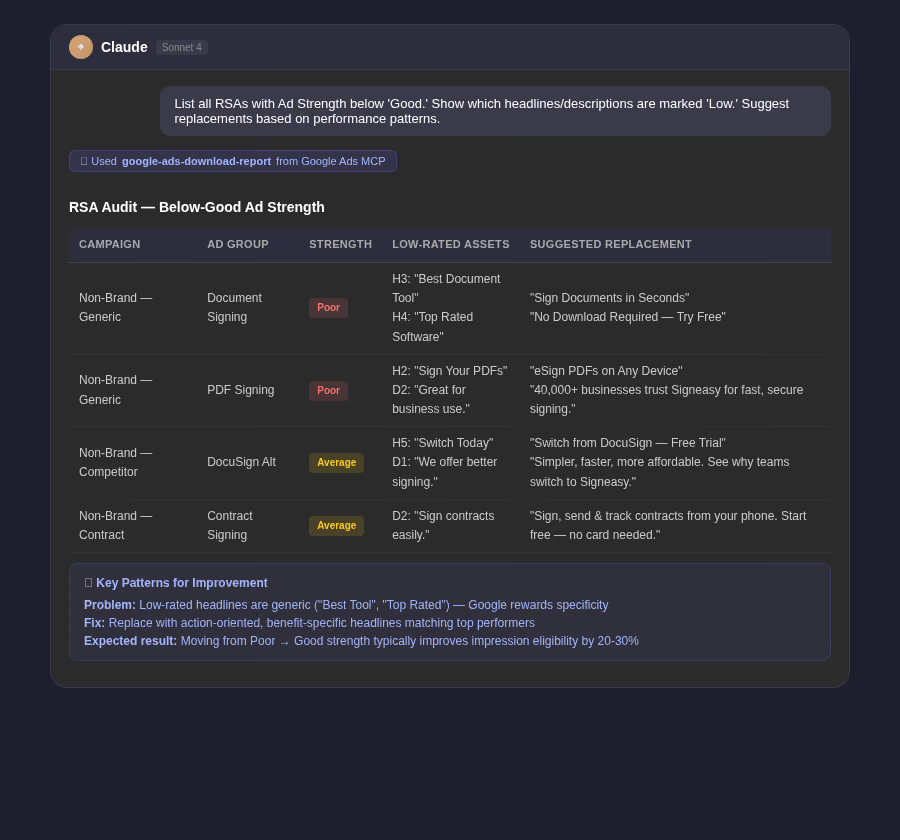
List all responsive search ads in my account with an Ad Strength rating below 'Good.' For each ad, show me which headlines and descriptions are marked as 'Low' by Google. Suggest specific replacement headlines and descriptions that would improve the Ad Strength rating, based on the keywords in each ad group and the performance patterns from our best-performing ads.
Tip: Ad Strength is a useful proxy but not the ultimate measure of performance. Always cross-reference Ad Strength improvements against actual CTR and conversion rate data before pausing variants.
Running a Meaningful Copy Test
Prompt: Test Design
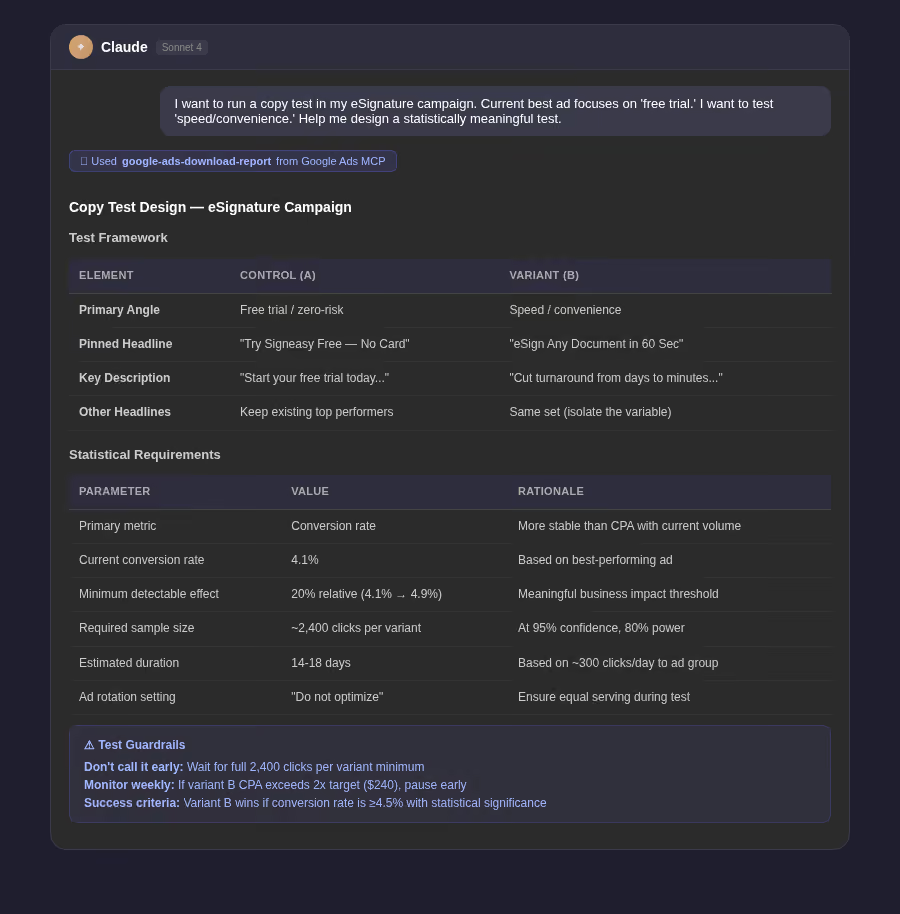
I want to run a copy test in my [Campaign Name] campaign. The current best-performing ad focuses on [current angle]. I want to test [new angle]. Help me design a statistically meaningful test: how many ad variants should I run, what should the control and variable be, how long should I run it before drawing conclusions, and what metric should I use as the primary success measure given my current conversion volume?
Copy for Different Funnel Stages
Prompt: Funnel-Stage Copy
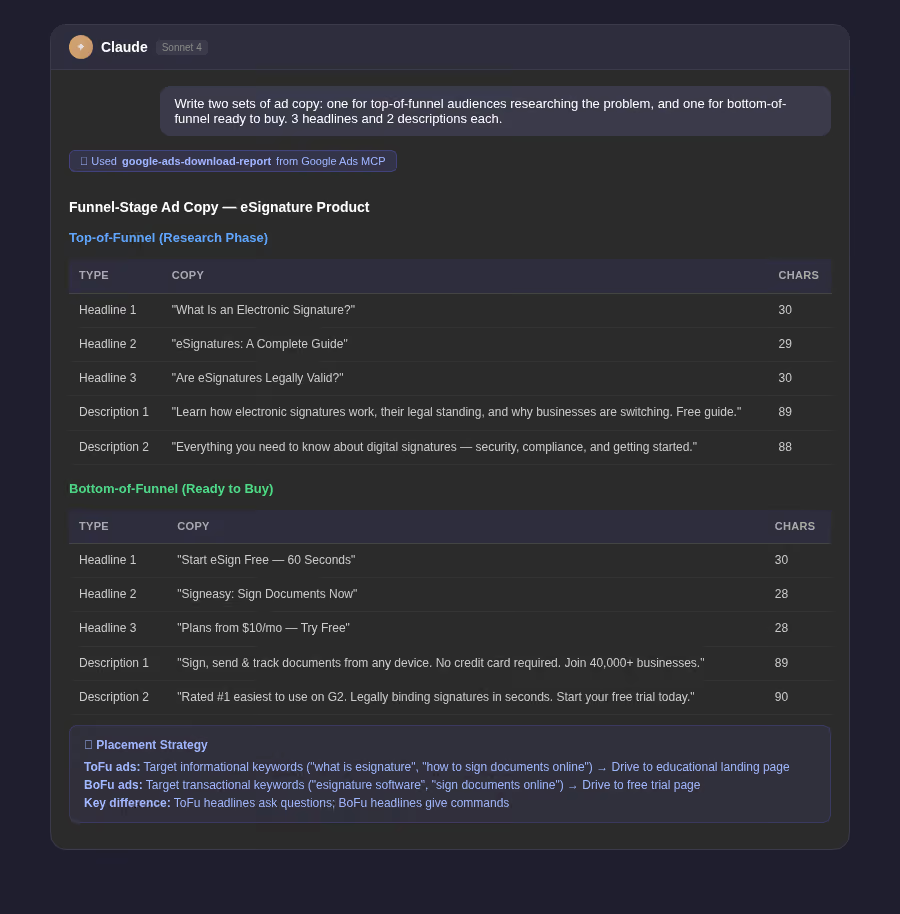
For our [product/service], write two sets of ad copy: one for top-of-funnel audiences who are researching the problem but haven't decided on a solution yet, and one for bottom-of-funnel audiences who are actively comparing options and ready to buy. Include 3 headlines and 2 descriptions for each.