Similarweb's 2026 analysis shows that AI search accounts for less than 1% of total web traffic for most B2B SaaS companies. But Forrester's 2025 Buyers' Journey Survey says 94% of B2B buyers are already using AI in their buying process.
So less than 1% of the traffic, but 94% of the buyers. What's happening?
The simplest explanation is that AI is answering buying decision questions even before the prospect visits a website. Purchase decisions are being made somewhere your analytics couldn't see.
That's what most teams are missing. The data they need to size up the opportunity, pick a playbook, and benchmark their own AEO program is scattered across a dozen reports.
That's why we put together this article that has 90+ AI SEO statistics for 2026. It's pulled from our 75K LLM traffic report across 100 B2B SaaS companies, plus primary research from multiple sources such as Forrester, Gartner, Similarweb, McKinsey, Seer Interactive, Semrush, and other industry leaders. Let's start with what we found inside our own portfolio.
AI SEO Statistics from Our 75K LLM Traffic Report
We pulled 8 months of analytics across 100 B2B SaaS brands in our portfolio, and the most surprising thing wasn't how much traffic AI was taking. It was how unevenly it was taking it.
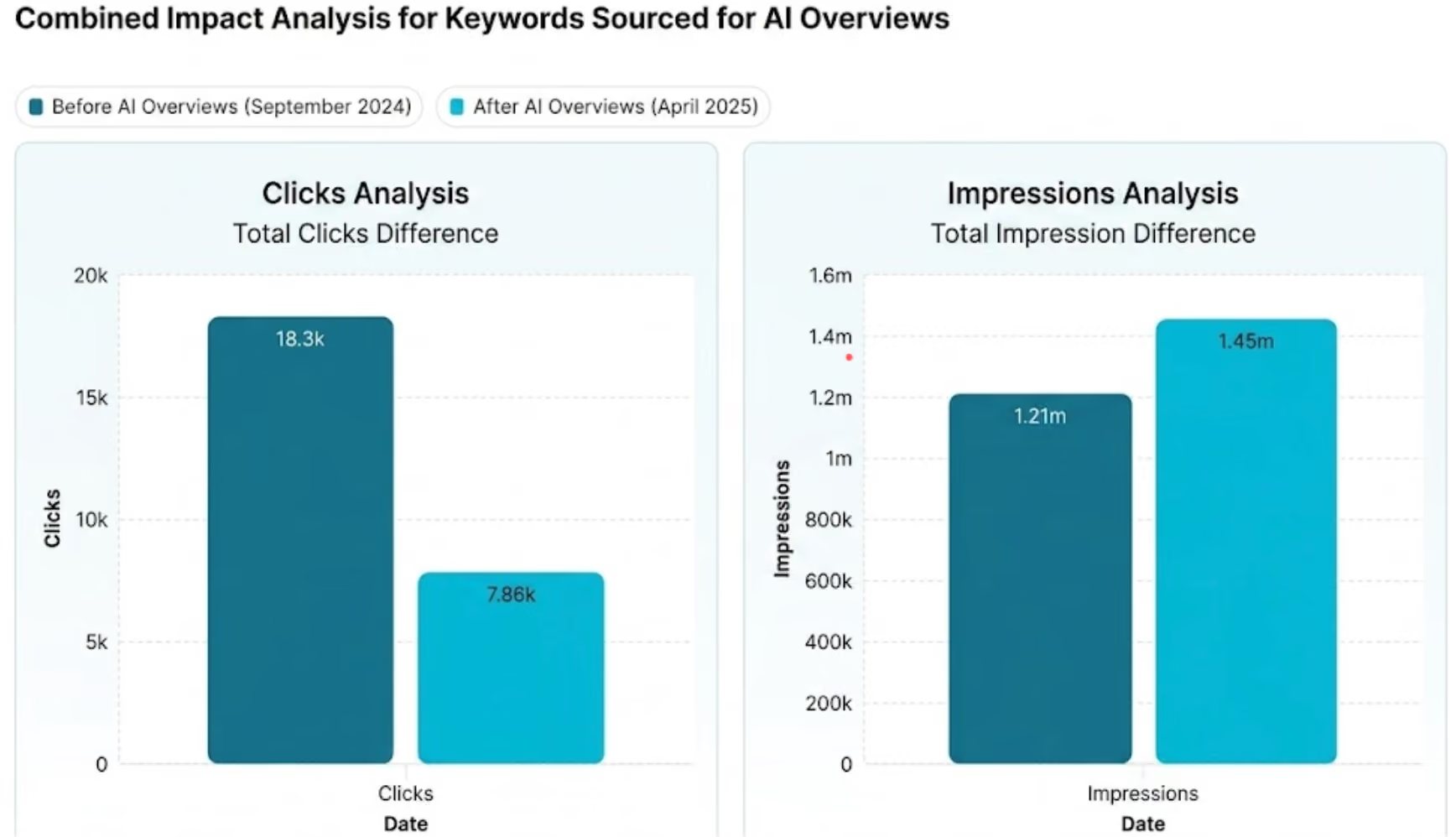
- When a search query triggers Google’s AI Overview, organic clicks to the websites dropped 57%. The ranking didn't move, but the clicks just stopped coming. Impressions for the same page rose by 19%.
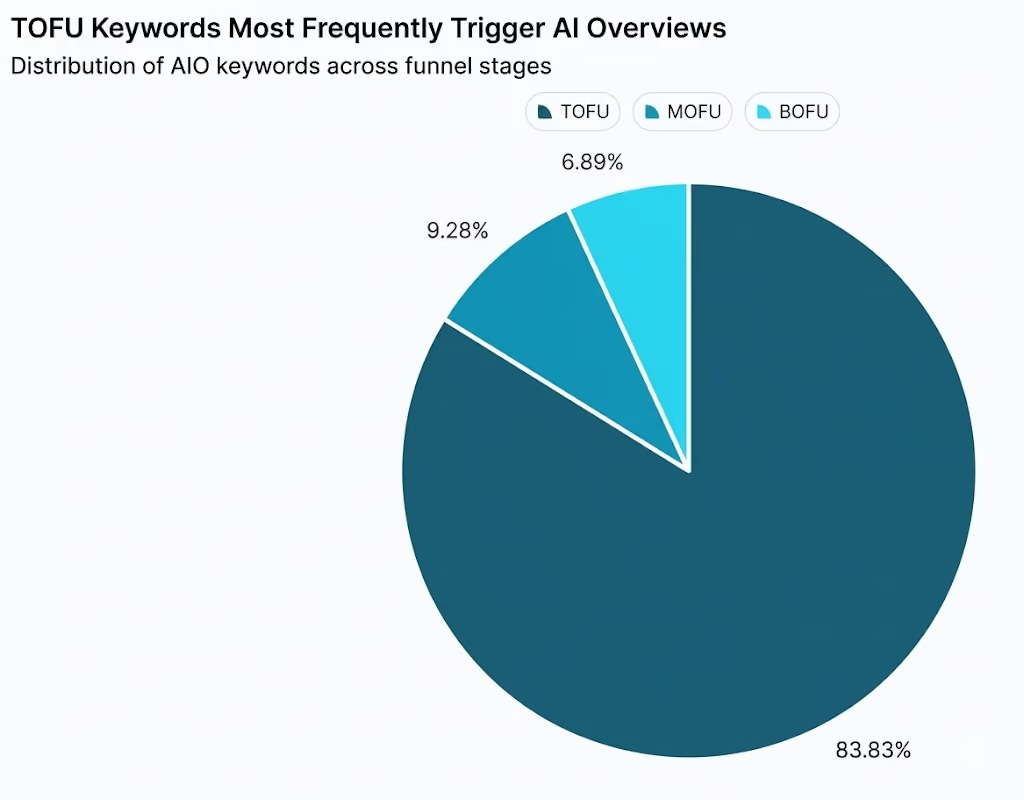
- TOFU keywords were the ones triggering AI overviews most often across the database. This shows that informational queries are most likely to be summarized by AI overviews, reducing the need for users to click through.
- LLM-driven traffic across the portfolio grew 47% in a single month (April 2025). This signal indicates the accelerated adoption of AI.
- ChatGPT traffic converted at 4x the rate of Google organic. AI users arrive with deeper product understanding and clearer intent.
- Over 65% of LLM traffic landed on just three page types: homepage, feature/solution pages, and long-form blogs. Bottom-funnel pages like free trial, demo, and pricing got less than 5% of LLM-driven sessions combined.
- Statistics-format pages were the most consistent LLM magnets. We tracked 35+ "Statistics/Trends" URLs that got cited across ChatGPT, Perplexity, and Claude simultaneously. One client's stats page alone earned 129 sessions across all three platforms.
Here's the takeaway:
Structure your homepage, feature pages, and stats pages for AI extraction, since 65% of LLM traffic lands there. Treat ChatGPT traffic as a high-value channel, since it converts at 4x the rate of Google organic.
How AI Is Reshaping B2B Buying Decisions in 2026
Two years ago, ChatGPT was a curiosity most marketing teams hadn't tried yet. Today, 94% of B2B buyers are using it inside their buying process. Recently, around March 2026, a report by G2 (surveying 1,076 B2B decision-makers) found that 69% of buyers said an AI chatbot influenced which vendor they ultimately selected.
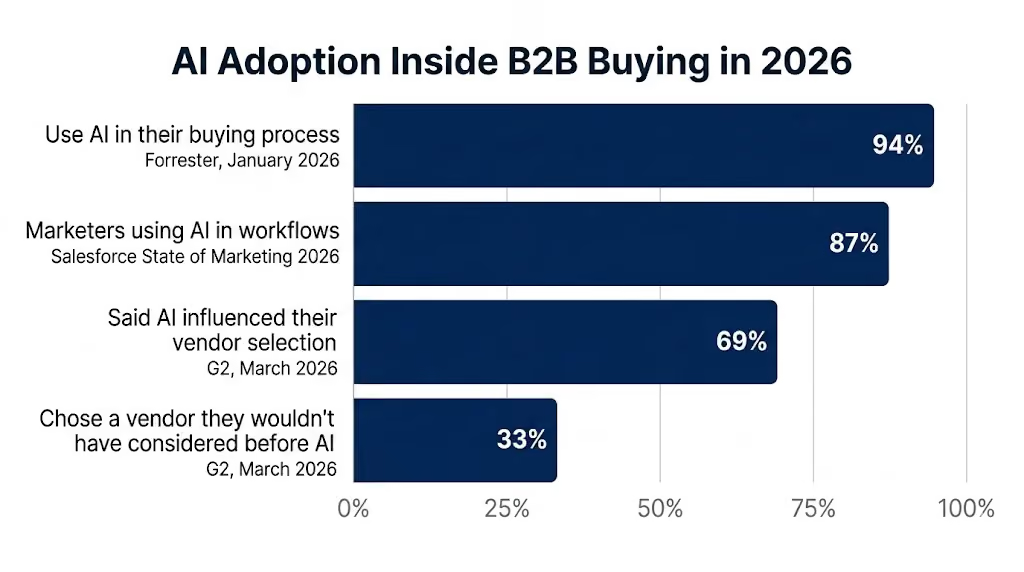
- Twice as many buyers named AI as more meaningful than any other source of information, according to Forrester's January 2026 Buyer Insights report.
- Visibility inside AI answers now drives a third of vendor selections that wouldn't have happened otherwise. G2's March 2026 Answer Economy report found that 33% chose a vendor they had never previously considered.
- McKinsey's October 2025 consumer AI survey found that roughly 50% of consumers across every age group, including those aged 60 and above, intentionally use AI-powered search for purchasing decisions. This means that AI search adoption is something that's now done by the young and the old generations alike.
- 85% of marketers say they are reshaping their SEO strategy because of AI's impact on search behavior, says Salesforce's Tenth State of Marketing report. 88% of marketers are optimizing for AI-driven search experiences like ChatGPT and Google's AI Overview, per the same report.
- Reddit and SurveyMonkey's early 2026 Hidden B2B Journey report (1,200 U.S. decision-makers) found that only 39% of buyers cite AI chatbots as a primary information source, ranking them below peer recommendations (73%) and vendor websites (55%).
So what does that mean for you?
AI is being used widely, but it isn't yet trusted blindly. Buyers verify what AI tells them before acting on it, which means brand presence on review sites, peer communities, and trusted third-party content is now part of AI SEO.
The right AEO play isn't just optimizing your owned content. It's making sure your brand shows up consistently on G2, Reddit, LinkedIn, and your competitors' websites before they even contact you.
What AI Cites and What Kind of Content Earns Those Citations
AI engines reward pages that are structured for extraction, refreshed often, and backed by visible brand presence on third-party sites. Pages that have all three get cited consistently. Pages that miss one or more of them get skipped, even when they rank well in Google.
- 44.2% of all LLM citations come from the first 30% of a page, according to industry research summarized by Kevin Indig in 2026. Your intro and opening paragraphs are the highest-leverage real estate on the page. If your strongest claim, statistic, or definition is buried below the fold, AI engines often skip it entirely.
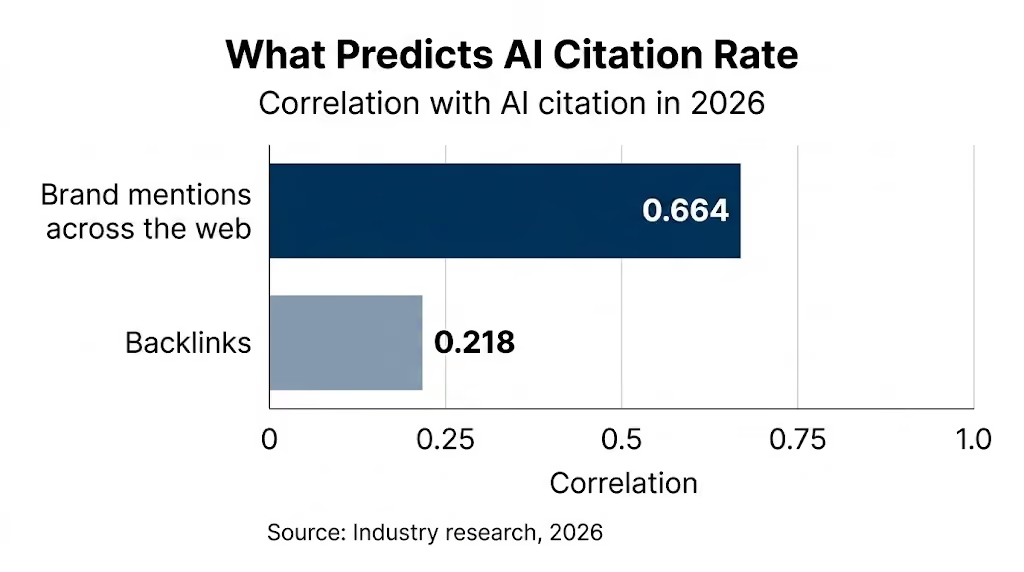
- Brand web mentions correlate at 0.664 with AI citation rates, approximately 3x stronger than the backlink correlation of 0.218, based on industry research. The strongest predictor of whether your brand shows up in AI answers is how often other sites mention you across the web. Mentions count whether they include a hyperlink or not.
- Princeton, Georgia Tech, and IIT Delhi's GEO research found that the most effective optimization tactics for AI citation are adding citations to credible sources, adding direct quotations from credible sources, and adding statistics to content. Across these three tactics, AI visibility lifted by 30 to 41% in the GEO-bench test. The patterns AI engines reward are mostly based on structure, format, and citation density.
- Content under 3 months old is approximately 3x more likely to be cited than older content, per Kevin Indig's 2026 analysis. Refresh cadence has become a structural AEO requirement. The brands committing to monthly refreshes on their highest-priority pages are widening their citation lead each quarter.
- AI citation stability is fundamentally lower than organic ranking stability. A page cited this month may not be cited next month, even if nothing about it has changed. 40 to 60% of cited sources change month-to-month across Google AI Mode and ChatGPT, per the same research.
- G2's March 2026 Answer Economy report found that the top trust signal for AI-generated recommendations is a citation from a review site. Among daily AI power users, 50% rank review site citations as their single most important trust signal.
- Pages with First Contentful Paint under 0.4 seconds average 6.7 citations per page versus just 2.1 for slower pages. Site speed isn't an AEO signal in theory. It's a measurable citation multiplier in practice. The fastest 30% of B2B SaaS sites are pulling 3x the AI citations of the rest.
- Technology brands receive 12.3 AI citations per 1,000 queries in their category, compared to 6.2 citations for B2B services more broadly, per Superlines' State of GEO Q1 2026 report (drawing on Conductor's benchmarks).
- AI engines pull from structured, scannable formats more readily than from long-form essays. Listicle and comparison formats are selected for AI citation approximately 2.5x more often than narrative content, according to Kevin Indig's 2026 analysis. The "X best tools for Y" and "X vs Y" formats have become a major AEO infrastructure now.
Where to focus:
Use schema markup, structured formats, original statistics, and direct quotations to get cited. Monthly refreshes keep you cited as the AI engines update their sources. Brand mentions across third-party sites build the entity presence AI uses to decide whether to cite you at all. And a strong G2 or other review-site footprint is what shifts the buyer from "considering you" to "selecting you" once they've seen the AI recommendation.
Which AI Platform to Prioritize for AEO in 2026
Most marketing teams default to optimizing for ChatGPT and stop there. Of course, ChatGPT drives the most volume by a wide margin, but there are other platforms too. Each platform pulls from different sources, sends different kinds of traffic, and converts differently. Here's what the data shows about where each platform fits.
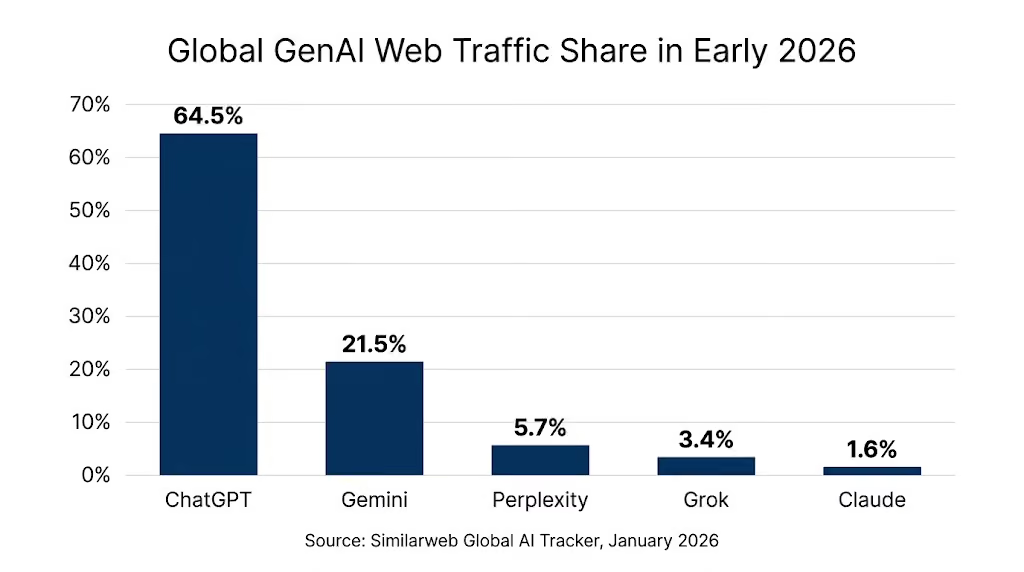
- ChatGPT held 64.5% of global GenAI web traffic by early January 2026, down from 86.7% twelve months earlier, per Similarweb's Global AI Tracker. The market is still ChatGPT-led, but the lead is shrinking. Optimizing only for ChatGPT in 2026 means missing the platforms that are growing fastest.
- Gemini is now embedded inside Google Workspace and Search. This has led to its growth from 5.7% to 21.5% of global GenAI traffic in twelve months, per the same Similarweb data. For B2B SaaS targeting enterprises with heavy Google Workspace usage, Gemini visibility now matters as much as ChatGPT did 12 months ago.
- Perplexity is where technical evaluators, analysts, and product teams are doing their deep-dive comparisons. The platform reached 170 million monthly visits by September 2025, per Similarweb's Generative AI report. Though it's smaller in volume than ChatGPT or Gemini, it skewed heavily toward research-driven users.
- Microsoft Copilot's daily active users grew 10x year-over-year, with average conversations per user doubling, per Microsoft's January 2026 earnings. Copilot's audience is overwhelmingly enterprise. If your B2B SaaS sells into Microsoft 365 environments, Copilot visibility is a default expectation among your buyers.
- Across our portfolio of 100 B2B SaaS brands, ChatGPT drove 70 to 80% of LLM traffic landing on high-intent pages (homepage, feature, solution pages). For long-form blogs and listicles, Perplexity contributed 25 to 30% of LLM traffic, with ChatGPT covering the rest.
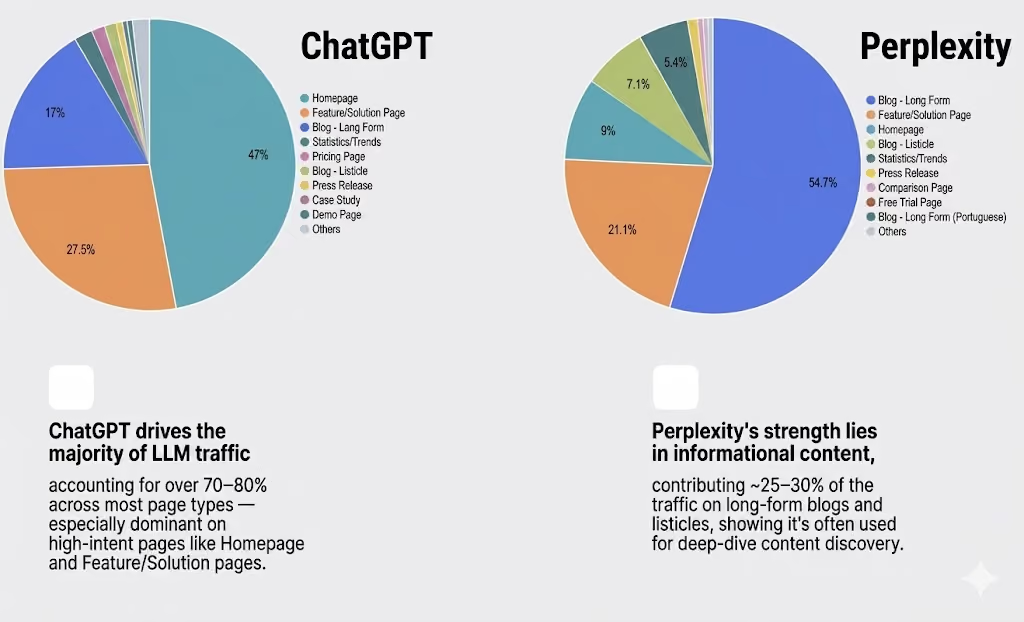
- Gemini's share of LLM traffic across our portfolio was under 5% for most page types, with some activity on feature/solution pages and long-form blog content. Gemini's presence was comparatively small. The growth curve suggests it'll matter more in the next 12 months than it does today.
- Claude shows a lower web traffic share than ChatGPT, Gemini, or Perplexity, but its user base is heavily concentrated among technical buyers, engineering leaders, and product teams. Claude's role in 2026 is platform-specific. If your B2B SaaS sells into developer-led teams or Anthropic API users, Claude visibility matters now. For most other B2B SaaS, Claude is a 2027 priority.
How to prioritize?
Your AEO priority order in 2026:
- First ChatGPT for volume
- Second, Perplexity for high-intent, research-driven buyers
- Third, Gemini, because of how fast it's growing inside Google Workspace
- Fourth, Copilot, if you sell into enterprise Microsoft 365 environments.
The fastest way to know whether you're showing up across these platforms is to run your top 30 to 50 buyer prompts manually each month and track which ones cite you. The brands that adapt their content to each platform's pull patterns will widen the citation gap on the brands that are still optimizing for "AI" as one channel.
How Each Industry Correlates With AI Overview Triggering
Your AI SEO playbook depends on the vertical you're in. The buyers, the queries, and the content AI cites, all of it shifts category by category. We mapped 15 B2B SaaS verticals across AI overview trigger rates, AI referral traffic, and content fit in our B2B SaaS Marketing Benchmarks Report 2026. Find your category from the data below.
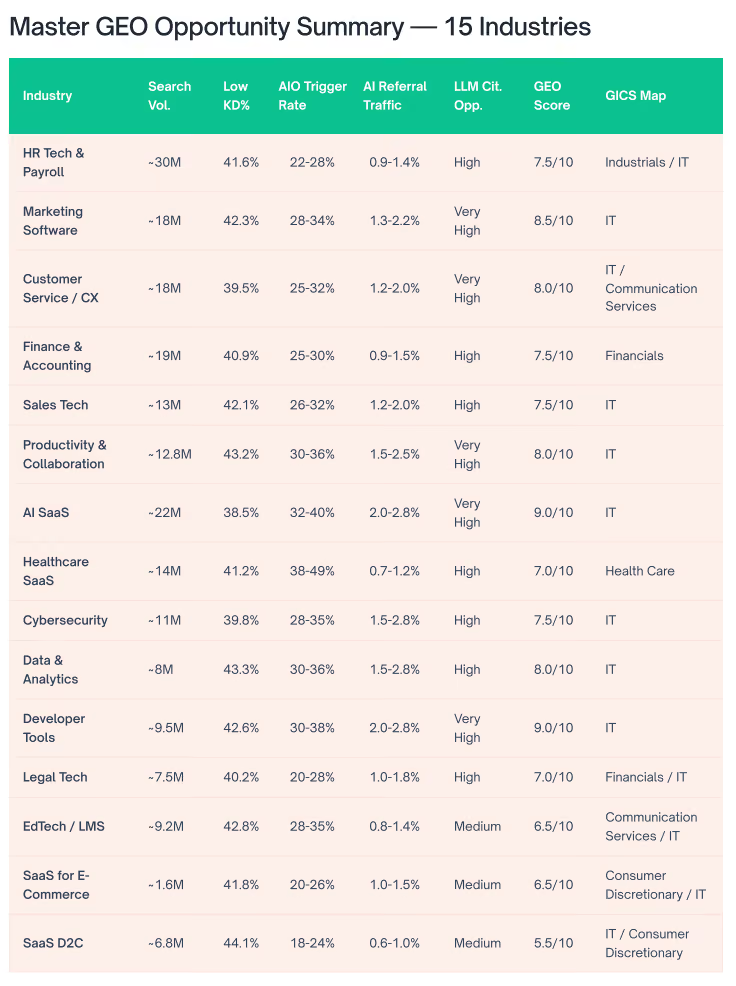
- AI SaaS and Developer Tools earned the highest GEO readiness score of 9.0 out of 10. AI Overview trigger rates run 32 to 40% in these categories, AI referral traffic reaches 2.0 to 2.8%, and the audience itself is the heaviest LLM-using cohort of any professional segment. If you sell to developers or AI practitioners, AEO is a foundational channel.
- Marketing Software scores 8.5 out of 10, driven entirely by query type. Comparison and "best of" searches dominate the category, and these are exactly the query patterns where LLMs are most active and most likely to return vendor recommendations. AEO investment in marketing software pays back fastest because the buyers are already asking AI to compare your tools.
- Healthcare SaaS has the highest AI overview trigger rate of any B2B SaaS vertical at 38 to 49%. But the AI referral traffic these healthcare pages actually receive is the lowest in the dataset, sitting at just 0.7 to 1.2%.
The reason is that healthcare queries fall under YMYL ("Your Money or Your Life"), so AI engines err on the side of caution. They cite a small set of trusted sources, such as Mayo Clinic and Cleveland Clinic, far more often than emerging healthcare SaaS brands.
- SaaS D2C scored the lowest at 5.5 out of 10 despite having the most accessible organic landscape across all verticals (44.1% of keywords in the low-difficulty range). Transactional intent reduces AIO triggering to 18-24 percent, and D2C buyers tend to validate through product trials rather than through consultative AI research. AEO matters less here than in any other B2B SaaS category.
- The IT sector ceiling for AI referral traffic is 2.8%, and that's the upper bound across every IT-mapped vertical, including AI SaaS, Developer Tools, Marketing Software, Cybersecurity, Sales Tech, and Productivity. No B2B SaaS vertical currently pulls more than 2.8% of total traffic from AI sources, which puts the channel into perspective. AEO is high-quality but still small in absolute volume.
- Sites with 32,000 or more referring domains see 2x the citation rate on ChatGPT compared to sites with fewer. Domain authority still compounds inside AI engines, even though brand mentions matter more than backlinks for citation prediction (covered in Section 3).
- Bottom-funnel content (case studies, pricing pages, comparison pages) gets the highest AI referral traffic percentage across all 15 verticals, with one case study showing 124,000 ChatGPT sessions in 6 months from comparison content alone. The pages most B2B SaaS teams under-invest in are the ones AI engines reward most consistently. Build comparison and case study libraries before you build more blog posts.
So what does that mean for you?
The fastest way to know whether AEO is a 2026 priority for your business is to find your vertical in the 5.5 to 9.0 range.
AI SaaS, Developer Tools, Marketing Software, Productivity, Data and Analytics, and Customer Service all sit at 8.0 or above and should commit dedicated AEO budget now.
HR Tech, Sales Tech, Finance and Accounting, Cybersecurity, and Healthcare are in the 7.0 to 7.9 range, where integrating AEO into existing SEO workflows pays back without needing a separate program.
EdTech, SaaS for E-Commerce, and SaaS D2C sit at 6.5 or below, where strong traditional SEO foundations matter more than AEO investment for now.
Find your number, then match your investment to it.
How AI SEO Pays Back: Three Returns Every B2B SaaS Brand Should Expect
The hardest question every marketing leader is being asked right now is whether AEO is worth the investment.
The honest answer is yes, but only if you understand what you're investing in. AEO compounds with SEO traffic and amplifies it. The data from Webflow, Vercel, Conductor, and Seer Interactive shows what AEO actually pays back.
Higher Conversion Rates from AI Traffic
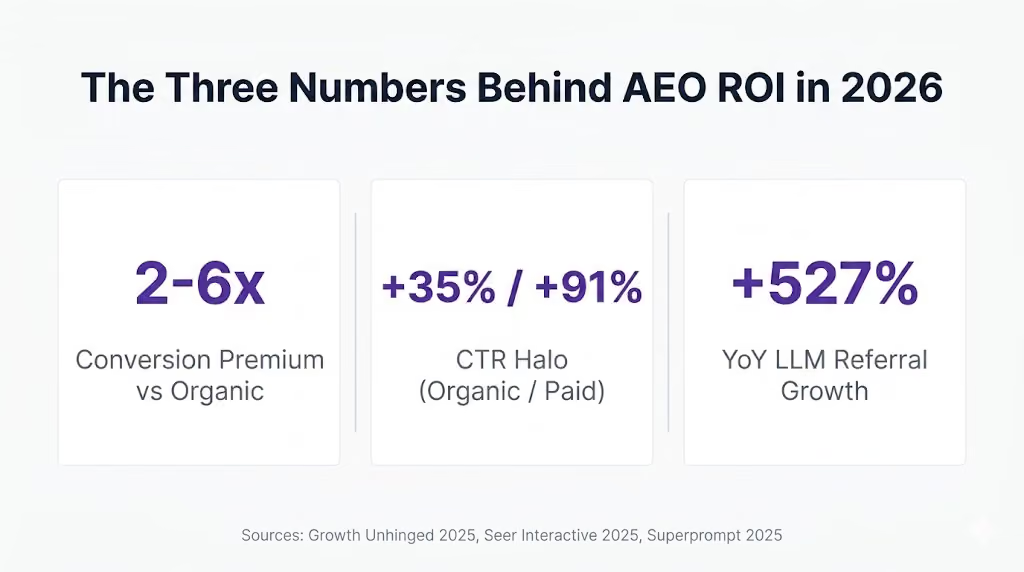
- AI traffic converts 2x to 6x more than organic traffic. Webflow's ChatGPT visitors convert at 24%, six times their Google organic rate, with two-thirds completing within 7 days (Growth Unhinged 2025). The conductor's analysis of 3.3 billion sessions confirms the same pattern across all major LLM platforms. AI-driven visitors arrive pre-qualified, with their evaluation already done.
- Vercel reports that 10% of all signups now come from ChatGPT. For a developer tools company at Vercel's scale, that's one in ten new accounts originating from a channel that didn't exist as a measurable referral source 24 months ago. Developer-focused B2B SaaS sees the strongest direct AEO ROI of any category.
- Customer acquisition cost is 34% lower for AI-sourced leads than for traditional channels. B2B SaaS sits in the middle of the citation distribution, but the leads that do come through convert cheaper than anything else in your funnel. It's worth tracking citation count against CAC quarterly to see how the trade-off is moving in your category.
Brands Cited in AI Get More Clicks Elsewhere on the SERP
- Brands cited in AI Overviews see a +35% organic CTR lift and +91% paid CTR lift compared to non-cited brands, per Seer Interactive's analysis of 3,119 queries across 42 organizations.
- Getting cited in AI Overviews increases the click-through rate on every other listing on the page. The halo effect on traditional SEO and paid search is bigger than the direct AEO traffic itself.
AI Traffic Is the Fastest-Growing Acquisition Channel
- LLM referral traffic to B2B SaaS sites grew +527% year-over-year in 2025, per Superprompt's analysis of 400+ sites. The base is still small in absolute terms (under 1% of total traffic for most companies), but the growth curve is the steepest of any acquisition channel right now. The ROI compounds month over month for teams that have started early.
TripleDart-managed brands have replicated this growth curve. FlowForma scaled from 90 to 664 monthly sessions across ChatGPT, Perplexity, and Gemini in six months. Signeasy reached 800 monthly sessions with 60 to 68% consistent month-over-month growth.
The three numbers that matter:
AEO ROI consists of three numbers stacked on top of each other.
- The direct conversion premium (2x to 6x higher than organic).
- The CTR halo effect (+35% organic, +91% paid for cited brands).
- The compounding growth curve (+527% YoY in referral volume).
The Dark Funnel: AEO Measurement Statistics for 2026
Let's first understand what “dark funnel” actually means. Imagine a buyer asking ChatGPT to compare you against three competitors. After reading the response, the reader decides you're the best fit and finally lands on your site by typing your URL directly. Your analytics show a direct visit. The actual decision was made in a chat window that your tools couldn't see.
That gap, between what buyers are doing and what your analytics can tell you, is the AEO dark funnel. The statistics below show how big it is and how to start measuring around it.
- 93% of AI search sessions end without a website visit, notes Semrush. The dominant outcome of an AI search isn't a click. It's a satisfied user who got the answer they needed inside the chat. For B2B SaaS, that means most of the buying-stage research happening on ChatGPT, Perplexity, and Gemini will never appear in your referral reports.
- Buyers ask an average of 2.3 follow-up questions per AI search session, per Superlines' analysis of Q1 2026 AI search behavior. A single buyer evaluating your product against alternatives has 4-6 conversations with the AI before making a decision. Each convo there shapes the shortlist. None of those show up in your analytics.
- 47% of users say they're satisfied with AI-only responses to their queries, according to Superlines. Nearly half of buyers don't need to visit your site to make a decision. They get enough signal from the AI's summary, citations, and comparison framing to move on. Your job shifts from earning clicks to earning citations.
- Branded search volume, direct traffic spikes, and demo form completions become better leading indicators than session counts per Bain & Company's 2025 zero-click analysis.
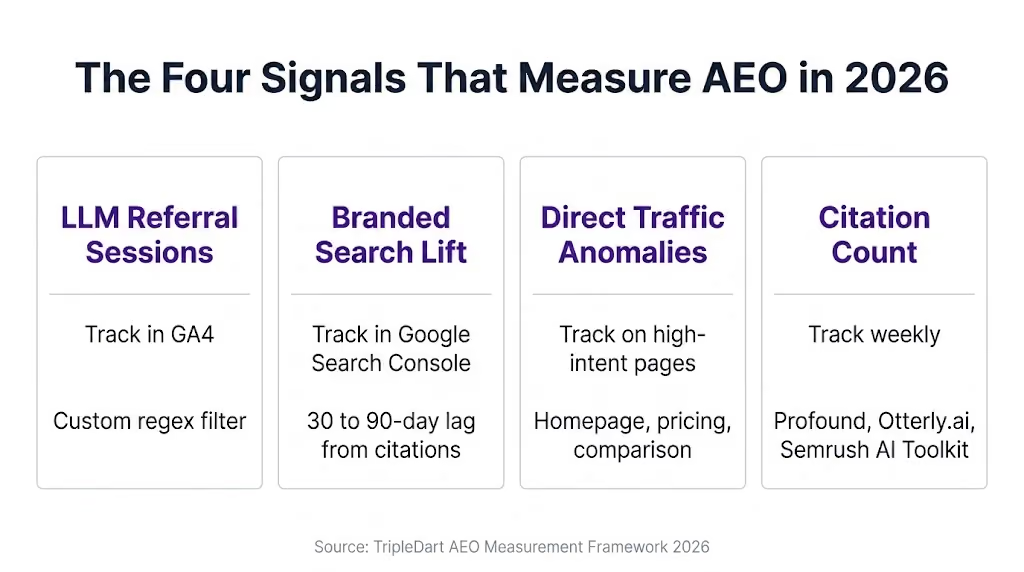
- 40 to 60% of cited sources rotate monthly in AI responses, says Semrush. A page that's cited heavily in March may not be cited at all in May, even with no content changes on your end. Track citations weekly with a tool like Slate, Profound, Otterly.ai, or Semrush AI Toolkit.
- Only 11% of domains are cited by both ChatGPT and Google AI Overviews. Ranking in Google does not guarantee LLM visibility. You have to measure citations on each platform separately because the citation criteria are genuinely different. ChatGPT favors authoritative editorial content, Perplexity favors community sources, and Google AI Overviews favors top-ranking organic pages.
- In our 75K LLM Traffic Report, the LLM-referrer-tagged sessions in GA4 captured roughly 30 to 40% of total AI-influenced traffic across the 100 B2B SaaS portfolios. The other 60 to 70% are routed through direct visits, branded organic search, and unattributed channels. If you're only counting referrals from chatgpt.com, perplexity.ai, and gemini.google.com in GA4, you're missing most of the impact.
What to track instead?
The four signals that actually work in 2026 are LLM referral sessions tagged in GA4 with a custom regex filter, branded search volume in Google Search Console (with a 30 to 90-day lag from citations), direct traffic anomalies on high-intent pages like the homepage, pricing, and comparison pages, and citation count tracked weekly through an AI visibility tool. Track those four together.
Where to Start Your AEO Program in 2026
Across our portfolio of 100+ B2B SaaS clients, the playbook works the same way every time.
- Audit which platforms cite you and which don't.
- Restructure your highest-intent pages for AI extraction.
- Earn brand mentions on the third-party sites your buyers trust.
- Track citations weekly and adjust monthly.
The teams that start now will be the ones cited a year from now.
If you want help building this into your program, TripleDart's AEO agency team can run the audit, the restructuring, and the tracking for you.
Book a call to see what your AI SEO baseline looks like in your category.
How We Compiled This Information
The statistics in this article come from two TripleDart primary research reports:
our 75K LLM Traffic Report (8 months of analytics across 100 B2B SaaS brands) and our B2B SaaS Marketing Benchmarks Report 2026 ($250M+ in ad spend across 200+ websites and 19 industries).
We supplemented this with third-party research from Forrester, Conductor, Semrush, Seer Interactive, McKinsey, G2, Salesforce, Microsoft, Growth Unhinged, Superprompt, and Superlines. Every statistic in this article is from late 2025 or 2026.
Frequently Asked Questions
1. What is AI SEO?
AI SEO refers to the practice of structuring and optimizing content so that AI-powered platforms like ChatGPT, Perplexity, Google AI Overviews, Copilot, and Claude cite, mention, or recommend your brand when users ask questions. Sometimes called Answer Engine Optimization (AEO) or Generative Engine Optimization (GEO), the discipline focuses on visibility inside AI-generated answers rather than ranking in traditional search results.
2. Does AI SEO replace traditional SEO?
No. AI SEO is a layer that sits on top of traditional SEO. AI engines pull most of their citations from web content that's already indexed, well-structured, and authoritative. This means strong SEO fundamentals like technical health, schema markup, content quality, and backlinks directly fuel AI visibility. The brands winning AI citations today are the ones with mature SEO foundations.
3. How do I measure AI SEO success?
Track brand inclusion rate in AI answers, AI share of voice against competitors, and citation frequency from your own pages as your primary signals. Then watch for branded search lift, demo form mentions, and direct traffic spikes on high-intent pages. Most teams run these alongside their traditional SEO metrics for a complete view.
4. How long does it take to see AI SEO results?
Most B2B SaaS brands begin seeing visibility shifts in 4 to 8 weeks once content has been restructured for AI extractability. Meaningful citation share, where you appear consistently across priority prompts, typically develops over 4 to 6 months. Brands that started 12+ months ago are widening their lead now, which is what compounding looks like in this channel.
5. What's the difference between AEO, GEO, and traditional SEO?
Traditional SEO optimizes for ranking in search results. AEO (Answer Engine Optimization) optimizes for being cited in AI-generated answers on platforms like ChatGPT and Perplexity. GEO (Generative Engine Optimization) is often used as a synonym for AEO, with more emphasis on Google AI Overviews specifically.