
May 2026 Google Core Update: Seeing Traffic Dips?
It finished June 2 after the most volatile rollout of the year, and it arrived in the middle of Google's AI Overviews expansion.
Contributor

Abishek Balaji
Content Marketing Manager
In this article
On Tuesday, June 2, Google closed the May core update after almost twelve days.
“Wait for the data, don't react” is true, and it is not very useful because every SEO already knows it.
The harder question this time is whether the update moved you at all. It finished in the middle of the biggest reshaping of Google's results in years, so two things were pulling on your traffic at once.
The story
Two weeks ago, halfway through the rollout, the early call across the industry, our own included, was that this looked like a slower repeat of March. The finished data tells a different story.
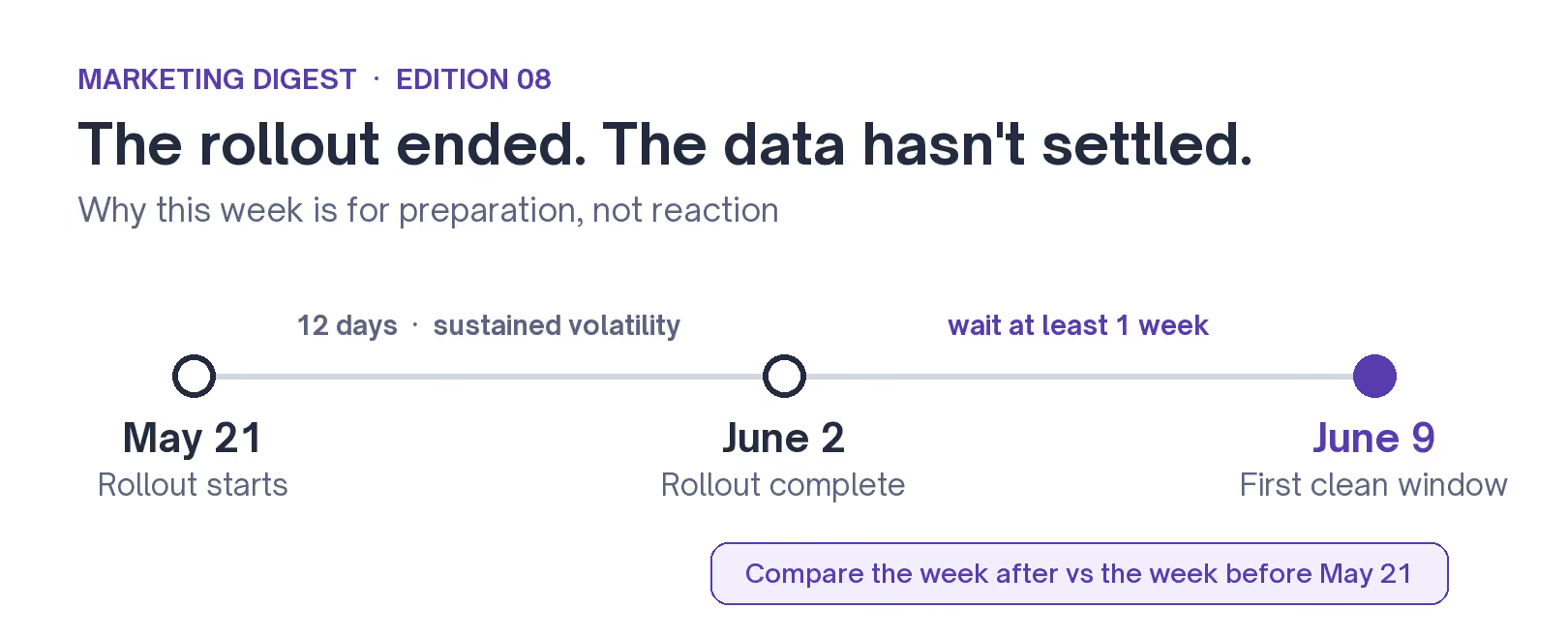
The update started on May 21 and ran for almost twelve days, closing on June 2. Google calls these regular updates, meant to better surface relevant content from sites of every kind, and it ships a few a year.
Google's advice is to wait at least a full week after a rollout ends before you analyse Search Console, then compare that week against the week before the rollout began.
That puts the earliest clean comparison at around June 9.
So the ranking data you are staring at today is still moving. But one number in your Search Console does not need to wait, and that is where the useful work starts.
Hotter and longer than March
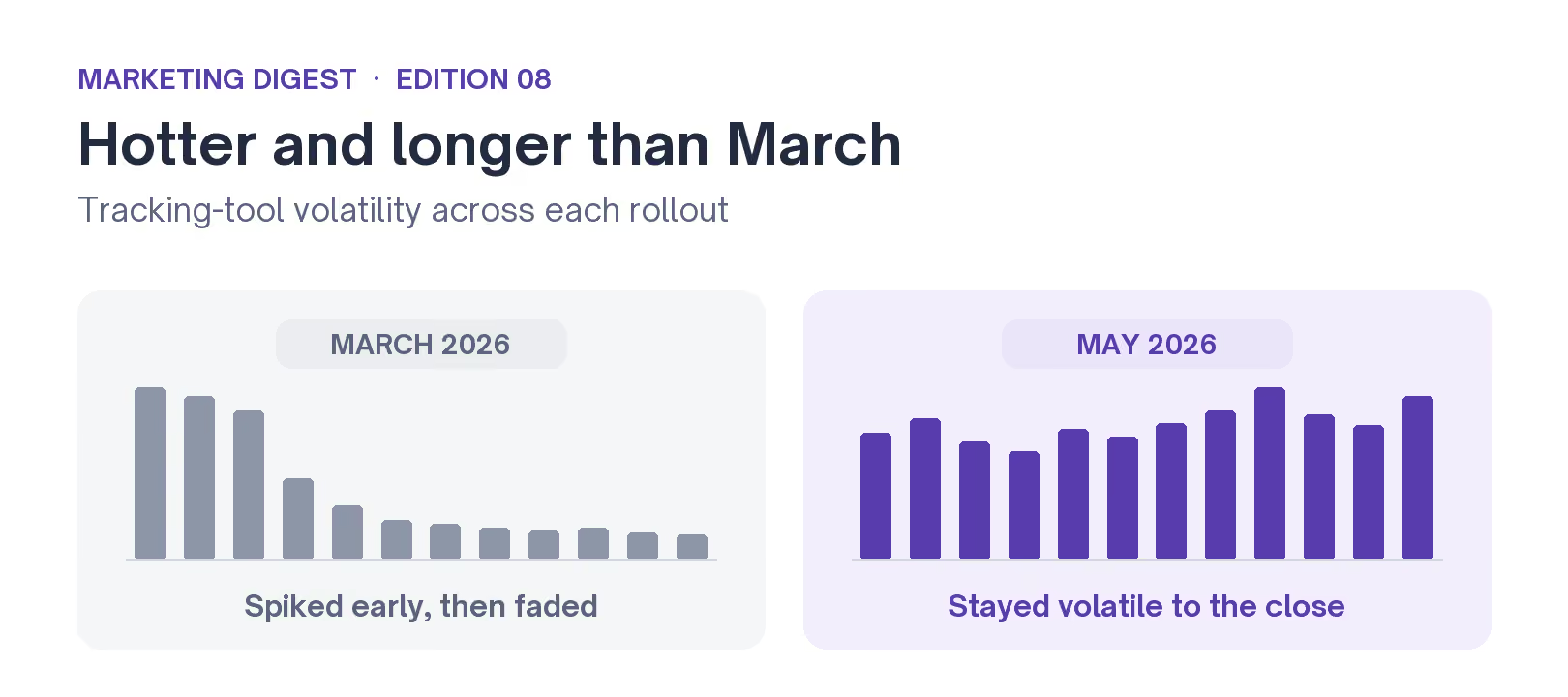
This was not a launch-day spike that faded. Tracking tools showed elevated movement at several points across the whole rollout, with the heaviest swings over the weekend of May 30 and another jump as Google closed it out on June 2.
The people who watch these closely said the same thing in different words. Glenn Gabe, who tracks core updates account by account, told Search Engine Journal the May update was "much more like a typical core update", and put it plainly: "March was meh, but May is big".
Lily Ray saw it from the winners' side, telling the same report that "a handful of sites started seeing big surges over the weekend".
Here is why the sustained volatility matters for you specifically:
Because the swings ran the entire rollout, a lot of sites dropped one weekend and recovered the next, inside the window. Anyone who rewrote a page after the May 30 dip was reacting to a position that, for many of them, came back on its own. That is the trap of reading a hot rollout day by day.
Is it the update, or is it AI Overviews?
The update opened two days after Google I/O and its AI search overhaul, and through the rollout Google kept pushing more queries into AI Overviews and AI Mode. So if your traffic fell in late May, you cannot assume the core update did it.
There are two separate ways your numbers can fall, and they need opposite responses.
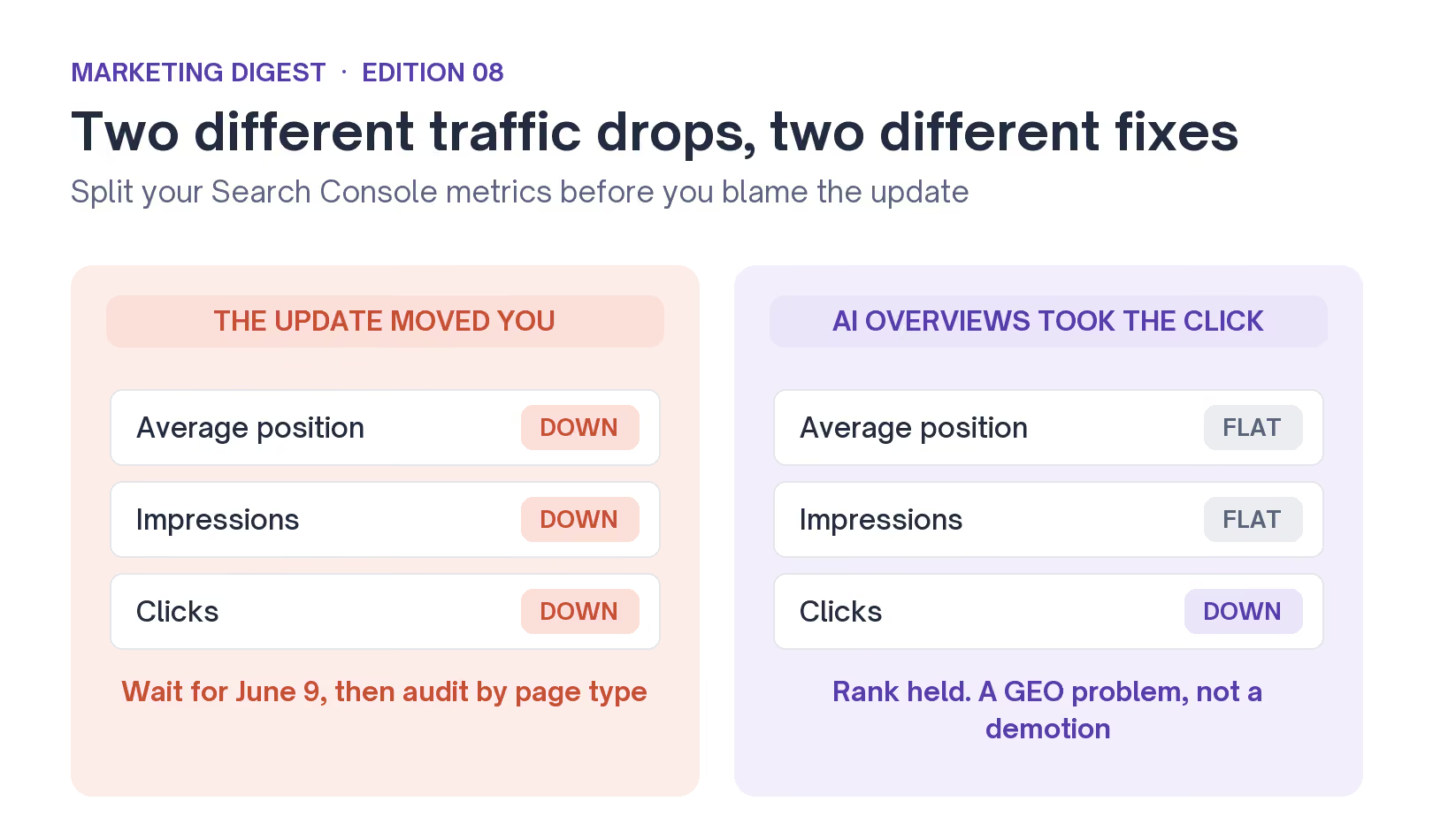
A core update demotion shows up as a drop in average position. You ranked third, now you rank ninth, and the clicks follow the rank down. That is a content quality signal, and the audit below is the answer.
AI Overviews interception looks nothing like that.
Your position holds and your impressions hold, but your clicks fall, because Google answered the query above the results and took the click before anyone reached your link. Your ranking is fine. The page is being read inside the AI answer instead of on your site.
Split those two before you touch a page.
In Search Console, look at position, impressions and clicks side by side for the queries that fell. Position down means the update. Position flat with clicks down means AI Overviews, which is a GEO problem, not a demotion, and rewriting the page for ranking will not get the click back.
What's holding, and what's sliding
When the clean ranking data does arrive on June 9, the patterns this update rewarded are the same ones every 2026 core update has rewarded, only sharper. Search Engine Land's March analysis noted Google is now weighing how much genuinely new information a page adds, and the May data points the same way.
Across the B2B SaaS sites we run SEO for, the right column is where the losses keep clustering, update after update.
The pages that hold have something a rephraser cannot fake: data they own and a named author standing behind a clear point of view. That is also the work that gets a page cited inside AI answers, which is why the GEO and SEO checklists keep converging on the same short list.
What to do this week
So the work this week splits into things you can do today and things that wait for June 9.
- Pull the position-impressions-clicks split now: The AI Overviews question does not need the rollout to settle. Find the queries where clicks fell but position held, and you have found interception, not a demotion.
- Tag the queries that now trigger AI Overviews or AI Mode: That tells you which losses are Google answering above the results and which are genuine ranking drops.
- Build the holding and sliding buckets: List your no-author, no-schema and aggregator-style pages while you wait, so the audit is ready the moment the data clears.
- Freeze rewrites until June 9: No mass edits, deindexing, or pruning until the clean before-and-after is in front of you.
- Write one hypothesis per bucket. A sentence on why that group might have moved, to test against the clean data instead of a chart that is still settling.
If you want a second set of eyes on the split once June 9 lands, compare notes with us.
We'll be back once the data clears with what moved, and why.