
ChatGPT Ads Introduces Product Feeds and Conversion Matching

Contributor

Abishek Balaji
Content Marketing Manager
In this article
If you tested ChatGPT Ads when it opened to every US business this spring, you probably hit the same wall most of us did: the ads were simple to launch, and almost impossible to tie to a signup or a sale.
This past month OpenAI went straight at that problem, with three updates to its Ads Manager that move the product a long way toward the performance channels you already run on Google and Meta.
The story
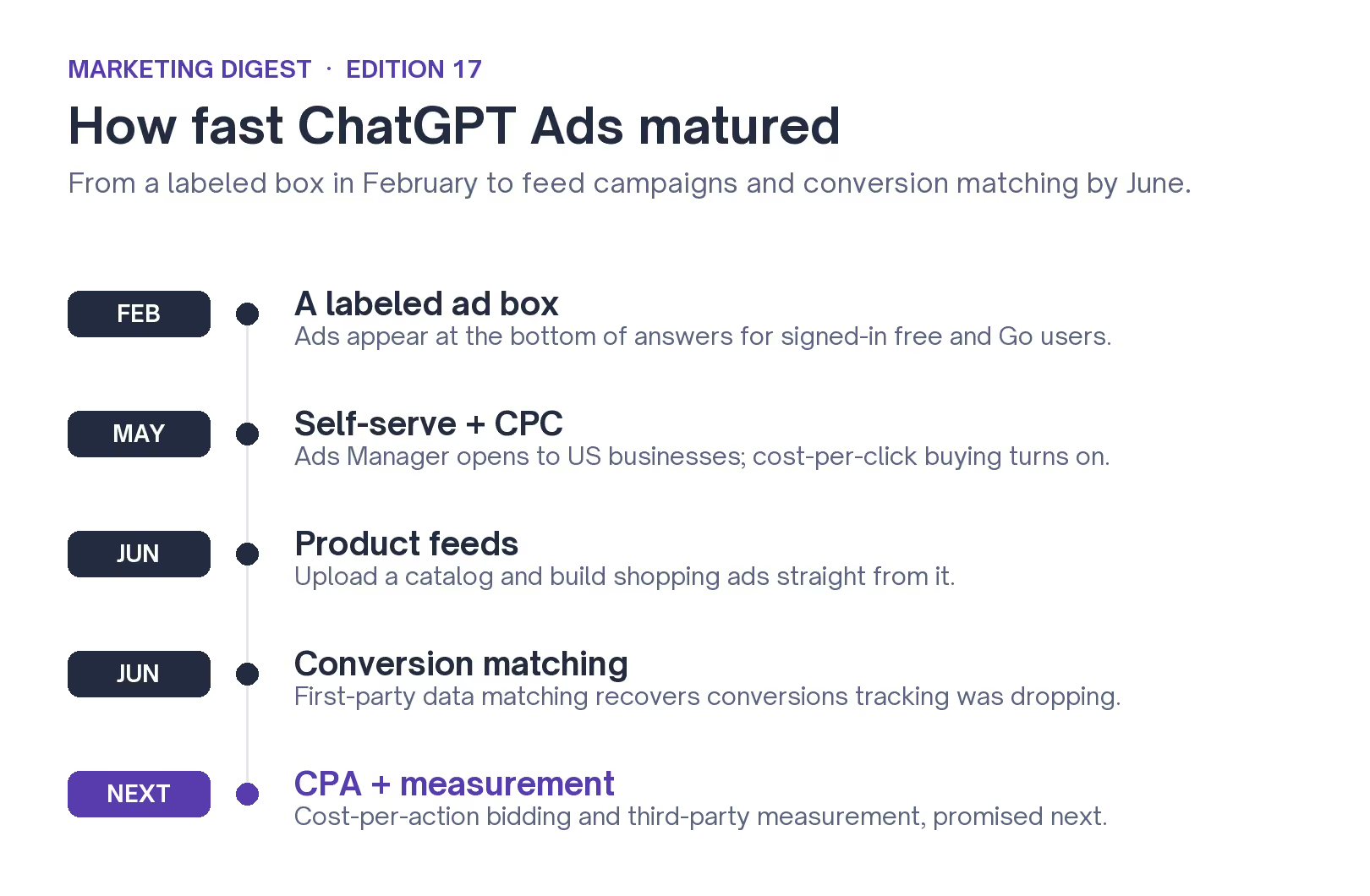
ChatGPT started showing ads in February, in labeled boxes at the bottom of answers for signed-in users on the free and Go tiers. By May, OpenAI had opened the Ads Manager to any US business, with no minimum spend, and turned on cost-per-click and cost-per-mille buying. The three updates from this past month are the next layer:
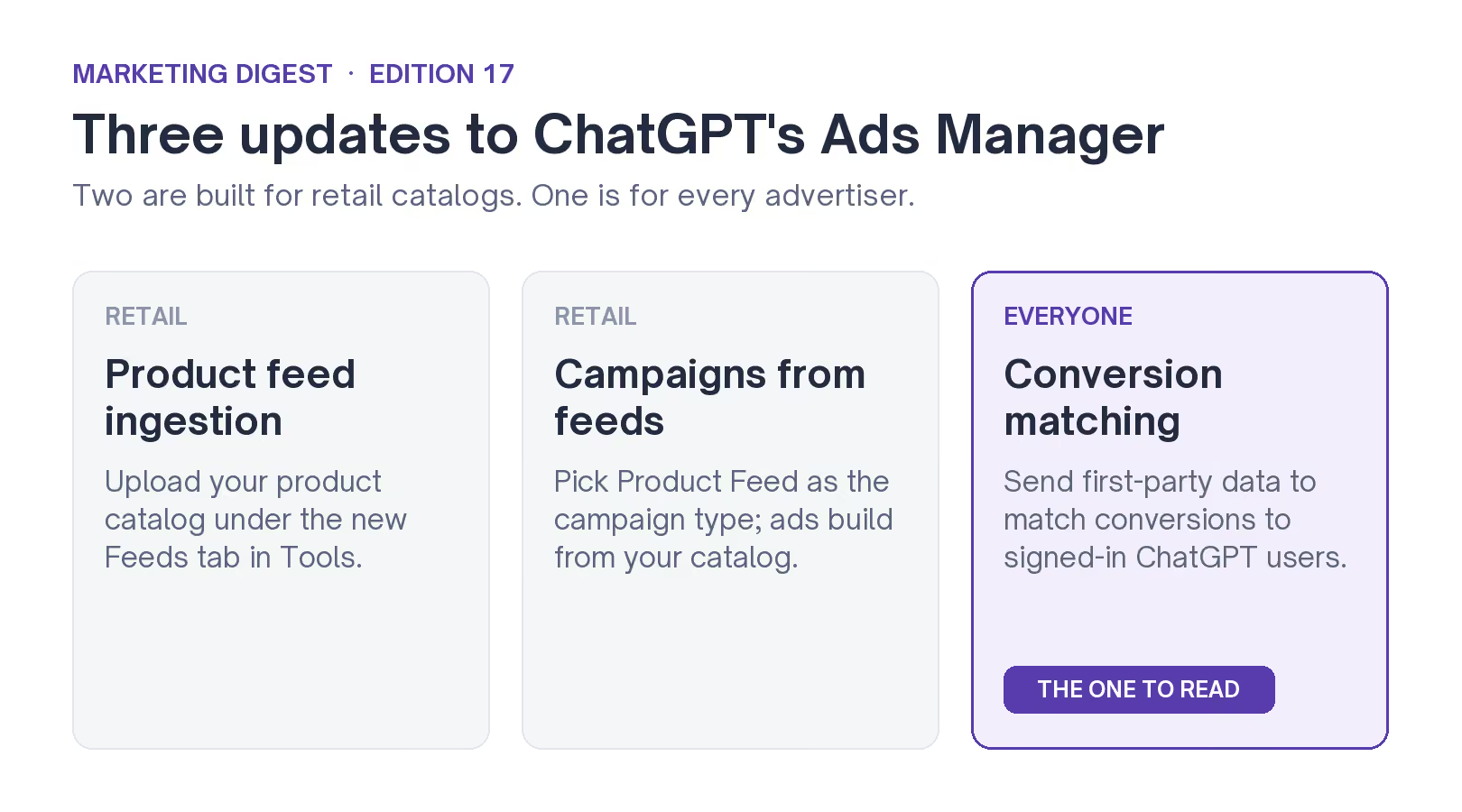
- Product feed ingestion: You upload your product catalog straight into Ads Manager, under a new Feeds tab in the Tools section.
- Campaigns from feeds: You create a campaign, pick Product Feed as the type, and choose which products go into each ad group, so the ads build themselves from your catalog.
- Better conversion matching: Conversion tracking now uses the user data you send it to match conversions back to the people who saw your ads. OpenAI says some advertisers will see a meaningful jump in reported conversions.
The first two help retailers turn a catalog into ads. The third helps anyone measure whether the ads worked.
Are ChatGPT's product feed ads worth it for B2B SaaS?
For most B2B SaaS, not really.
These two feed updates are OpenAI cloning Google Shopping: you connect a product catalog and ChatGPT builds shopping ads straight from it, with no manual creative per item. It uses the same file format you already send to Google Merchant Center and handles up to a million SKUs, so a retailer with a Google feed can be live fast. A software product with one signup flow has nothing to feed it.
For e-commerce, this matters. Debra Aho Williamson of Sonata Insights called catalog-to-ad automation "table stakes in the age of AI," which is about right. Google and Meta have offered it for years.
But if you sell software, this mostly isn't your lever. Unless you sell something with a catalog, like templates, a marketplace, courses or hardware, the feed campaigns are not where your budget goes.
The update worth your attention is the third one:
How does ChatGPT's conversion matching work?
You send ChatGPT hashed first-party data, like a customer's email, along with each conversion, and it matches that against the signed-in user who saw or clicked your ad. More matches mean more conversions get attributed, so reported numbers can climb once you turn it on.
This is the gap we flagged a few weeks ago. We posted what we found running ChatGPT Ads for a B2B SaaS account: writing the ad copy was straightforward, the targeting sorted itself out, and almost all the setup time went to tracking, which still came back thin. The new matching goes straight at that.
It works the same way as Google's enhanced conversions and Meta's Conversions API: you give the platform first-party data, and it recovers conversions that cookie-and-click tracking would otherwise miss.
This is worth understanding before you read the new numbers. When the conversion count climbs, the tracking is finally catching signups the old setup missed. Those signups were happening all along; better matching just counts them now.

That distinction changes how you judge the channel. On the paid accounts we run for B2B SaaS, turning on the same kind of data matching recovers conversions the click-only setup was dropping, and it has for more than a year. We expect ChatGPT's version to recover even more, because its users are signed in. Match rates fall apart when people are logged out, and inside ChatGPT they rarely are, so there is a clean identity to match on almost every impression.
Where ChatGPT Ads is heading
ChatGPT Ads went from a labeled box in February, to cost-per-click buying, to product feeds, and now to conversion matching, with cost-per-action bidding and third-party measurement promised next. OpenAI is rebuilding the Google and Meta performance stack inside ChatGPT, in months rather than years.
The tracking list goes beyond "order created" for retailers, into lead created, trial started and subscription created, the funnel events a B2B SaaS team measures its paid program by. OpenAI is building this for lead-gen as much as for shopping.
Where each update leaves a B2B SaaS team:
Why it's worth testing now
Most B2B SaaS teams are still treating ChatGPT Ads as a novelty. We set it up as a channel, for ourselves and for clients, and the early numbers are why we are paying attention. Across the campaigns we have run so far, click-through rate has come in around 3%, close to the 3.2% we see on comparable Google campaigns. Cost per click has run $3 to $8, four to ten times cheaper than our roughly $30 Google benchmark.

Some of that is timing. New channels are cheapest in their first months, before every advertiser piles in and bids the auction up. Google Ads looked like this around 2002, Meta around 2007. ChatGPT Ads is in that window now, and it is US-only for the moment, so if the US is your market there is an early-mover edge while costs are this low.
The placement helps too. Your ad runs as a sponsored card under the answer, matched to the conversation, so you reach a buyer while they are still researching the decision. For a considered B2B purchase, that is a useful moment to show up in.
So the one move to make now, even if you are not ready to spend: get the conversion tracking in.
Install the pixel or the Conversions API, wire up your lead and trial events, and send a test conversion before you launch. Smart bidding is only as smart as the signal you feed it. When you do run ads, write to the conversation rather than to keywords, since targeting here is contextual, and put the budget behind whatever drives pipeline.
It is early. Attribution is still maturing, and this will not replace your core channels this quarter. Testing it now is cheap, though, and the price of the channel only climbs from here. If you want a second set of eyes on the tracking before you turn anything on, walk the setup with us.