
Google's AI New Search Report Shows Impressions, But Not Clicks.
On June 3, Google started rolling out a Search Console report for AI Overviews and AI Mode. It shows where your pages turn up inside AI answers, and says nothing about wheth
Contributor

Abishek Balaji
Content Marketing Manager
In this article
On June 3, Google started rolling out something SEOs have been asking for out loud for two years.
The story
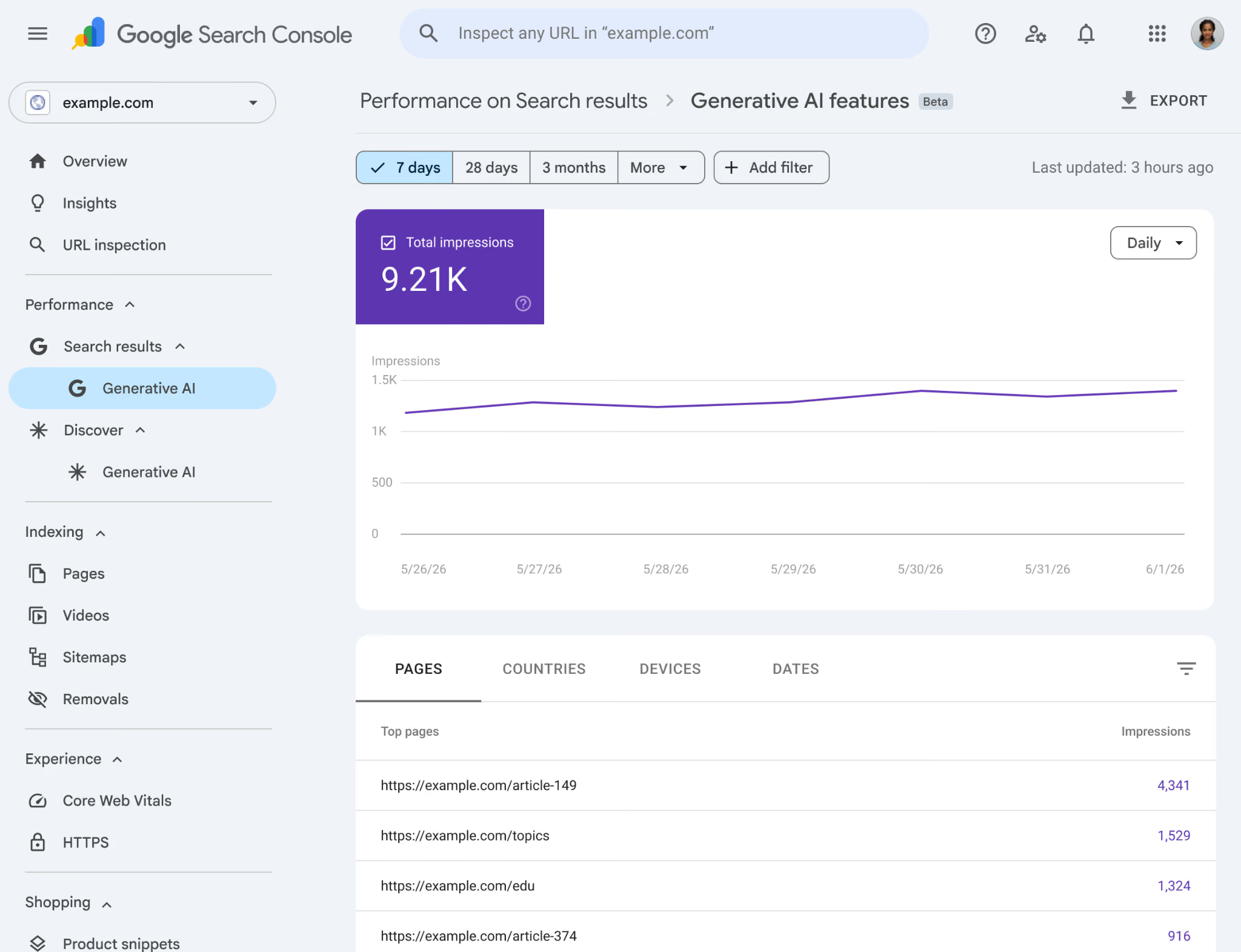
A new Search Console report for AI search. It shows how often your pages appear inside AI Overviews and AI Mode, plus the AI features in Discover. For the first time, the visibility you were getting from Google's AI answers sits in a report you own, instead of an estimate from a third-party tool.
Aleyda Solis spoke for most of the field last year when she asked Google and OpenAI to "release a search console for your LLMs" so teams could measure their content in AI search instead of guessing from the outside. Part of that ask arrived this week.
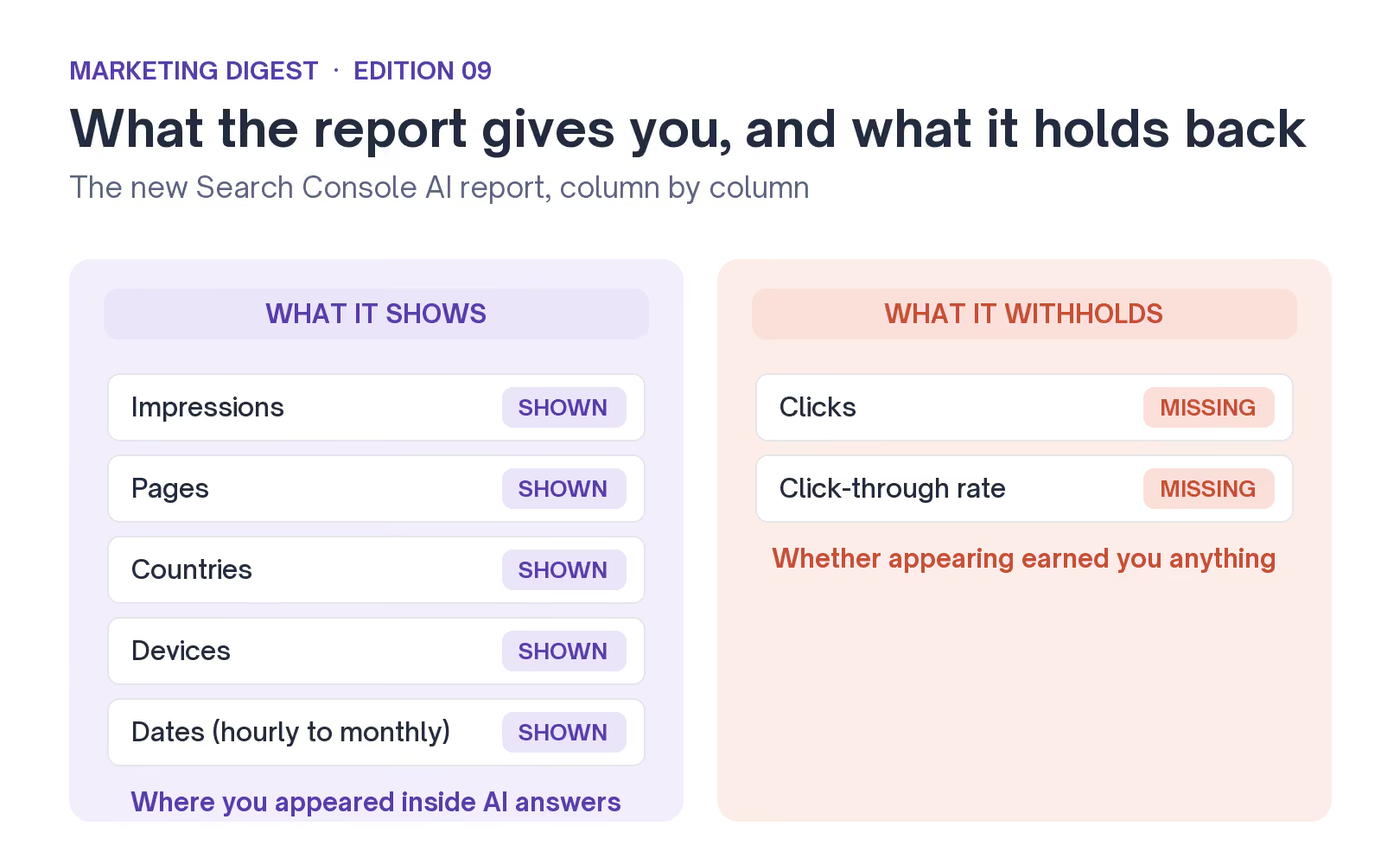
Part, because the report ships with one column missing. You get impressions, pages, countries, devices, and dates. You do not get clicks. A Google spokesperson told Search Engine Land the company is "continuing to work with website owners to understand what insights will be most helpful" and will add more metrics over time.
There's a second piece in the same release. A toggle that lets you keep your site out of Google's AI answers entirely. And it's moving slowly: a subset of website owners in the UK get it first, with everyone else waiting on a global rollout.
What an impression in this report means
An impression here means your page was eligible to show up inside an AI answer. It does not mean you were the source the model quoted, and it does not mean a single person clicked through to you.
Last week we walked through the same split from the other side. When your position holds and your impressions hold but your clicks fall, that is Google answering the query above the results and keeping the click. The work that wins it back is GEO, not a ranking rewrite. Google has now handed you the impressions half of that diagnosis. The clicks half, the part that proves the interception, is the column they kept back.
So the report tells you that you appeared. It does not tell you what appearing did for you.
The number Google left out - the one that matters?
Impressions tell you that you showed up. Clicks tell you whether showing up did anything for you. Leave clicks out, and the report can draw a line that climbs all quarter while your AI search traffic sits flat.
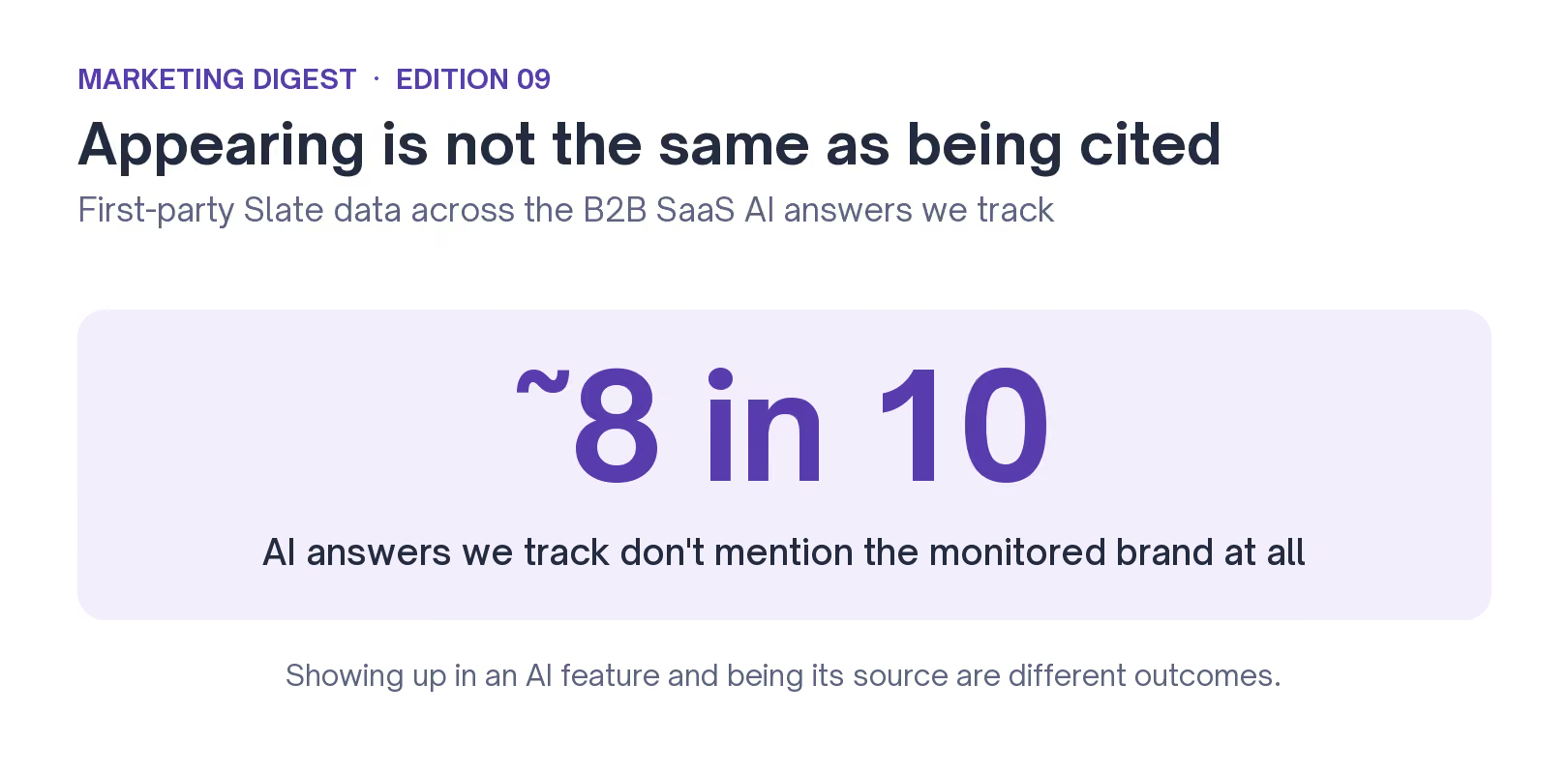
There's a wider gap underneath this, too. Across the AI answers we track for the B2B SaaS accounts we run SEO for, the brand we monitor goes unmentioned in about eight of every ten responses. Showing up in an AI feature and being the source it cites are two different outcomes, and the distance between them is large.
Closing that distance is the point of a GEO programme. It works to make your page the source an answer is built on, which is the step an impression count never confirms. A rising impressions line feels like progress. Whether it turns into pipeline is the question the report still leaves open.
The opt-out toggle is a trap for most B2B SaaS
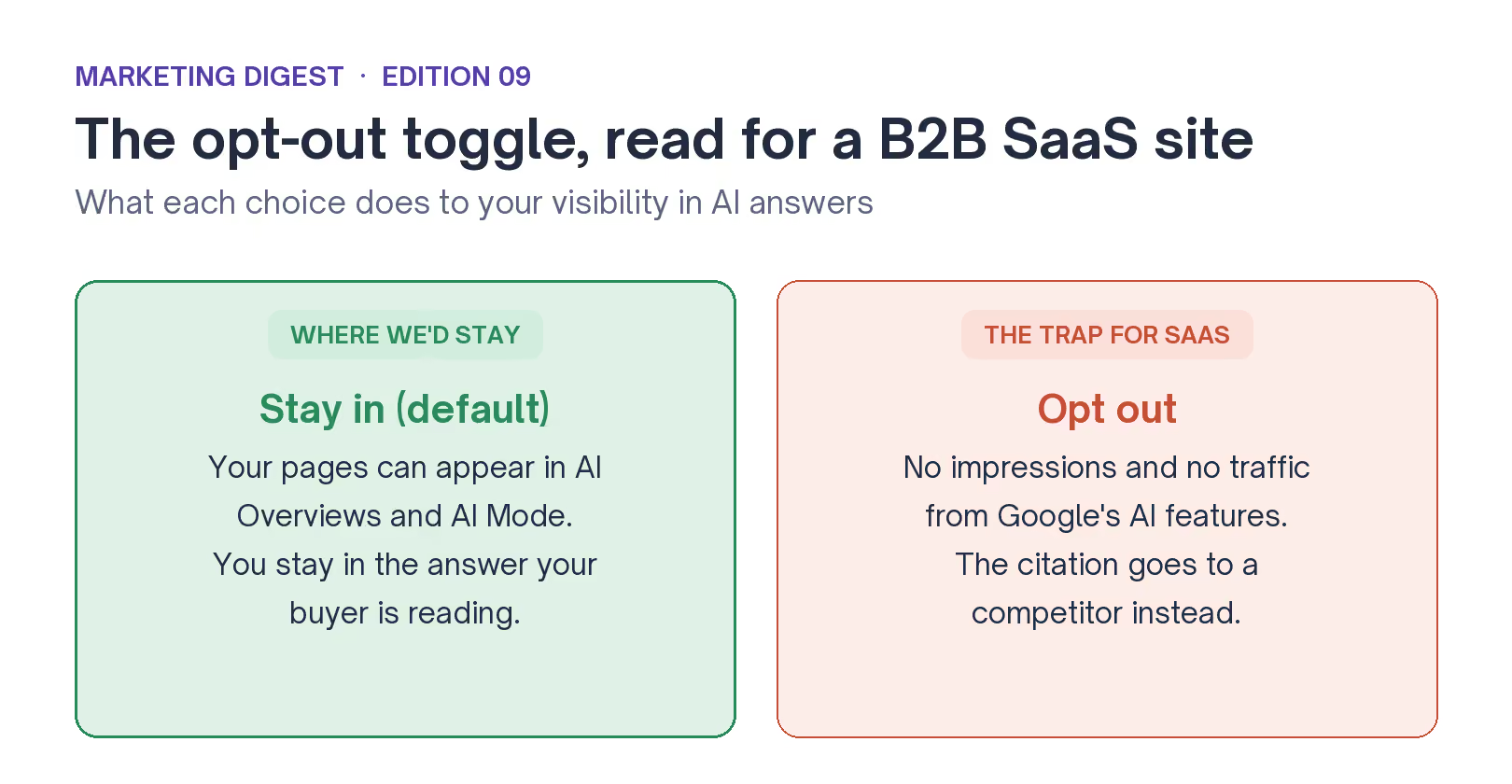
The same release hands you a switch to pull your site out of Google's AI answers. Google says sites that opt out "will not receive traffic or impressions from our generative AI features," and that the choice won't hurt your normal search rankings.
For most B2B SaaS sites, flipping that switch is the wrong move. Your buyers are already asking AI tools which products to shortlist. Vanishing from those answers, to protect a click you may not have been getting in the first place, hands the citation straight to a competitor.
The toggle suits a narrow kind of publisher whose whole model is the click and who gets nothing from being summarised. A company selling software is not that. You want to be inside the answer your buyer reads.
What to do this week
So the work splits into a few clear moves while the rollout reaches you.
- Check whether you even have the report yet. It's going to a subset of UK site owners first, so most accounts won't see it for weeks. Outside the UK, you wait.
- When it lands, read impressions as reach, not as results. A climbing AI-impressions line means you're eligible to appear, nothing more. Pair it with your referral analytics before you call it a win.
- List the queries where you appear in AI features but earn no clicks in standard search. That overlap is where the AI answer is taking the click, and it is your GEO priority list.
- Leave the opt-out toggle alone unless you are a pure publisher. For a SaaS site, being summarised beats being invisible.
- Start the citation work now, without waiting for the clicks column. The pages that get cited are the ones with first-party data and a named author, the same pages that hold through every core update.
None of this needs the missing column to begin. The teams that get ahead in AI search are the ones treating impressions as a starting line, then chasing the citation the report won't measure for them yet.
If you want to map your AI-impression queries against the clicks they return, compare notes with us.
We'll be back when the clicks column ships.