
Google drew a line around third-party SEO tools
On June 7 Google said it doesn't endorse any SEO tool and that none can see its ranking data. That's accurate, and it's only half the map now that AI answers live outside Search.
Contributor

Abishek Balaji
Content Marketing Manager
In this article
On June 7, Google published a page about the tools you already pay for. It wasn't a product or an algorithm update, just a short piece of documentation on how to think about third-party SEO tools, services, and advice. It's the first time Google has put this in one place. And if half your team runs one of those tools, the wording is worth reading closely.
The story
Google added a new help doc on using third-party SEO tools, services, and advice, and rewrote the older "Do you need an SEO?" page. The reason it gave was plain: to help people weigh third-party tools and advice, and to trim outdated examples from the docs. For anyone who runs SaaS SEO day to day, the wording is the interesting part.
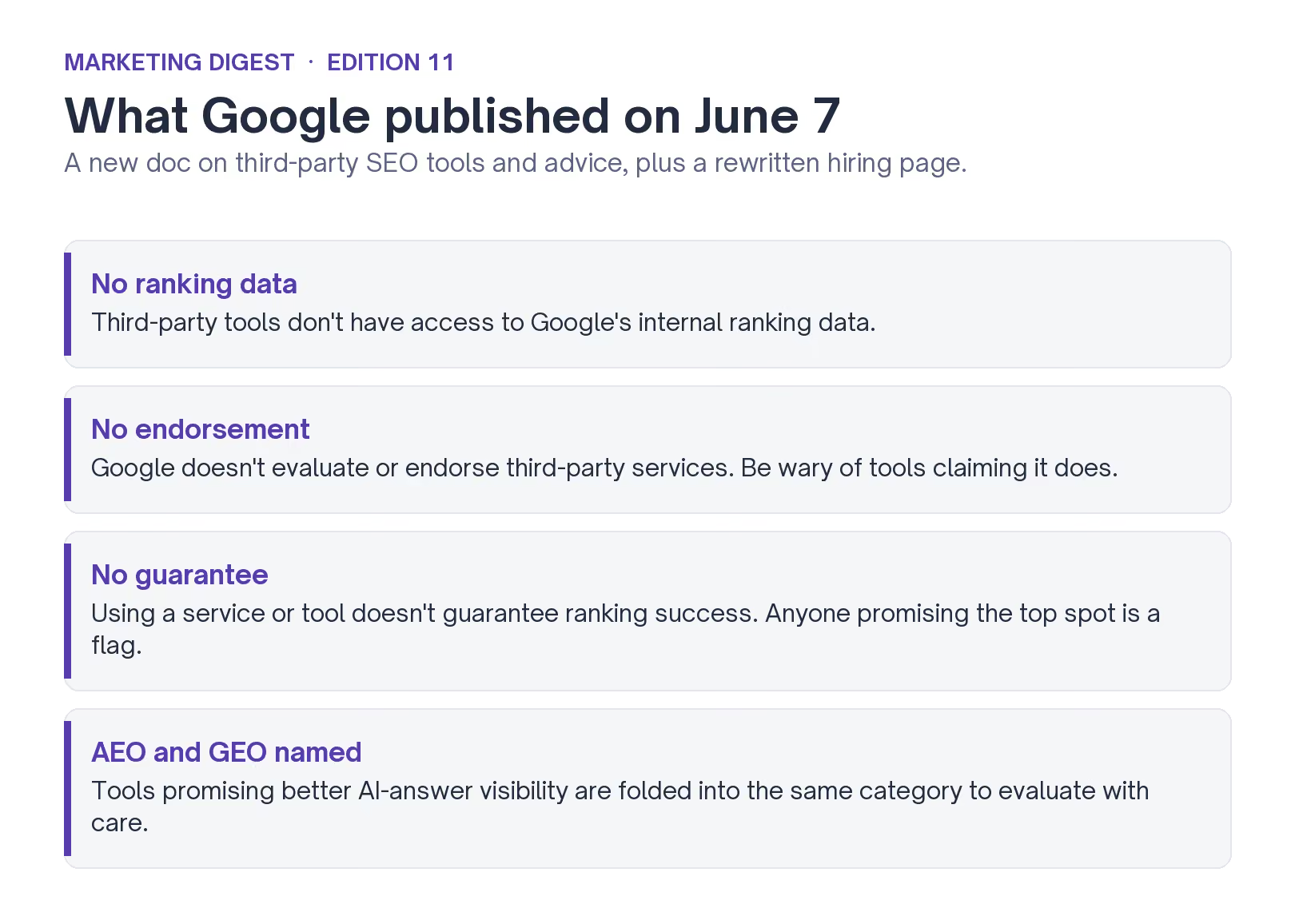
Read the guidance and a few lines do the work. "Third-party tools don't have access to our internal ranking data." "Google doesn't evaluate third-party services, so be wary of such claims and those making them." And "Using a service or tool doesn't guarantee ranking success."
Google also points readers back to Search Console for data that comes straight from Search, and tells you to be wary of any tool that bills itself as approved by Google. The hiring advice kept its longstanding warning too: an SEO who guarantees you the top spot is a reason to walk away.
The newer part is that the doc names "AEO" and "GEO" tools directly, the ones promising better visibility in AI answers, and folds them into the same category you should evaluate with care.
What the field read into it
Most of the trade coverage read this as Google planting a flag, not picking a fight with any single vendor. The wording is careful, but the direction is hard to miss.
Roger Montti at Search Engine Journal called it Google's strongest claim yet to be the authority on SEO, and asked the question everyone keeps coming back to: why Google is doing this now. Barry Schwartz at Search Engine Land covered the change as a documentation cleanup with teeth: shorter pages and a sharper line between Google and the tools that trade on its name.
It connects to a bigger argument Google has been making since May: that AEO and GEO are still SEO, and that strong fundamentals carry you into AI answers without special hacks. That claim is true and incomplete at the same time, and the gap is where this gets interesting for anyone running AI-search work.
Where Google's guidance ends
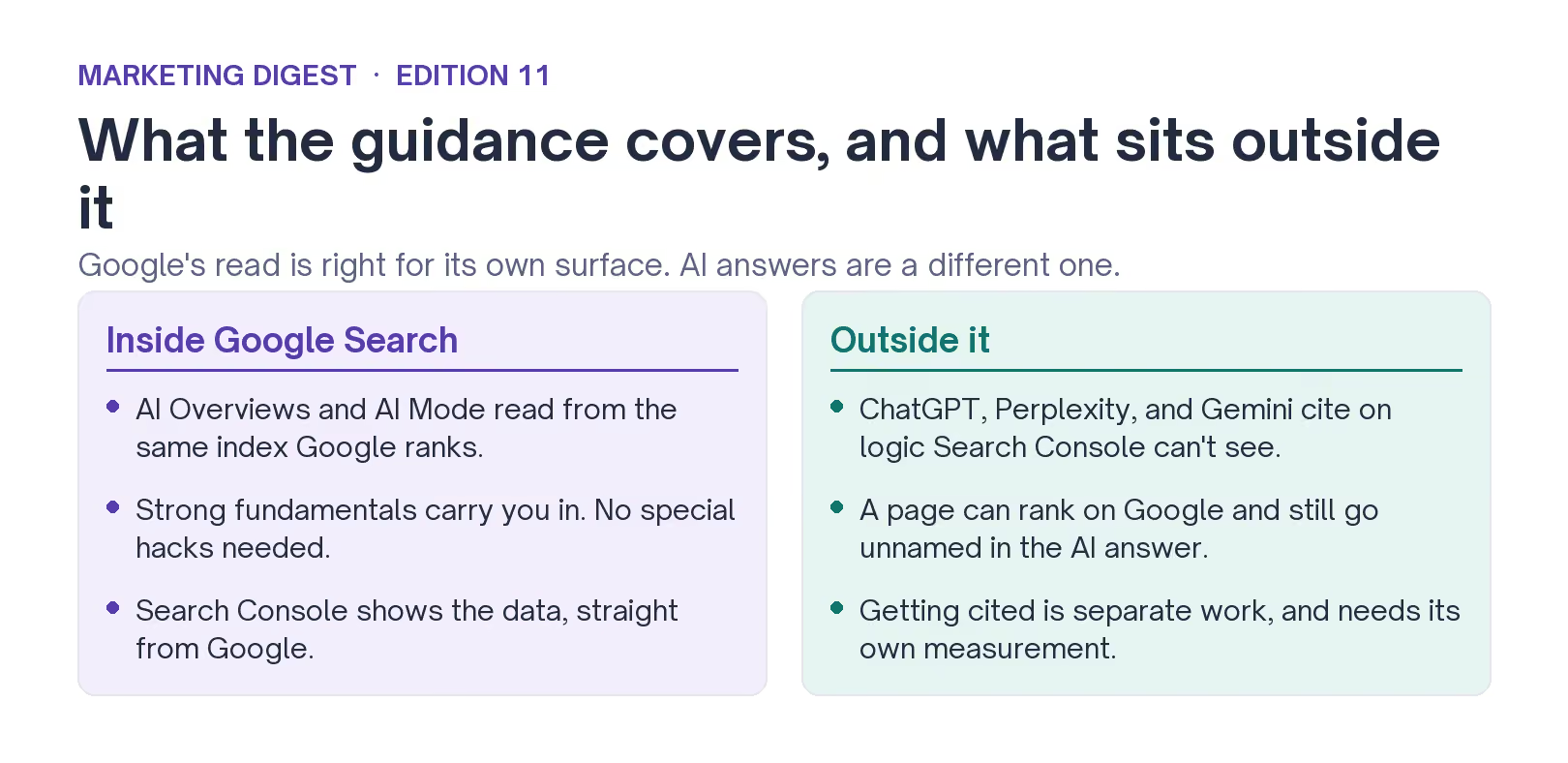
Google's guidance is accurate inside Google Search. No third-party tool can see its ranking systems, and none was ever sanctioned. Doing the fundamentals well does carry you into AI Overviews and AI Mode, because those features read from the same index Google already ranks.
The wall is that Google Search isn't the whole of AI search anymore. ChatGPT, Perplexity, and Gemini's standalone answers pull from sources Google's index doesn't fully govern, and they name brands on logic Search Console doesn't report. A page about optimizing for Google's own AI features says nothing about whether ChatGPT cites you.
Across the B2B SaaS accounts we run GEO programs for, the brand still goes unmentioned in most of the AI answers we track for their core queries, even when the same pages sit on page one of Google. Strong fundamentals got those pages ranking. Getting them named in the AI answer is separate work, and it needs its own measurement, because Search Console won't show it to you yet.
What this means for your stack
None of this is a reason to drop your tools or your AI-search work. Use both, and use Google's own test to check what they tell you. The doc gives you a clean way to vet any tool or consultant. Three questions:
- Does the advice cite official Google documentation, or at least flag itself as opinion?
- Does it line up with Google's published guidance for AI features, rather than contradicting it?
- Does the tool lean on data you can see, like Search Console, instead of a number it implies came from Google?
Keep the tools for what they measure: rankings, crawl health, content gaps, and where you do and don't appear in AI answers. Anchor every recommendation in Google's own docs. And don't let a relabeling exercise talk you out of answer engine work that Google's own page can't measure for you.
Google's guide is right about Google Search. AI answers now sit well outside it, and that gap is where the work and the tools still matter. If AI citations are on your Q3 plan, book a call and we'll show you where we'd start.