
Bing's AI reports now measure your citation share
Bing just added intent tagging, topic clusters, citation share and period-over-period comparison to its AI reporting, all in preview. The reporting layer for AI search is starting to look like analytics, and the most useful number is the one Google still won't show you.

Contributor

Abishek Balaji
Content Marketing Manager
In this article
For about two years, working out whether you turn up in AI answers has meant…guesswork.
Bing is beginning to change that.

The story
Bing Webmaster Tools has had an AI Performance Report since February, when it went into public preview.
It counts how often your pages get cited inside Bing's AI answers and Copilot, the kind of AI search visibility SEO teams have spent two years trying to measure from the outside. (A grounding query is the search the model runs in the background to pull sources for its answer.)
On June 16, Bing started adding four AI Visibility features to that report, all in preview, for everyone:
- Intents. Each grounding query gets tagged by what the searcher wanted, like informational, commercial or navigational intent.
- Topics. Related queries get grouped into broad subject clusters.
- Citation Share. For a single query, the percentage of all the citations that point to your site instead of someone else's.
- Compare. Overlay an earlier time period on the current view to see how your citations moved.
Krishna Madhavan, the principal product manager at Microsoft AI and Bing, previewed these at SEO Week in New York back in April. This week they started showing up in dashboards. It's still preview software, so treat the numbers as directional for now.
What is AI citation share?
Citation share is your share of voice inside an AI answer. For a single grounding query, it's the percentage of all the sources Bing cites that point to your site rather than a competitor's. Bing describes it as the slice of the citation space your site holds on a given query.
Raw counts tell you that you showed up. Share tells you how much of the answer is yours and how much belongs to everyone else.
But a count alone hides the size of your slice. An AI answer usually leans on a handful of sources, so being one of eight is a long way from being the one it builds on.
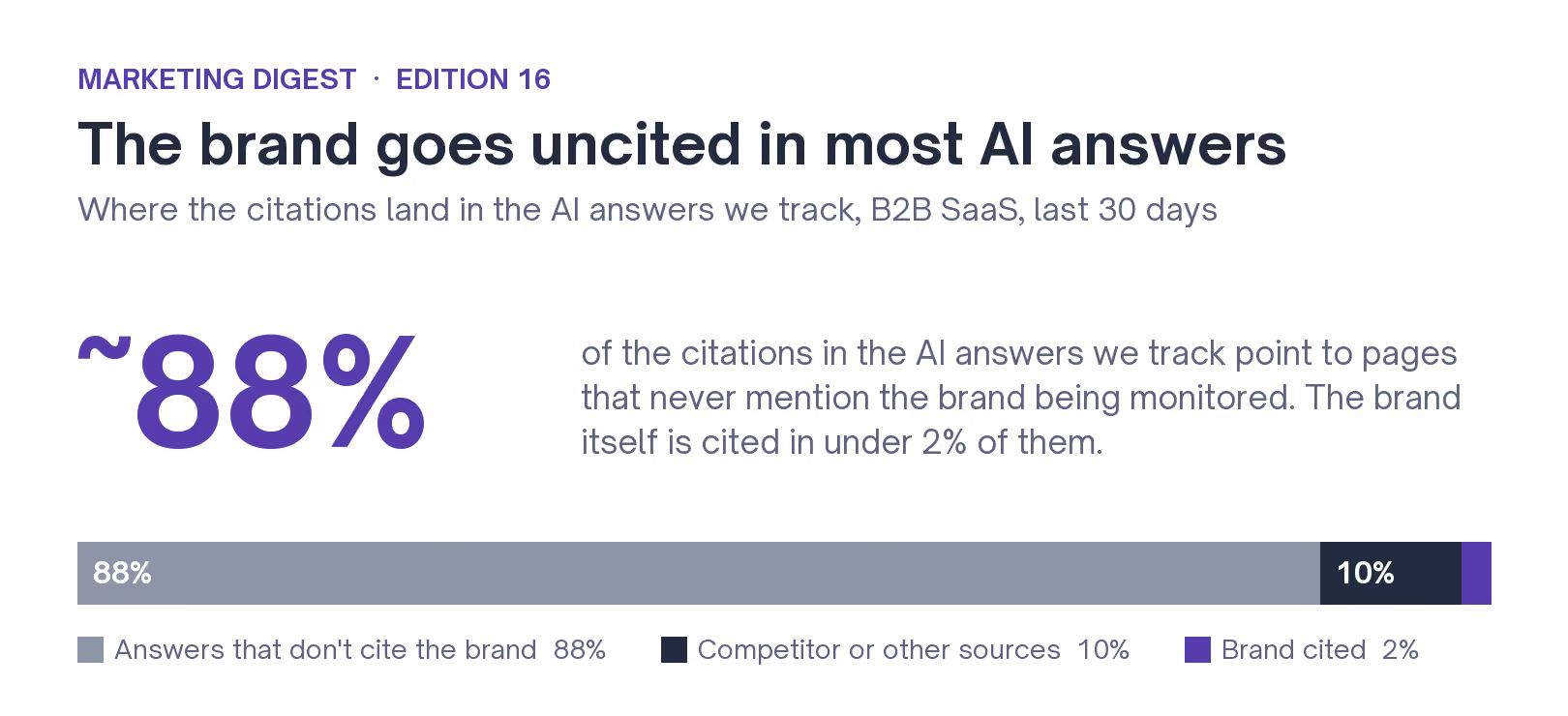
Most teams have little sense of how thin their slice is. In the AI answers we track for B2B SaaS, the brand being monitored goes uncited in close to nine of ten responses; across the last month that share sat at about 88%.
So citation share would put a per-query number on exactly that gap. Instead of a vague sense that you're missing, you'd see you hold 4% of the citations on a query you care about while a competitor holds 30%.
A couple of weeks ago, Google gave SEOs a Search Console report for AI answers that counts impressions but stops at the click, the same impressions-up, clicks-down pattern we keep seeing. Bing's citation share goes a step past that. It tells you not just that you appeared, but how much of the answer you held.
Intent and trend lines make it usable
Citation share is most useful once you can slice it and track it, which is what Intent and Compare add.
Intent tags let you pull out the commercial-intent queries, the ones near a buying decision, from the broad informational ones. You can look at your share on just the queries where a buyer is comparing tools, instead of averaging it across every how-to question.
And Compare lets you put last month next to this month, so after you publish or restructure a page, you can see whether your share on those queries moved.
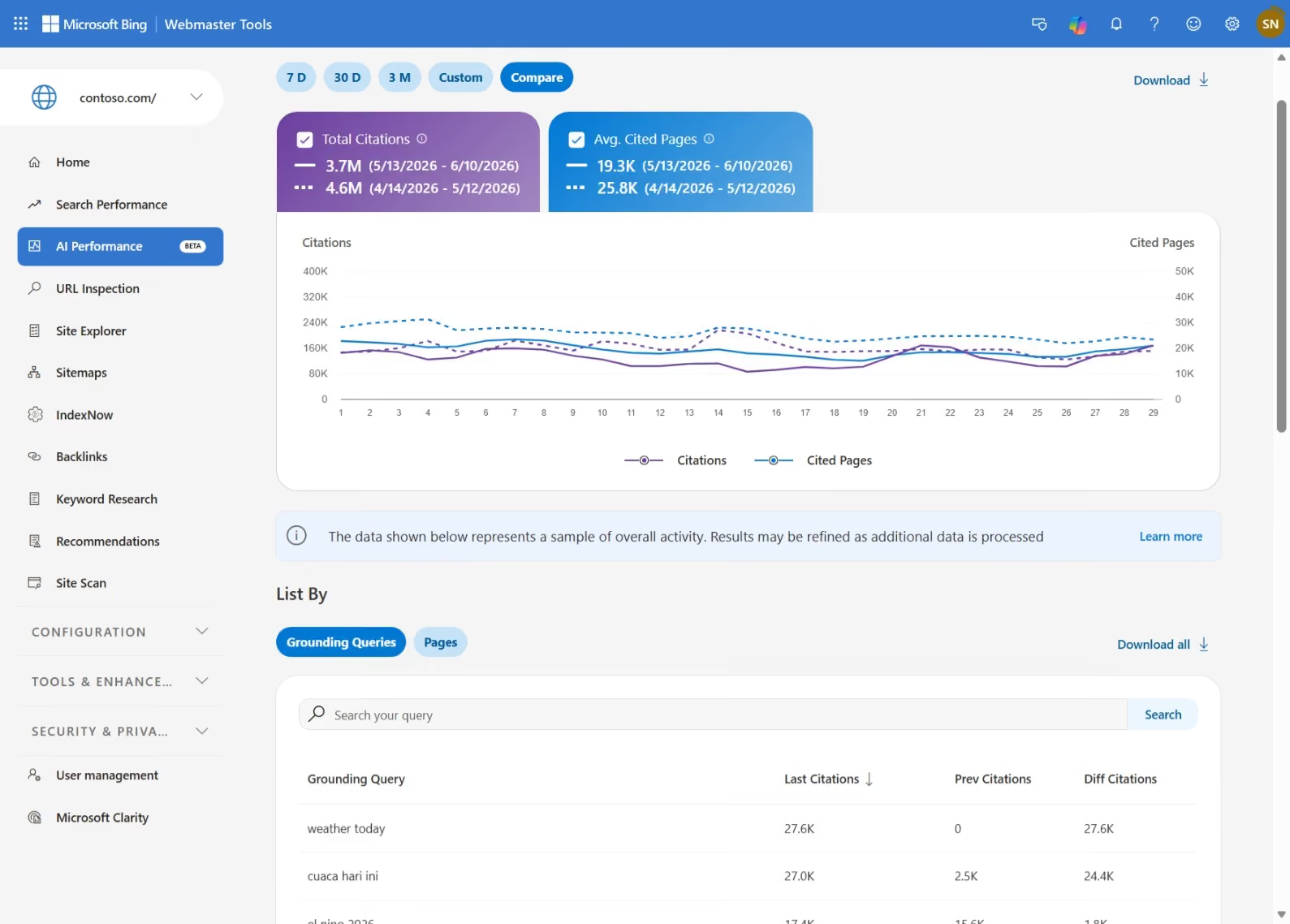
Put together, that's share of voice you can read by intent and watch over time. That's the shape of an analytics report.
A year ago you got the first row, if you got anything.
Topics is the weak one
Topics is the least useful of the four, at least today. It groups your grounding queries into broad subject clusters so you can see which areas you're gaining ground in.
The clusters are too broad to act on. For most B2B SaaS, the queries pile into buckets like Business or Marketing and Advertising, which says almost nothing about which page to write next. Search Engine Land flagged the same limit: Microsoft concedes the preview labels can still be broad, especially for niche domains. Fine for a category-level glance, not for planning.
Where this leaves AI-search measurement
The bigger thing here is that the engines running AI answers are starting to report like analytics platforms. A year ago you got a raw count, if you got anything at all. Now you get share of voice, broken out by intent and tracked over time.

Bing is ahead of Google on the number that matters. Google's AI report shows you reach; Bing's citation share shows you how much of the answer you hold on a given query, and lets you watch it move. Even in preview, that's the measurement layer the GEO and AEO work of getting cited in AI answers has been missing.
One thing is worth doing now, preview or not, and even though Bing is a smaller slice of AI search than Google or ChatGPT: turn the report on and capture a baseline. Compare only works once it has an earlier period to measure against, so the sooner you start, the sooner you can watch your share move.
If you want to know where your citation share stands across the AI answers your buyers see, benchmark it with us.