
The May 2026 Google Core Update: What We Know So Far
A few days into the rollout, the volatility is heavier than December and the winners and losers are starting to look like March. Here is what we can say with confidence today, and where the data still needs to settle.
Contributor

Abishek Balaji
Content Marketing Manager
In this article
For the after-update story, check here
The update started rolling out on May 21, two days after Google I/O. That timing is the first thing worth sitting with.
Most SEO teams woke up on the 22nd to dashboards that looked off. Some saw clients down by half. Others saw nothing. The gap between "got teeth" reports on Search Engine Roundtable and "no movement" notes from inside the same vertical is itself a signal about what this update is doing.
Here is what we can say with confidence after five days inside the rollout, and where we will need to wait before drawing harder conclusions.
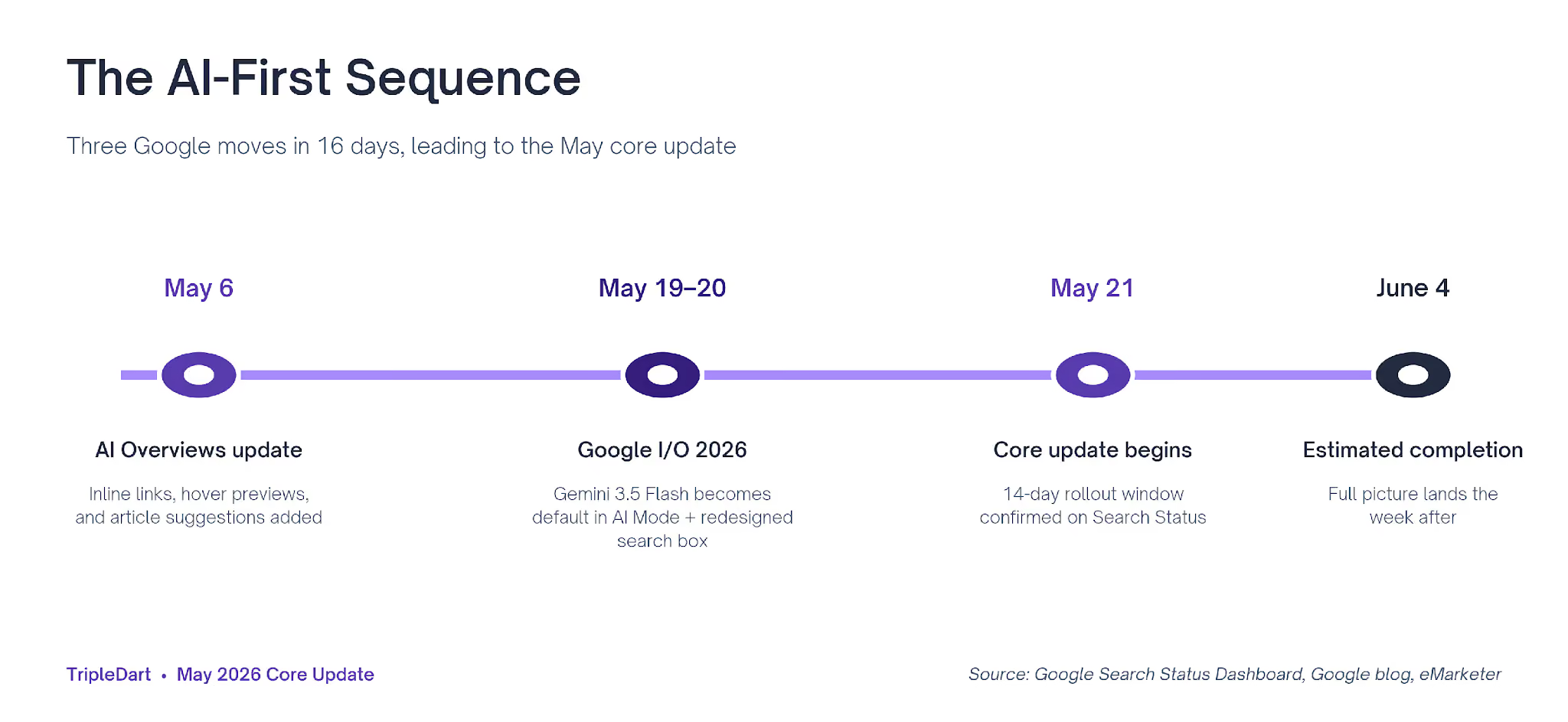
The three Google moves that frame this core update.
What Google Has Officially Said
Not much, in the usual style.
The Search Status Dashboard confirmed the update at 8:43 a.m. PT on May 21, with a 14-day rollout window. Completion lands around June 4.
Google's stance has not changed since 2023: nothing specific to remediate, and recovery from one core update tends to arrive with the next. Anyone not reading it for the first time knows it is the only honest answer Google can offer.
What is new this time is the context around the update. It landed two days after Google I/O 2026, where Gemini 3.5 Flash became the default model in AI Mode and the search box got its biggest redesign in 25 years.
This update sits inside a larger move toward AI-first surfaces, and that frame matters when we read the early data.
How Bad Is the Volatility?
Worse than December 2025, by a clear margin.
Early sensor data from Digital Applied's Day 3 report shows 79.5% of top-3 URLs moved position, compared to 66.8% during the December 2025 update. That is a 12.7-point jump.
The deeper number is what happened to top-10 pages. 24.1% of them dropped out of the top-100 entirely, nearly double the 14.7% rate from December. When a page goes from page one to page eleven, Google has stopped trusting it for the query.
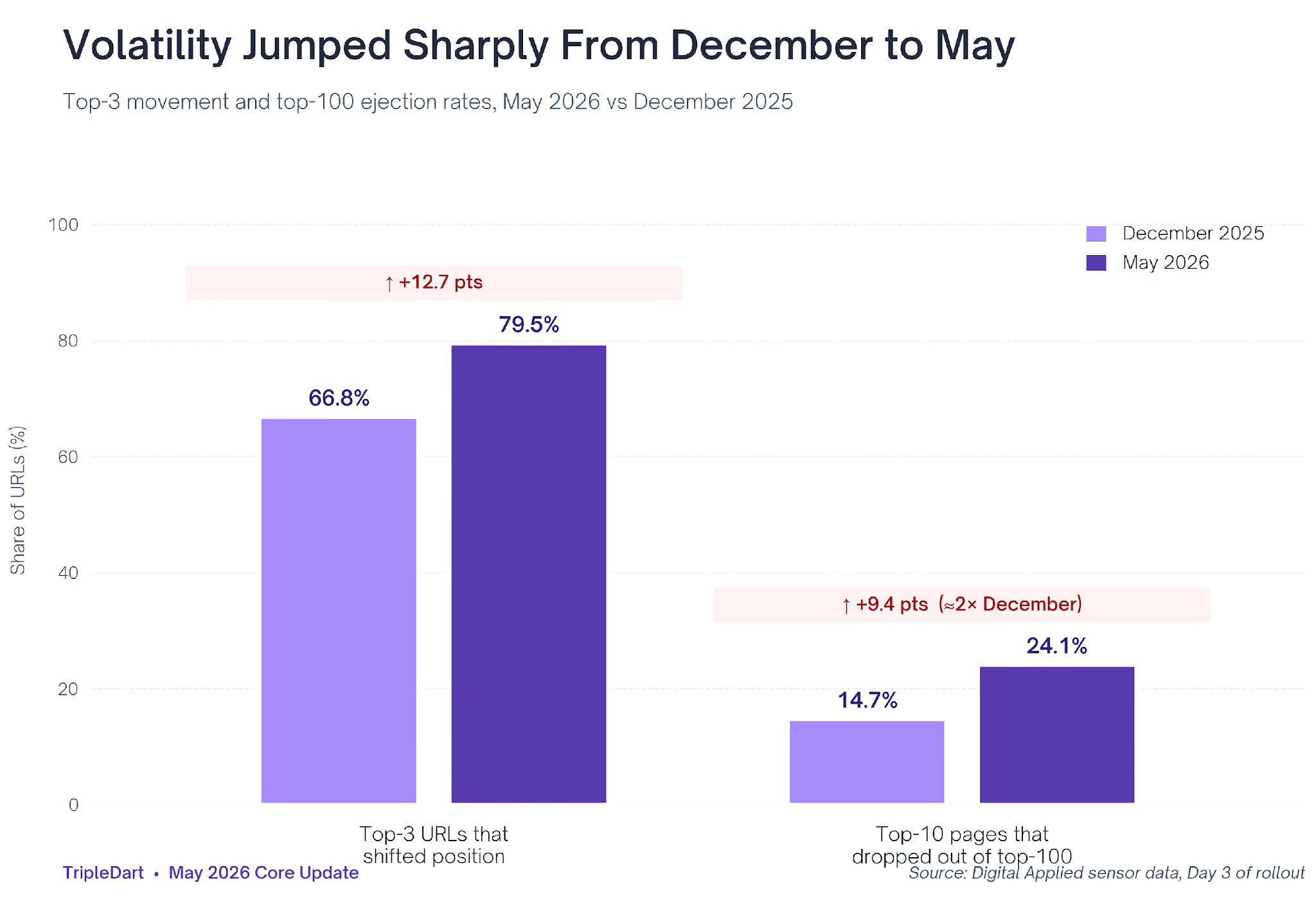
The two numbers that explain the chatter in SEO Slack channels right now.
We will need to wait for the rollout to finish before treating these as final figures. Mid-rollout volatility tends to overstate the eventual swing, and Google itself recommends waiting at least a full week after completion before comparing Search Console data.
What Patterns Are Holding So Far?
The clearest pattern is one we saw in March 2026 too: aggregators losing ground to brand-owned and source-owned domains.
Amsive's March analysis tracked the specifics.
Visibility losses spanned categories: JustWatch -24%, Rotten Tomatoes -8.5 VIS, Indeed -18%, ZipRecruiter -21.6%, with both NerdWallet and CreditKarma slipping in finance. Brand-owned and government domains gained ground across the same verticals: NIH.gov and FDA.gov rose in health, hotel chains climbed past OTAs in travel, and government job boards moved ahead of Indeed and ZipRecruiter in jobs.
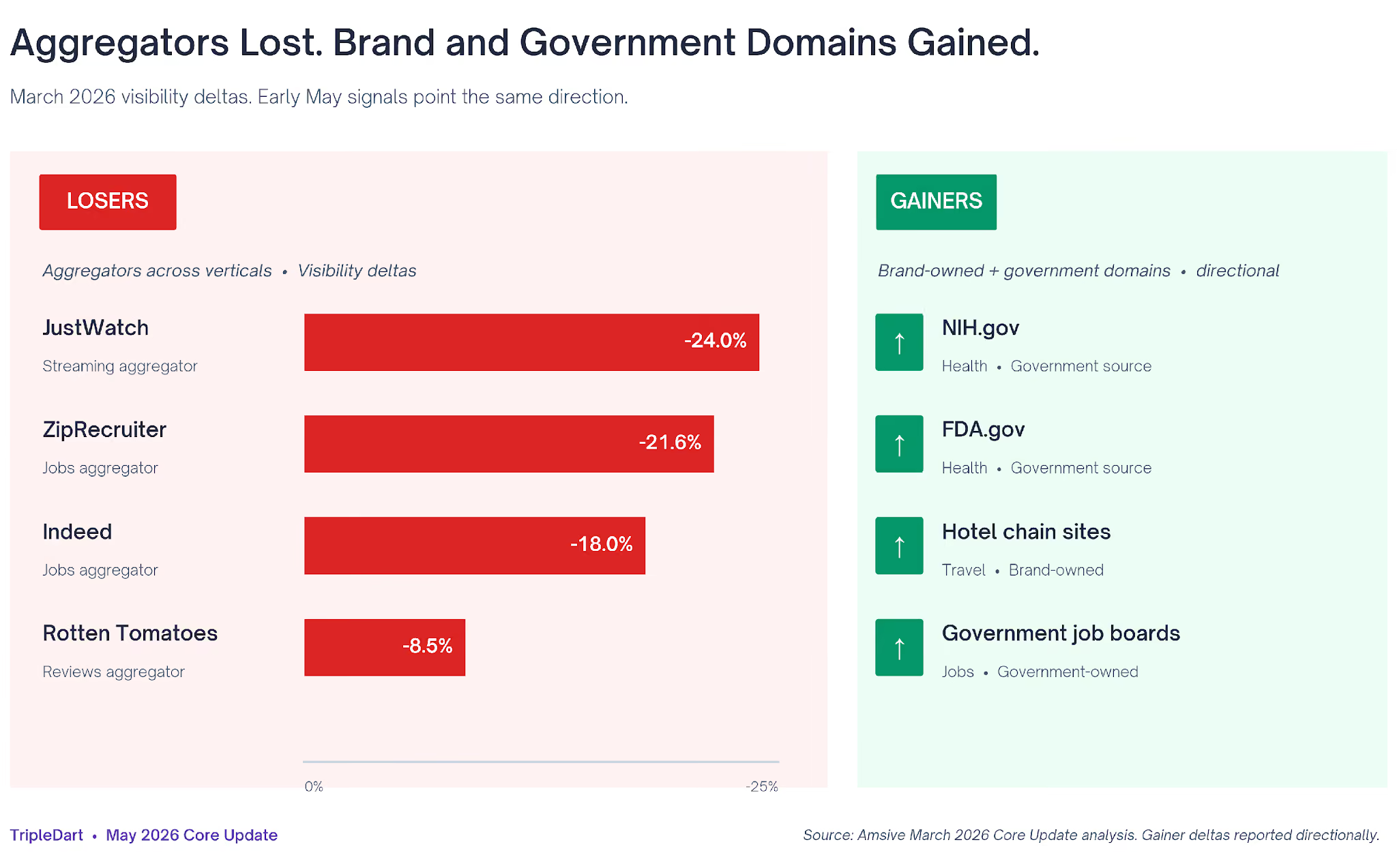
March 2026 visibility deltas. Early May signals point the same direction.
Early May signals point the same way. Sites running thin informational content, scaled AI-generated pages, or no clear author attribution are absorbing the heaviest drops. Pages with schema markup and named expert voices are holding better.
We need more days to confirm whether the May update intensifies that pattern or breaks from it. The full picture lands after June 4.
Why Now?
Two days before it started, Google announced a redesigned search box, agentic search features, and Gemini 3.5 Flash as the new default in AI Mode. Two weeks earlier, on May 6, Google added inline links, hover previews, and end-of-answer article suggestions to AI Overviews. Those five changes were aimed at giving publishers a slightly bigger share of the click pie.
That sequence reads as one coordinated play. AI Overviews and AI Mode work by citing sources, and the citation slots are limited. If Google is going to keep expanding generative answers, where 58.5% of US searches already end with zero clicks and 93% of AI Mode sessions end without a click, then the corpus those features pull from needs to be tighter and easier for the model to verify.
Google is cleaning the pool that AI Mode and AI Overviews draw from. Brand-owned domains, government sources, named experts, and schema-tagged pages are content the generative layer can cite without risk. Aggregators, thin AI-written summaries, and structurally ambiguous pages create citation risk Google would rather avoid.
Whether that read fully holds will be clearer once the rollout completes, but the directional alignment between the I/O announcements and the update timing is too tight to treat as coincidence.
What Should SEO Operators Do This Week?
Not much yet.
The instinct after a volatile update is to start changing things, push new content out, rewrite intros, prune pages flagged as low-quality. Almost all of that is premature. Mid-rollout data is too noisy to diagnose what is moving, and changes made during this window will contaminate the post-rollout analysis we need to do later.
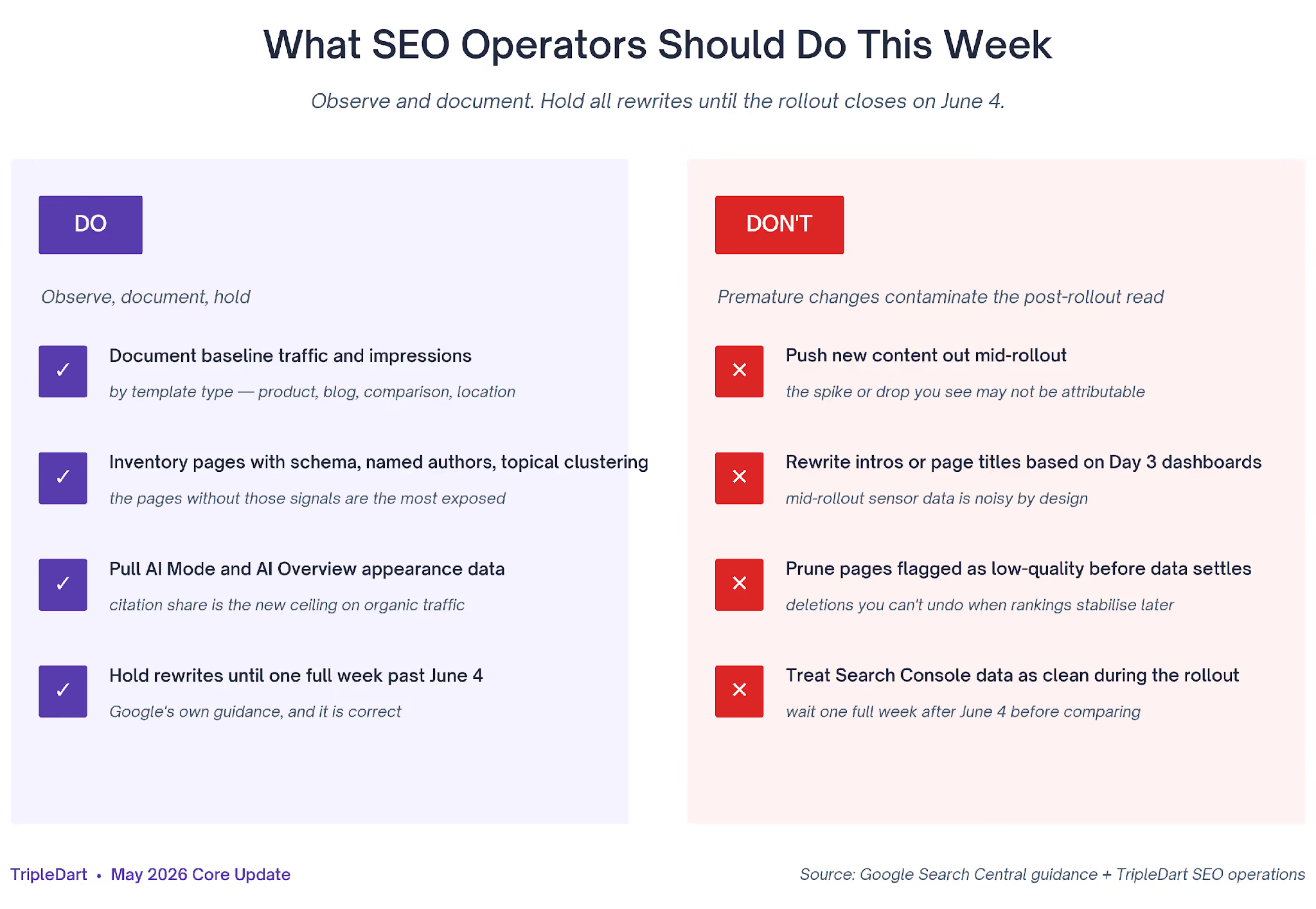
The week-of-rollout playbook for SEO ops teams.
The work for this week is observational:
- Document baseline traffic and impressions by template type (product pages, blog posts, comparison pages, location pages) before further movement. We will need this delta to attribute losses or gains cleanly later.
- Inventory which pages already have schema, named authors, and topical clustering versus which do not. Pages without those signals are the most exposed.
- Pull AI Mode and AI Overview appearance data for your top queries if you have access. Even when rankings hold, citation share is the new ceiling on organic traffic.
- Hold off on content rewrites until at least one full week past June 4. Google's own guidance says so, and it is correct.
What We Will Know in Two Weeks
By mid-June, the rollout will have completed and Search Console data will be clean enough to compare. The full winner/loser picture from third-party vendor reports (Sistrix, Semrush sensor, SearchMetrics) lands by the third week of June.
The questions worth tracking by then:
- Did the aggregator-to-brand pattern from March intensify or hold steady in May?
- How did AI-generated content score against human-written content at the same depth and authority level?
- Where did the citation traffic from AI Overviews and AI Mode flow once ranking volatility settled?
We will write a follow-up once those numbers are clean. For now, what we know is enough to position correctly. This update has teeth, it runs heavier than December, and the operators who treat it as part of Google's AI-first re-architecture will read the data better than the operators who treat it as a standalone ranking shuffle.
For the after-update story, check here