
How Corey Haines Uses Claude Skills to Run Marketing End to End
Contributor

Corey Haines
Co-Founder, Conversion Factory; Founder, Swipe Files; Co-Founder, SwipeWell

Glenn
Organic Growth Manager @ TripleDart
In this article
Most marketing demos open with a deck. Corey Haines opened a terminal.
And he warned everyone first. He's not a theory guy, so the whole session was a live build. The tool's non-deterministic, he said, so even a demo he's run a thousand times comes out a little different each time.
Corey founded Swipe Files and co-founded Conversion Factory, a B2B SaaS agency. He's spent years on growth, content, and conversion for software companies.
His take on AI in B2B marketing is simple. Break marketing into single units of work. Decide which ones an agent should run and which still need a person. Then write the agent's units down as Claude skills it can reuse.
Here's how the session went:
- Where his marketing skills came from
- What a Claude skill is when you open one up
- Why he runs everything from the terminal
- A live build that took FormCraft from a thin homepage to ten live SEO pages
- What to keep doing yourself once agents handle the rest
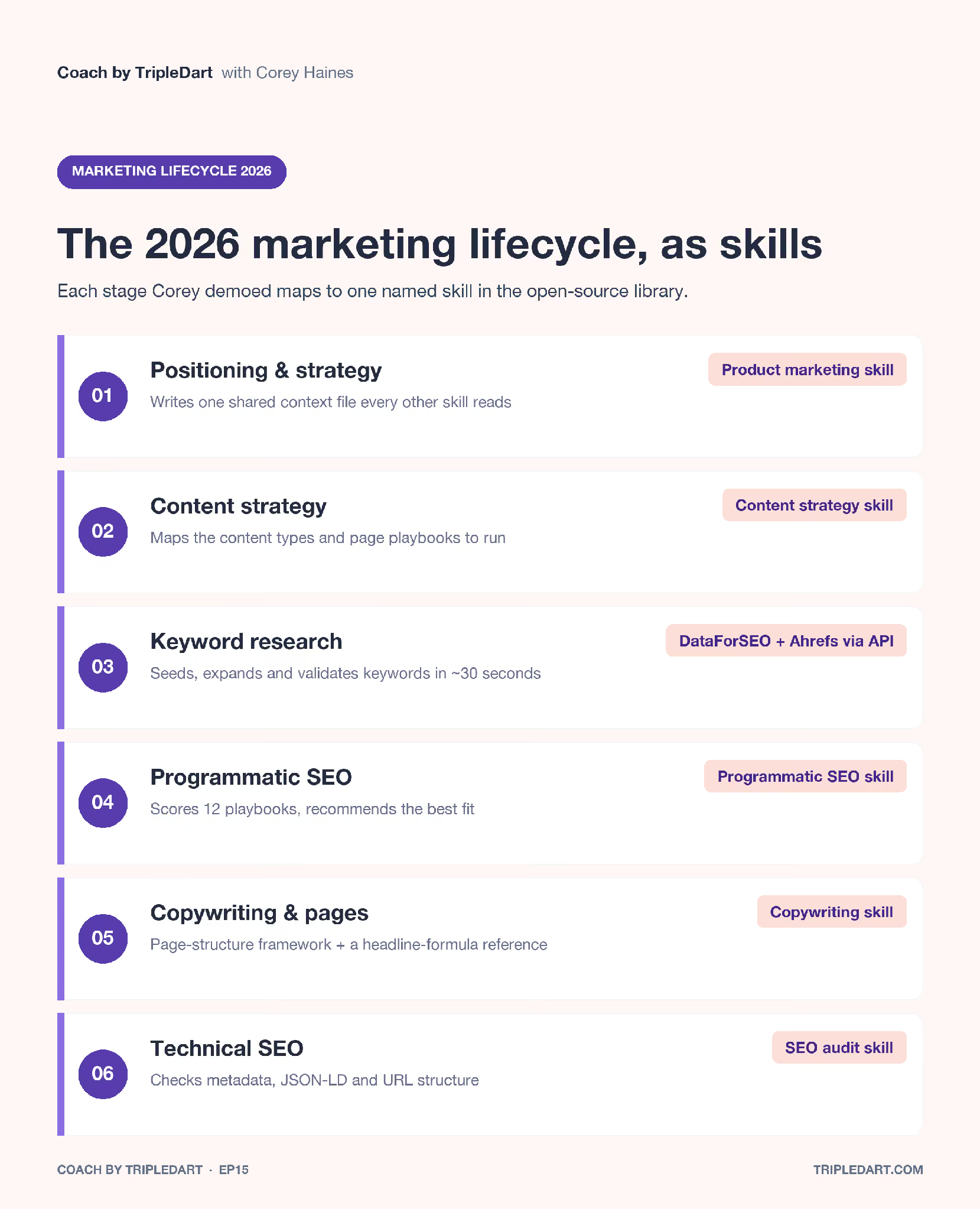
The whole 2026 marketing lifecycle was on the table, each stage with a skill behind it.
Watch the full session here: Claude Skills for Marketing with Corey Haines.
Where Corey's marketing skills came from
The marketing skills began as a filing cabinet, years before any agent touched them.
From Notion SOPs to a coding garage
Corey launched Conversion Factory in 2023. And he did what most agency operators do: turned every repeatable process into a standard operating procedure and dumped it in Notion.
How to write a newsletter. How to plan a landing page. How to run keyword research. In a service business, the SOP is close to the product itself.
His first run at using AI was brute force. He pasted whole chapters of his own playbooks into the agent on every task, reloading the same context each time. It got old fast.
The turn came at a coding bootcamp. In August 2023 he flew to a near-stranger's house outside Atlanta and learned to code over two weeks of long days in a garage. That's where he met the early agentic tools, including an editor called Cursor with a chat model built in.
He's built around 15 tools since then. 5 are live.
When Anthropic shipped Skills, the library was born
Late last year Anthropic released its Skills protocol. That handed Corey a way to write his prompts in at a system level, so an agent could follow a long task without him feeding it prompt after prompt.
He put the library on GitHub and called it "marketing skills," a generic name that doubles as an SEO play. It's past 30,000 stars now.
Here's the part that matters for your own AI marketing workflows. Every skill is a real SOP that earned its place. None of it was whipped together over a weekend.
“The agents take what's in my brain, download it into their brain permanently, and access it any time."
What a Claude skill is under the hood
People tell Corey the skills feel like magic. He spends a few minutes killing that, because the mystery is what stops people getting more out of them.
It's just a markdown file
A skill is a text file the agent reads before it works. That's the whole secret.
When someone asks how to get more out of his copywriting skill, he gives two answers:
- Read it. It's plain text and nothing's hidden.
- Ask the agent how to use it. The agent will read the file and work it out.
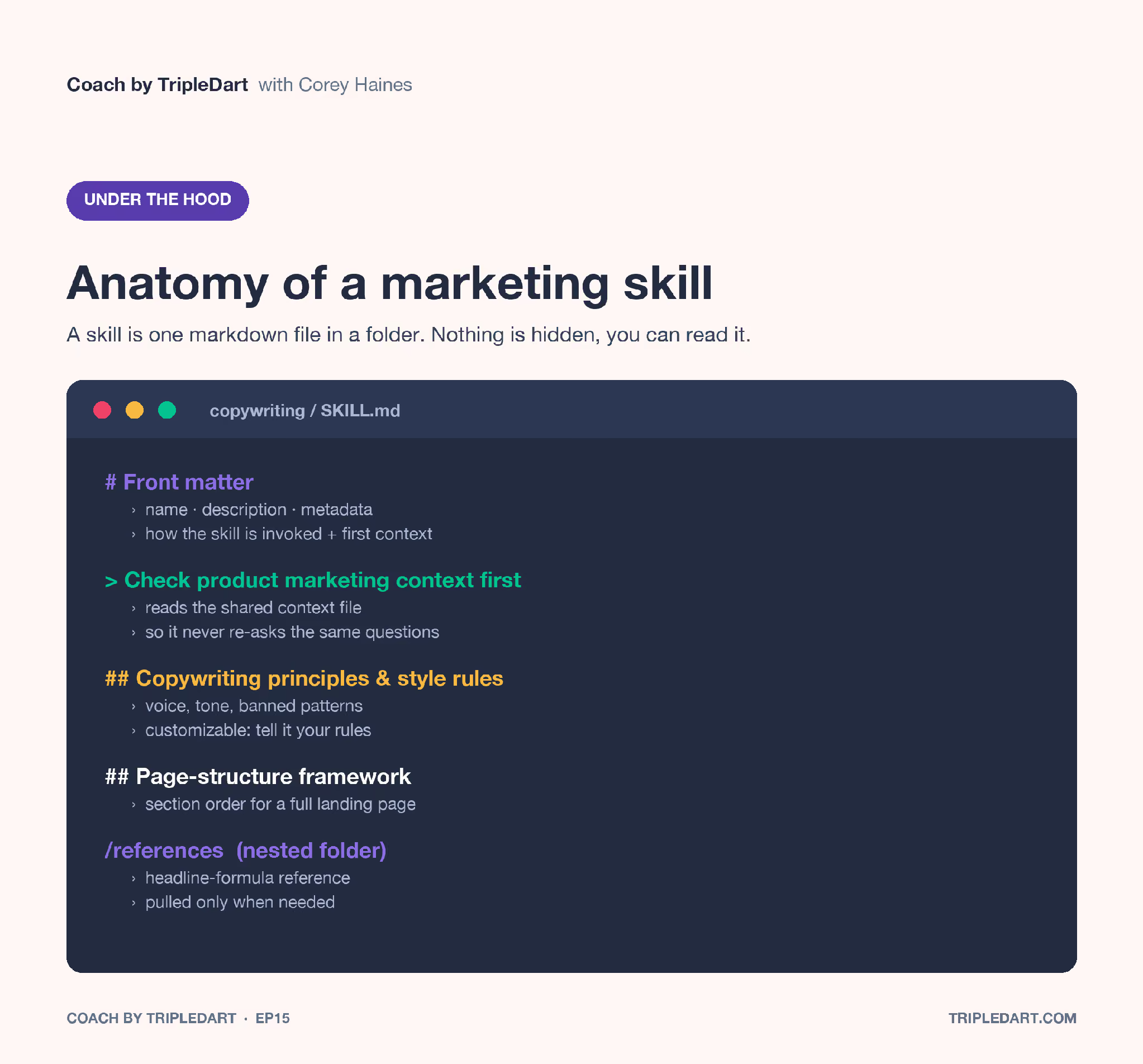
Open the copywriting skill and the layout is plain:
- Front matter at the top: a name, a description, metadata. This is how the skill gets invoked.
- The instructions: copywriting principles, style rules, a page-structure framework, guidance on calls to action.
- A nested folder for anything that doesn't fit. Corey keeps a headline-formula reference the skill pulls only when it's time to brainstorm headlines.
The one trick worth copying
Every skill starts by telling the agent to check a separate product marketing skill first.
Corey built that after the agent kept asking him the same setup questions on every run. Who are your customers. What's your market. What makes you different.
The product marketing skill answers all of it once. It walks you through your product, audience, personas, pain points, competition, and differentiation, then writes the answers into a single context file. Every other skill reads from that file.
You set the foundation once. After that, the agent stops drifting.
You can rewrite any Claude skill in plain English
Say you can't stand the em-dashes Corey writes with. You don't edit the output by hand.
You tell the agent, and it opens the copywriting file and swaps the dashes for commas. The next run sounds more like you. The skill is the steering wheel, and you're allowed to turn it.
Why Corey Haines works from the terminal
The terminal scares people. Corey talks the room down from it, because the terminal is where his approach gets its range.
A back door to everything on your computer
His reasoning is about options. Anything you can do in Claude chat or Cowork, you can also do in Claude Code in the terminal. The reverse isn't true.
The terminal is one of your computer's own tools, with the keys to all the others. It can:
- Spin up headless browsers and run searches
- Read and change your files
- Write scripts, build reports, and generate CSVs
- Drive any other app on the machine
He compares it to a jailbroken iPod, the old trick that stripped away the maker's restrictions.
Code is just text in files
This one took Corey a while to swallow. He used to picture code living somewhere mysterious.
“Code is just text in files. Turns out it's files inside folders, same as everything else.”
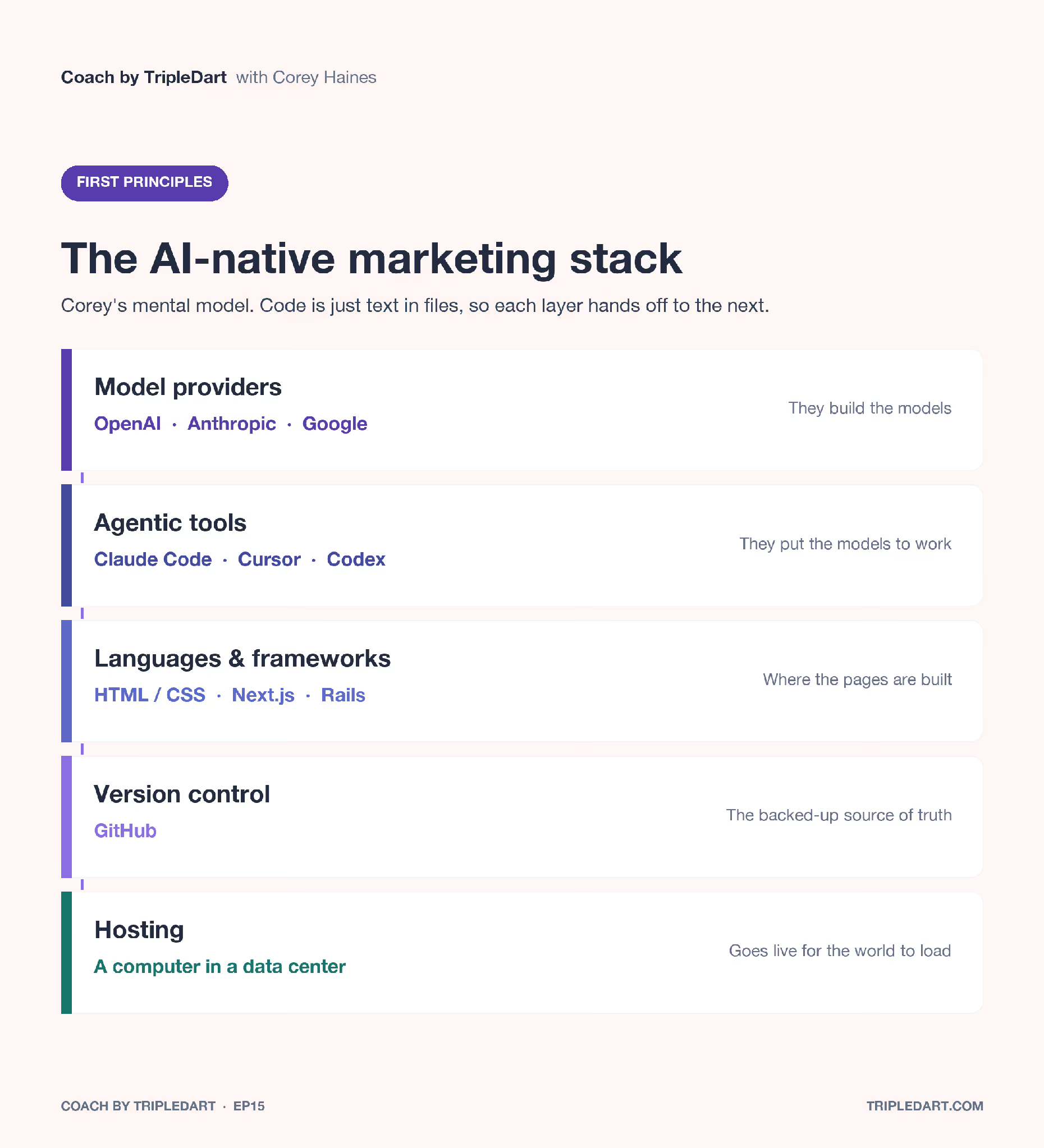
Once that lands, the stack gets easy to reason about from first principles:
- Providers like OpenAI, Anthropic, and Google build the models.
- Agentic tools like Claude Code, Cursor, and Codex put the models to work.
- Languages and frameworks like HTML, CSS, and Next.js are where pages get built.
- GitHub saves and versions all of it.
- Hosting drops the code onto a computer in a data center so other people can load it.
A website runs on that same pipeline. And once you see where each layer sits, you see why custom code can do things a page builder can't.
From middleman to marketing orchestrator
This was Corey's sharpest point, and it changes how you think about the job.
Give the agent the keys
The old way of working is slow. You sit in one tool for your website, another for email, another for testing, and you carry the context between them in your head.
ChatGPT helped a little. You'd ask it for copy, then paste that copy into your page yourself. You were still the courier.
Things change when the agent reaches your tools directly. Give it the keys to your website, email platform, testing tool, and CRM, and it stops handing work back for manual entry. It implements. And it holds the context across every tool at once.
So you stop being the bottleneck. You're the orchestrator now, and your tools talk to each other through the agent.
“I'm no longer the middleman or the bottleneck between my tools and AI."
Why custom code beats a page builder
When the agent writes raw code, it has full control. It can add new sections and make design calls on its own.
Hand it Webflow through a connector and it can fill in blanks, but new sections get hard. Webflow sits several layers of abstraction above the code, so the agent has to work out how those layers fit before it can move.
The lesson underneath all of it is short. The more of your stack the agent can reach, through an MCP, an API, or a CLI it writes for you, the more it runs on its own.
With that set up, Corey opened FormCraft and started stacking.
The live build: five Claude skills in one afternoon
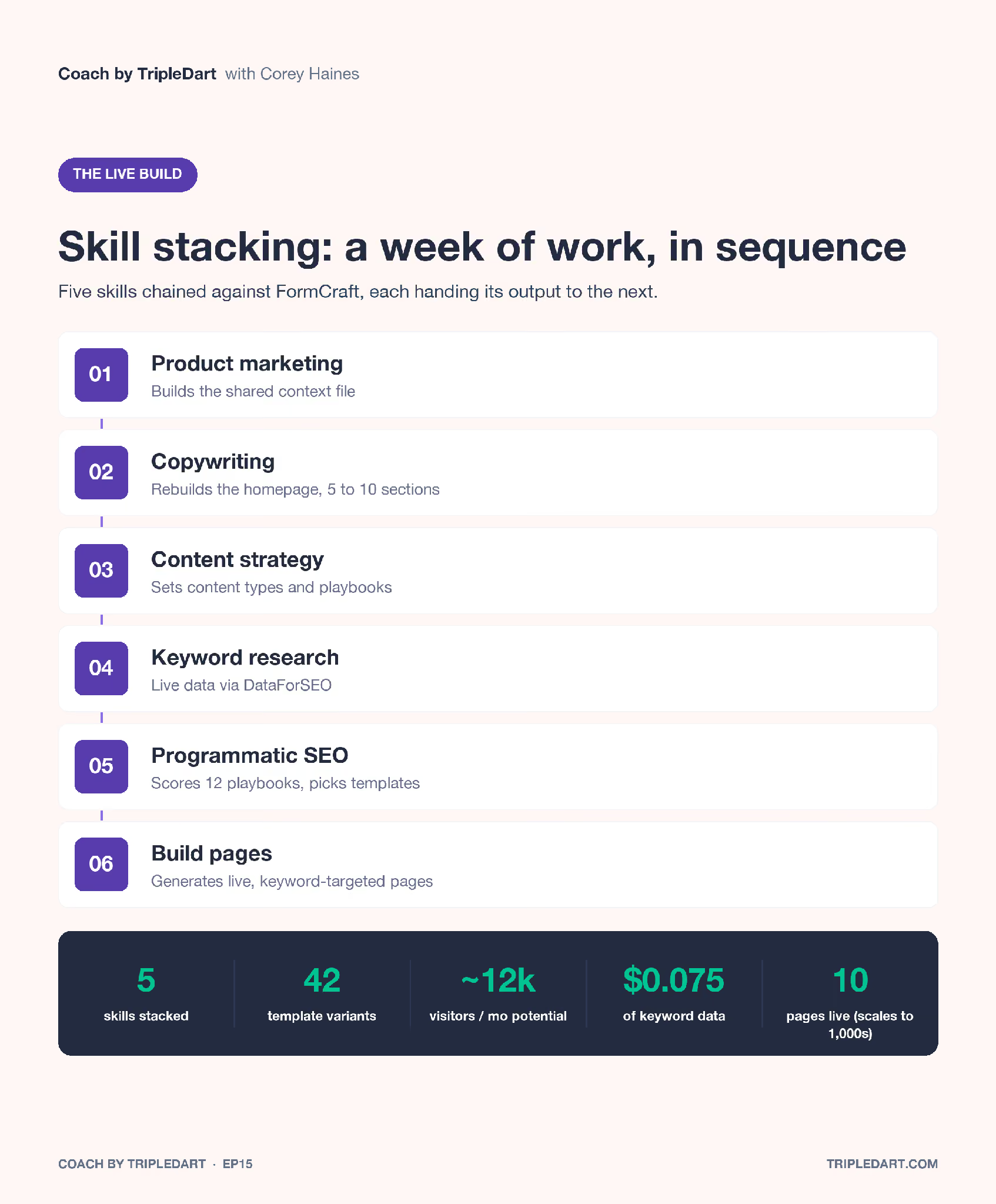
Here's where the talk stopped being theory. Corey ran five skills in sequence against FormCraft, a fictional form builder, and narrated each one as it went.
Start with context, then rewrite the page
He ran the product marketing skill first, since everything else reads from it. He kept his answers short and let it write the context file.
Then he pointed the copywriting skill at the homepage. It planned to keep the existing five sections. Corey pushed back and told it to add sections and lengthen the page.
It asked the questions a good copywriter asks. What direction for the headlines. What social proof exists. What tone to strike. Then it rebuilt the page from five sections to ten.
The new homepage led with "beautiful forms that convert without the Typeform price tag," named its rival, and ran through social proof, a how-it-works block, features, a comparison table, testimonials, an FAQ, and a closing call to action. The copy held up. That's what a tight brief does, the same way it produces a good comparison landing page.
Keyword research in about 30 seconds
Next he moved to content strategy and keyword research.
He gave the content strategy skill the content types FormCraft should target, then asked it to seed keywords, pull live data, and build a report. He pointed it at DataForSEO, a keyword tool that runs through an API and costs far less than the alternatives. Ahrefs was there as a deeper second pass.
Anyone who's done keyword research knows how long it takes. The brainstorming, the rabbit holes, the checks on what competitors rank for. The agent did it in about 30 seconds against the API.
That data fed the content plans. It's the work behind a long-tail keyword strategy or a hunt for low-hanging keywords, done while you blink.
Score the playbooks, then build the pages
He stacked the programmatic SEO skill on top of the keyword data and asked it to lay out the available playbooks and recommend one.
The skill scored all 12. It declined to recommend some outright, and pointed at the templates playbook with its reasons. That refusal matters to Corey. It shows the skill isn't a yes-man churning out filler, the same discipline that separates real topic clusters from noise.
Then it pulled the keyword data for that playbook and wrote a Python script to build the table. The numbers it came back with:
- 42 template variants
- About 12,000 visitors a month across all of them
- Seven and a half cents of keyword data
- Sorted into tiers
He told it to build the tier-one pages, capped at ten. Then he mentioned, almost in passing, that he could have asked for 10,000 and walked away while it ran.
Within minutes the templates section on FormCraft was live, sorted by category. Each page carried breadcrumbs, an H1, a real template, related links, and a call to action. Each one targeted its own keyword. Technical SEO cleanup like metadata and JSON-LD was one more skill, which he skipped for time.
Ten pages, ready to scale to hundreds or thousands.
What marketers should own when agents do the work
Underneath the demo sits Corey's clearest framework, and it's the one to take home. He drew a line between what agents are built for and what people still hold.
What agents are good at
- Holding more data than any person can keep in their head
- Chaining multi-step tasks without losing the thread
- Editing many files at once and running sub-agents in parallel
- Ideating, which is why keyword research suits them, since the hard part is knowing what you don't know
- Grinding through the point-and-click work people are slow at
Most of Corey's day is now ten agents running at once while he clicks between them.
What stays with you
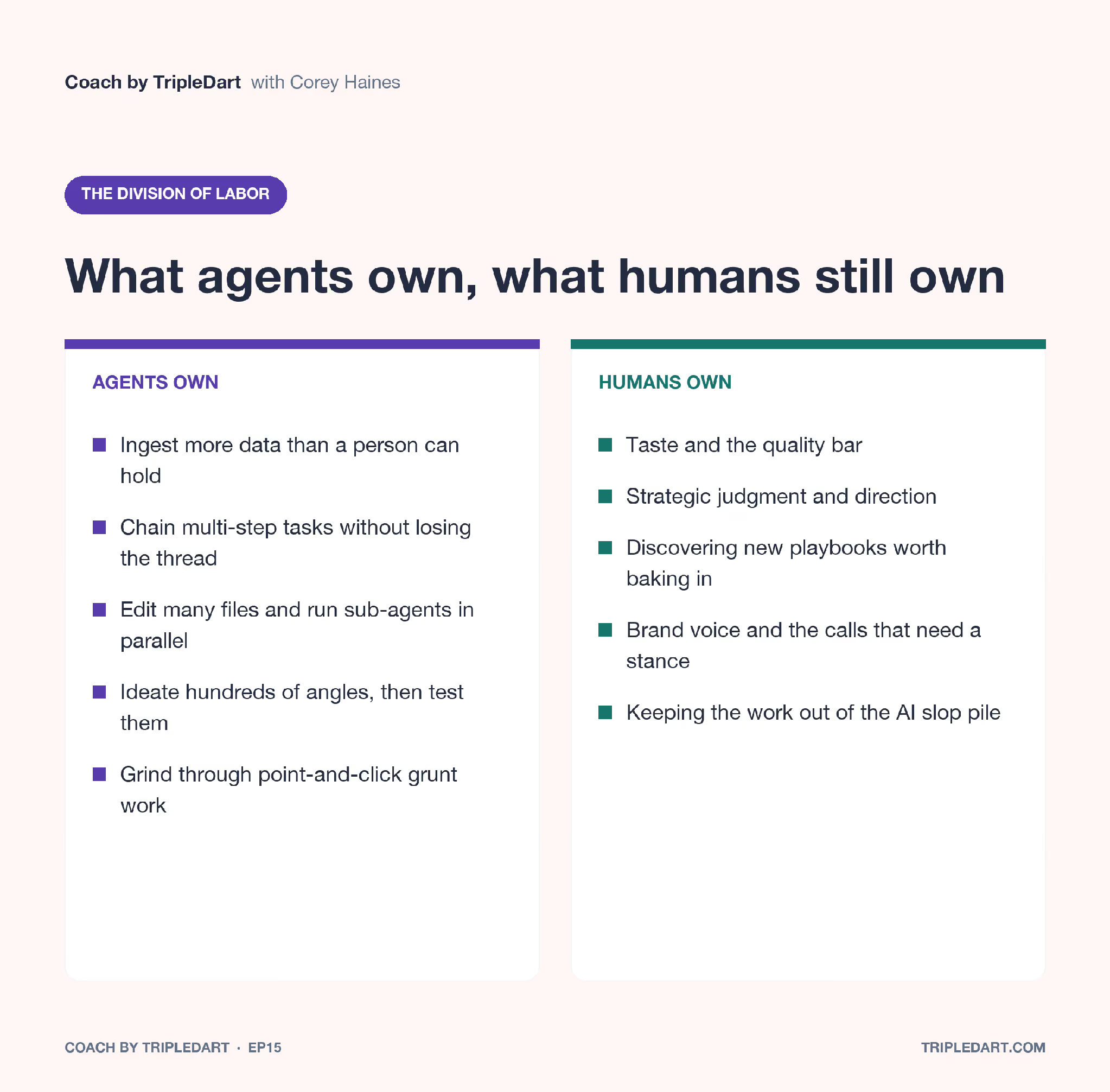
- Taste and the quality bar
- Strategic judgment and direction
- Finding new playbooks worth baking into a skill
- Brand voice and the calls that need a stance
- Keeping the output out of the slop pile
How to AI-proof your marketing career
You can't out-execute the machine, so don't try.
The move is to be the one who finds and names the plays worth turning into a skill. The hard execution is getting cheap. The taste and the strategic read hold their value.
As AI-generated pages pile up, taste is what keeps your work credible. That instinct is also what sits behind strong answer engine optimization, steady organic lead growth, and a real point of view on SEO versus GEO as search keeps changing.
"It's up to us to use skills, to use taste, to use expertise, to put something out that's good that doesn't look like AI slop."
How to start with Claude skills for your own marketing
The change Corey describes is about moving up a level. From the person clicking through tools to the person who designs the systems that run the work, then watches a row of agents do it.
The craft doesn't vanish. It moves into deciding which plays are worth running and writing them down well enough that an agent can run them a thousand times.
Key actions to take immediately:
- Write your repeatable processes down as SOPs first. A clear SOP is most of what a good skill needs.
- Install Corey's marketing skills from GitHub and read the copywriting file as plain text.
- Run the product marketing skill once to build a shared context file your other skills can read.
- Get comfortable in the terminal with Claude Code, since it reaches every tool on your machine that chat can't.
- Give your agent direct access to your stack through an MCP, an API, or a CLI it writes, so it implements instead of handing work back.
- Stack skills in sequence: product marketing, copywriting, content strategy, keyword research, programmatic SEO.
- Connect a low-cost keyword source like DataForSEO so the agent can pull live data into your plans.
- Customize any skill you download by telling the agent how your voice and rules differ.
- Spend your own time on the part agents can't do: finding new plays and applying taste.
Watch the full video here:
Claude Skills for Marketing with Corey Haines