
B2B Demand Generation in 2026: The 5Bs Framework for a Pipeline That Compounds
.avif)
Contributor
.avif)
George Coudounaris
Co-host of The B2B Playbook and Co-founder, The B2B Incubator

Glenn
Organic Growth Manager @ TripleDart
In this article
George Coudounaris of The B2B Playbook walks through why traditional lead generation has stopped scaling, why only five percent of any market is ever in buying mode, and how the 5Bs flywheel (Be Ready, Be Helpful, Be Seen, Be Better, Be The Best) gives B2B teams a sequenced system for building pipeline that compounds quarter after quarter.
What's Working in B2B Marketing & Demand Gen in 2026 | George Coudounaris | Playbook
Introduction
Seven years ago, George Coudounaris was checking Google Ads dashboards on a Sunday night, wondering how a client he had handed leads to for six months straight had ended up losing money. The lead targets were hit. The conversion rates were respectable. The pipeline filled. And by month six, the math collapsed.
That story is the one most B2B marketers can tell from memory. The lead factory runs hot for a quarter, the sales team buries marketing in complaints about quality, and the cost of acquiring a customer drifts in the wrong direction every month it stays alive. George's argument is that the cause is not bad tactics. It is bad sequencing. Content goes out before the ICP is defined. Ads run before trust is built. Sales receive leads before those leads are ready to buy.
In episode 14 of Coach by TripleDart, host Glenn Bona sits down with George to walk through the system he has stress-tested across 400-plus B2B teams. George co-hosts The B2B Playbook podcast with Kevin Chen, runs an end-to-end demand generation agency, and has published over 220 podcast episodes pressure-testing the 5Bs framework against teams in every B2B vertical from finance to construction to SaaS.
The framework George walks through is sequenced on purpose. It treats B2B demand generation as a flywheel that accelerates with every turn, and it begins where most teams say they will figure things out eventually, and then never do.
The Lead Factory That Breaks Every Six Months
Month one of George's old client engagement, the call goes well. "George, you boys are killing it. We're going to smash our lead target." Month two, the budget doubles. Month three, the sales team is hiring to keep up with volume. Month four, leads stop converting and the client asks for more spend. Month five, Google Ads stops being profitable. Month six, the contract is in trouble.
That arc is what happens when a B2B team treats marketing as a lead factory. Marketing gets incentivised on lead count. Sales gets incentivised on closed deals. The two teams drift, then collide. Most leads miss the mark, very few become opportunities, and the bucket leaks faster than the pour fills it.
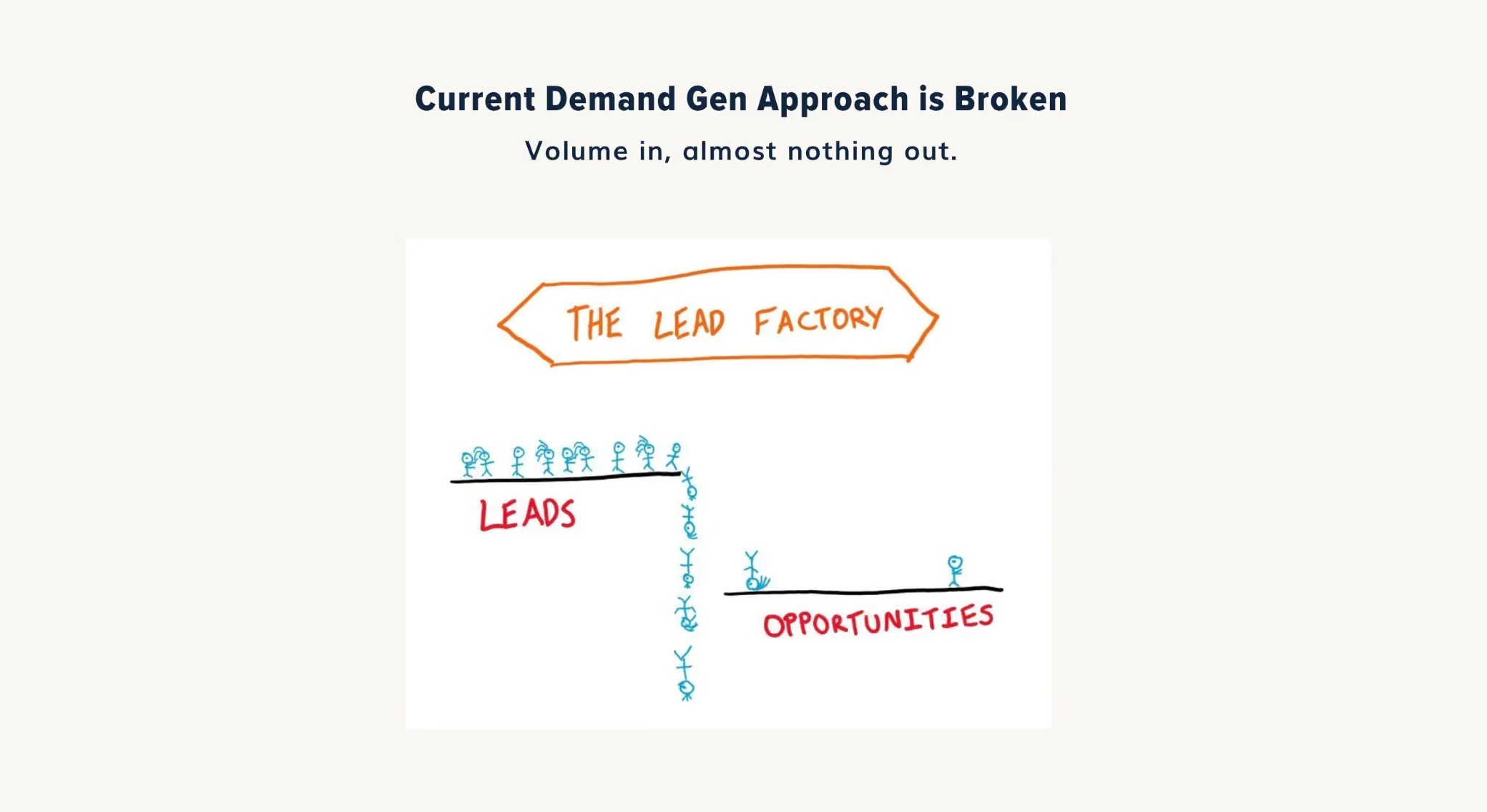
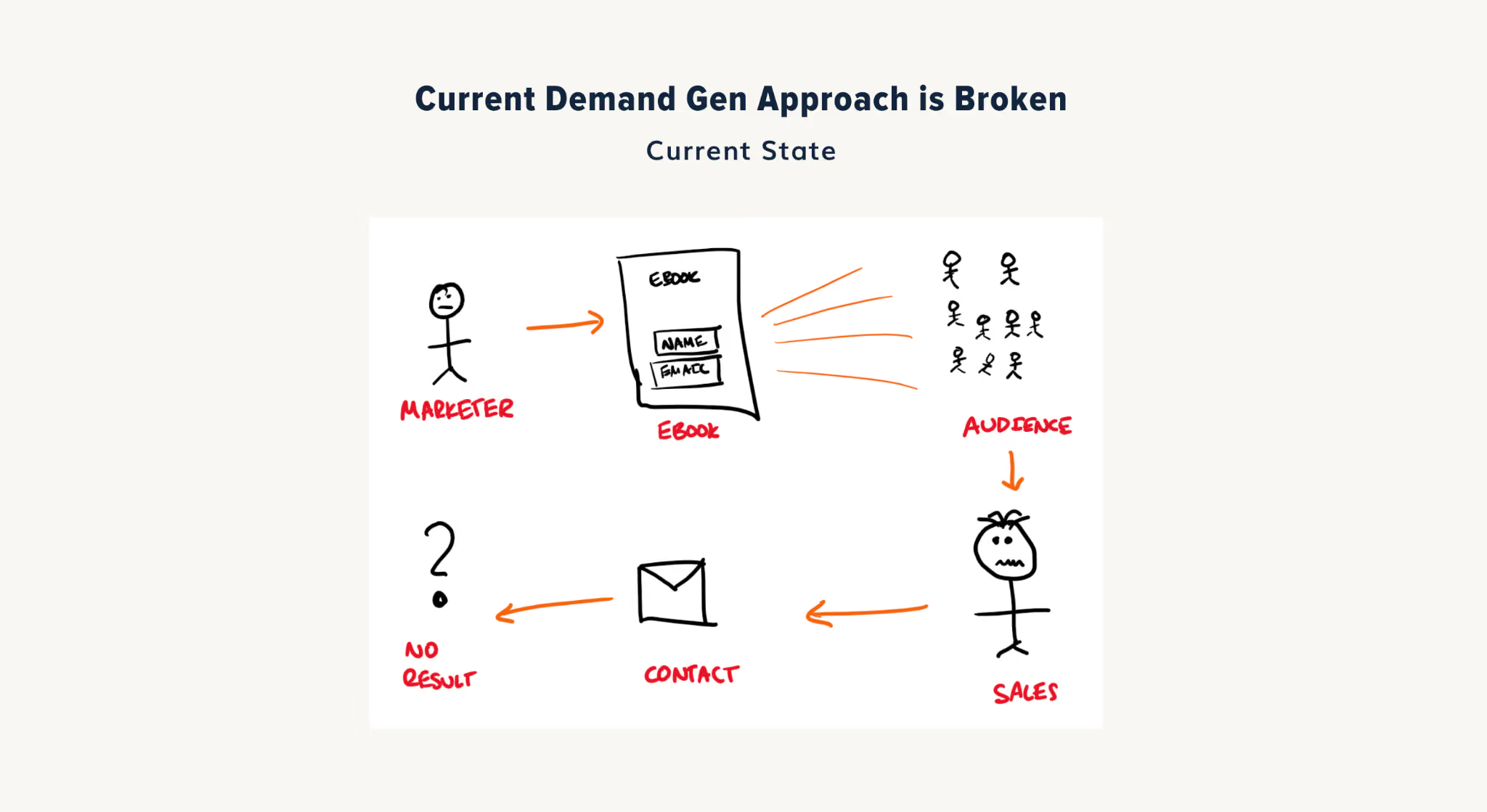
George sketches the standard version on the whiteboard. A marketing team is handed a quarterly target. The team produces an ebook with whichever year is in the title. The ebook gets blasted across LinkedIn and Meta and content syndication networks. Prospects exchange their job title and work email for a download. The MQL target gets hit. The leads go to sales, sales tries to reach them, and most of the people on the list barely remember the report they downloaded, let alone the brand behind it. Sales stops trusting what marketing sends over. Marketing stops trusting that sales is following up. The lead-to-win rate sits in the basement.
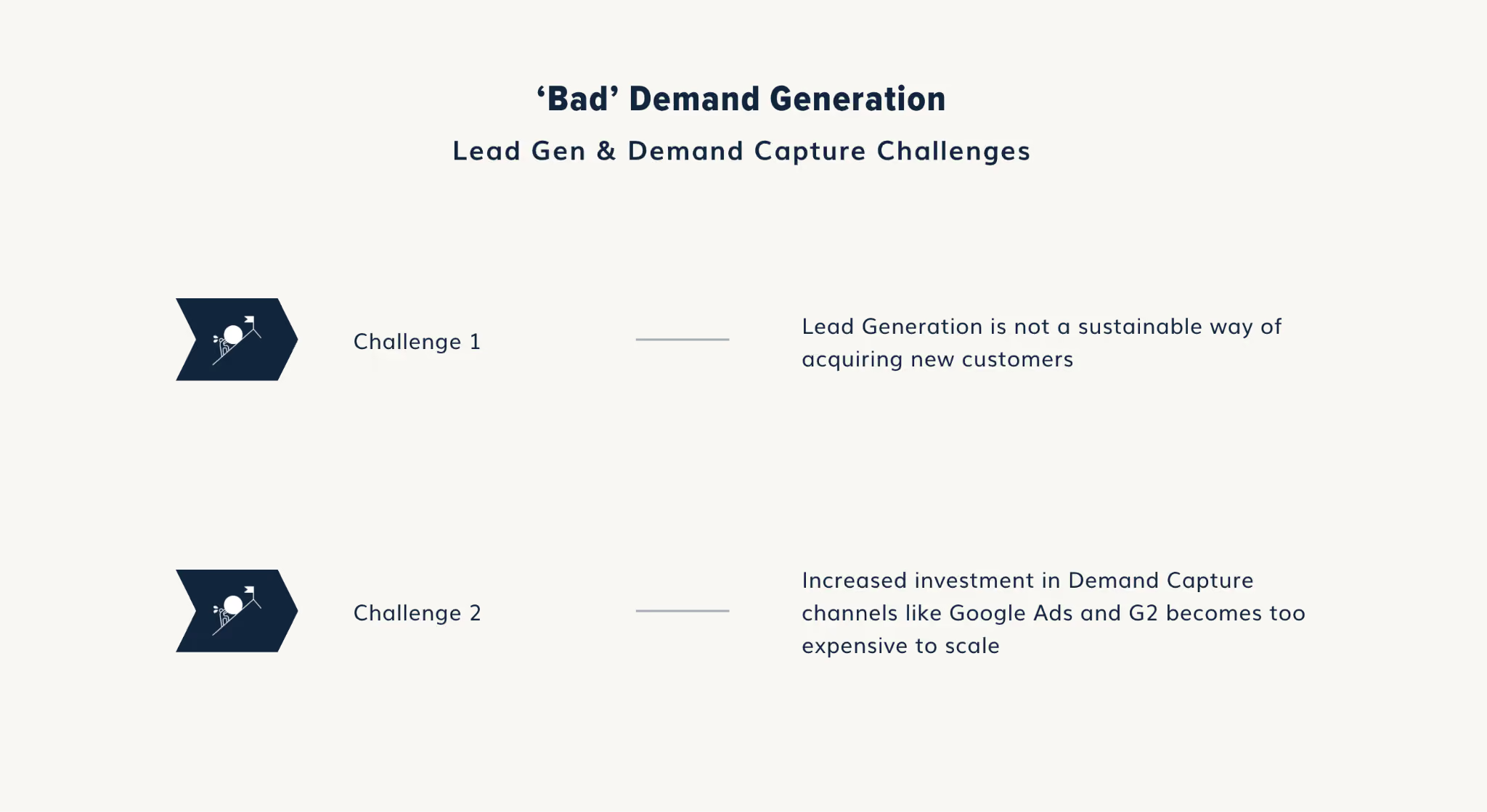
The diagnosis George offers is that traditional B2B lead generation carries two structural problems. The first is that lead gen as a model is rarely profitable once the hidden costs land on the page. The second is that the demand-capture channels teams lean on to compensate, like Google Ads and review-site placements, never scale the way the forecast assumes they will.
Why Lead Generation Stops Being Profitable
The cost-per-lead math most teams use is ad spend divided by leads generated. George's point is that the math hides almost everything that matters. It leaves out marketing salaries, the tooling stack, and the largest hidden line item of all, which is the time sales burns sifting through unqualified leads looking for the one person who is genuinely ready to buy.
Once those costs land in the model, the lead-to-win rate becomes the only number that matters, and for most teams running the ebook-and-blast model, that rate is brutally low. George's recommendation is to run the calculation honestly before assuming the model works. For some businesses with the right unit economics and a strong buyer persona, it can still be profitable. For most, it is a slow leak that takes a quarter to show up in the numbers and another quarter to admit.
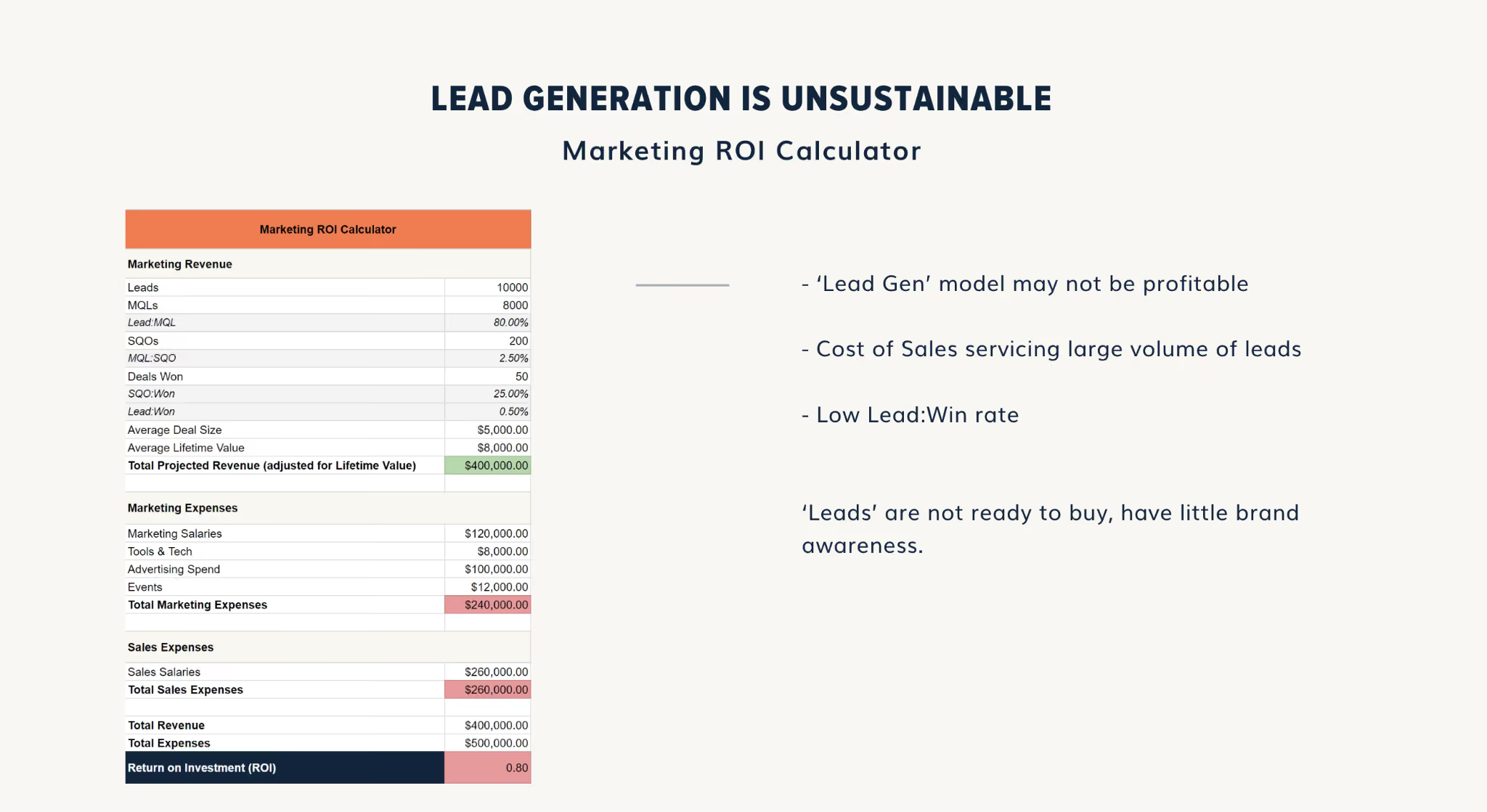
The deeper issue is that the leads being generated through this model are rarely close to buying. They downloaded a piece of content. They handed over an email. They have almost no brand awareness and almost no buying intent. The pressure on sales to convert a list of mildly curious downloaders into pipeline is what produces the misalignment, not a personality clash between the two teams.
The Demand-Capture Ceiling
The second instinct, when lead gen stalls, is to double down on demand capture. Run more Google Ads. Buy more review-site placements. Capture more of the buyers who are already in market. George's experience is that almost every forecast he sees assumes the cost per acquisition trends downward as the brand grows. In practice, the curve goes the other way.
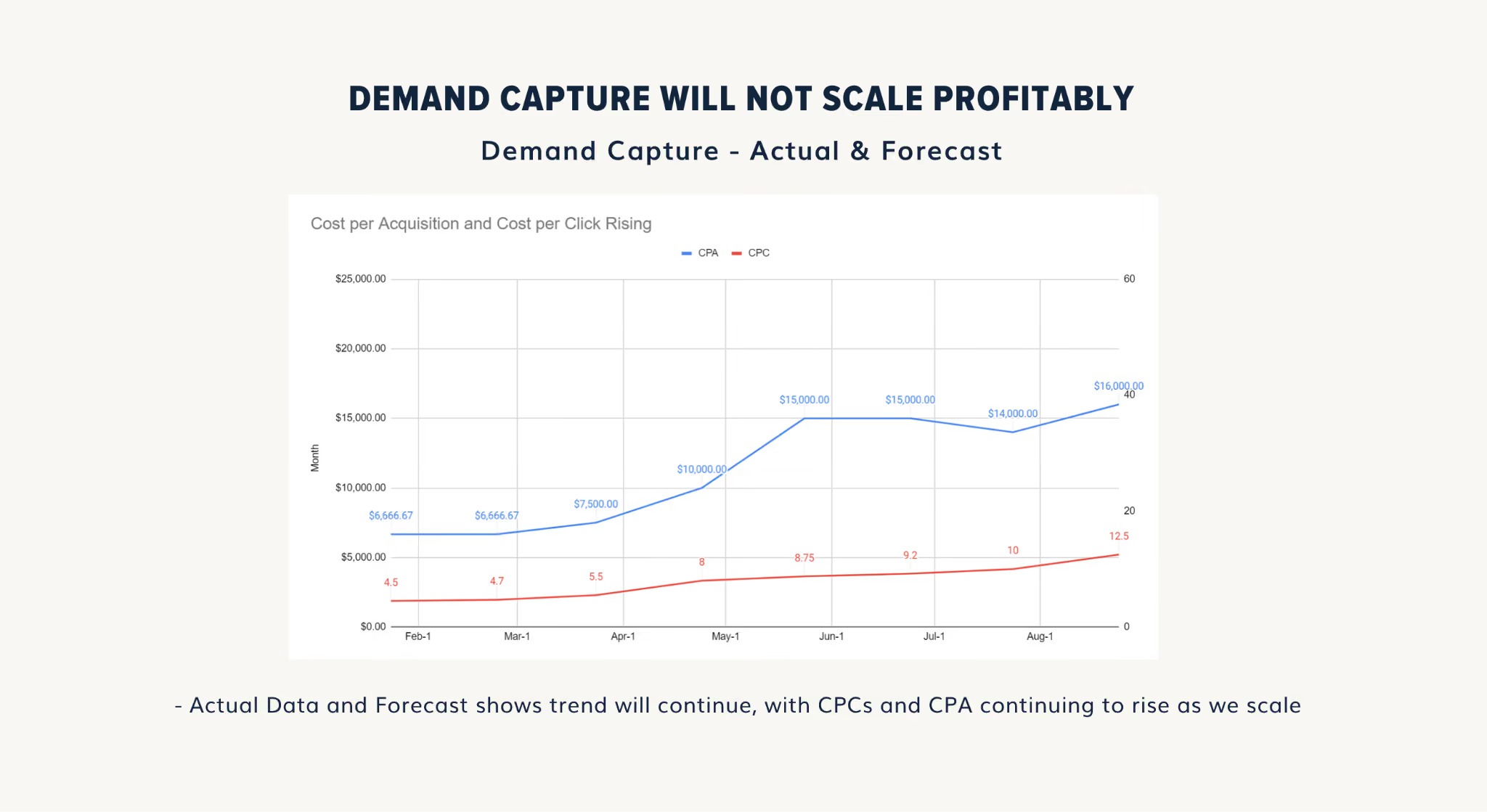
Two forces work against the downward forecast. The first is that the cost to play on the major paid platforms rises every year as competition stacks up. The second is that any decent B2B PPC operator starts with the long-tail terms that match what the company sells most precisely, then runs out of volume and has to bid on more generic terms. Those generic terms cost more and convert worse. The cost-per-click curve climbs, the conversion rate drops, and the cost-per-acquisition line goes up and to the right.
The capture lane has a hard ceiling. That ceiling is the size of the in-market segment, and the in-market segment is smaller than most teams realise.
The 95:5 Rule and the Bain Shortlist
Five percent. That is the figure the B2B Institute, LinkedIn's in-house think tank, puts on the slice of any B2B market that is in active buying mode at any given moment. The remaining 95 percent are either content with an existing vendor, locked into a contract, or not yet aware that they have a problem worth solving.
George frames the math with a personal example. If a company has just signed a two-year deal with HubSpot as its CRM, the odds that the team is shopping for a replacement six months in are close to zero. The contract has to expire, the pain has to be severe, or a category entry point has to fire before the buyer ever opens a browser. And when every competitor in a category fights over the same five percent, the cost of winning that slice climbs every year while the slice itself stays the same size.
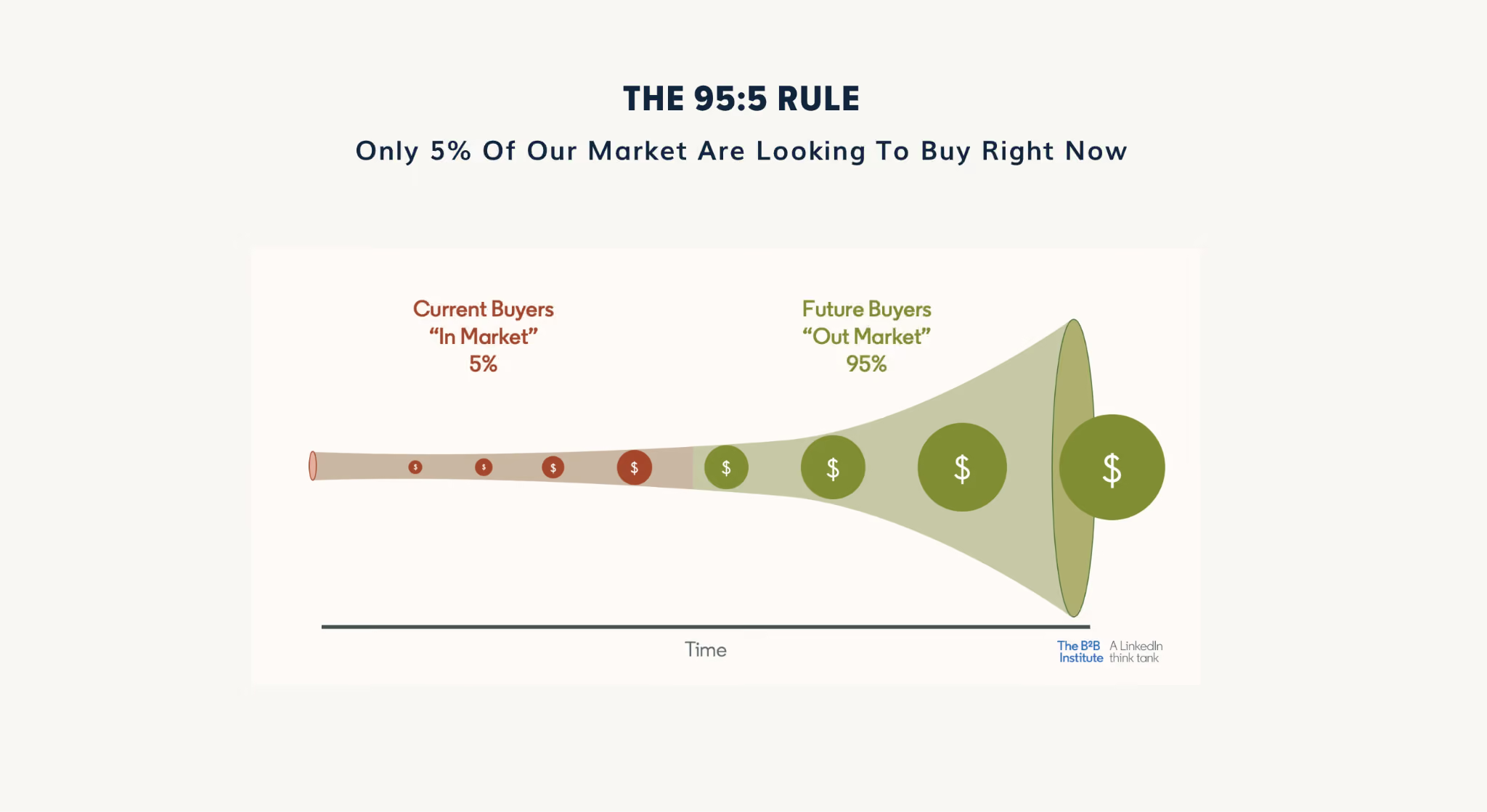
The bigger opportunity is the 95 percent. The job is to build relationships with that group before they enter the buying conversation, so when they do, the brand is already on the shortlist.
Research from Bain puts a number on that part of the equation, too. Eighty percent of in-market B2B buyers will not consider a vendor on day one of their search unless they have heard of that vendor before. George ties this to the line every senior B2B operator has repeated some version of: nobody got fired for hiring IBM. Buying a B2B product is a career risk for the person signing the paperwork. If the rollout goes badly, the buyer is the one who answers for it. Familiar brands feel safer because the buyer can defend the choice in a way they cannot defend an unknown vendor.
The job of B2B brand awareness work, in George's framing, is to make the company one of the names a buyer recognises on day one. Not the name they look up. The name they already know.
The Five Stages of Awareness
Eugene Schwartz mapped five stages of awareness in 1966, and George uses the same map as a content planning tool sixty years later. A buyer moves from unaware, to problem-aware, to solution-aware, to product-aware, to most-aware. The five percent who are in market sit at stages four and five. The 95 percent sit at stages one through three.
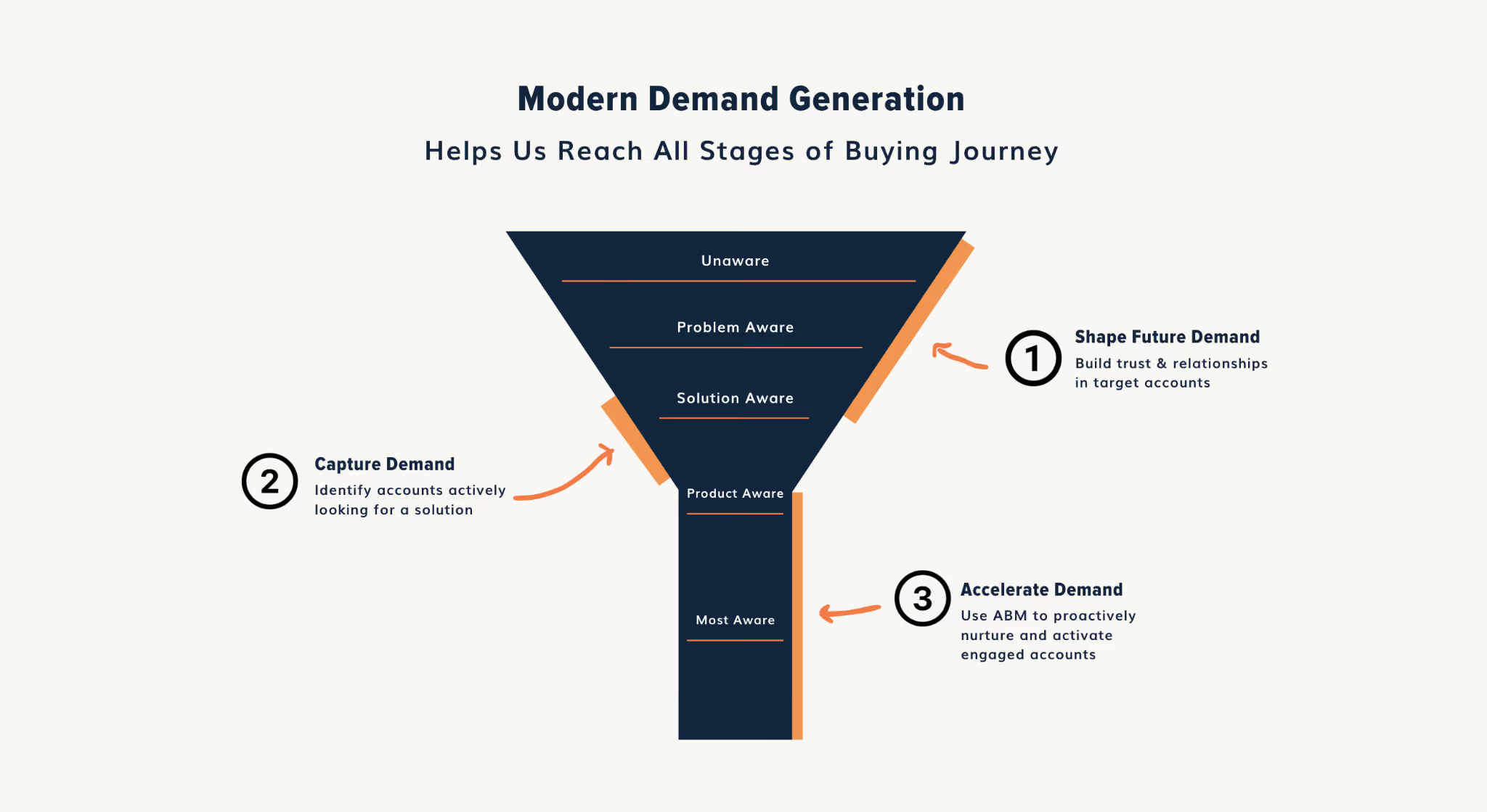
Most teams write content for stages four and five. Comparison pages, feature explainers, product walk-throughs, customer logos. That work matters, but it speaks to the slice of the market that already knows it has a problem and already knows there are solutions on the table. The 80 percent of the market sitting at stages one through three never sees a piece of content that meets them where they are.
George's response is a sequenced operating system, not a content audit. It is the framework that runs through the rest of the session.
A Flywheel, Not a Funnel
The 5Bs are Be Ready, Be Helpful, Be Seen, Be Better, and Be The Best. George is clear that the order matters. A funnel empties. A flywheel accelerates. Strategy has to land before content gets written. Content has to land before distribution gets switched on. Distribution has to land before optimisation can do anything useful. Skipping a stage is what creates the leaky bucket six months later.
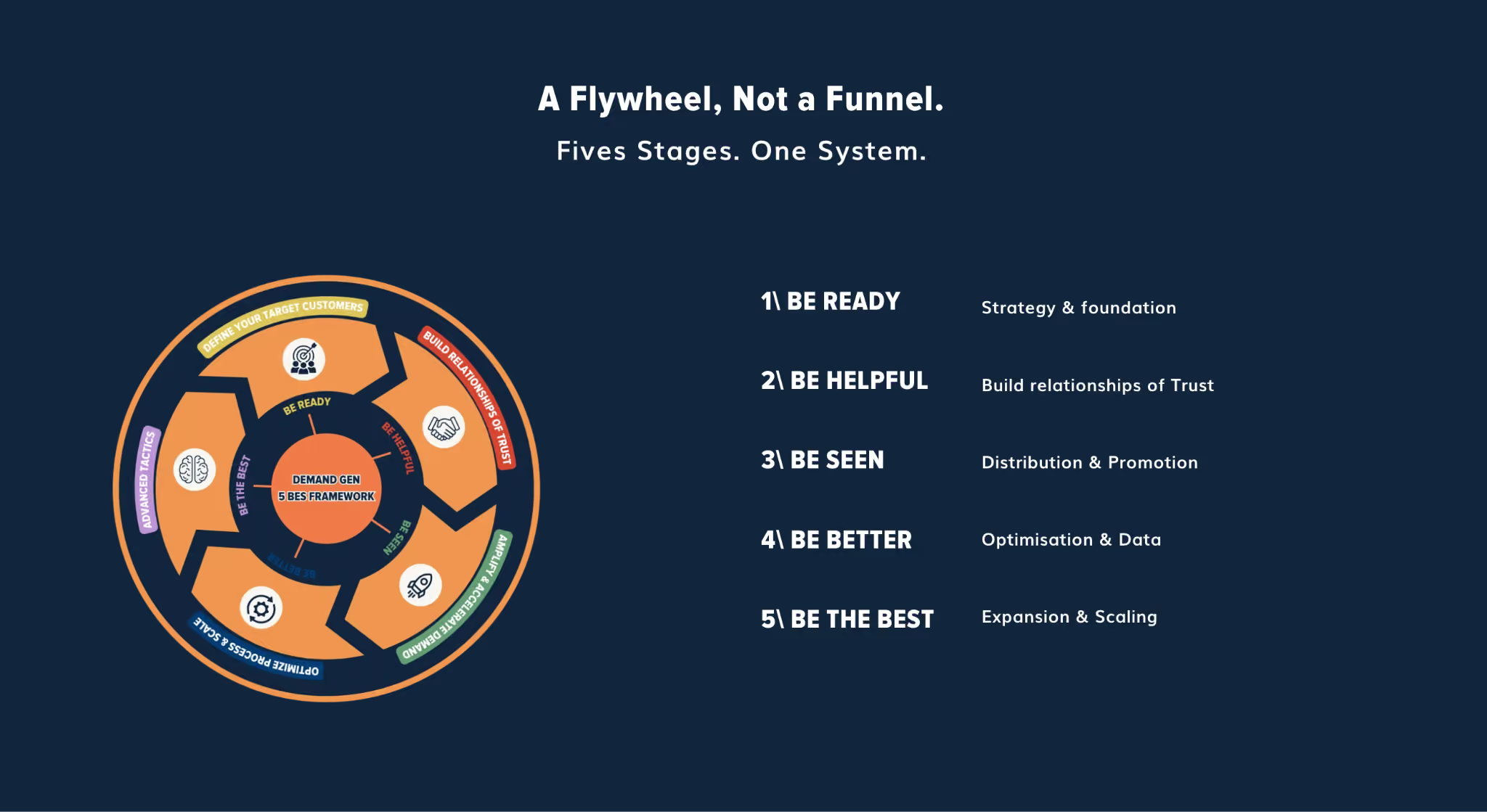
The framework was built in response to what George and Kevin saw as a glut of tactical advice in the B2B marketing space and a shortage of guidance on what to do, and when. The podcast tests the framework against operating teams every week, and the open-source version of the system lives on the 5 BEs framework page. What follows is the version of the system as George walks through it on stage.
Be Ready: The Foundation Most Teams Skip
Before a single piece of content gets written, there are six pieces of work most B2B teams assume the data will eventually surface for them. George's experience is that the data never does. The teams that win do this work deliberately and early.
Market selection is the first piece. Before defining the ICP, the team has to answer a more fundamental question, which is which segments are worth pursuing in the first place. An 80/20 analysis on the existing customer base is the cleanest way in. Which segments generate the most revenue. Which renew and expand. Which close fastest. Which become loyal users. A handful of segments almost always emerge as disproportionately valuable. Serving everyone equally dilutes the message and drains the resources behind it.
From there the team builds a sharper SaaS ICP definition than the standard firmographic sketch. Job title and company size are inputs, not the output. The output is a description of the behaviours, the pressures, the priorities, and the operational context that make someone a great fit. The best version of this work comes from direct customer interviews, not data enrichment.
The third piece is mapping category entry points: the specific triggers that put a buyer into market. A pipeline review that goes badly. A board meeting where the CEO names the gap. A churn spike. A new VP joining. These are the moments where someone goes from problem-aware to solution-aware. The teams that name those moments and produce content against each one earn the right to be remembered when the moment arrives.
The fourth piece is one George says will be new to almost every marketing team in the room, and it is the one he spends the most time on. It is called cataloguing, and George learned it from a two-time CRO and seven-time head of sales he collaborates with regularly.
Twenty years ago, sales development reps knew their territory. They knew which accounts were six months from renewal. They knew who had budget approved. They knew who was quietly frustrated with their current vendor. They knew what it would take to win each account, who the internal champion was, what the timing window looked like. That work was happening constantly. It just was not called cataloguing.
The predictable-revenue era changed the model. Sales optimised for the people willing to take a meeting today, not the people worth knowing in twelve months. The accounts that were out of market got dropped from the pipeline and never re-entered the conversation. And the responsibility for guessing who was in market quietly moved to marketing, which is why so much of the misalignment between the two teams ends up parked there.
George's argument is that cataloguing belongs back inside the sales motion, even for accounts that are out of market. The conversation runs as a structured discovery, not a sales pitch: who is the current vendor, what do they like about the current vendor, what do they not like, when does the contract end, and is there permission to circle back. That data is gold for marketing. It tells the team which accounts to keep nurturing, which to exclude, and which features the product team needs to ship to win the segment.
The fifth piece is positioning and messaging that lands with the buyer the team is trying to win. Specific enough that the right buyer reads it and recognises their own situation. Vague enough to feel like a category and the team will lose to the brand that named the niche.
The sixth piece is alignment across marketing, sales, and customer success on what winning looks like. The full B2B GTM strategy only runs as fast as the slowest team on the same definition of the ICP.
Be Helpful: Trust at Scale Before Buyers Raise a Hand
Buyers at stages one through three of awareness do not want a demo. They want help understanding the problem they are sitting on. Be Helpful is where the team becomes the most useful voice in the category, so the buyer associates the pain they are experiencing with the brand offering the solution.
George maps content against the five stages of awareness as a planning tool, not a segmentation lens. The point is not to predict where any individual buyer is on the ladder. The point is to make sure something useful exists for buyers at every stage. Most teams skip stages one through three entirely. The ones that do produce top-of-funnel content often produce it for its own sake, with no logical path from the content to the product. George's rule is that the product or service should be the natural conclusion of the content, even when the content is not selling.
Useful content has to come from useful insight. George stresses that there is no substitute for direct customer interviews. An AI tool can produce a competent article on a category topic. Every competitor can do the same. The advantage comes from the things the buyer says in an interview that no AI tool has access to. The advantage compounds because the SaaS content strategy becomes harder to copy with every interview added.
The B2B Playbook itself runs on this model. One podcast per week becomes a YouTube video, an extended article, a newsletter, twelve LinkedIn posts, and eight to ten short clips. The pillar content sits at the top of the engine. Everything downstream is repurposing. George's preference for video as the pillar is that it captures voice and presence in a way text alone cannot, and it is harder for an AI tool to replicate.
That repurposing model is also how the team makes B2B SaaS content marketing commercially viable at small headcount. One recording session funds a month of distribution.
Be Seen: Distribution as a Multiplier
Paid media works on the fuel that strategy and content have already built. Teams that jump to Be Seen before doing the Be Ready and Be Helpful work end up using the ad budget as a learning lab, which is the most expensive way to test what should have been validated upstream.
George thinks about distribution in three lanes. One-to-many is where paid social, organic content, podcasts, and newsletters live. One-to-few is where webinars, events, and curated communities sit. One-to-one is where direct outreach lives, and that one is almost always owned by sales, because most marketers are not pulling the phone out of their pocket to call a prospect cold.
The three lanes have to run together. Cutting any of them produces a flat distribution motion. And every lane has to run always-on. The 95:5 math means a campaign burst will miss most of the buyers who matter most, because they are not in the buying conversation yet. The system has to be present in the market the day the buyer enters it. That is the entire point.
LinkedIn Hacks That Compound
George spends a full chapter on the LinkedIn tactics his team has stress-tested at scale. The first is LinkedIn thought leadership ads. Engagement rates on thought leadership ads run between 8 and 15 percent for his client base. The equivalent number on company-page ads runs between 0.5 and 1 percent. The delta is large enough that company-page ads function as a different product entirely.
The second hack is what George calls the daisy chain. Every organic post that becomes a thought leadership ad has a call to action added before the boost. For posts mapped to stages one through three of awareness, the call to action links to another helpful piece of content, often another LinkedIn post. The phrase "check out this LinkedIn post" produces a higher click-through rate than an equivalent outbound link, because the platform rewards keeping the user on-platform. The buyer hops from post to post, going deeper into the brand for the price of a single impression. The full LinkedIn ads guide covers the targeting and bidding side of the same approach.
The third hack is the podcast play for ABM. Instead of pitching a target account cold, invite the decision-maker onto the podcast or a content collaboration. Senior leaders who would never take a sales meeting will accept a podcast invitation. The conversation builds a relationship. The follow-up has a natural reason to exist. The motion is still one of the strongest one-to-one ABM plays available, and it pairs well with a full LinkedIn ABM program for the same accounts.
The fourth is self-reported attribution. A simple field on the demo form asking "how did you hear about us?" surfaces every channel the CRM never captured. Events. Podcasts. YouTube videos. Newsletters. Without the field, the podcast would have been cancelled at George's own agency years ago, because nobody last-clicks from a podcast episode.
Case Study: How Sam Dunning Grew Breaking B2B 4x
The case George walks through is Sam Dunning of Breaking B2B, an SEO and AEO agency the team has worked with for around twenty months. Sam came in with a strong organic SEO presence and a declining organic reach, the same pattern most marketers are now living with. The team mapped Sam's content to the five stages of awareness, filled the gaps, ran every post through the daisy-chain treatment, and added thought-leadership-ad spend on top of the strongest organic posts.
Engagement on Sam's organic posts ran 8 to 15 percent. The team layered in company-page ads and ran thought-leadership ads using other recognised voices in the industry who had posted about Sam's work, including Adam Robinson of Retention.com and RB2B. That third-party validation drove some of the strongest performance in the entire program. Sam grew from a £50,000-a-month agency to a £200,000-a-month agency in twenty months, on roughly £1,500 a month in ad spend.
George's point about the case is that the lift came from the foundation, not the ads. Sam knew his ICP. His content answered the questions buyers were genuinely asking. The LinkedIn Ads agency playbook simply made sure the people who needed to see the content saw it.
Be Better: Optimisation and Closed-Circuit Selling
Great demand-gen programs get cancelled because the team cannot show they are on the right track before the lagging indicators show up. The Be Better stage is where the team builds the leading indicators that buy the program enough credibility to keep running.
George tracks engagement from ICP accounts, brand traffic growth, ICP traffic growth, engaged traffic captured by pixel, share of search, marketing-influenced pipeline, and self-reported attribution as the leading set. Meetings booked, HIRO pipeline (SQOs), marketing-influenced and marketing-sourced revenue sit on the lagging side. The proper marketing attribution stack covers both layers.
The deeper part of Be Better is what George calls revenue alignment architecture. The system closes the feedback loop between marketing, sales, and customer success so all three teams operate from the same truth about the market. Without it, sales insights never reach the content team, customer-success conversations never update the targeting, and every team makes its own guesses about who the market is.
George tells a small story to ground it. A property-technology team he worked with had a salesperson who started cataloguing prospects ahead of pipeline conversations. One target account had absorbed five to ten thousand dollars of marketing spend trying to book a demo. Once the cataloguing conversation happened, the salesperson learned the account was happy with a competitor's feature that the company's roadmap did not include. Marketing pulled the account from the targeting list. Product got a roadmap signal. The five to ten thousand dollars of monthly spend went to better-fit accounts. The closed loop paid for itself in two months.
Be The Best: Compounding Advantages Competitors Cannot Copy
The compounding advantage in a category is the thing competitors can copy on paper but cannot replicate in practice. Be The Best is where the team builds the assets that earn the long-term position in the market.
The case George closes with is a client that built a video podcast called Construction Is Hard with subject-matter experts from the industry. The podcast became the pillar piece of content across social, ABM, and the resource library. Within eighteen months, seventy percent of the company's pipeline was marketing-sourced. Previously, sales had been the dominant source. The brand was being cited in industry publications. The hosts were being treated as recognised thought leaders in a category that had almost no leaders to begin with.
Competitors could have built a podcast. They could not have built the trust the show had compounded with the audience over eighteen months. That asymmetry is what Be The Best is about.
The path to compounding advantages varies. For some teams it is community. For others it is a research engine that publishes proprietary category data. For others it is a flagship event. The constant is that the asset has to be hard to replicate, useful enough to compound, and consistent enough to outlast the team that started it. The teams that have run this play well, including some of the brands featured in the Plivo case study, end up owning a share of voice that paid media cannot rent.
How It All Connects
George closes the framework with a single diagram. Three demand motions run in parallel, fed by the same foundational work. Shape demand with future buyers through helpful content, organic social, podcasts, paid ads, and newsletters mapped to the five stages of awareness. Capture in-market buyers through Google Ads, review-site advertising, and the cataloguing loop. Accelerate demand for engaged accounts through high-touch B2B ABM strategy work that turns marketing-qualified accounts into closed revenue.
The three motions run as outputs of the same operating system, fed by the ICP work, the category-entry-point mapping, the cataloguing loop, and the positioning that came out of Be Ready.
The Implementation Plan
George's advice on rollout is to resist the urge to overhaul everything at once. Pick one segment, one product or service, and allocate ten to fifteen percent of the time and budget to the new motion. Give the foundational work six to eight weeks. ICP alignment and cataloguing are not finished in a sprint. Content mapped to the buying journey lands in months two and three. Distribution to the ICP starts ramping in months three and four. Demand acceleration and capture layered on top of the foundation start to produce returns in months four through six.
The teams that compound results are the ones that protect the early months from the pressure to skip ahead. The teams that abandon the model after six weeks are the ones that never gave the foundation enough runway to start paying back.
Audience Q&A Highlights
The audience asked four questions worth keeping. Each surfaced a piece of the system that the main presentation only had time to gesture at. George has covered each of them in deeper episodes on The B2B Playbook podcast.
On balancing demand creation and demand capture when leadership wants short-term results: George's position is that capture and creation are not in competition, and the demand-capture work should keep running. The honest conversation with leadership is that capture has a ceiling, that the ceiling is the size of the in-market segment, and that scale comes from the 95 percent of the market that is not yet shopping. A useful tactic is to play back customer interviews with the CEO's favourite customer, so the leader hears in the buyer's own words what the actual buying journey looked like.
On AI-proofing a marketing career when AI agents can produce most marketing assets: The durable skill, in George's view, is being the conduit between the market and the business. The marketers who win in an AI world are the ones who can work with sales to gather first-party intelligence on buyer timelines, current vendors, objections, and category-entry-point triggers, and translate that intelligence into the strategy the team executes. The inputs become the moat. The downstream content production gets cheaper for everyone.
On how long to give a tactic before judging whether it works: At least one and a half to two sales cycles. A new motion will only appear to work in month one if it happens to catch someone exactly when they enter the market. The signal shows up when the same prospect sees the motion at three or four touch points across several months, then eventually enters the buying conversation. Single-burst tactics rarely produce that data, which is why most of them get killed early.
On the relative value of Reddit, YouTube, and LinkedIn for distribution: George leans heavily on LinkedIn for discoverability because the platform's business context makes audiences receptive to educational content in a way that consumer social platforms are not. YouTube does the depth-building work, because video earns trust faster than text. Reddit he treats as a place to learn from, not publish to. The repurposing loop the team runs across LinkedIn and YouTube has been compounding the team's SaaS marketing channels mix for the last twelve months.
Conclusion
The change George describes asks B2B teams to stop confusing activity with system, rather than asking them to do more demand-gen work. The lead factory broke because each part of it was optimised in isolation. The flywheel works because every stage feeds the next one in sequence: strategy creates the conditions for useful content, useful content earns the right to be distributed, distribution generates the data that sharpens optimisation, and optimisation produces the assets that compound into category leadership. Skipping a stage is the cause of the leak, not the symptom.
The teams that compound results in 2026 are the ones that resist the pressure to skip stage one. The teams that keep filling the bucket faster than it leaks are the ones that never built the system underneath it.
Key actions to take immediately:
- Run an 80/20 analysis on your existing customers to identify the segments that generate the most revenue, renew, expand, and close fastest, then concentrate the next quarter's effort on those segments only.
- Run five to ten customer interviews focused on the moment each buyer entered the market, and map the category entry points that the interviews surface.
- Build a cataloguing motion inside sales that captures the current vendor, contract end date, and known objections for every out-of-market prospect the team speaks to.
- Audit your existing content library against the five stages of awareness and identify the gaps in stages one through three.
- Pick one pillar content format you can produce weekly, ideally a video podcast or long-form video, and build the repurposing engine that turns each episode into ten or more downstream assets.
- Add a call to action to every organic LinkedIn post before sponsoring it as a thought leadership ad, linking to a helpful piece of content for early-stage awareness and a meeting booker for late-stage awareness.
- Add a self-reported attribution field to your demo form and meeting booker, and review the responses weekly to find the channels your CRM never credits.
- Track leading indicators (ICP engagement, brand traffic, share of search, marketing-influenced pipeline) alongside lagging ones (meetings booked, HIRO pipeline, marketing-sourced revenue).
- Allocate ten to fifteen percent of the demand-gen budget and time to the 5Bs motion for one segment, and give it six to twelve months to compound before judging the results.
- Subscribe to The B2B Playbook for George and Kevin's weekly episode-level breakdown of each stage, and bookmark the 5 BEs framework page for the open-source templates that sit underneath it.
- Re-listen to George's full episode here and bookmark the other Coach episodes covering ABM strategy framework, the LinkedIn Ads blueprint, and the BOFU content system for the connected stages.
Watch the full video here:
https://www.youtube.com/watch?v=DO2XMccTto8