
How to Become a Better Performance Marketer Using Fundamentals of Marketing
Contributor

Gab Bujold
Founder, Press X to Market and Co-host, We’re Not Marketers

Glenn
Organic Growth Manager @ TripleDart
In this article
Introduction
Early in his career, Gab Bujold kept getting the same request. Double the leads. He'd double them, and the next month it came back, double them again. On his side the numbers looked great. Then sales pulled up the pipeline and told him the leads were bad, and he needed to do something about it.
That gap is where a lot of performance marketers live. You can tune a bid, refresh a creative, and rebuild an audience in an afternoon. The hard part stopped being the media buying.
It moved upstream. Targeting leaks signal behind privacy walls, creative fatigues in days, and the ad auction has everyone bidding at once. The lever that still moves results sits in the work most paid teams never touch: who you target, why you win, and what you say.
Gab's argument is that the same missing context shows up in two places at once. "The gap that makes AI output generic is the gap that makes your targeting and ad copy generic." Nothing in the tool knows how your business works yet, and nothing in your campaign does either.
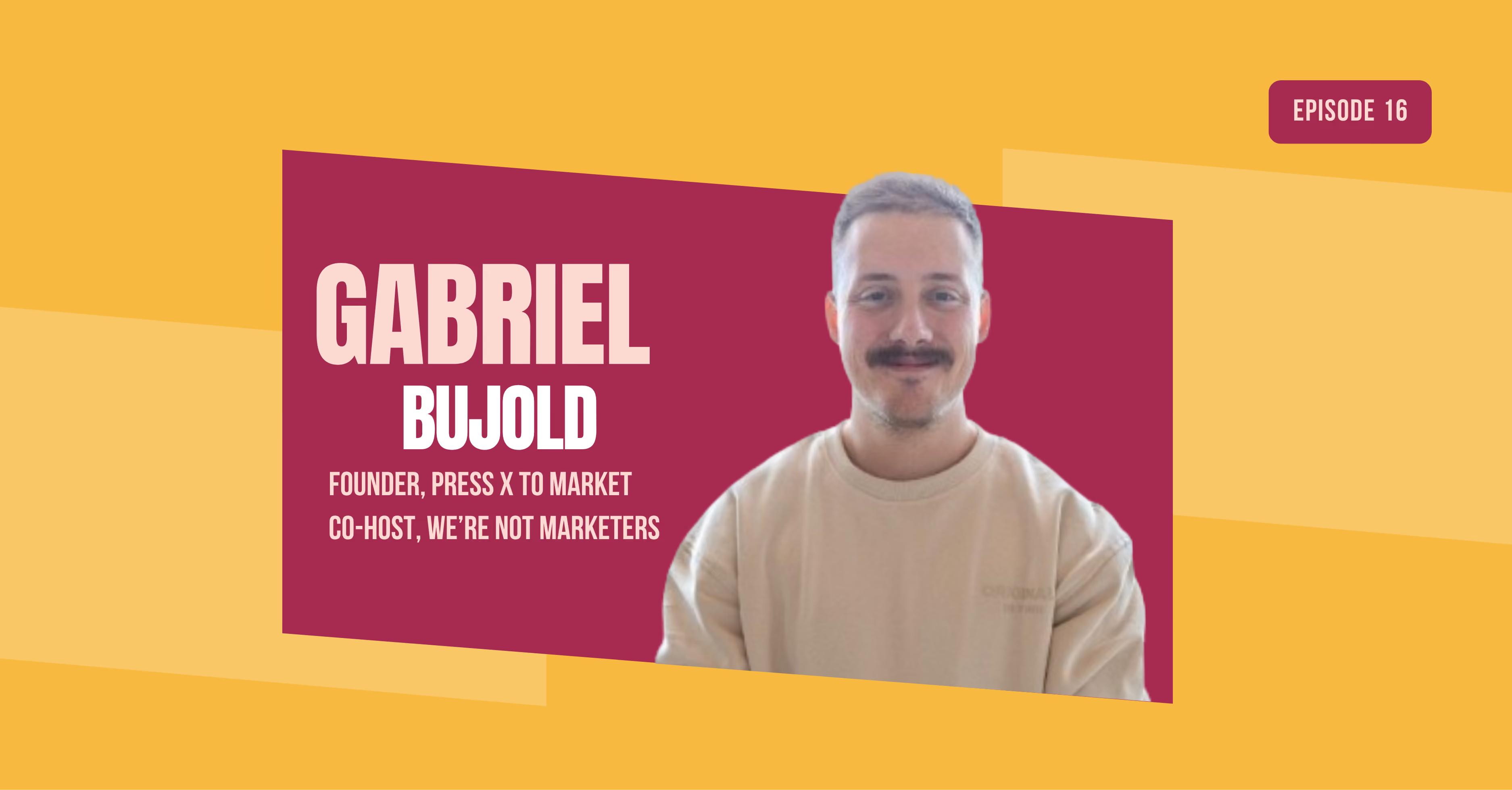
This guide covers how he turns ICP, positioning, and messaging into structured AI skills you run against your own company. It's based on his session during Episode 16 of Coach by TripleDart.
Gab founded Press X to Market and co-hosts the We're Not Marketers podcast, where he's interviewed more than 50 product marketing experts across 70-plus episodes. Over the past decade he's worked with more than 40 B2B SaaS companies on messaging, positioning, launches, and go-to-market strategy. His open product marketing skill set has been run more than 200 times, and he's been named a top product marketing consultant two years running.
He opens with the reason those foundations carry more weight now than they did five years ago.
Watch the full session here:
The paid engine got harder, and the lever moved upstream
A founder leans over and asks the question every paid marketer has heard. Can we just increase the budget? Spend another 10k a month and we're there, right? Gab's answer is that it's never that clean. The result depends on the landing page, the ad score, the keywords you bet on, a dozen things that a bigger number doesn't buy.
The reason it doesn't buy them is that paid got harder on every axis at once. Targeting used to give rich, deterministic signal, and now it runs on modeled audiences behind privacy walls. A creative winner used to last months; now the variants fatigue in days. Cheap reach with few bidders turned into climbing CPMs as everyone piles into the same auction. Clean last-click attribution became a blended model nobody fully agrees on. And the product gaps you used to exploit have flattened into feature parity across the category.
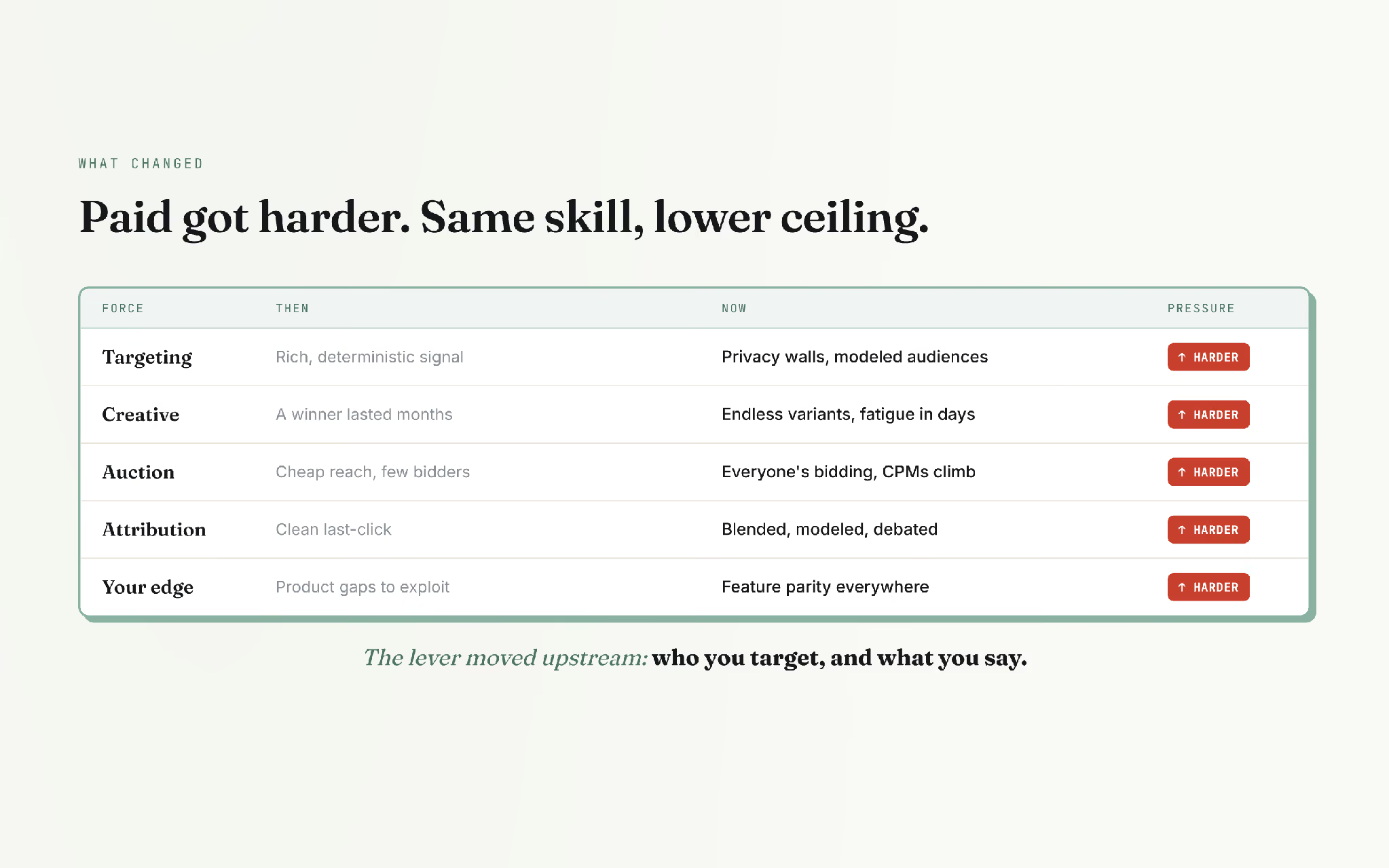
Same skill, lower ceiling. That's the part founders miss when they reach for the budget slider.
While paid got harder, the buyer went quiet. People spend less time with vendors every year and do their own research first, increasingly through AI search. The deck puts numbers on it. Back in 2012, 57% of the buying decision was already made before anyone talked to a vendor. Today buyers spend around 17% of their time with vendors at all, per Gartner. Two lines cross on the chart: the attention you can buy is falling, and the payoff of strong foundations is rising.
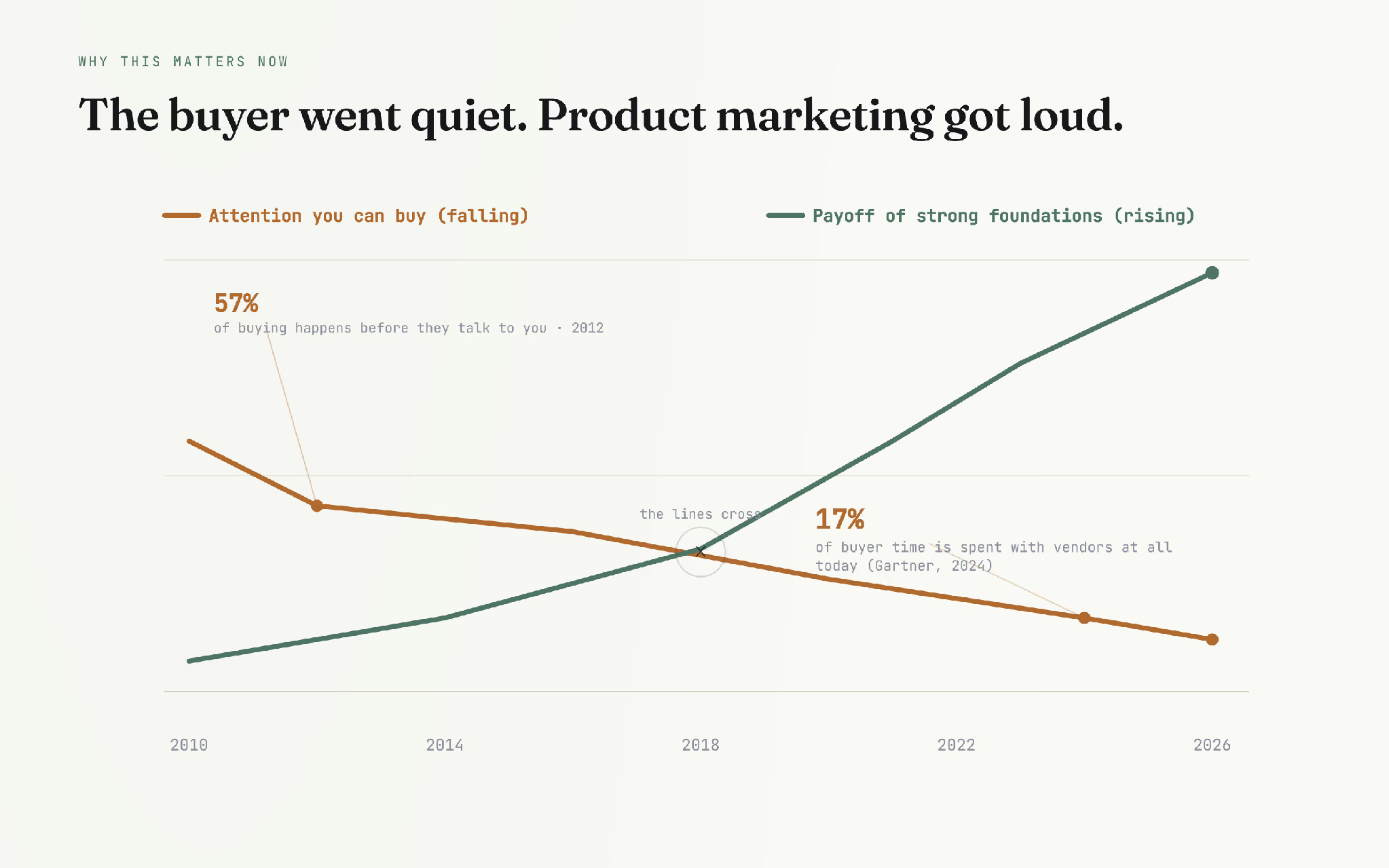
So when you push something into the market, you want it to land as a signal that this is built for a specific person, rather than more noise. That depends on three things, and the same pressure shows up across B2B demand gen too.
The three questions every campaign quietly depends on
Strip a campaign down to what it's resting on and you find three questions it rarely says out loud. Who you sell to, the ideal customer profile. Why you win, which is the positioning. And what you say, the message that every hook and ad pulls from.
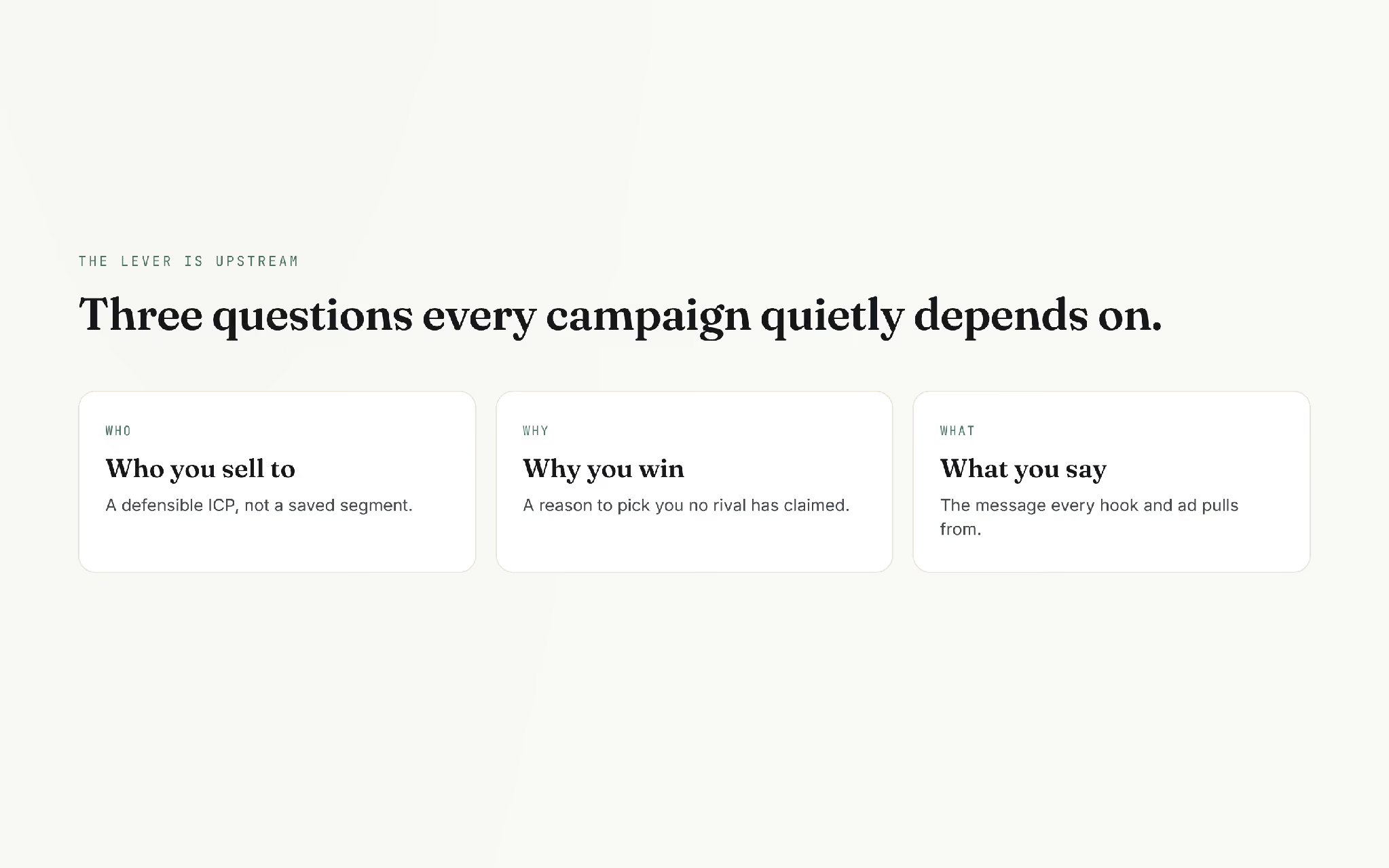
Here's the uncomfortable part. Most paid teams inherited all three. The ICP came from a deck someone built a year ago. The positioning is the website headline, untouched since launch. The ad copy traces back to whoever wrote it last quarter. None of it was ever pressure-tested, and that's exactly where performance stalls.
It's also where AI stalls, for the same reason. Feed a model thin context and you get a generic answer back. Feed your campaigns thin foundations and you get generic targeting and copy. Gab puts it plainly: there are no bad agents and no bad skills, there's bad context. Sort that once and the agent stops guessing.
Which is why he never opens with a prompt. He opens with a repo.
Why Gab builds on a repo instead of a chat window
Most people open a chat window and start typing. Gab opens a folder.
One repo holds the whole company. A CLAUDE.md file sits at the entry point and works as the brain of the project: the goals, what you're talking about, how you want the work done. A context folder holds the raw research, the company profile, the market, the competitors, and the brand voice. A skills folder holds the three foundations. An examples folder holds the company's existing ads, and an outputs folder catches whatever the skills produce.
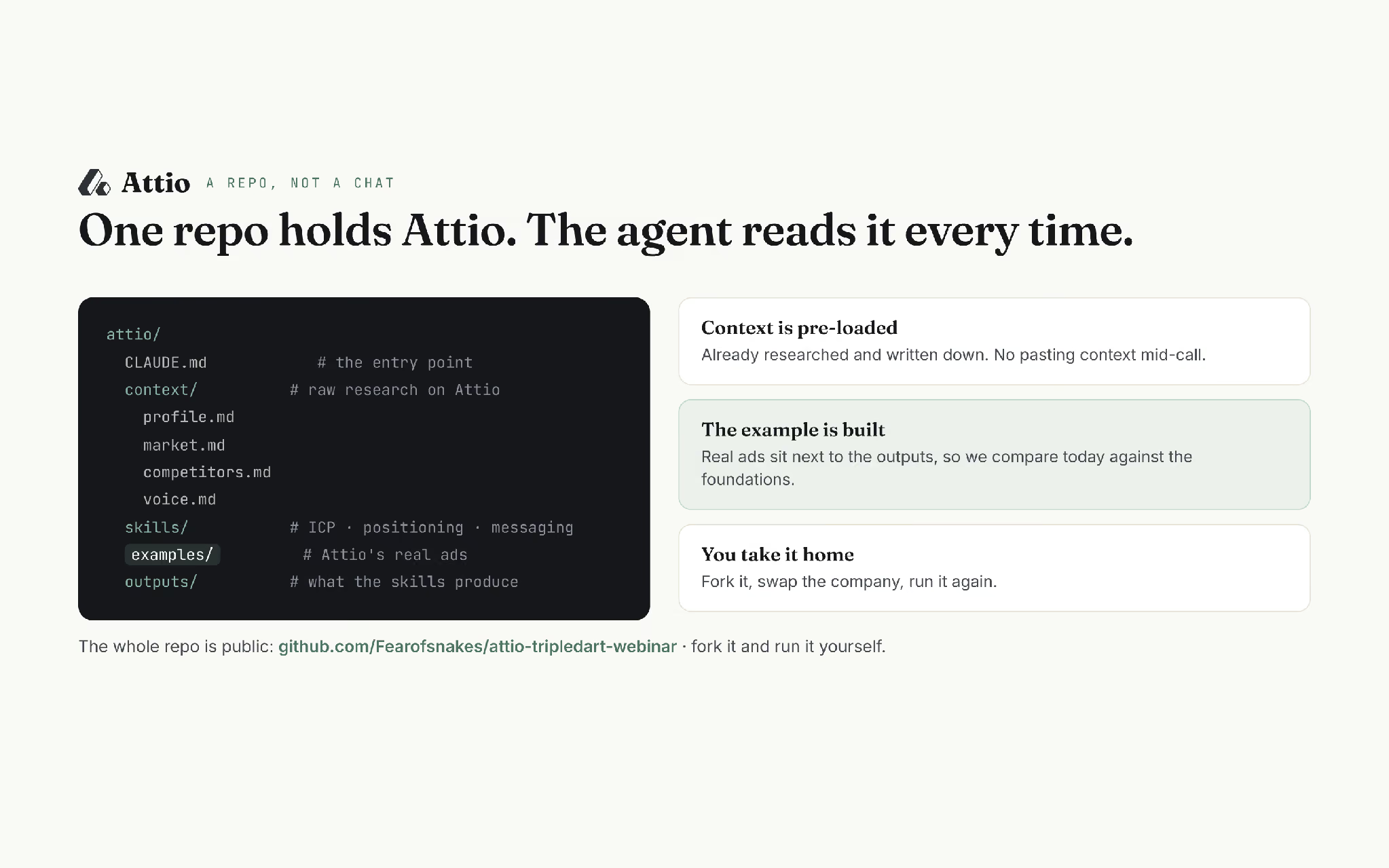
The point of writing it down once is that the agent reads the same picture every time. No pasting context into every new chat, no reminding it who Attio is on the fifth message.
Gab's way to think about context is to talk to AI tools like a sharp intern who needs a lot of instruction. You wouldn't say "build me a website." You'd give the destination, the role you want the intern to play, the constraints to apply, the kind of output you expect, and an open door to ask questions. The repo is that briefing, captured once.
He has one more habit worth stealing. When he wants a sharper output, he tells the model to argue with him. Run a Socratic debate on this. Play an Andreessen Horowitz partner reviewing my pitch and be brutal about it. The pushback exposes the weak parts before a stakeholder does.
The whole repo is public, so you can fork it and run it on your own company. With the context written down, the skills can do something a plain prompt can't.
How each skill works as a guided session
Run one of Gab's skills and the first thing it does is interview you.
Each skill moves through three acts. The build act lays the foundation one piece at a time, gathering the exact inputs the output needs before it writes anything. The pressure-test act is where it excludes wrong-fit options, audits the claims, and adapts, and it's where the debt in your current foundations shows up. The operationalize act turns the result into something you can use the same day: a signal map for the sales team, a rewrite of the copy, or a 60-second pitch.
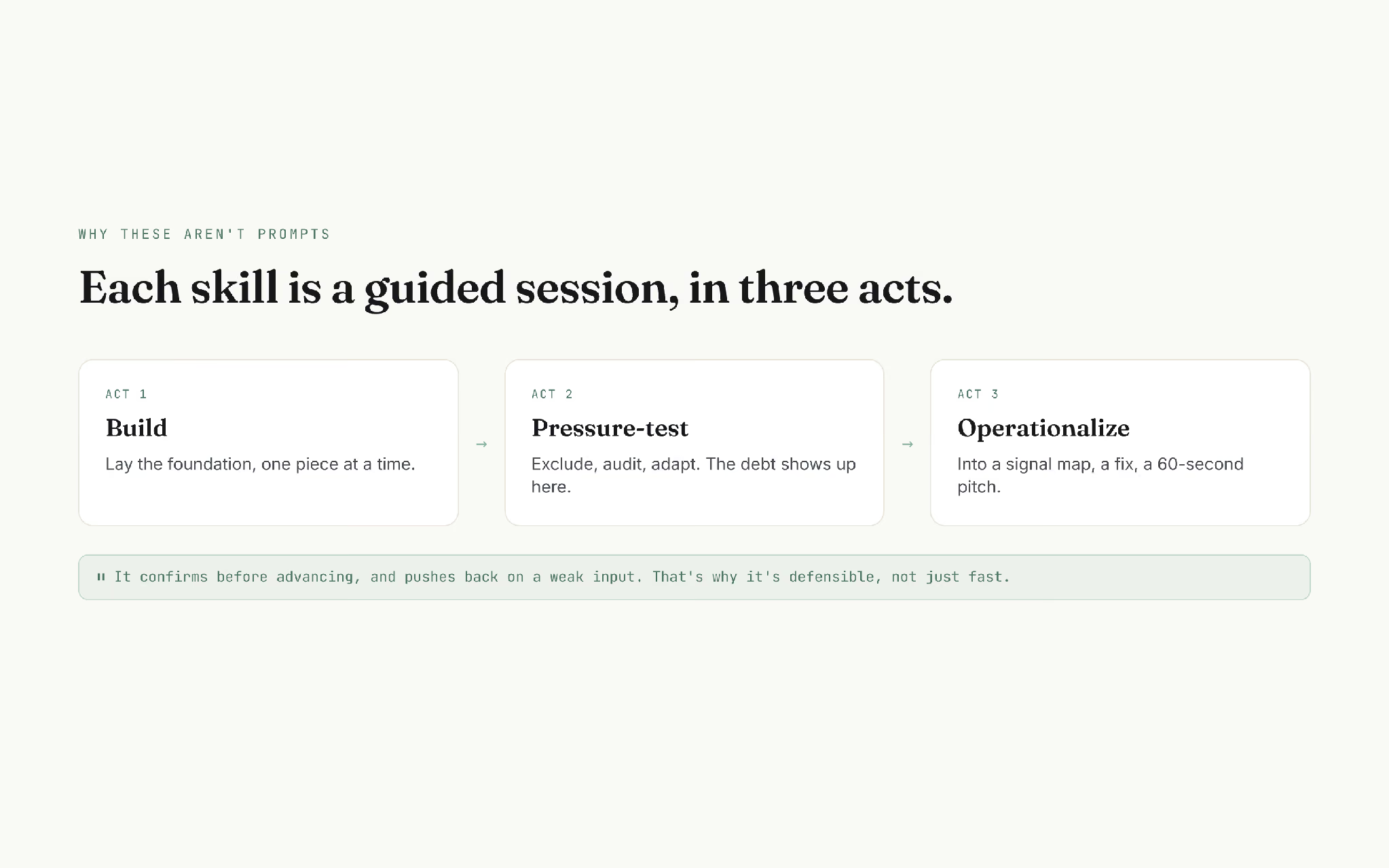
The property that matters is the friction. The skill confirms before it advances and pushes back when you feed it a weak input. That's what makes the output defensible instead of merely fast, and it's the difference Gab draws between a guided session and a one-line prompt. This is the same approach behind turning marketing work into repeatable AI marketing skills.
The first skill tackles the question every other one leans on: who you're for in the first place.
Skill one: defining an ICP you can defend
"Startups and builders." That's how plenty of companies describe who they sell to. Gab ran his ICP skill on Attio, a CRM he likes, and walked through how that phrase becomes a profile you can bid against.
The skill builds the ICP in layers, and it pulls the starting point from the context already in the repo. It opens with the firmographic layer, the broad filter of size, stage, and industry. For Attio that landed around 10 to 80 employees, VC-backed and Series B funded with a tooling budget, B2B software startups that are often AI-native, concentrated in US and European startup hubs and English-first.
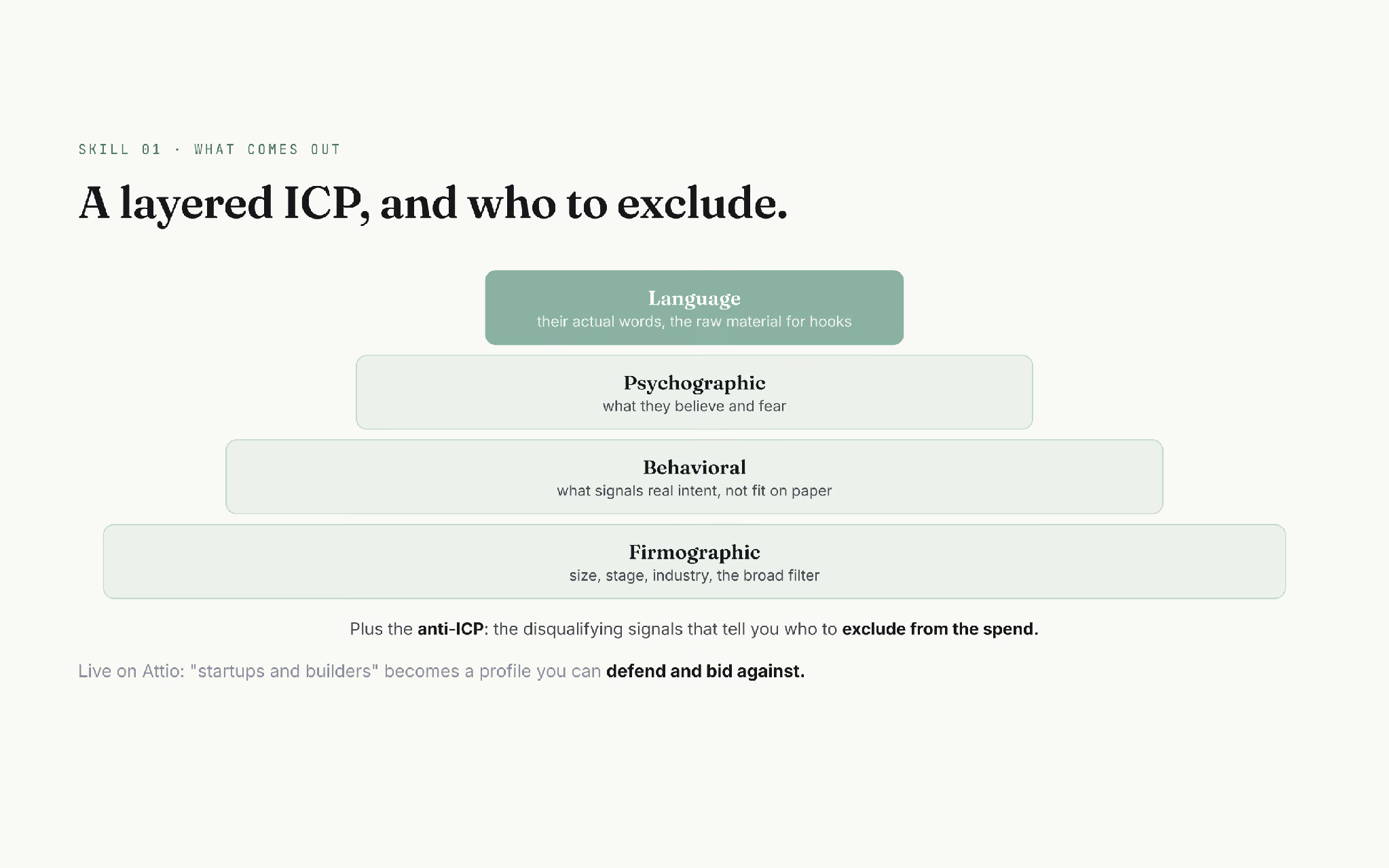
From there it goes deeper. The behavioral layer captures the signals that show genuine intent rather than fit on paper, like a Notion database breaking so deals start slipping, or a team fighting the data model inside HubSpot or Salesforce. The psychographic layer names what the buyer believes and fears. And the layer most teams skip is language: the buyer's own words, pulled from sales calls and Reddit threads, sorted into problem, objection, comparison, and success language. That language is the raw material for hooks, metadata, and ad copy.
The skill also produces an anti-ICP, the disqualifying signals that tell you who to exclude from the spend. Gab's logic is that defining who you're not for makes who you target obvious. Startups love to say "target everyone, bigger market, better story for the VCs." Tightening the profile feels uncomfortable, and that discomfort is usually the sign you're doing it right.
A defensible ICP tells you who to talk to. The next skill answers why they should pick you.
Skill two: a positioning audit that finds white space
In Attio's category, everyone now reaches for the same two words. AI-native. Gab's positioning skill is built to find the room nobody else is standing in.
The audit starts from four pillars: the ICP, the use case and category, the competitive alternatives, and the differentiation. Together they give enough context to make a clear call, whether to take on a direct rival, squeeze an adjacent one, or claim ground nobody has staked. Out of that comes a positioning statement.
For Attio, the statement read like this. A CRM for builder startups that outgrew a spreadsheet but won't be boxed in by a legacy CRM. Where Salesforce and HubSpot bend you to their data model, and Notion or Airtable stay flexible without being a real CRM, Attio gives you a fully customizable data model on a real CRM backbone. You set it up the way you sell in an afternoon, no admin required, and it still scales to 200 people.
Then the skill scores the positioning across clarity, differentiation, relevance, credibility, and memorability, mapped against Salesforce, HubSpot, Zoho, and Notion. Most dimensions came back healthy. Relevance came back as debt. The biggest gap was ownability, which points at a messaging problem more than a product one.
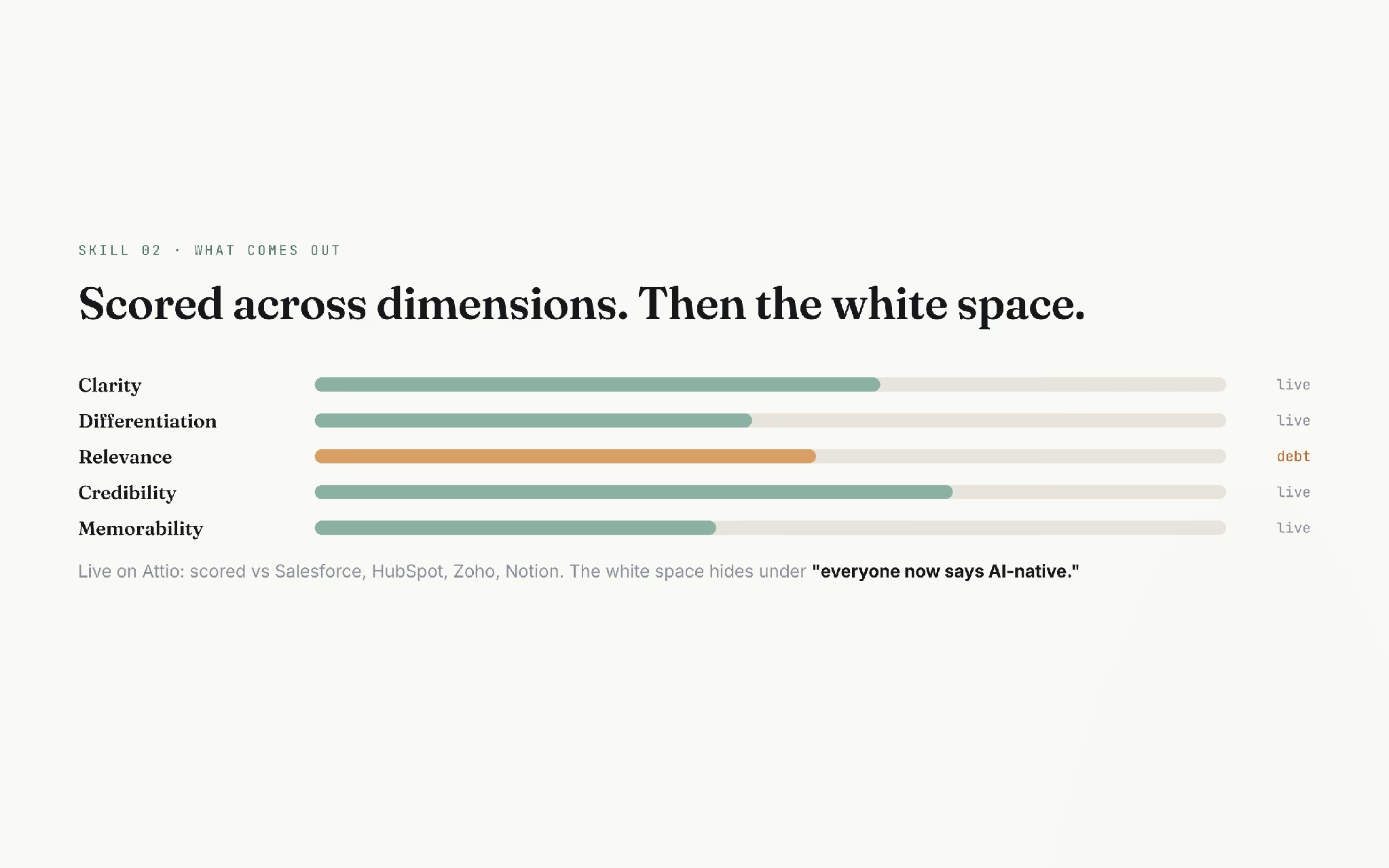
The white space pass is the part Gab leans on. It reads how rivals position themselves and surfaces the claims that are low-credibility or simply unclaimed, the ground you can take with less risk. For Attio, the opening hid under the "AI-native" line everyone else was crowding into. Understanding how the board is laid out lets you be bolder, because you can see which moves a competitor could copy and which they can't.
The skill closes with a stakeholder summary, which Gab calls the part product marketers treasure. One clear view of the biggest gap and the argument for changing it, so a positioning revamp starts from evidence instead of the four-week debate everyone dreads. Positioning sets the strategy. Messaging is where it becomes words.
Skill three: the five-layer messaging hierarchy
Gab uses a house to explain why messaging falls over. Positioning is the foundation. Messaging is the walls and the structure. The copy is the furniture inside. Try to move the furniture in before the foundation is poured and the whole thing comes down like a house of cards.
The messaging skill builds a five-layer stack. At the top sits the POV, the belief you bet the brand on. Under it comes the value proposition, the one promise that pays off that POV. Then the benefits in the buyer's own words, the proof points that make those benefits believable, and at the base the features, the capability sitting under each claim. A traceability chain links every layer to the one above it, and the skill scores the quality at each step.
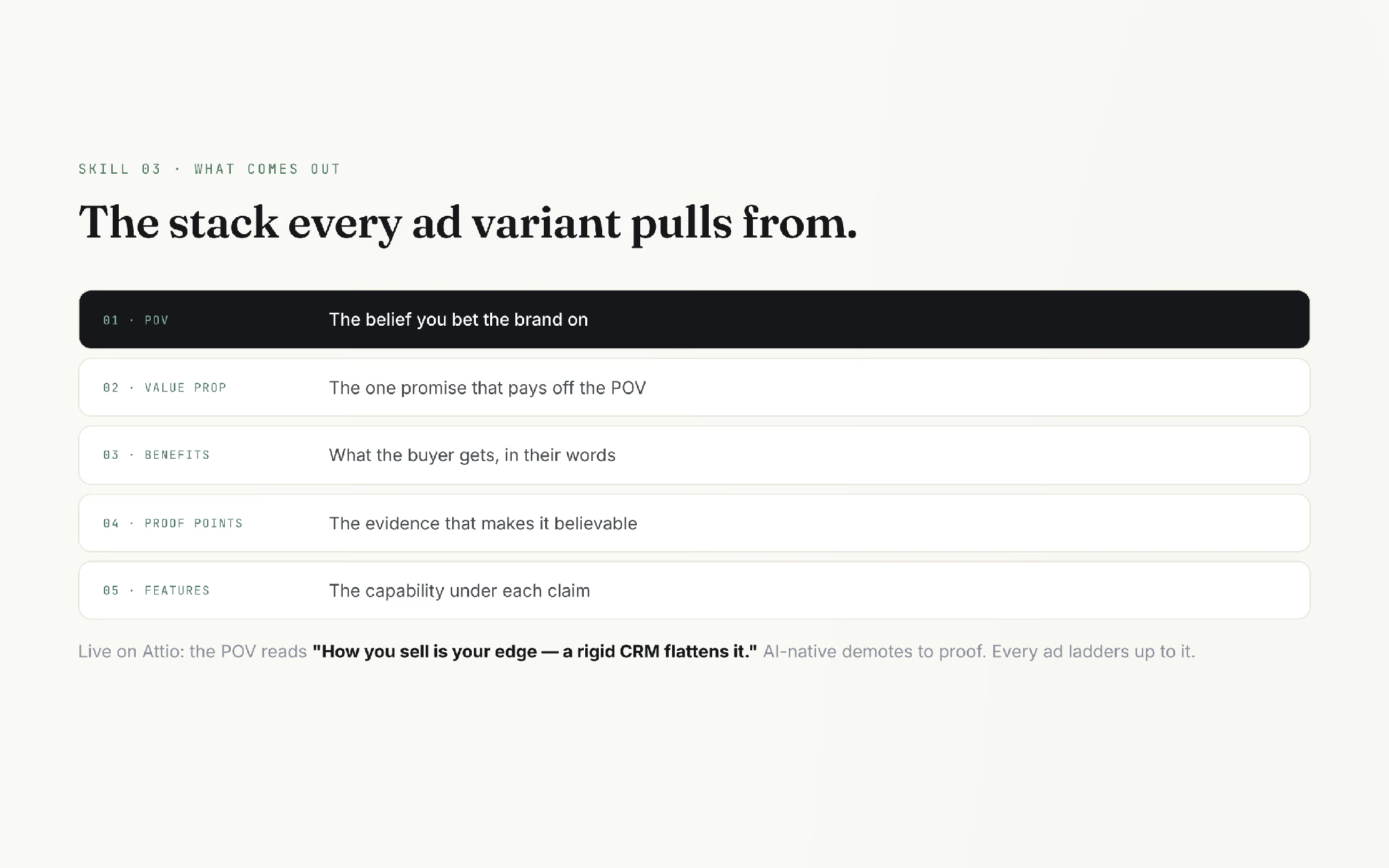
For Attio, the POV the skill landed on read: how you sell is your edge, and a rigid CRM flattens it. That single belief reorders everything beneath it. The "AI-native" claim the company had been leading with drops down to a proof point, where it belongs, and every ad variant ladders back up to the POV instead of competing with it.
Gab is upfront that this looks like a lot. He built it deep on purpose, so a team with strong positioning still finds gaps and a team with none can reach something competitive in a cutthroat category. The same stack feeds your homepage messaging, your outbound, and your sales one-liner, well beyond your ads.
All that structure exists for one reason: to produce something you can run.
From foundations to ads you can run
What comes out the other end is a set of ads you can put in market.
Once the context is encoded and the three skills have run, an ad-studio skill turns the messaging hierarchy into six LinkedIn ad concepts ready to run that day. Each one pulls straight from the stack: the POV up top, the value prop, the problem it speaks to, the benefits, and the proof underneath.
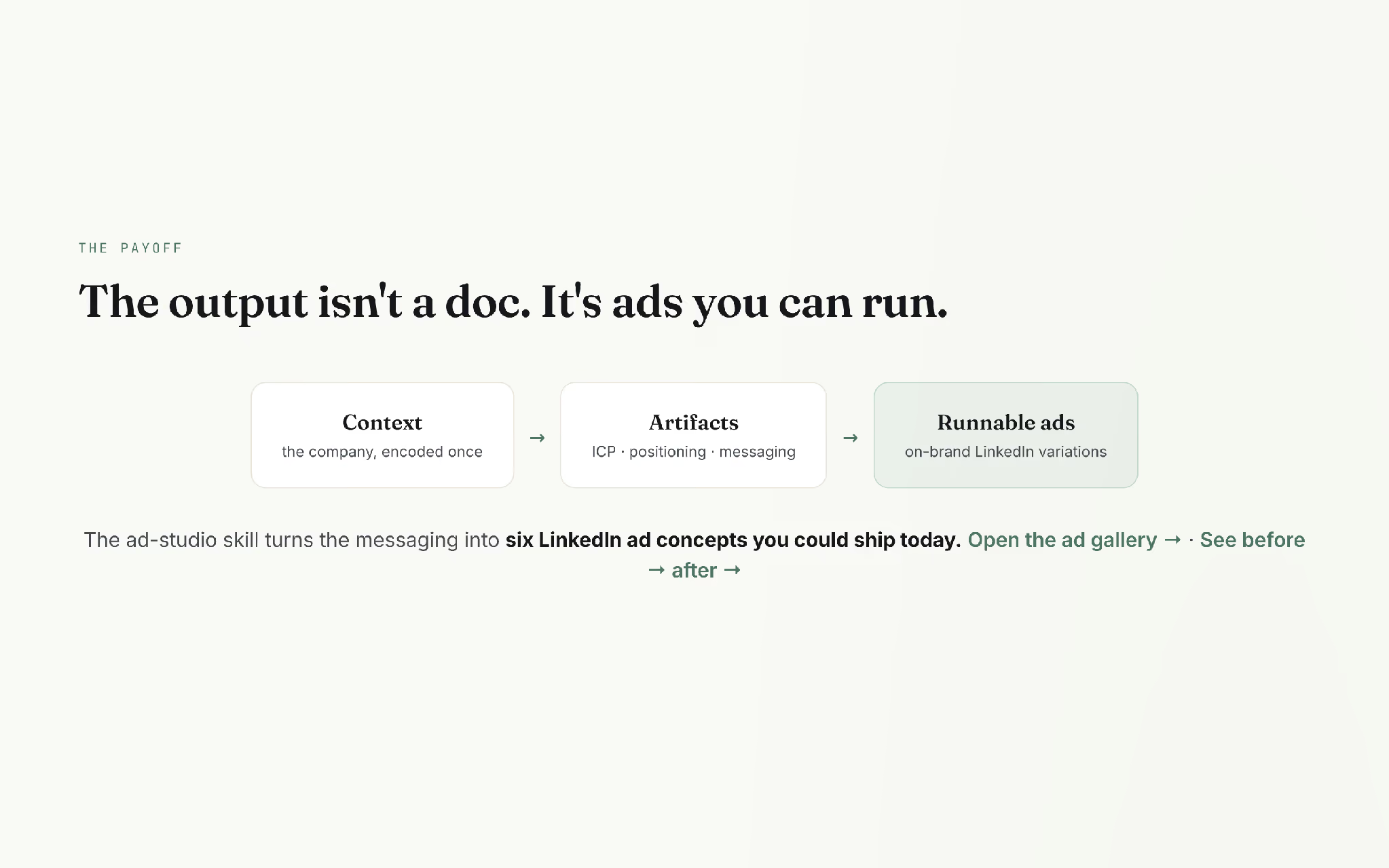
Gab started by pulling Attio's existing ads from the LinkedIn ad library. They leaned on "AI-native" and "the AI CRM," which he argues quietly turns the product into a commodity. When HubSpot and Salesforce claim the same AI capabilities, that line stops separating Attio and starts reading as noise. The new concepts moved onto the wedge Attio owns: the customizable data model, the idea of building the CRM around how you sell. You'd fine-tune them before putting budget behind them, but most of the work is done the moment they fall out of the messaging.
Those concepts can run across Google Ads and LinkedIn ad concepts, and the same stack carries into paid social and outbound.
Gab is clear that messaging is a bet you keep testing. Positioning is the long-term call; messaging gets tested across the website, ads, outbound, the sales one-liner, even the pricing page headline. He built a second-tier skill, message-market-fit, that diagnoses whether a message is ready to test and then checks it against the target persona, which fits performance marketers who already run constant touchpoints with the market.
Audience Q&A highlights
Several questions from the audience added useful detail about how this works in practice.
On the one foundation to start with: Asked which single foundation he'd repair if he joined a SaaS tomorrow, Gab chose positioning. It carries the ICP inside it and feeds the messaging, so working on it pulls the other two along. A company that doesn't know what mind share it wants to own is setting itself up to fail.
On narrowing the right ICP: Discomfort is a good sign here; a tight ICP should feel tighter than management wants. The test that matters is revenue. Look at closed-won deals, study the pipeline, and run a win-loss analysis. The best-mapped ICP is worthless if no revenue is attached to it.
On finding a defensible wedge: In a crowded category, ask why competitors never took the open ground, because sometimes there's a reason and sometimes it's yours to claim. Working with GuideFlow, a Storylane alternative, Gab noticed Storylane led on creating demos fast, while sales calls showed buyers were frustrated that those demos rotted after every UI update. "Demo rot" became the angle. A clear contrarian line beats a bland different one, and it doesn't take an unhinged take either: Freckle's "Clay without the learning curve" says everything in four words.
On keeping AI output consistent: Add a guard after the first pass. Gab tells the agent to score the draft against human-validated past campaigns and copy out of 100, and to redo it until it clears 90. The score matters less than what it confirms, that the agent understood the context.
On the failsafe for messaging: Verification lives in two places. The language layer captures the buyer's words from calls and threads, and the second-tier message-market-fit skill tests the message against the target persona before it goes wide. Messaging should be tested across ads, site, email, and sales, never run on a hunch.
On whether a design system comes next: Design sits after messaging, and only if you run creatives. The hierarchy already contains the copy, so the next step is segmenting it into the content marketing or outbound you run, well before a design system enters the picture.
Conclusion
The bigger change Gab describes is about where the work happens. Most teams pour their energy into the paid engine, tuning bids and refreshing audiences, while the inputs that decide whether any of it converts sit untouched. His method moves the effort upstream and writes the business down once, so the agent and the campaigns both stop guessing. Do the thinking first, encode it as context, then run it as skills. Repair the inputs and the whole engine lifts.
Key actions to take immediately:
- Audit where your ICP, positioning, and ad copy came from, and mark anything you inherited and never pressure-tested.
- Build one repo for your company with a CLAUDE.md entry point and a context folder holding your profile, market, competitors, and voice, so the agent reads the same picture every time.
- Brief the agent like a sharp intern: give it the destination, the role, the constraints, and permission to ask questions before it produces anything.
- Run an ICP definition across firmographic, behavioral, psychographic, and language layers, and write the anti-ICP so you know who to exclude from the spend.
- Pull your buyers' words from sales calls and community threads, and sort them into problem, objection, comparison, and success language you can reuse in hooks and metadata.
- Score your positioning against named rivals on clarity, differentiation, relevance, credibility, and memorability, then treat the weakest dimension as your next move.
- Build a five-layer messaging hierarchy from POV down to features, and check that every ad variant ladders back up to the POV.
- Keep testing your messaging across ads, website, email, and sales calls, and add a guard prompt that scores AI output against your validated copy before you use it.
- Fork Gab's public repo and skill set, run the three skills on your own company this week, and book a call if you want a team to run the foundations with you.
Watch the full video here: