
Who Owns Page One in B2B SaaS Search: A 100-Query Study
Contributor

Abishek Balaji
Content Marketing Manager
In this article
Key Takeaways
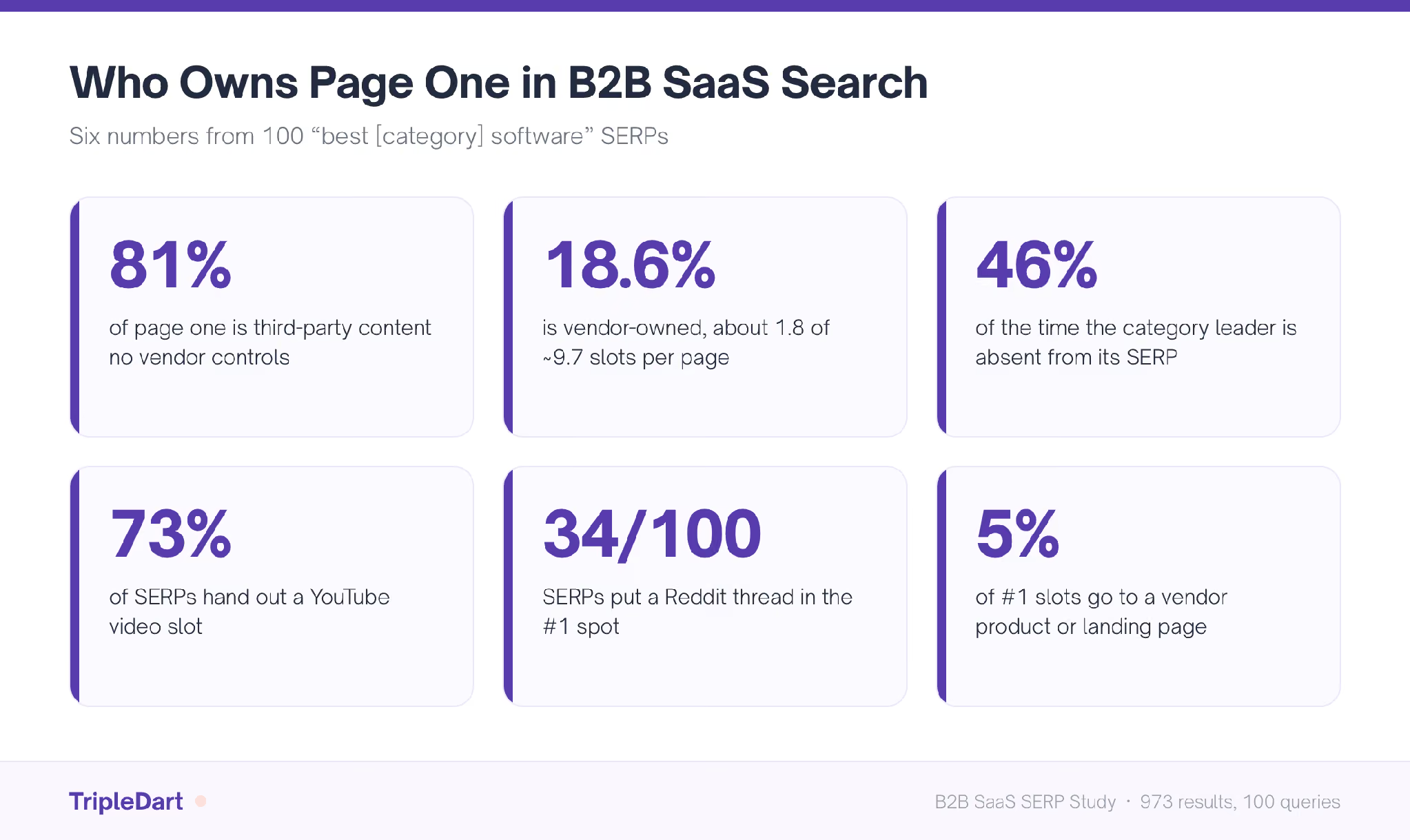
- 81% of page one is non-vendor content. Across 973 results, vendor product, landing, and homepage pages are 18.6%. Everything else is third-party.
- The category leader ranks in its own SERP only 54% of the time. For 46 of 100 queries the share-of-voice leader’s own domain is absent from the top 10, and the correlation between share of voice and ranking is 0.21, near zero.
- A YouTube video appears in 73% of SERPs, an average of 1.11 per page, though only 23 of 111 reach the top 5.
- Listicles are the single biggest block: 37.8% of all results, present in 95 of 100 SERPs.
- Reddit is in 91 of 100 SERPs and holds #1 in 34 of them. A vendor product or landing page wins #1 in just 5.
- 31 of 100 SERPs carry zero vendor-owned results. The average page gives a vendor 1.8 owned slots out of about 9.7.
When someone searches for “best antivirus software” in the US, Avast leads the category in share of voice at 12%, yet it’s nowhere in the top 10.
We saw the same thing over and over across the 100 queries we evaluated.
The best-known name in a category is often just missing when buyers go to compare their options.
We ran all 100 B2B SaaS “best [category] software” queries through the US Google top 10 and tagged every one of the 973 results by page type.
These patterns came up again and again:
On these pages you’re mostly competing with whoever holds the slots, and for these queries that’s publishers, communities, and review sites. The other software vendors are a smaller piece of it than your competitor list would have you believe.
How We Ran the Study
We used Slate to bulk-run the 100 queries against the US Google top 10, then had an LLM tag every organic result with one of 12 page types. Doing that by hand would have taken days. The pipeline did it in an afternoon.
- Queries: 100 “best [category] software” or “tool” terms across B2B SaaS categories, including accounting, CRM, payroll, HR, ERP, help desk, and 90 more.
- Source: US Google, top 10 organic per query. 973 results were classified.
- Page types: YouTube video, Reddit, Forum/Community, Listicle/Roundup, Review aggregator/Directory, Product/Landing page, Homepage, Blog/Editorial, Reference, News/Press, Docs/Support, Other.
- Leader test: each query carries a category leader by third-party share of voice. We checked whether that leader’s own registrable domain holds any top-10 slot. Sub-brands on the same root count, so TurboTax sits under intuit.com.
Page One Is 81% Third-Party Content
We split the 973 results into two groups: vendor-owned pages (product, landing, homepage) and everything else. Everything else takes most of the page, 81% of it.
Vendor-owned pages are 18.6% of the 973 results. The average SERP carries 1.8 of them out of about 9.7 slots.
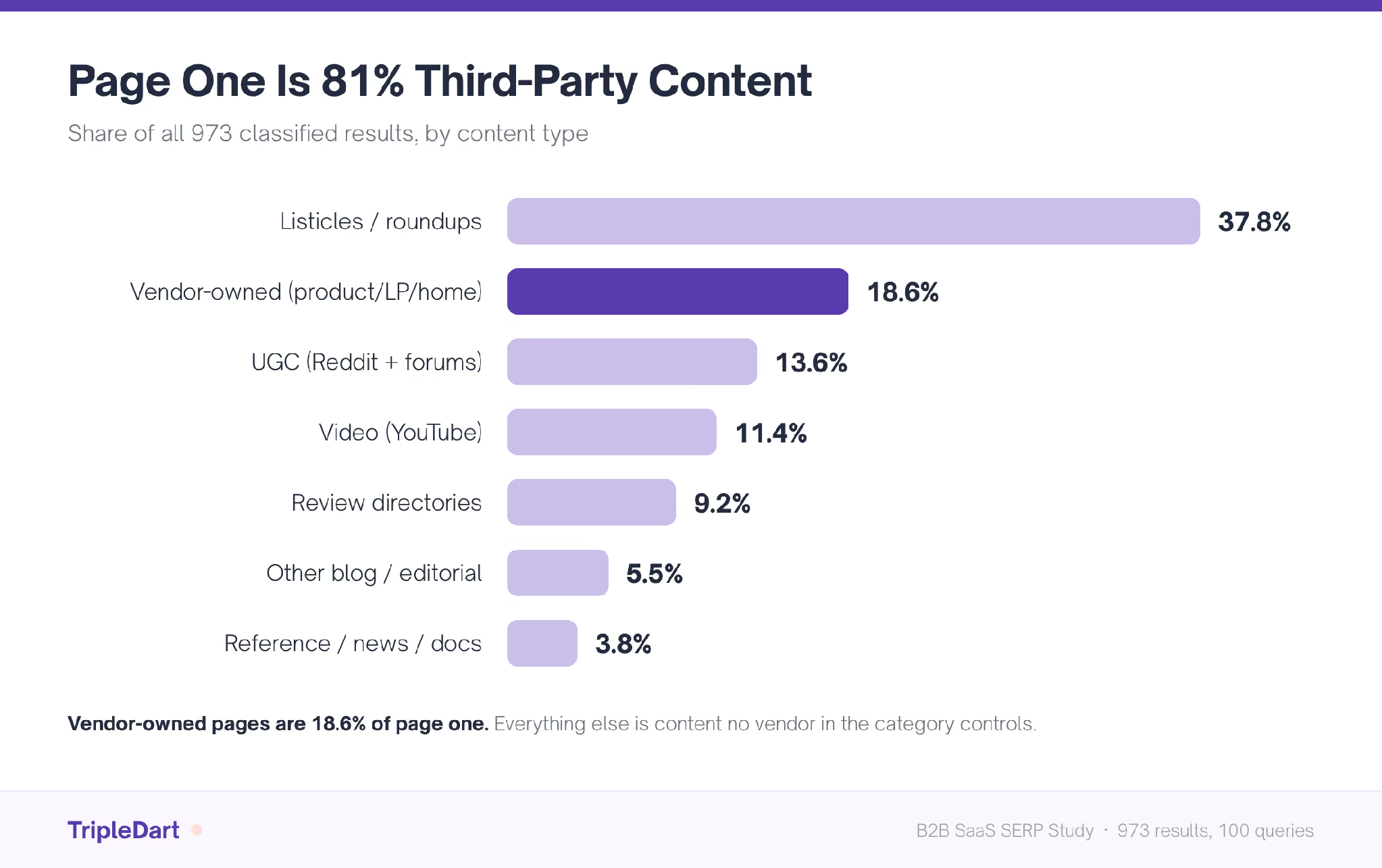
Call it the 18.6% ceiling: that’s about the most of page one you can win for a head term by ranking your own pages. Most categories don’t get close. 67 of 100 SERPs give vendors two slots or fewer, and 31 give them none.
So ranking your own pages for the head term only gets you so far. The bigger opening is getting into the content that already ranks: the roundups, the Reddit threads, the G2 and Capterra profiles. Review directories alone show up in 58 of 100 SERPs.
A good SaaS SEO strategy works those surfaces as hard as its own pages. If owned pages cap out at 18.6%, someone else holds the rest. We started with the brand you’d expect to dominate.
The Category Leader Is Missing From Half Its Own SERPs
For 46 of 100 queries, the category’s biggest name doesn’t rank for its own head term at all. Every query has a leader by share of voice, and we checked whether that leader’s own domain lands anywhere in the top 10 for the “best [category]” search.
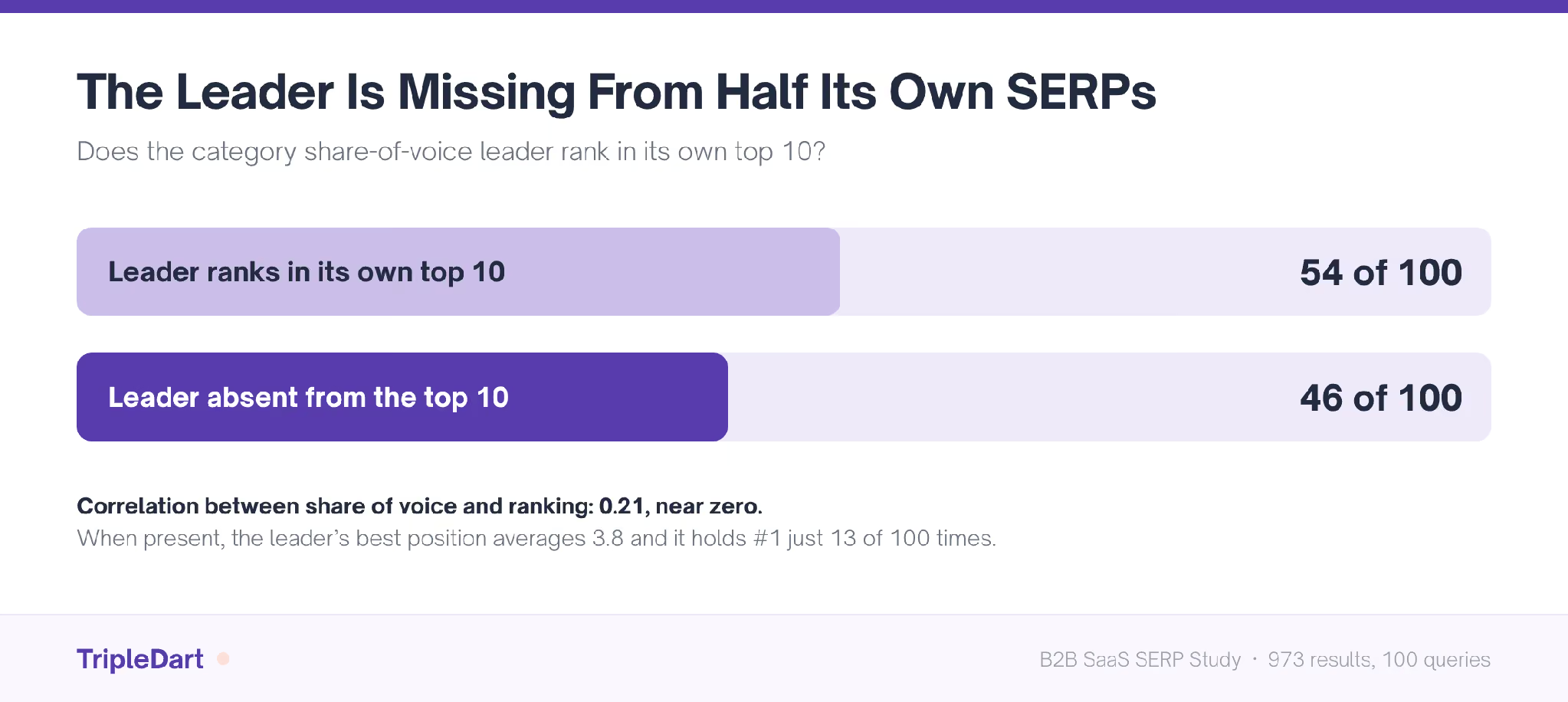
The leader’s own site shows up in its top 10 just 54% of the time. When it does, 13 land at #1 and 32 make the top 3.
That surprised us. Share of voice barely predicts ranking, and a correlation of 0.21 means knowing the category leader tells you almost nothing about who shows up.
These aren’t small brands. Avast leads antivirus and misses the top 10 for “best antivirus software.” Intuit, through TurboTax, leads tax software yet is absent from “best tax software.”
HubSpot, BambooHR, Adobe Acrobat, and LiveChat each lead their category on voice and miss the top 10 for their head term.
That’s the opening for everyone else. When the incumbent can’t hold the page with its own site, the slots go to third parties that list lots of brands at once. A challenger gets onto the same page by being in those listicles, threads, and review profiles.
So if the leader usually isn’t taking the top slot, who is?
What Wins the #1 Slot
Almost never a vendor. A third-party listicle or a Reddit thread holds #1 in 71 of 100 SERPs. A vendor product or landing page holds it in just 5.
Reddit alone owns the top spot more often than every vendor-owned page type combined.
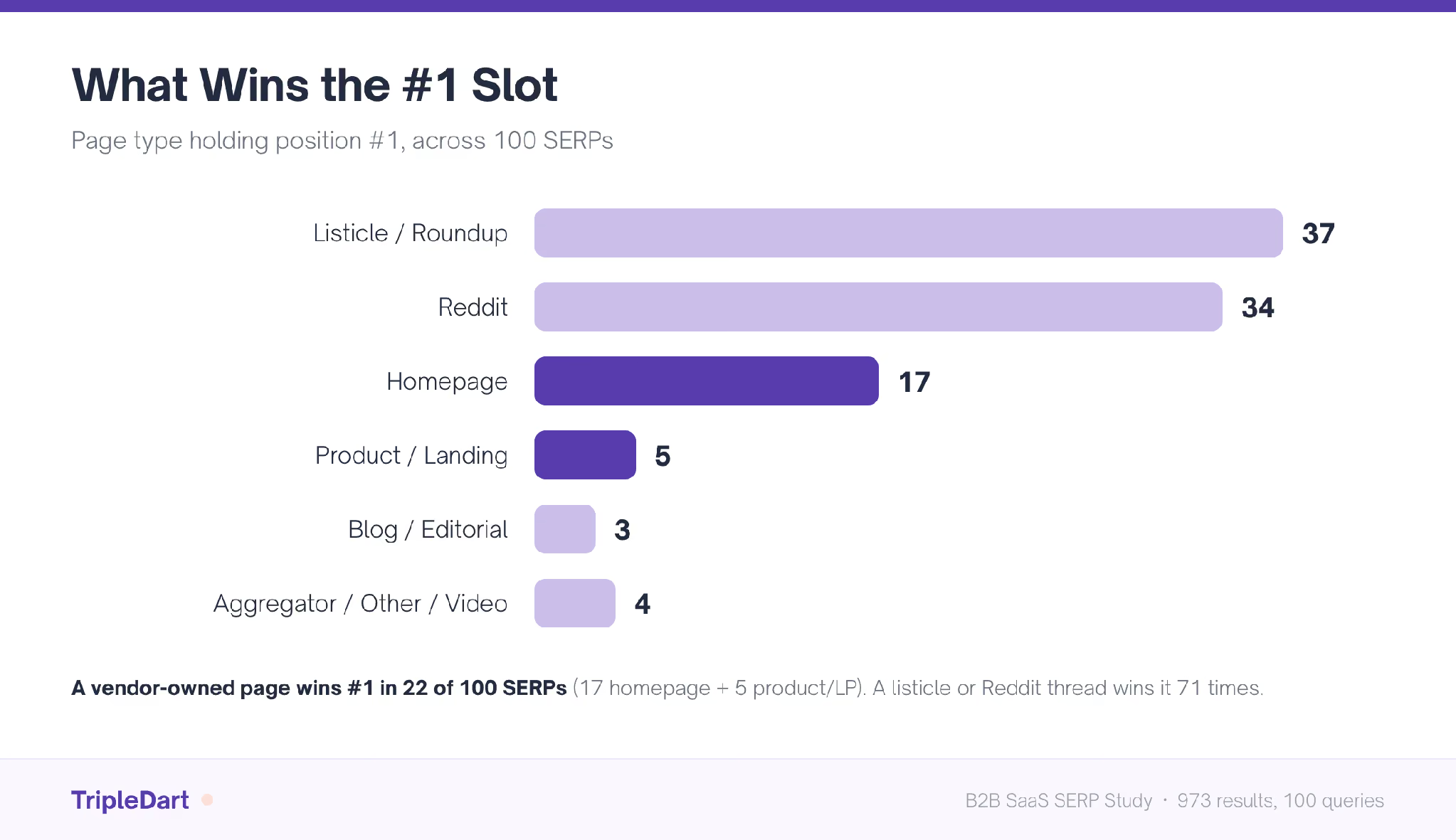
And the top slot is where the clicks go. The #1 organic result pulls 27.6% of them, per Backlinko’s 2025 study of four million results. On these queries that #1 is usually a roundup or a Reddit thread, so most of the demand lands there.
When a vendor does win #1, it’s the homepage far more often than a product or landing page: 17 of 100 versus 5. Either way, for a head term the #1 organic spot is rarely the one you can move. The work goes to the surfaces that do rank there.
One of those surfaces, video, turns up in almost every category.
A YouTube Video Appears in 73% of SERPs
YouTube takes a top-10 slot in 73 of 100 SERPs. That’s 111 videos in all, 11.4% of everything we classified, or about 1.11 per page. 30 of 100 SERPs carry two or more.
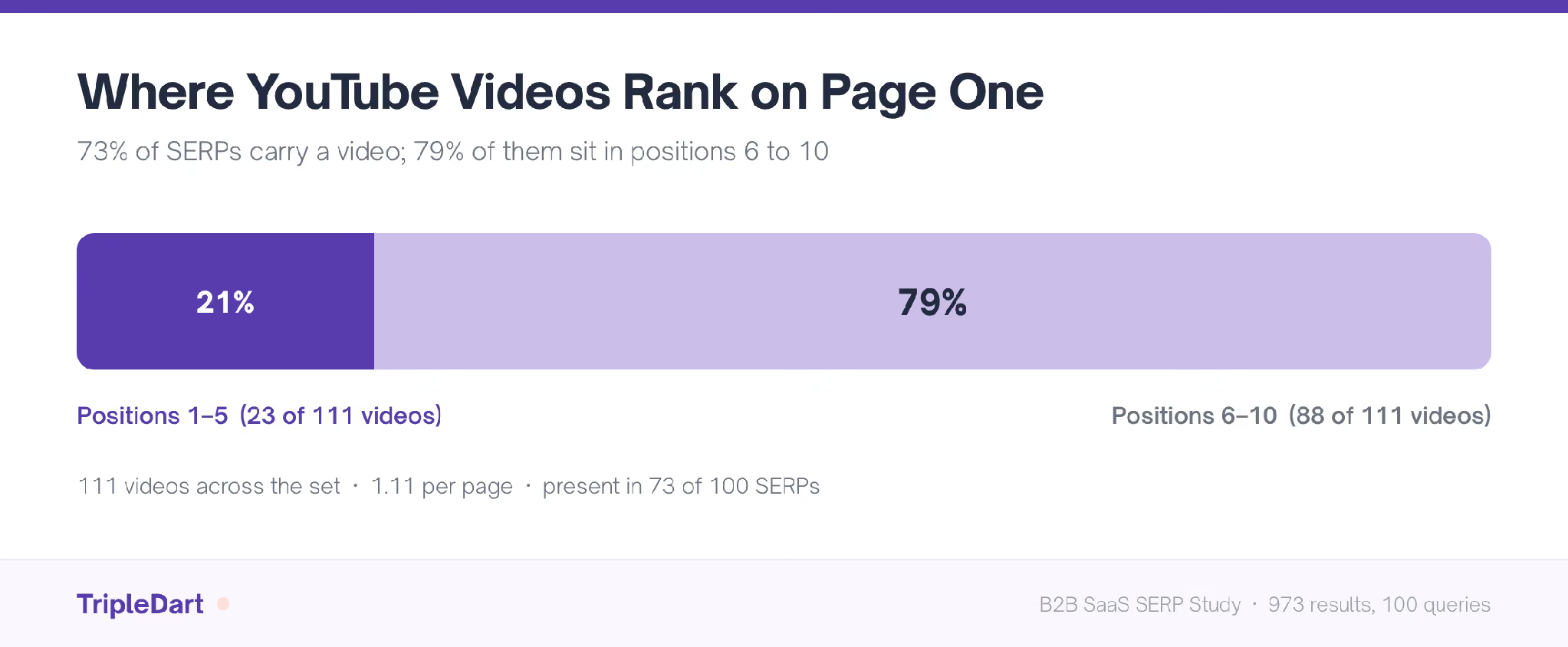
The category barely changes it. Consumer-leaning ones like video editing and antivirus and deep-B2B ones like ERP and fleet management all pull in a video. If people search it, a video tends to show up.
Video in search has grown about 75% year over year, per seoClarity. But it sits low: 88 of those 111 videos land in positions 6 through 10, and only 23 crack the top 5.
So a video almost always gets you on the page, just rarely near the top. For a core category term, a YouTube asset is close to a must-have. If you don’t claim that slot, a competitor or some random creator will.
Add up the roundups, the threads, the videos, and the review profiles, and that’s the competitor set.
Who You Compete With on the Page
Most brand and SEO planning starts from a list of product competitors. On the page, the names taking the slots are mostly different ones.
Across these 100 queries, 81% of page one is content no vendor in the category controls: publisher roundups, Reddit threads, G2 and Capterra profiles, YouTube.
Your nearest product rival usually holds a slot or two, about what you hold. The category leader holds none 46% of the time, the way Avast does in antivirus.
So a big part of the fight is with your SEO competitors: the publishers and platforms ranking for your terms. They’re every bit as important as the vendors chasing the same deals.
A lot of that is Reddit. Its Google visibility jumped more than 1,300% across 2023 and 2024 (Sistrix), and now Reddit threads hold #1 in 34 of these 100 SERPs.
The buyers using these surfaces do their homework:
- Forrester buyer research finds 92% start with at least one vendor in mind, yet still open a “best [category]” query to check it.
- G2 buyer behavior data shows 31% of software buyers consult review sites more than any other source.
- Gartner’s rep-free buying survey finds 61% of B2B buyers now prefer a self-serve experience.
So here’s the order of work. Look at the SERP first, then match each move to whatever’s holding the slot. Aim only at outranking other products, and you’re fighting over 18.6% of the page.
What To Do With This
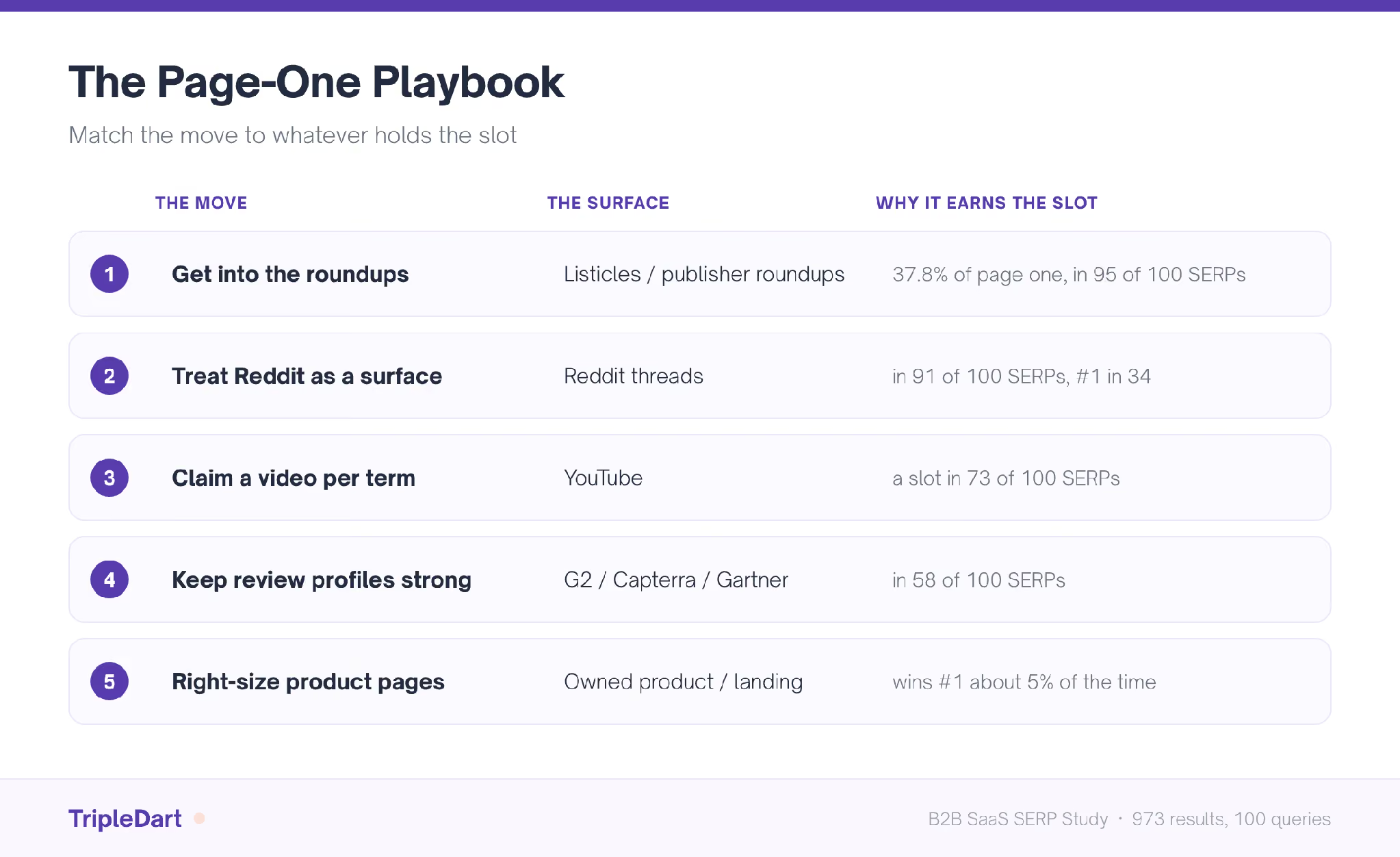
The playbook just follows the slots. Each move below goes after a surface that holds page one, with the number behind it.
Get Into the Roundups
Listicles are 37.8% of page one and live in 95 of 100 SERPs. Find the publishers ranking the “best [your category]” roundups and earn your way in with outreach, original data, or product inclusion.
Here programmatic SEO for SaaS and editorial work beat another owned landing page.
Treat Reddit as a Ranking Surface
91 of 100 SERPs carry a Reddit thread and 34 put one at #1. Show up and be useful in the threads that rank for your category terms. Back it with a SaaS content strategy that knows which threads already rank before you post.
Claim a Video Slot Per Term
73% of SERPs hand out a video slot, mostly low on the page. Claim it with a YouTube asset for each core category term before a competitor or a creator does.
Keep G2, Capterra, and Gartner Profiles Strong
Review directories appear in 58 of 100 SERPs and convert intent better than most owned pages. Keep profiles current, seed recent reviews, and treat each listing like a page you’re trying to rank.
Right-Size the Product-Page Effort
Owned pages win #1 about 5% of the time and make up 19% of page one. Put the surplus into comparison and long-tail queries, where SaaS keyword research shows owned pages still rank and convert.
Run This on Your Own Category
The whole study is a query list and a classifier. Swap in your own 100 terms, pull the US top 10, tag each result by page type, and you have your category’s map in an afternoon.
We built the pipeline in Slate and can run it for your category on request. From there we turn the map into a plan that goes after more than the 18.6% your own pages can reach.
If you want your category’s page-one map and a plan to go with it, book a demo. We’ll start with your SERPs and match each move to whatever holds the slots.
Frequently Asked Questions
Who Ranks on Page One for B2B SaaS “Best Software” Queries?
Across 100 “best [category] software” queries and 973 US Google results, 81% of page one is third-party content. Listicles and roundups are 37.8%, Reddit and forums 13.6%, YouTube 11.4%, and review directories 9.2%.
Vendor-owned product, landing, and homepage pages are 18.6%, about 1.8 slots out of 9.7 per page.
Why Is the Category Leader Missing From Its Own Search Results?
The share-of-voice leader’s own domain ranks in its head-term top 10 only 54% of the time, so it is absent in 46 of 100 queries. Mindshare and ranking barely correlate, at 0.21.
Google fills “best [category]” SERPs with third-party pages that compare many brands, which crowds out a single vendor’s pages even when that vendor leads the category.
Does Reddit Rank for B2B SaaS Searches?
Yes. A Reddit thread appears in 91 of 100 of these SERPs and holds the #1 slot in 34 of them, more often than every vendor-owned page type combined.
Reddit’s Google visibility surged through 2023 and 2024, which is why it now behaves like a primary ranking surface for category terms.
How Important Is YouTube for B2B SaaS SEO?
A YouTube video appears in 73% of these SERPs, in consumer and deep-B2B categories alike, averaging 1.11 per page. They sit low, though: 79% of those videos land in positions 6 through 10.
A video almost always gets you onto the page, just rarely near the top, so it is worth claiming for each core category term.
Should B2B SaaS Companies Still Build Product Pages for Category Terms?
Within limits. Owned pages cap out around 18.6% of page one and win the #1 slot only 5% of the time for head terms.
They still rank and convert on comparison and long-tail queries, so right-size head-term product-page effort and put the surplus into roundups, Reddit, video, and review profiles.
How Do I Find Out Who Owns Page One in My Category?
Build a list of your category’s “best [X] software” queries, pull the US Google top 10 for each, and classify every result by page type. The split between vendor-owned and third-party content shows where ranking your own pages can and cannot help.
A B2B SEO agency can run the full pipeline and turn the map into a plan.