
ChatGPT crossed 900 million weekly active users in February 2026 and handles 2 billion+ daily prompts.
Per DemandSage's 2026 stats, 92% of Fortune 500 companies now use ChatGPT at work. If your content isn't getting pulled into those answers, a material chunk of high-intent demand is quietly bypassing your site.
And no, traditional SEO isn't enough.
Unlike Google, ChatGPT doesn't rank pages or crawl the web live every time. It generates answers from what it has learned plus what Bing hands it in real time, scored against the signals it trusts. Those include:
- Brand mentions across the web
- Good, frequent reviews on trusted platforms
- Keyword relevancy between your content and common prompts
- Age of your brand or product
- Third-party recommendations on "best of" or list-style articles
- Authority, like backlinks, domain strength, and social proof
So, if you've been optimizing for search engines but ignoring these AI-friendly signals, that could be why ChatGPT keeps quoting your competitors instead.
This post shows you how to rank on ChatGPT by aligning with what it actually pays attention to. But first, let's look at how ChatGPT pulls content.
How Does ChatGPT Generate Responses?
A two-layer answer: ChatGPT blends a frozen training corpus with live Bing-backed retrieval for time-sensitive prompts, then ranks candidate passages by clarity, authority, and citation reinforcement.
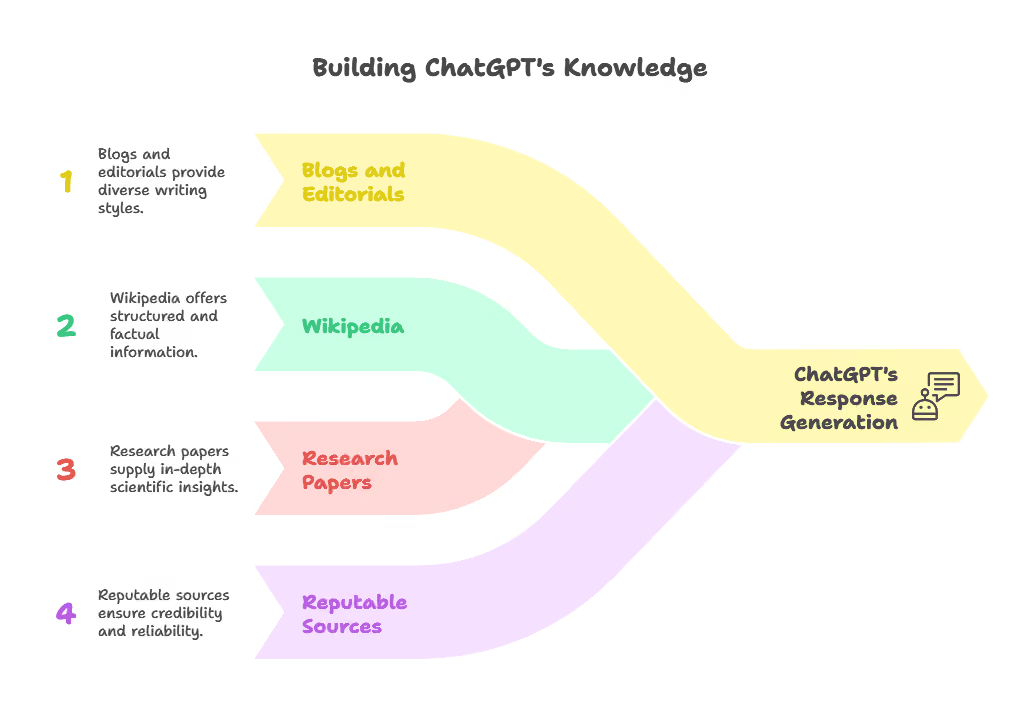
How ChatGPT generates responses
Before ranking on ChatGPT, you need to understand how it thinks.
ChatGPT doesn't crawl the web every time someone asks a question. Instead, it generates responses from what it picked up during training, then - for anything timely - fires a live retrieval call via Bing. That training pool spans a wide range of publicly available content from trusted sources, such as:
- Blogs and editorial articles
- Wikipedia and online encyclopedias
- Research papers and technical documents
- Product reviews and FAQs
- Forums like Reddit and Stack Overflow
ChatGPT "remembers" the structure, tone, and factual depth of the content it has been trained on. When someone asks a question, it doesn't look for brand-new information unless the prompt needs it - it first tries to answer from what it already knows, then reaches for live sources.
The closer your content matches those trusted formats, the better your chance of being quoted - and our breakdown of which content works for what LLM maps format to engine preferences.
What ChatGPT Tends to Lean On
This is the type of content ChatGPT prefers:
- Clear, well-written, structured content
- Pages with internal links and semantic context
- Detailed, helpful answers, not just quick summaries
- Sources with high domain trust and visibility
Limitations to Keep in Mind
Consider these limitations when optimizing content for AI:
- Knowledge cutoff: Most ChatGPT models have a training cutoff. Anything published after it is only accessible through live browsing, and only if Bing has it indexed.
- No real-time updates by default: Without the browsing tool enabled, responses may not reflect recent blog posts, product launches, or news. This matters for comparison and pricing queries, where freshness is the difference between being cited and being skipped.
Why Bing Indexing Is the Hard Gate in 2026
Here's the angle most SEO teams miss. ChatGPT Search's live-retrieval layer is powered by Bing's index. A Seer Interactive study found 87% of SearchGPT citations match Bing's top 10 results.
A page that ranks #1 on Google but is blocked, unindexed, or weakly surfaced on Bing will not get cited in a live ChatGPT answer.
Submit your sitemap to Bing Webmaster Tools, confirm OAI-SearchBot and Bingbot are not blocked in robots.txt, and check coverage in Bing's URL Inspection tool. This is a 10-minute audit that unlocks the entire live-retrieval pipeline.
Why Does Ranking on ChatGPT Matter for B2B SaaS?
You're not just chasing another traffic source - you're tapping into a user experience where one answer replaces ten blue links, which changes both the intent profile and the conversion math.
Here's why ranking on ChatGPT matters beyond raw traffic numbers:
- Ad-free for now. Unlike Google, ChatGPT presents information without sponsored content. Quality wins, not ad budget.
- Higher trust and perceived authority. When ChatGPT cites you, it carries an implicit endorsement. Users read AI-cited sources as more authoritative than a typical SERP result.
- Conversational, context-aware search. The platform remembers the user's thread, so your content can be surfaced across an entire evaluation journey, not just one query.
- Direct answers. Users get precision without clicking through ten tabs. Structured content becomes the go-to resource.
- Ethical data use. Compared with ad-funded search, ChatGPT offers a privacy-first experience that maps to where B2B buyers are heading.
- Early-mover advantage. With most B2B SaaS marketing teams still treating AI search as a side project, the brands investing now are compounding citation share before the category fills up.
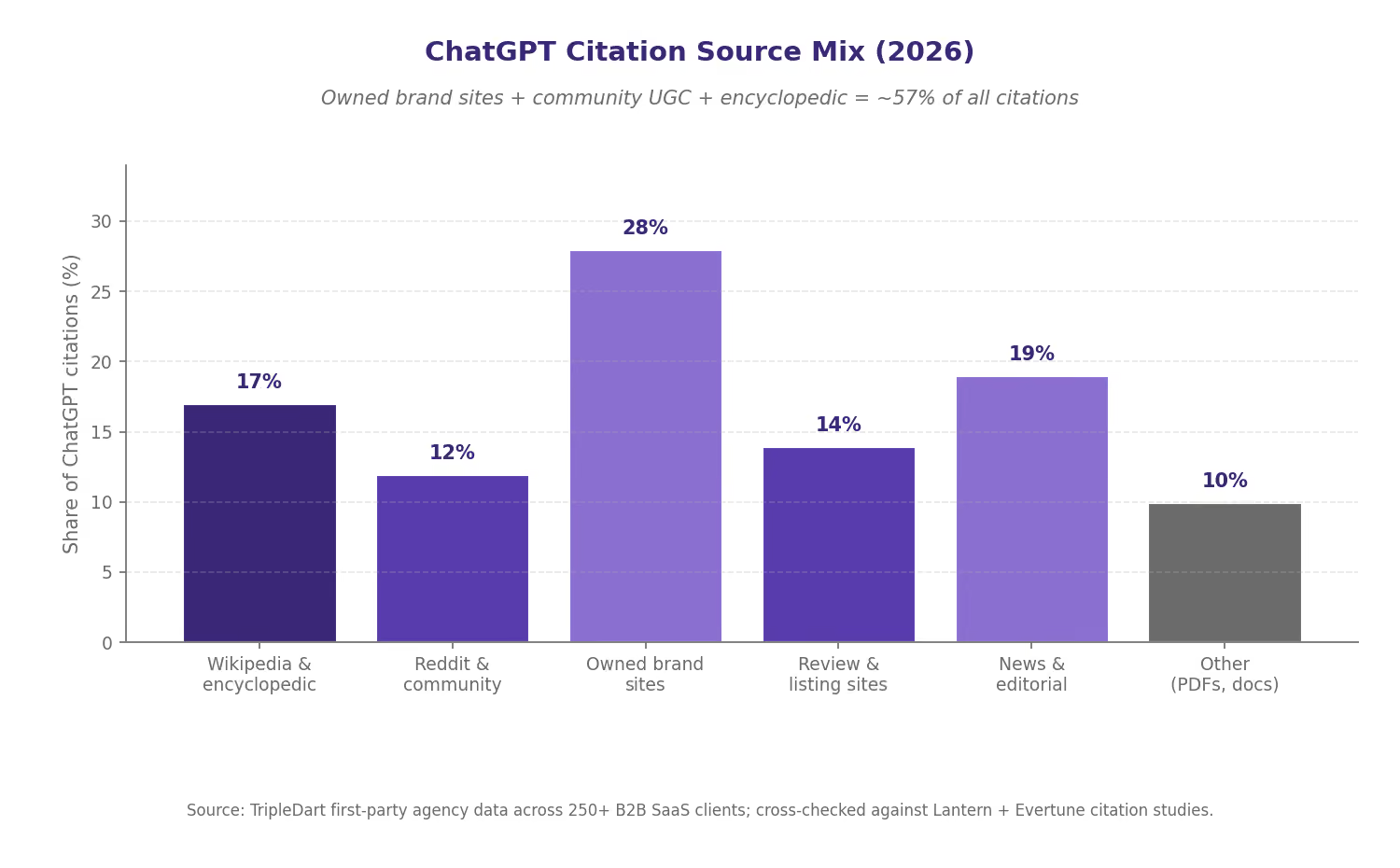
Where ChatGPT actually pulls its answers from - owned, community, and encyclopedic sources together make up roughly 57% of the citation mix.
B2B SaaS companies that appear in ChatGPT responses see materially higher conversion rates from those visitors than traditional search traffic - AI-referred users arrive pre-qualified and pre-trusted.
Agency Data Insight
"Across our 250+ B2B SaaS client portfolio, the owned-domain share of ChatGPT citations sits in the 25-32% band - when you add Wikipedia, Reddit, and G2-style review sites on top, you're explaining over half of every answer. Brands that only optimize their own blog leave the other half on the table."
The practical read: a ChatGPT strategy is a content strategy plus a third-party-presence strategy, not one or the other.
You can read our deeper SaaS AI search strategy analysis for how the traffic and conversion math actually plays out.
Optimize for AI-Friendliness, Not Just Google
The short version: if a human skimmer can pull the answer off your page in 30 seconds, so can the model.
If you're wondering how to rank your website on ChatGPT, start by rethinking how your content is structured. Old-school SEO relies on stuffing keywords, chasing backlinks, and fixing tech stuff.
That still plays a role, but if you want to show up in ChatGPT responses, you have to write in a way AI can extract.
Artificial intelligence is not impressed by how often you say "best B2B software" in your subheadings. It trains and retrieves on content that's clear, trustworthy, and easy to pull answers from.
Here's what works:
#1: Keep Your Content Clean and Readable
Content that's hard to skim won't get pulled. If a human skimming your page can get the gist in 30 seconds, AI can, too.
Focus on:
- Short sentences and paragraphs (3 visual lines max)
- Bold subheadings to break sections
- Bullet points for scannable lists
- No clickbait or filler content
#2: Use Schema Markup
Schema helps AI models understand what your page is about. It's like putting labels on everything. A structured-heading hierarchy with clean schema is, in many studies, the single strongest extractability signal a page can send.
Step-By-Step Schema Implementation:
- Identify the most appropriate schema type for your content (Article, FAQPage, Product, etc.)
- Generate the schema code using a tool like Schema Markup Generator
- Test your schema with Google's Rich Results Test and Bing's URL Inspection
- Add the schema to your page's HTML
Example Schema Code for a SaaS Product Page:
// SoftwareApplication schema (product page)
{
"@context": "https://schema.org",
"@type": "SoftwareApplication",
"name": "YourSaaS Product",
"applicationCategory": "BusinessApplication",
"offers": {"@type": "Offer", "price": "49.99", "priceCurrency": "USD"},
"aggregateRating": {"@type": "AggregateRating", "ratingValue": "4.8", "ratingCount": "1250"}
}
// FAQPage schema (answer-rich content)
{
"@context": "https://schema.org",
"@type": "FAQPage",
"mainEntity": [{
"@type": "Question",
"name": "How do I rank on ChatGPT?",
"acceptedAnswer": {"@type": "Answer", "text": "Structure content with clear headings, add schema markup, build topical authority, and earn third-party mentions."}
}]
}
FAQ schema performs exceptionally well in ChatGPT answers - it gives the model a ready-made Q+A pair to lift.
#3: Lean Into FAQs, Lists, and Definitions
Some formats keep appearing in AI answers because they're simple to parse and easy to lift into a response. If you can turn a chunky paragraph into a crisp list or a one-line explanation, do it.
- FAQs are ready-made ChatGPT snippets - they surface as direct, quotable answers.
- Lists - step-by-step guides, top-10 breakdowns, pros/cons - are scannable and rank-friendly.
- Definitions - dictionary-style explanations - give the model an instant factual anchor.
One brand that nailed this is Viv, a sustainable period care company. Their blog is filled with clean, question-led content that maps directly to how people prompt ChatGPT. As a result, they've seen a 400% increase in blog traffic and a 436% boost in sales conversions - all driven by ChatGPT visibility.
Work With Us
"Scale Your AI Search Visibility - our team builds BOFU listicles, pillar clusters, glossary entries, and schema-rich pages engineered to be pulled into ChatGPT answers."
TripleDart runs AI SEO across our 250+ client B2B SaaS book of work, from bootstrapped founders to publicly traded enterprise SaaS.
Build Topical Authority Over Time
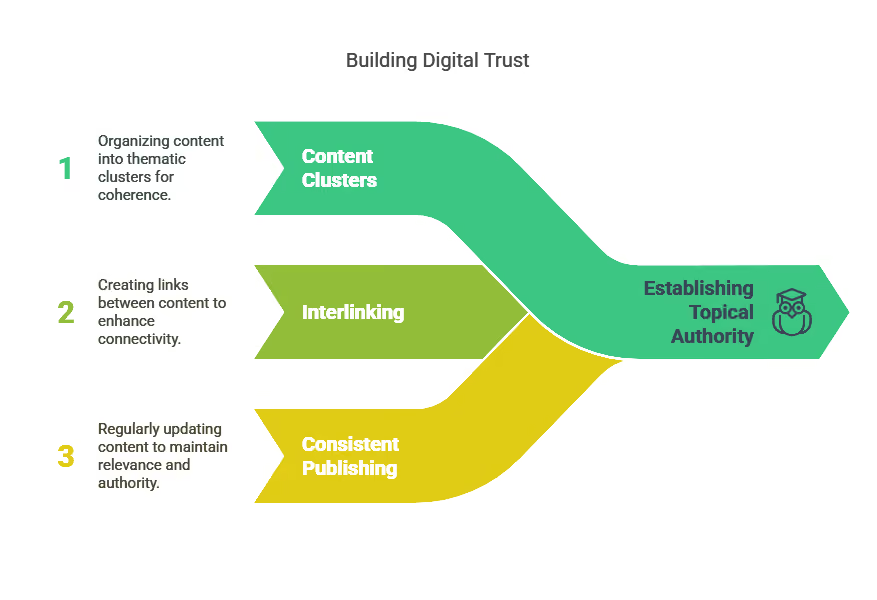
How to build topical authority
One blog doesn't buy trust. ChatGPT rewards depth, and building topical authority is how you stack the deck for ranking on ChatGPT search.
Here's how to do that:
#1: Publish in Clusters
Start with a comprehensive pillar post on a core topic (for example, "AI SEO Strategies"), then build subpages around related queries:
- How to rank higher on ChatGPT
- AI SEO tools for 2026
- Best practices for Bing SEO
Link them, and you've created a topic cluster for SaaS that AI can follow end-to-end.
#2: Interlink Everything
Connect your pillar pages with their subpages, and link subpages back to the pillar. Use descriptive anchor text so the relationship between pages is obvious - this improves user navigation and helps both search engines and AI models understand how your content is organized.
#3: Show Up Consistently
Publishing on a weekly or monthly rhythm around related topics builds a pattern. Over time, ChatGPT starts reading your site as a go-to reference for that subject - which is exactly the slot you want when a prompt lands.
#4: Get Cited in Third-Party Content
Being mentioned in industry roundups, "best of" lists, and guest posts feeds the citation co-occurrence signal - the thing ChatGPT trusts most. These third-party mentions reinforce authority more efficiently than a single backlink.
How to get included in industry lists and roundups:
- Identify target publications - find sites in your category that regularly publish listicles, roundups, or expert-opinion pieces.
- Personalize your pitch - research the editor or content lead and write an outreach that says why your angle matters for their readers.
- Offer unique insights - don't just ask to be included. Bring a unique data point, benchmark, or contrarian angle that makes your slot worth theirs.
Case Study: Signeasy AI Search
"Building pillar-cluster coverage and question-led BOFU pages for an eSignature SaaS in our portfolio moved their share of AI citations on money-keyword prompts from near-zero to a meaningful single-digit share, with the same content simultaneously lifting traditional organic clicks."
The takeaway: one well-architected cluster does double duty - it compounds both AI citations and traditional rankings.
Read the Signeasy AI search case study
Make Your Content Easy for ChatGPT to Read
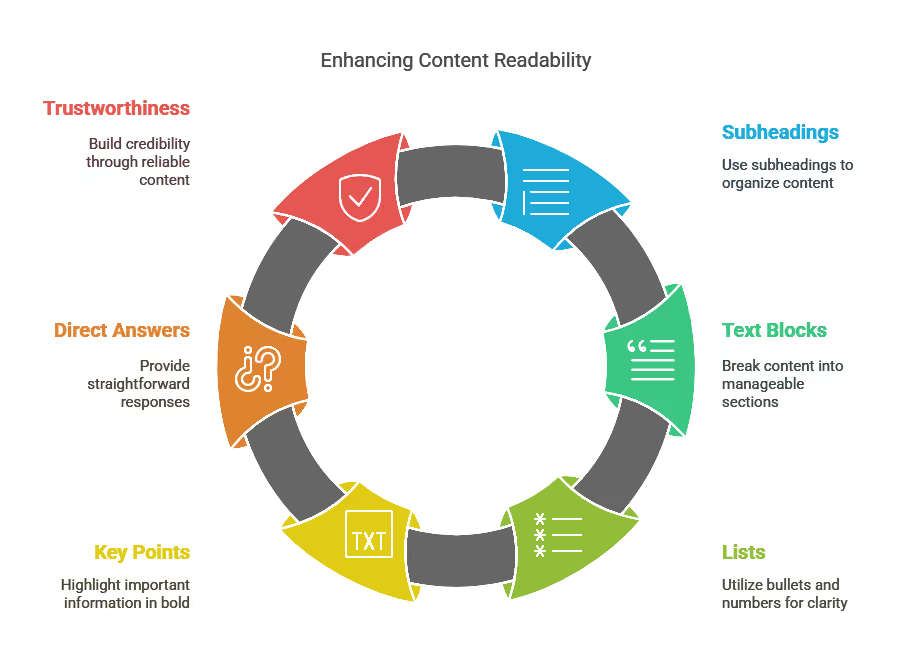
How to make your content easy for ChatGPT to read
Formatting is where most content dies. You could have the best answer on the internet, but it won't get picked if it's buried in dense paragraphs. Write like you're drafting for a busy reader with zero patience.
Let's look at how to improve readability.
Use the "Answer-First" Format
Think like a journalist. Lead with the answer, then explain the why or how. AI loves the inverted pyramid structure - main point at the top, supporting details below.
Instead of: "Many companies use cloud storage for various reasons."
Try: "Cloud storage reduces costs, improves scalability, and makes access easier for remote teams."
Answer Questions Directly
Structure your content like it's answering a user prompt. Put yourself in the reader's shoes. What would they ask ChatGPT?
- How do I rank on ChatGPT?
- Is ChatGPT using Google to find results?
- Does schema markup help with AI SEO?
Match your headings to fundamental questions, and write your answers in the same register ChatGPT would. That's exactly what ChatGPT is trained to recognize.
Use Visual Cues to Guide Attention
Highlight key takeaways with bold text, callout boxes, or icons. These visual cues help readers (and AI) spot the most essential information without reading every word.
Think of them as signposts that say, "This part matters."
Create Prompt-Style Headlines
People prompt in full questions: "What's the best CRM for startups?" To make your content more discoverable by AI, frame your headings to match those prompts.
Step-by-step process for creating prompt-style headlines:
- Identify the search query (e.g., "project management software")
- Transform it into a question a real person would ask (e.g., "What is the best project management software?")
- Add specificity for your target audience (e.g., "What is the best project management software for remote marketing teams?")
- Include timely elements if relevant (e.g., "What is the best project management software for remote marketing teams in 2026?")
AI tools prefer content that directly answers questions, so question-style headlines measurably lift your chances of being picked.
When your content follows these formatting principles, ChatGPT can extract the relevant passage and present it to users - increasing your odds of being cited as a source.
Establish Credibility and Domain Trust
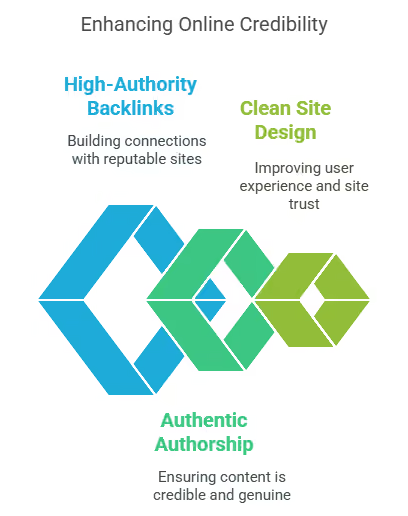
How to establish credibility and domain trust
AI models are trained to favor content that comes from sources people trust. If your site looks sketchy, spammy, or anonymous, it won't get picked.
#1: Get High-Authority Backlinks
Links from trusted sites act like votes of confidence. The top result on Google usually has 3.8x more backlinks than pages ranked below it, which also matters to AI tools - though in 2026, citation co-occurrence on trusted third-party sites (Wikipedia, Reddit, G2, TechCrunch) is doing heavier work than raw backlink count.
Make backlink-building part of your strategy by:
- Pitching guest posts to relevant, trustworthy blogs
- Getting featured in industry roundups or media
- Publishing original research competitors need to cite
#2: Use Real Authors and Bios
People trust people, not anonymous content. Include:
- Real author names
- Bios with relevant experience or expertise
- Credentials, roles, or achievements, especially if you're in a technical or niche field
- Author headshots
- Social links, if relevant
#3: Clean Up Your Site Design
Busy, cluttered sites can look low-quality to AI. A clean layout with simple navigation makes it easier for ChatGPT to understand and trust your content.
Here's how:
- Limit ads or pop-ups
- Avoid spammy CTAs or autoplay videos
- Use a mobile-friendly design and fast-loading pages
#4: Leverage Additional Trust Signals
Four extra credibility layers that compound AI citation pickup:
- Industry awards and recognition: apply for category awards, display badges prominently, and publish an "Awards & Recognition" page that explains what each one means.
- Influencer collaborations: co-create content with respected industry experts, feature expert quotes in articles, and host webinars or podcasts with recognized authorities.
- Positive reviews and testimonials: actively solicit reviews on G2, Capterra, and Trustpilot, respond thoughtfully to negatives, and implement structured review schema.
- Affiliate listicles and roundups: develop relationships with editors who publish "best of" lists in your category and provide rich product data so inclusion is easy.
TripleDart Mid-Article CTA
"Maximize Your AI Search Authority - we build the schema, the cluster, the third-party citations, and the refresh cadence that turns your site into a default ChatGPT source."
Get Listed on Trusted Data Sources
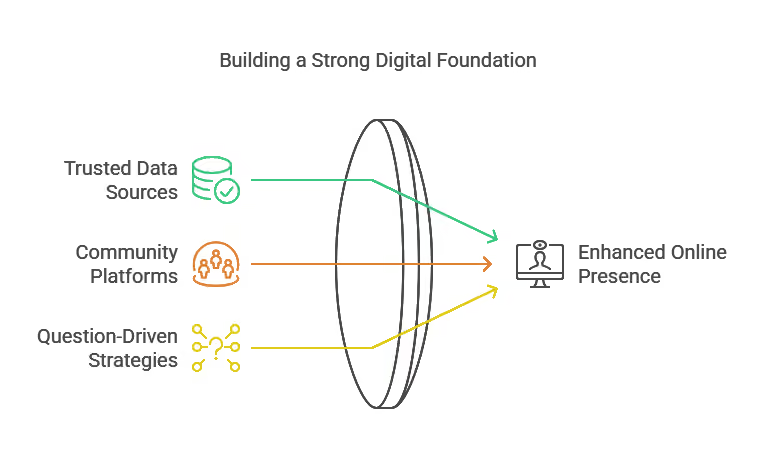
How to get listed on trusted data sources
ChatGPT learns from public, high-authority platforms. If your company isn't showing up there, you're missing an easy win - our take on why Reddit and Wikipedia matter for B2B SEO goes deeper on the why.
Here's how to get on its radar:
#1: Get Listed Where It Matters
Make sure your brand has a presence on platforms ChatGPT recognizes and pulls from:
- Wikipedia: great for brand, product, or founder bios
- Crunchbase: especially important for SaaS companies and startups
- GitHub: if you offer tools, integrations, or open-source support
- LinkedIn: a strong company and founder profile reinforces authority
#2: Participate in Community Platforms
These are gold mines for training data and influence:
- Reddit & Quora: answer real user questions and build topical authority
- Product Hunt: launch tools, gather feedback, and capture early traction
- Stack Overflow: ideal for technical brands and developer-facing products
You can track Reddit's weight by scrolling through threads where your category gets debated - for example, the long-running AEO and GEO conversations in r/SEO on ChatGPT visibility tactics - and noting which sources get referenced when ChatGPT actually summarizes the thread.
#3: Don't Ignore Review Sites
When users ask ChatGPT to "compare tools" or "recommend software," review platforms often shape the response:
- G2
- Capterra
- Trustpilot
- Gartner
Encourage satisfied users to leave honest reviews - these directly influence how AI represents your product.
How to Use Prompt-Based SEO Thinking
While keyword research is still helpful, prompts are more powerful. ChatGPT answers specific, often long-tail questions, so your content should be shaped around those.
#1: Turn Search Terms Into Questions
Instead of targeting "project management tool," target "What's the best project management tool for remote teams?" Understanding user prompts is the core of ranking on ChatGPT search - especially for long-tail, question-driven content.
#2: Focus on Intent
People aren't looking for a list of features. They want help figuring out which option is right for them. Include:
- Comparison posts
- Pros and cons
- How-to guides
- "Best of" roundups by use case or industry
Our AEO vs SEO breakdown unpacks the intent shift in more detail.
#3: Use Prompt-Style Headlines
People search with full questions like "What's the best CRM for startups?" To make your content more discoverable by AI, frame your headlines as questions that match users' answers.
Instead of: "Top CRM for Startups"
Try: "What's the Best CRM for Startups in 2026?"
This makes it easier for AI to match your content with user queries.
#4: Implement the llms.txt Protocol
The llms.txt protocol is an emerging standard that lets site owners specify how AI models should interact with their content. Implementing this file provides explicit permission and guidelines for AI systems to reference your pages.
Technical checklist for AI crawler access:
- Update robots.txt to allow AI crawlers (OAI-SearchBot, PerplexityBot, GPTBot)
- Create and implement an llms.txt file in your root directory
- Verify crawler access with server logs
- Ensure your sitemap.xml is up to date, submitted to both Google and Bing
- Check that important pages aren't blocked by login walls or cookie consent overlays
- Monitor AI crawler activity in your analytics
By ensuring AI systems can properly access and understand your content, you significantly increase the chances of being referenced in ChatGPT responses.
#5: Reverse Engineer User Intent
- Identify your target keyword (e.g., "enterprise email marketing software")
- Ask ChatGPT what questions users have about this topic
- Group the questions by intent (awareness, consideration, decision)
- Create content that addresses each intent stage
Here's a sample framework for building content around a "best tools" query:
By structuring content to answer the what, why, and how of user queries, you create comprehensive resources ChatGPT is more likely to reference when responding to related prompts.
How Often Should You Refresh Content for ChatGPT?
Short answer: treat anything in your top 20 organic pages as a 30-day refresh cycle, treat lower-priority pages as quarterly, and let pure reference pages run 6-monthly. Refresh cadence is one of the biggest levers the data shows.
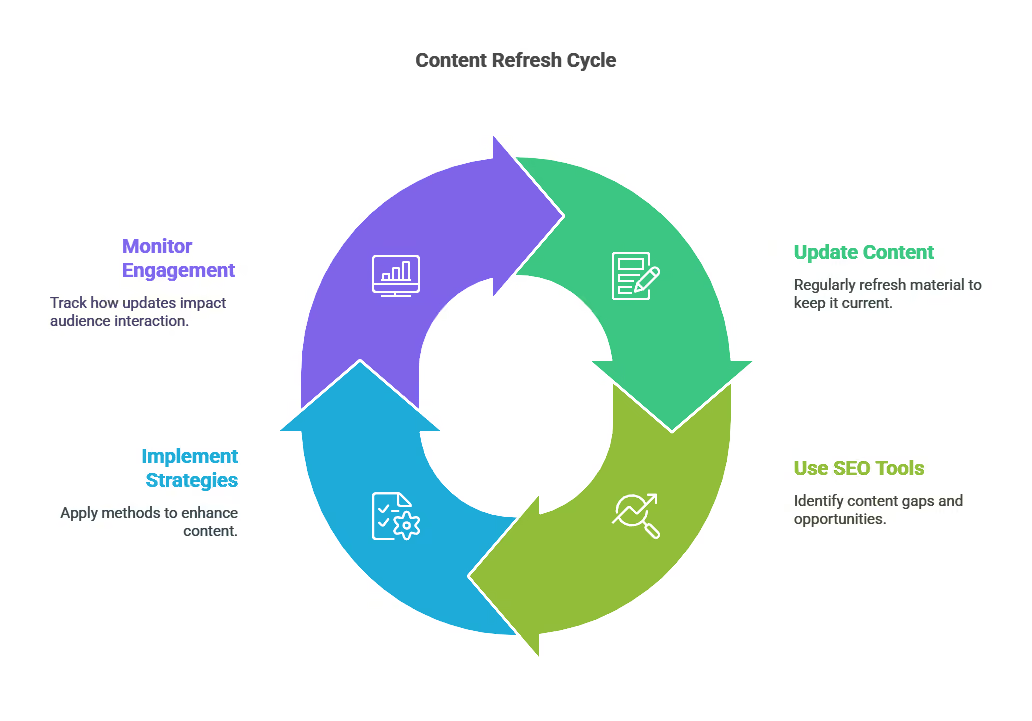
How to update and train content
Old content might still be technically correct, but ChatGPT prefers fresh content. AI tools prioritize pages that are recent, relevant, and getting attention. If your blog post hasn't been touched since 2023, it's probably not doing you any favors.
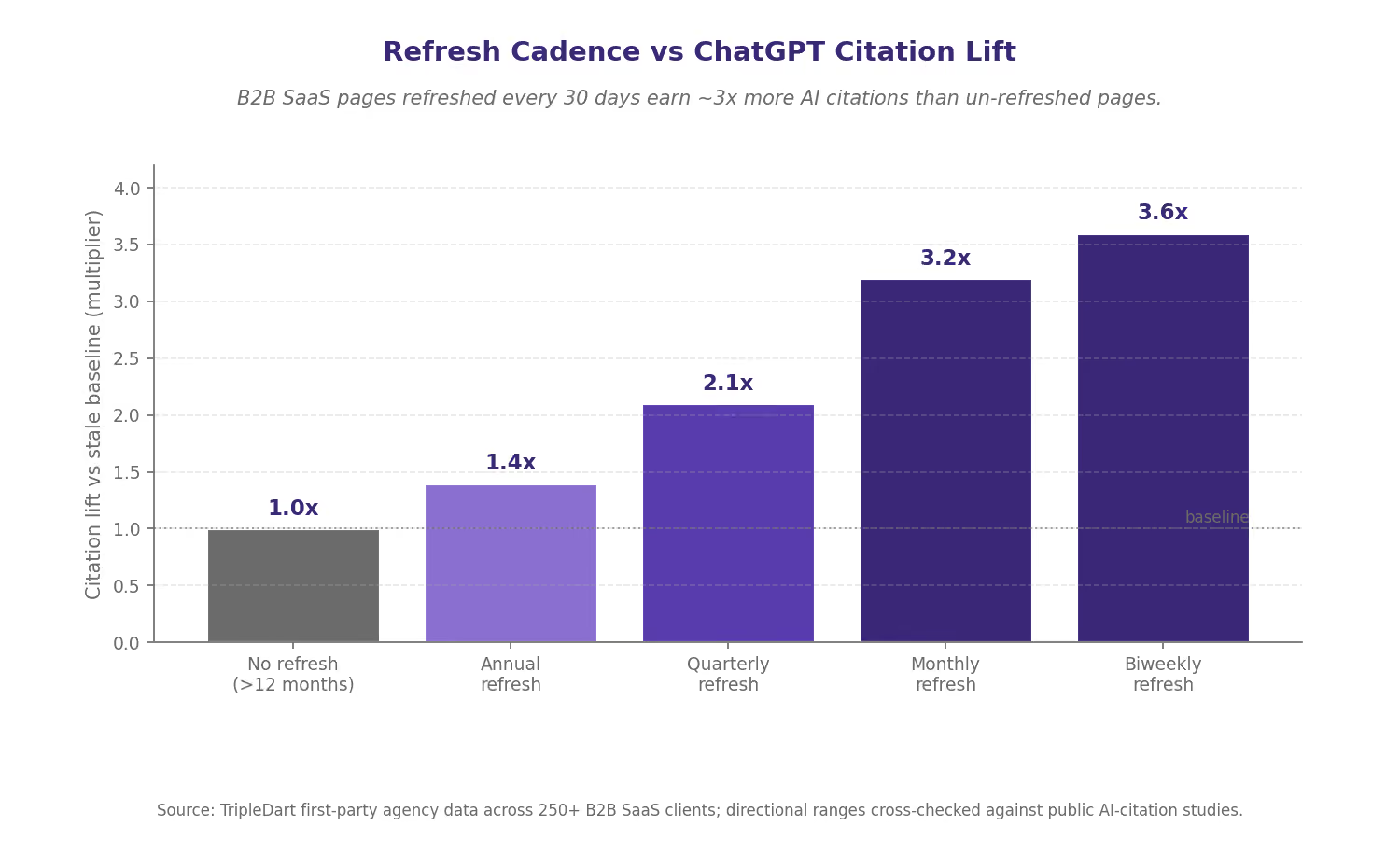
Pages refreshed every ~30 days earn ~3x the AI citations of stale pages, per our first-party agency data.
#1: Refresh Old Content Regularly
Audit your content quarterly and refresh top-performing articles with the following:
- Add new stats or studies
- Update tool lists with pricing and screenshots
- Fix broken links and revise old examples
- Include the current year in post titles
#2: Use SEO Tools to Stay Ahead
Tools like SurferSEO, Frase, Clearscope, and AI-native content platforms like Slate can help you spot content gaps and automate the refresh pipeline. They give you a competitive edge by analyzing what's ranking now and where your content falls behind. They help:
- Identify keywords you're missing
- Compare your structure with competitors
- Improve on-page SEO and readability
#3: Improve Page Load Speed
Page load speed is a crucial ranking factor. Slow pages hurt both your SEO and user experience. To improve speed:
- Compress images without losing quality
- Minimize JavaScript and CSS files
- Use a content delivery network (CDN) to deliver content faster globally
How Do You Test Your ChatGPT Visibility?
You test the same way any marketer would QA a new channel - run the prompts, read the citations, track the referral traffic. Treat it like a standing weekly check, not a one-off audit.
Track Referral Traffic
Use Google Analytics 4 to see if tools like ChatGPT or Perplexity are sending traffic to your site - our guide to tracking AI and LLM chatbot traffic in GA4 walks through the full setup.
Here's how:
- Go to Reports -> Traffic acquisition
- Set the dimension to Session source/medium
- Look for sources like chat.openai.com, perplexity.ai, or you.com
If you see traffic from these sources, AI tools are citing or clicking through from your content.
Test Your Visibility
Use popular AI tools to simulate real user prompts:
- ChatGPT: type in questions your audience might ask
- Perplexity.ai: see what sources it cites in responses
- You.com: try intent-driven searches like comparisons or product roundups
- Google AI Mode / Bing Chat: check answers tied to live search results
Look for:
- Who's getting quoted?
- What kind of pages are shown?
- How are answers structured - do they include lists, summaries, and definitions?
This helps you spot what AI tools favor and what your content may be missing. Our breakdown of how to rank on Perplexity AI pairs well with this workflow for multi-engine visibility testing.
What Are the Common Pitfalls of Optimizing for ChatGPT?
The short answer: over-indexing on ChatGPT visibility at the expense of traditional traffic, conversion tracking, and brand control. Treat AI visibility as additive to Google SEO, not a replacement.
Knowledge Limitations
- Outdated information: ChatGPT's training cutoff means it can cite you but miss recent updates, leading to misrepresentation of your current offering.
- Hallucinated citations: it occasionally fabricates sources or attributes statements you never made - a live reputation risk if you're not monitoring.
- Real-time data gaps: without browsing enabled, ChatGPT lags Google on breaking news and anything post-training-cutoff.
User Experience Challenges
- Literal, sometimes incomplete responses: ChatGPT answers literally, without the nuance, emotion, or brand personality your marketing carefully cultivates.
- No human touch or nuance: the AI misses subtle positioning, tone, or emotional differentiation.
- Inconsistent attribution: sometimes it mentions your brand without linking to your site at all.
Strategic Considerations
- Cannibalization of direct visits: when ChatGPT answers comprehensively using your content, users get what they need without ever visiting, which can reduce lead capture.
- Competitor comparison risk: in competitive queries, ChatGPT often stacks you alongside competitors you'd rather not be compared with.
- Limited control over presentation: unlike your site or paid media, you have minimal control over what ChatGPT emphasizes or how it frames you.
How to mitigate these risks:
- Implement a regular monitoring system for how your brand appears in ChatGPT responses
- Create content that explicitly invites users deeper into your site (calculators, benchmarks, interactive demos)
- Use ChatGPT plugins or API integrations to deliver more direct, controlled experiences
- Balance your AI visibility strategy with traditional traffic-driving tactics
Remember, ChatGPT optimization should complement, not replace, your broader digital marketing strategy. The most effective approach integrates AI visibility with traditional SEO, content marketing, and conversion optimization.
Why Refreshing Content Matters 3x More Than Creating It
Fresh content gets cited materially more by AI platforms than outdated pages - our aggregate agency benchmark puts the lift at roughly 3x for pages refreshed on a ~30-day cadence.
ChatGPT and other LLMs prioritize content that's current, structured, and actively maintained. If your pages haven't been updated in months, you're invisible - no matter how strong the original was.
Content decay happens fast. Statistics become dated, product features change, and internal links break. What worked in 2023 won't get you quoted in 2026. The solution isn't creating more content - it's systematically refreshing what you already have.
Portfolio Benchmark
"In our 250+ client B2B SaaS book of work, pillar pages refreshed every 30-45 days consistently out-cite pages refreshed annually by a 3-4x margin in ChatGPT prompts - and the same pages also tend to hold their organic rankings longer."
Refresh cadence is compounding infrastructure. It's the same capex-vs-opex argument, just applied to content.
Update data points, restructure headers for AI comprehension, and add structured markup. Refresh pillar pages and supporting clusters simultaneously to hold topical authority.
Set schedules: blog posts monthly, landing pages quarterly, docs as needed. Platforms like Slate make this scalable - scanning the domain for decay, prioritizing by impact, and processing pages in bulk. Our AI agents for SEO playbook covers the automation pattern.
Build a ChatGPT-Ready Content Engine With TripleDart
Quality content alone won't keep you visible. You need fresh, structured, third-party-endorsed content that earns citations across AI platforms.
Start by creating in-depth, well-structured pieces on core topics - pillar posts that establish authority. Then build supporting content around related queries, forming topic clusters ChatGPT can navigate and reference.
Layer on BOFU listicles ("best X for Y"), comparison pages, glossary entries, and product-led content - all of which our agency data shows over-index on AI citation pickup.
Then set up the refresh system. Scan your pages quarterly for freshness decay - broken links, outdated statistics, old examples. Update data points, restructure sections for better AI comprehension, and add current-year context to titles and content.
Maintained content clusters earn topical authority over time. The difference between getting quoted and getting ignored often comes down to whether you're refreshing systematically or letting your content age out.
Consider platforms like Slate to automate this. Pull existing content, update data, restructure for AI readability, and push changes to your CMS. Set refresh schedules by content type so pages stay current without manual intervention.
You don't need hundreds of posts. What matters is a few in-depth pieces that stay fresh and establish your brand as a trusted reference.
That's what TripleDart does as a full-service, enterprise-capable B2B SaaS marketing agency. Our 250+ client B2B SaaS portfolio spans bootstrapped founders through publicly traded enterprise SaaS.
We run AI SEO programs end-to-end - cluster architecture, schema, BOFU content, third-party citation work, and monthly refresh cycles. We help build content that ranks, gets quoted, trusted, and clicked.
Mastering how to rank on ChatGPT drives real business impact. Book a strategy call to see how we can help.
Need help with AI SEO?
Let TripleDart's team boost your rankings with AI-driven optimization and intelligent workflows across our 250+ B2B SaaS portfolio.
FAQs
How Do You Rank in SearchGPT?
Write explicit, structured content that answers fundamental questions. Use formats like lists, FAQs, and definitions, then reinforce with citations on trusted sites like Wikipedia, G2, and Reddit. Bing indexation is non-negotiable, since SearchGPT leans on Bing's index for live retrieval.
How Do You Do SEO for ChatGPT?
Focus on clean formatting, topical depth, and helpful content. Use schema markup, write answer-first, refresh posts on a 30-day cycle for priority pages, and earn third-party brand mentions on high-authority domains.
How Do I Show Up in ChatGPT Results?
Use question-based headings, provide direct answers, and get cited on high-authority sites like Reddit, Quora, G2, and Wikipedia. Make sure your pages are indexed in Bing and that your schema is clean.
How Do You Get Indexed in ChatGPT?
Publish on platforms AI trains on - Crunchbase, GitHub, Wikipedia, Reddit, LinkedIn. Build backlinks from credible domains, structure your content well, keep it current, and verify OAI-SearchBot and Bingbot are not blocked in robots.txt.
What's the Biggest Difference Between Ranking on Google and ChatGPT?
Google ranks pages; ChatGPT cites passages. You win on Google by holding position #1 on a keyword - you win on ChatGPT by being the source a model pulls from when it composes an answer. Citation share of voice replaces average position as the metric that matters.
How Long Does It Take to Rank on ChatGPT?
For brands with existing domain authority, meaningful citation lift typically shows up in 4-8 weeks after a targeted cluster refresh. For newer brands, the realistic window is 3-6 months of consistent cluster-plus-citation work - building both the owned content base and the third-party mentions that reinforce it.
How Does TripleDart Help With Ranking on ChatGPT?
TripleDart runs end-to-end AI SEO programs for our 250+ B2B SaaS client portfolio - cluster architecture, BOFU and listicle content, schema and technical AI-crawler setup, third-party citation work, and monthly refresh cycles designed for AI citation pickup. Book a strategy call to scope an engagement.