How Helpshift Achieved 16x Pipeline Influence and 5x ROAS with LinkedIn ABM, SEO, and AI SEO

Helpshift’s ICP is specific: senior decision-makers at gaming companies, a concentrated market that is difficult to reach through broad-based paid tactics.
They partnered with TripleDart to shift from generic, search-led demand capture to a pipeline-first ABM motion, where paid, SEO, and content work together to reach and influence the right companies.
About Helpshift
Helpshift is a leading AI-native player engagement platform purpose-built for the gaming industry. Trusted by gaming studios like Zynga and Supercell, Helpshift integrates technology, AI, and human expertise across player support, engagement, trust and safety, and community. The platform helps gaming studios maximize player lifetime value by improving the player experience.
The Challenge
Paid Spend Not Reaching the Right Audiences
Helpshift was running paid search with weak ROAS and a high cost per lead. A significant portion of budget was going toward audiences outside the target market. Search-led demand capture was not suited to a niche B2B product with low category search volumes, and the spend was not converting into qualified pipeline.
Low Brand Awareness Among the ICP
Gaming studios are a tight vertical. Building the kind of brand familiarity that supports a sales motion requires consistent presence in front of the right people: senior gaming executives, Heads of Player Experience, and VPs of Product. That presence was limited.
Content Not Building Real Authority
Helpshift was publishing content regularly, but it was not differentiated enough to rank or generate inbound interest proportional to the effort. There was no clear topical authority in the gaming space, and no strategy for showing up in AI-driven search environments as that channel grew.
Tech Stack in Place but Not Activated
Demandbase and LinkedIn were already part of the stack. Without account segmentation, funnel-stage logic, and cohort-specific creative, the tooling was not being used to its potential. The question was not “what tools to buy” but “how to build a motion around what was already there.”
TripleDart's Approach
The Strategy at a Glance
Now, let’s dive deeper into these steps.
Fixing the Foundation
Before any campaign went live, we addressed the measurement layer: tracking, attribution, and CRM workflows were set up so every dollar of spend could be tied back to pipeline. Getting this right first meant every subsequent optimization decision was based on accurate data rather than approximations.
Channel Selection
What we evaluated
Google Search and Meta Ads were tested early. Search volumes for Helpshift's core use cases are low in this niche, and Meta audiences did not provide the account-level precision needed to reach senior gaming executives reliably.
What we ran with
Budget was concentrated on LinkedIn and Demandbase, the platforms where Helpshift's ICP is reachable with enough targeting precision to support an ABM motion. This decision was based on an evaluation of where qualified reach was possible in this specific market.
Account Segmentation: TOFU, MOFU, BOFU Cohorts
Target accounts were divided into three funnel-stage cohorts based on their prior engagement with Helpshift.
Each cohort needed a different approach:
- TOFU accounts received awareness-stage content to establish Helpshift's presence in the gaming space.
- MOFU accounts, familiar with Helpshift but not yet in active conversation, received proof-oriented content: case studies, testimonials, and gaming-specific impact metrics.
- BOFU accounts received direct, conversion-oriented messaging aimed at pushing toward sales engagement.
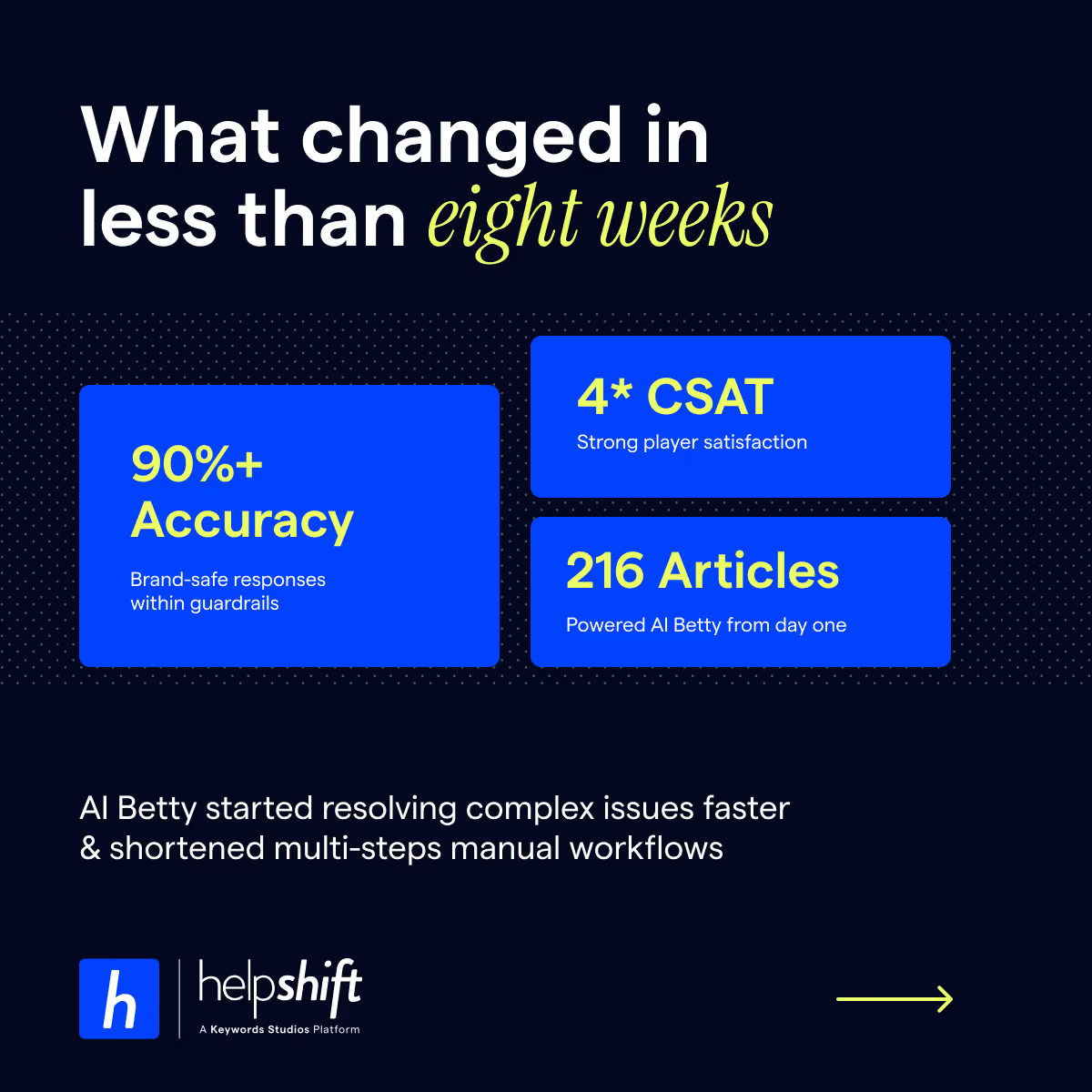
Running all three through the same campaign would have diluted results. Segmenting them meant budget and messaging were calibrated to where each account was.
Creative and Landing Pages
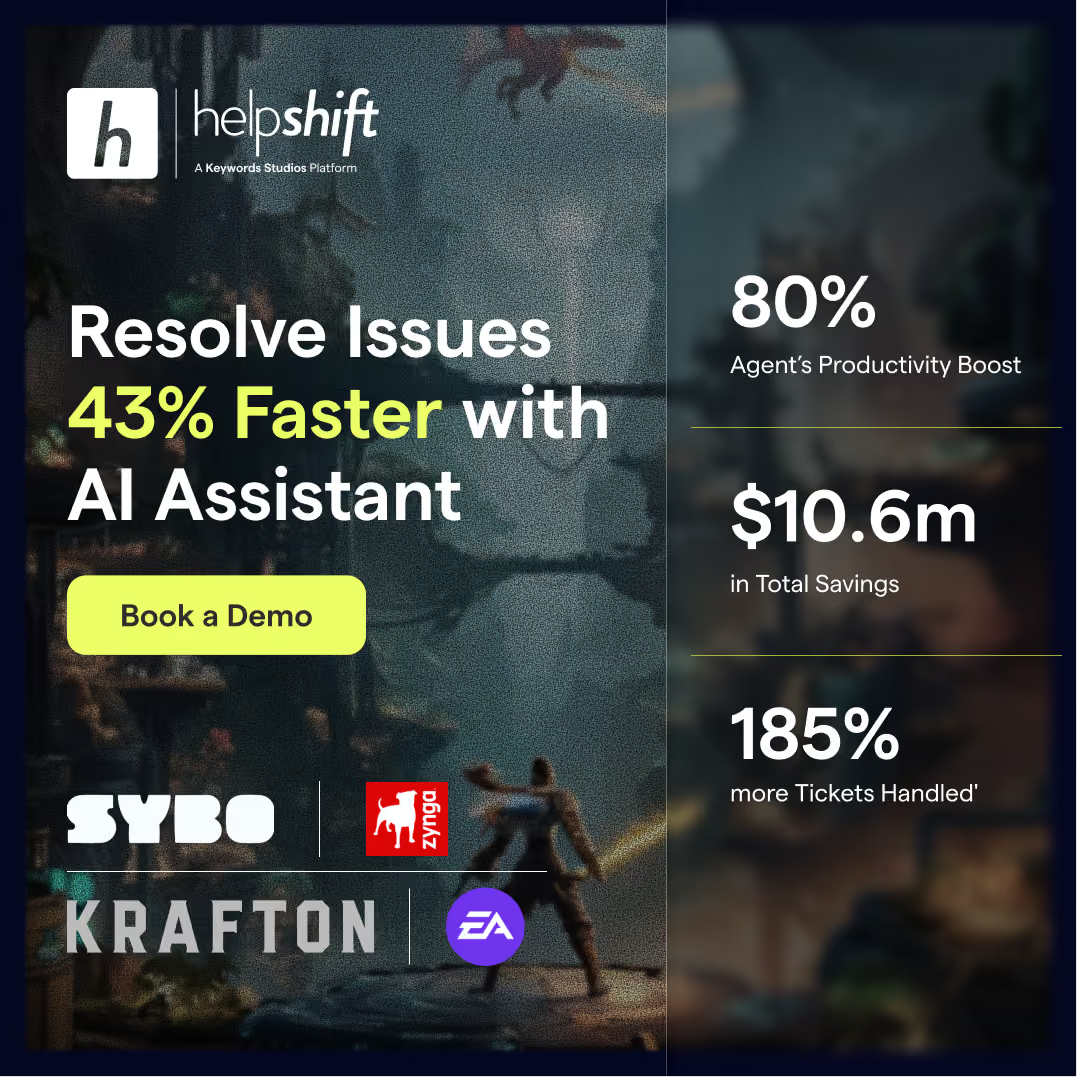
C-Suite creative was built around business outcomes: player LTV, cost efficiency, and the operational risk of poor player support at scale.
Senior and Manager-level creative focused on product capability: native integration into gaming environments, AI deflection rates, and workflow efficiency for support and community teams.
Landing pages were built separately for MOFU and BOFU cohorts. Each page led with gaming-specific metrics and case studies relevant to that audience, rather than sending ABM traffic to a generic homepage.
1:1 ABM on Demandbase
LinkedIn served as the awareness and engagement layer. Demandbase handled escalation for high-intent accounts.
Accounts showing meaningful LinkedIn engagement, right job titles, sustained interaction, and clear intent signals, were moved into 1:1 ABM campaigns on Demandbase. These campaigns were designed to push accounts already showing buying signals further into the sales motion.
Using LinkedIn engagement as a qualifying filter meant the 1:1 program stayed focused on accounts that were genuinely ready.
Execution Controls
A few specific controls drove efficiency gains throughout the program:
Weekday-only scheduling
Campaigns ran only on weekdays, where decision-making activity in this audience is concentrated.
Impression caps by funnel stage
TOFU accounts received lighter frequency. BOFU accounts received higher frequency during the decision window, calibrated to avoid fatigue.
Fibbler for exclusions and reporting
Irrelevant job titles were excluded across all campaigns. Fibbler also provided account-level reporting on which companies were being reached.
Monthly optimization rhythm
Each month: review performance, identify what is working, double down, and cut what is not. Impression capping, ad rotation, message testing by persona, and bidding strategies by asset type were all treated as live variables.
SEO: Building Topical Authority in Gaming
Running alongside the ABM program, the SEO work focused on building genuine topical authority in the gaming space. The goal was content that ranks and drives inbound interest proportional to the effort.
This involved strategic decisions on which topics to own, how to structure content for search, and how to measure impact beyond traffic metrics. The aim was for Helpshift's content to become a real source of inbound interest from gaming companies.
AEO and GEO: Showing Up in AI-Generated Answers
As AI search has grown into a real discovery channel for B2B buyers, the engagement extended into AEO (Answer Engine Optimization) and GEO (Generative Engine Optimization): optimizing Helpshift's content to appear in AI-generated answers across platforms like ChatGPT and Perplexity.
Slate, TripleDart's content and reporting platform, provided visibility into where Helpshift was being mentioned and cited across AI platforms, which prompts and themes they were showing up for, and where gaps existed.
That signal shaped both content priorities and outreach decisions, replacing guesswork with data on AI visibility.
Results
Wasted spend on out-of-ICP audiences was eliminated. Helpshift now has stronger penetration within gaming studios, a paid motion tied to pipeline, and an organic and AI search presence being built alongside it.
Client Feedback
"We partnered with TripleDart to handle our ABM, performance marketing, SEO, and, more recently, AEO/GEO. On the ABM side, they helped us define our ICP more tightly, segment our audiences more effectively, and build messaging tailored to each account segment and persona. That work also fed into how we approach performance: the targeting and messaging became more aligned rather than running in silos.
SEO runs alongside it all as a longer-term channel, and they have extended that into AEO/GEO, optimizing our content to show up in AI-generated answers across platforms like ChatGPT and Perplexity. It is not something most agencies are thinking about yet, so it has been a meaningful addition to the overall strategy.
We also use Slate, which is their tech platform for content creation and reporting, which keeps everything tied together without things falling through the cracks. It is a team that knows how to connect these functions rather than running them independently."
- Viral Patel, Head of Marketing, Helpshift
The Team
- Mahesh, Director of Growth
- Mithun, Paid Media Specialist
- Shubangi, Paid Media Analyst
- Impana, SEO Specialist
- Praveen Swaminathan, Project Manager
Conclusion
Niche B2B markets require a specific approach to paid, organic, and AI search. The Helpshift engagement was built around tighter ICP definition, account-level segmentation, cohort-specific messaging, and a measurement foundation that tied all activity back to pipeline. ABM, SEO, and AEO/GEO ran as connected functions rather than separate programs, and the results reflected that alignment.
At TripleDart, we work with B2B SaaS companies to build marketing engines that are efficient and scalable. If your campaigns need that kind of attention, we should talk.