

.png)
If you are working in anything related to organic search marketing today, you are probably plucking your hair trying to figure out one thing: Generative Engine Optimization.
With AI-based search behaviour only projected to improve (Gartner even says there will be a 25% decline in traditional search by 2026), GEO perhaps becomes the most important channel to focus on in 2026.
Unfortunately, there have been few real-life accounts of implementing GEO. There are guides, posts, and videos explaining the concept theoretically - but how does it look in real life?
That’s what we address in this guide.
This is a comprehensive walkthrough of a real-life GEO implementation case with Flowforma, which is one of TripleDart’s long-standing clients. You’ll learn the step-by-step process of how to do GEO in reality, from the lens of a company that’s already done it.
Before we get started, if you’d like to get more context on AI Search, here’s a 10-minute video explaining everything you need to know:
Phase 0: GEO Goals

Let’s quickly introduce you to FlowForma: they are a no-code process automation platform that lets business users digitize manual processes without bugging IT. Started in 2016 and based in Dublin, Ireland, they work with enterprise clients in manufacturing, healthcare, financial services, and construction.
Despite having a solid product and loyal customers, FlowForma was somewhat invisible in AI-generated responses. Some competitors were showing up when people asked AI about process automation. This was a problem we had to address.
And that brings us to the pre-step-1 of GEO: setting the right GEO goals.
Primary Objective – Getting Noticed by AI Platforms
FlowForma's biggest goal was simple: show up in AI-generated answers when people asked about process automation. They wanted to appear prominently across ChatGPT, Perplexity, Gemini, Copilot, and Google's AI Overviews, and track this in a measurable way through time.
Secondary Objectives – Traffic, Authority, and Brand Perception
When users discover you through AI recommendations, they already trust your expertise. They're not doing as much comparison shopping.
Beyond just showing up, FlowForma wanted to build a steady stream of AI-attributed traffic that would grow over time (AI-attributed traffic converts at 4.4x higher rates than regular search traffic).
FlowForma also needed AI systems to describe them accurately—getting the capabilities, differentiators, and use cases right. The final piece was creating a sustainable GEO content system that would keep working as AI platforms evolved.
Key Takeaways on Setting GEO Goals
- Track your current AI visibility and traffic first
- Set specific targets for each platform
- Include both numbers (traffic, citations) and quality measures (brand accuracy)
Once we had platform-wise goals set in stone, we started with the implementation.
Phase 1 – GEO Research and Analysis
Step 1: Understanding the Target Audience
AI platforms prioritize content that directly addresses user intent. Understanding how your audience searches ensures your content aligns with the conversational queries AI systems are designed to answer.
We started by figuring out why FlowForma's audience was searching. Were they researching solutions? Comparing vendors? Ready to buy?
We documented how they talked, what terminology they used, and how they asked questions. When people talk to AI, they use longer, more specific, intent-heavy queries than what they'd type in a search bar.
So we analyzed sales transcripts and customer conversations instead of just looking at keyword volume data. More on this in the coming sections.
Step 2: GEO Keyword Research
AI systems organize information around intent clusters and natural language patterns. Building a keyword framework ensures your content matches how AI processes and retrieves information.
We built a theme-based keyword framework that matched how AI systems process and prioritize content.
This meant targeting:
- Keywords that showed up frequently in AI Overviews
- Longer phrases that mirrored how people naturally ask questions
- Related terminology that added depth
We used the Query Fanout technique here by creating comprehensive FAQs for each blog that tackled the same topic from multiple angles.
We organized queries based on where people were in their buying journey. Our tools included ChatGPT for topic expansion, Google Autocomplete, People Also Ask, and AlsoAsked. We also used AI assistants with targeted prompts to uncover additional topic angles.
Step 3: AI Overview Response Analysis
Understanding which content formats and structures AI systems prefer allows you to reverse-engineer what gets cited.
We analyzed which queries generated AI-powered summaries in Google search, and studied what topics and formats AI systems liked best.
Using rank tracking platforms like Semrush, plus Google Search Console data, we compared organic rankings against AI Overview citations. We studied how AI structured responses—bullet formats, tables, embedded media, paragraph summaries.
We then filtered high-ranking queries to identify which ones were most likely to generate AI responses. This involved analyzing results to add relevant product, solution, and use-case page links to specific sections highlighted in AI Overviews.
Step 4: Competitor Citation Analysis
AI systems learn citation patterns from content that already performs well. Analyzing competitors who are frequently cited reveals what AI platforms trust and prefer to reference.
We identified competitors that AI cited frequently.
For this, we evaluated competitor content across multiple dimensions:
- How they organized information
- How deeply they covered topics
- What consistent elements appeared in AI-cited content
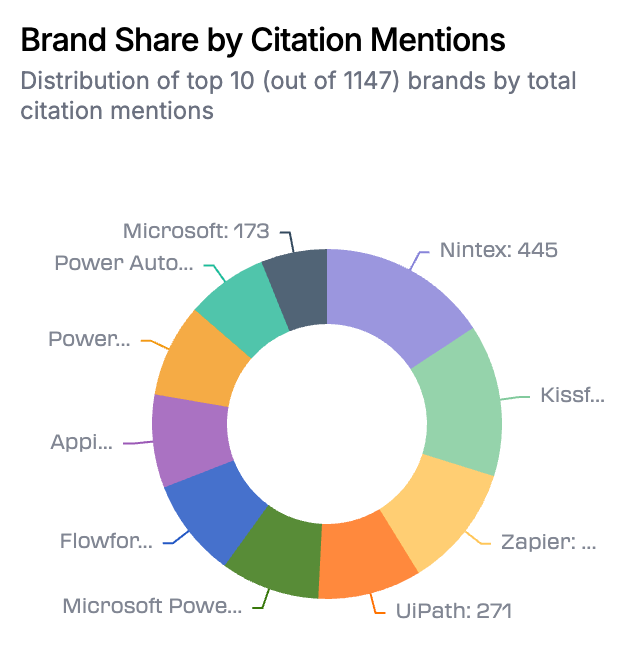
This revealed something important: topical authority clustering beats individual mega-articles. Writing twenty comprehensive articles on related topics generates more AI visibility than one perfect piece.
Step 5: Brand Perception Intelligence
AI platforms form and communicate brand perceptions based on the information they've been trained on. If you don't monitor and influence how AI describes your brand, you risk inaccurate positioning, missed differentiators, and losing competitive comparisons
We focused on "competitor alternatives" keywords to position FlowForma as the top alternative to specific competitors. This improved the share of voice in this area.
We asked AI platforms how they described FlowForma, and ran brand-specific queries like "What is FlowForma?" and "FlowForma vs <Competitor>."
After checking AI responses for accuracy, completeness, and tone, we looked at how customer feedback and third-party mentions influenced AI descriptions. This monitoring helped us track perception shifts and inform broader content and messaging decisions.
Step 6: Mining Customer Questions
Content built around authentic questions matches the conversational queries people ask AI platforms.
We dug through FlowForma's sales call notes to extract common customer questions. We identified recurring themes around integrations, use cases, and comparisons.
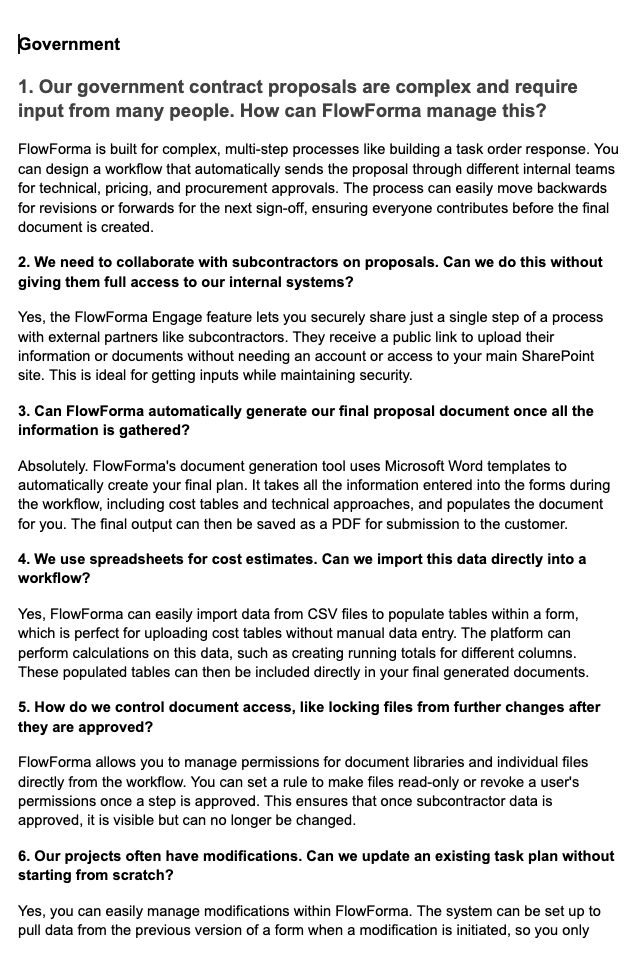
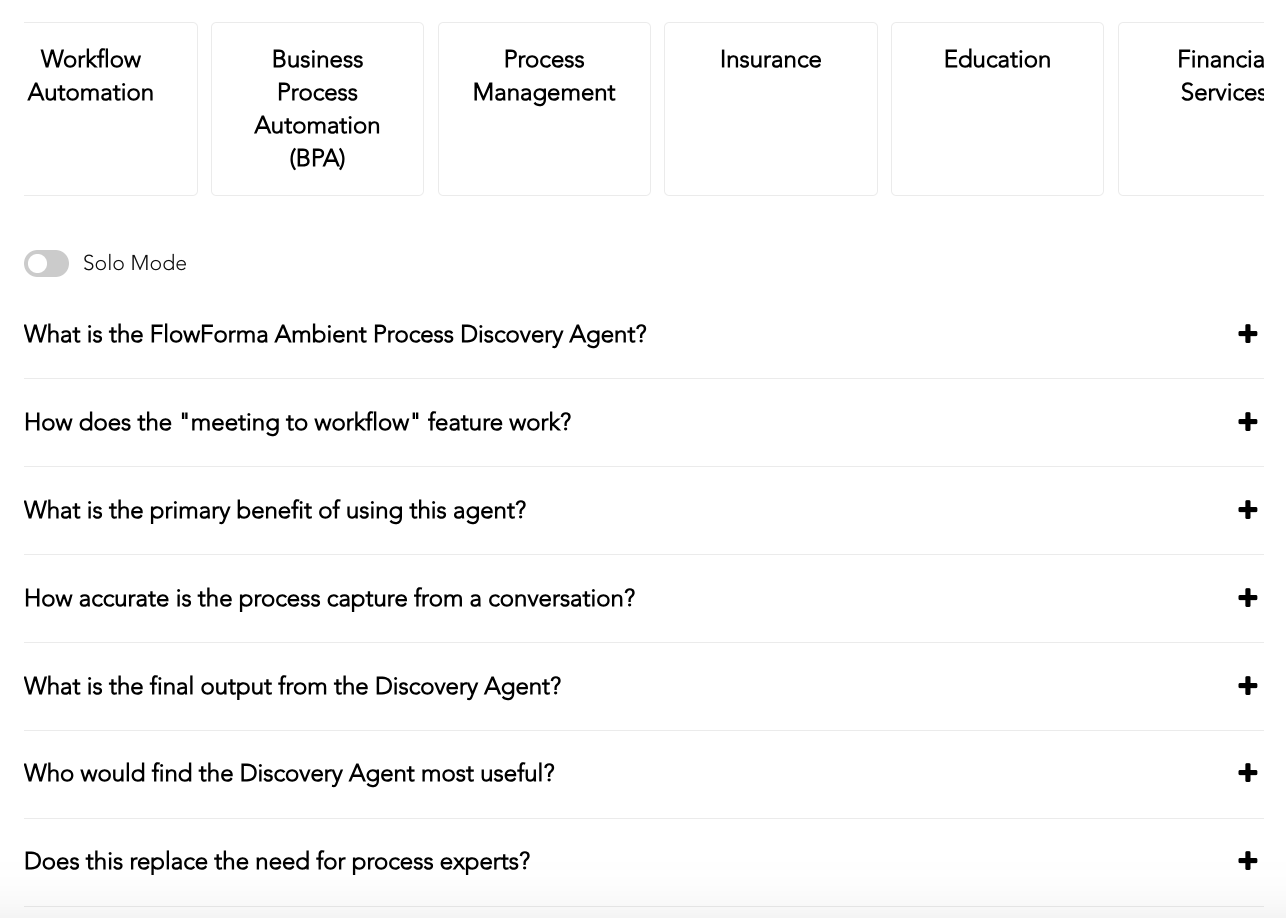
This sales process mining revealed customer questions that became the foundation for dedicated FAQ pages.
This evidence-based content direction works way better than guessing at keywords.
Key Takeaways: GEO Research Best Practices
- Regularly query AI platforms about your brand to establish baseline perception and track changes over time
- Map audience search behavior by analyzing how prospects naturally phrase questions in conversational AI interfaces
- Study AI-cited content to identify formatting patterns, structural elements, and depth requirements that increase citation likelihood
- Mine customer conversations to uncover authentic questions that align with AI query patterns
- Build topic maps that connect your brand to broader category concepts and related entities
- Establish monitoring systems to catch perception shifts and competitive positioning changes early
Phase 2 – Content Optimization
Step 1: Content Audit
AI systems evaluate content based on structure, clarity, comprehensiveness, and freshness. A GEO-specific audit identifies gaps in your current content.
We audited existing content against GEO criteria: structure, clarity, scannability, and schema implementation. Content got scored on how comprehensive it was, entity coverage, and freshness.
We created a prioritization framework based on potential impact.
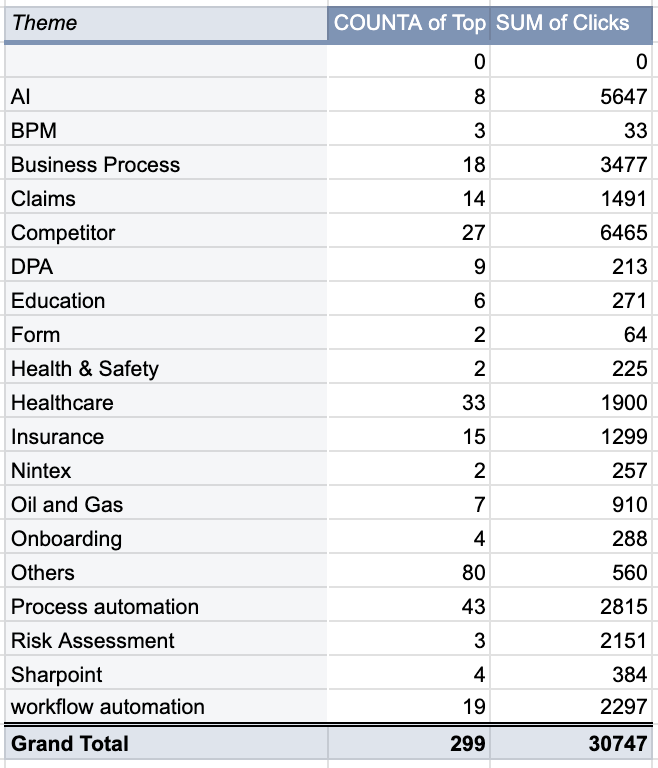
Our content gap analysis compared FlowForma's assets against competitor pages that were getting cited. This revealed improvement opportunities.
Step 2: Expanding Contextual Relevance
AI platforms understand semantic relationships and topical context. Expanding your content to cover related concepts, entities, and questions helps AI systems recognize your content as a resource worth citing.
We naturally wove target phrases into content without forced repetition and broadened topic coverage to address related questions and concepts.
This included incorporating relevant names, products, and category terms we'd identified during research.
Step 3: Building Authority and Credibility
AI systems preferentially cite sources with verifiable claims, expert input, and supporting evidence. Content backed by data, research, and recognized authorities signals trustworthiness.
Structured evidence increases citation confidence. AI systems are more confident citing sources with specific, verifiable claims backed by research, case studies, and measurable results.
We did a series of things here:
- Backed claims with references to reputable, current sources
- Included perspectives from recognized industry voices
- Presented data in standout formats like visual charts and comparison tables.
Step 4: Content Revamps
AI systems need to extract concise, complete answers quickly. Content structured around clear questions and direct answers makes it easier for AI to identify, extract, and cite your content.
We restructured FlowForma's existing content to align with how LLMs extract and present information. We optimized about 20 blog posts monthly.
GEO requires "AI-extraction-first" content architecture. You need to restructure around the assumption that AI systems need to extract concise, complete answers. Start with direct responses in the first two sentences.
Reformatting included:
- Question-and-answer structures
- Clear definitions
- Bullet-point summaries for better scannability
- Digestible sections AI models could easily process
We made sure each piece contained direct answers that AI could extract without confusion.
Step 5: Making Content Clearer and More Readable
AI platforms favor content that communicates clearly without unnecessary complexity. Plain language, visual breaks, and highlighted key points make it easier for AI to parse your content.
We wrote in plain language, avoiding unnecessary tech jargon. We used shorter paragraphs, lists, and visual breaks for easier scanning.
Critical points got highlighted through formatting—bold text, highlighted boxes, section summaries. We added images, charts, and diagrams to illustrate complex concepts.
We also suggested a new wireframe to revamp the complete blog structure, keeping design consistent across all content.
Step 6: Enabling Quick Understanding
AI systems prioritize content where key information is immediately accessible. Opening with clear value statements, providing upfront summaries, and placing answers at the beginning of sections ensures AI can quickly identify and extract your most important points.
These were a quick checklist that we ensured was followed everywhere:
- Content opened with clear statements of what readers would learn
- Summary sections at the beginning and within longer pieces
- Dedicated FAQ blocks addressing common questions directly
- Most important answers within the first few lines of relevant sections.
Step 7: Building Topical Authority
AI systems assess topical authority by evaluating the breadth and depth of your content across related subjects. Building content clusters around core themes signals subject matter expertise.
We initially prioritized bottom-of-funnel content for FlowForma: listicles, comparison pages, and "alternatives" blogs.
BOFU content naturally has higher intent and more specific questions. This makes it more likely to trigger AI responses and drive valuable traffic when cited.
We expanded into theme-based blog clusters around FlowForma's core topics:
- Process automation
- Workflow automation
- AI-driven business transformation
- No-code development
Consistent publishing on high-intent subtopics signaled subject matter depth to LLMs.
Step 8: New Content Planning
If competitors are being cited for queries where you have no content, AI has no choice but to recommend them instead of you.
We identified topics where competitors appeared, but FlowForma had no content. We created briefs aligned with AI preferences: comprehensive, structured, and authoritative.
We prioritized content types showing the best AI performance. We diversified formats across detailed guides, comparison articles, video content, and interactive tools.
Step 9: Content Refresh
Unlike traditional SEO where aged content can maintain rankings, AI platforms prioritize recently updated content to ensure accuracy and reduce hallucination risk.
We implement six content refresh sprints monthly:
- Regular reviews keep the information current
- High-performing blogs get refined on-page SEO optimizations
- Examples, statistics, and references get updated to reflect recent developments
Step 10: Adding Visual and Interactive Elements
AI platforms increasingly incorporate multimedia content in their responses, particularly in platforms like Perplexity and Google AI Overviews.
Understanding why AI systems favor content with visual components, we added and optimized images, videos, and graphics across high-priority pages.
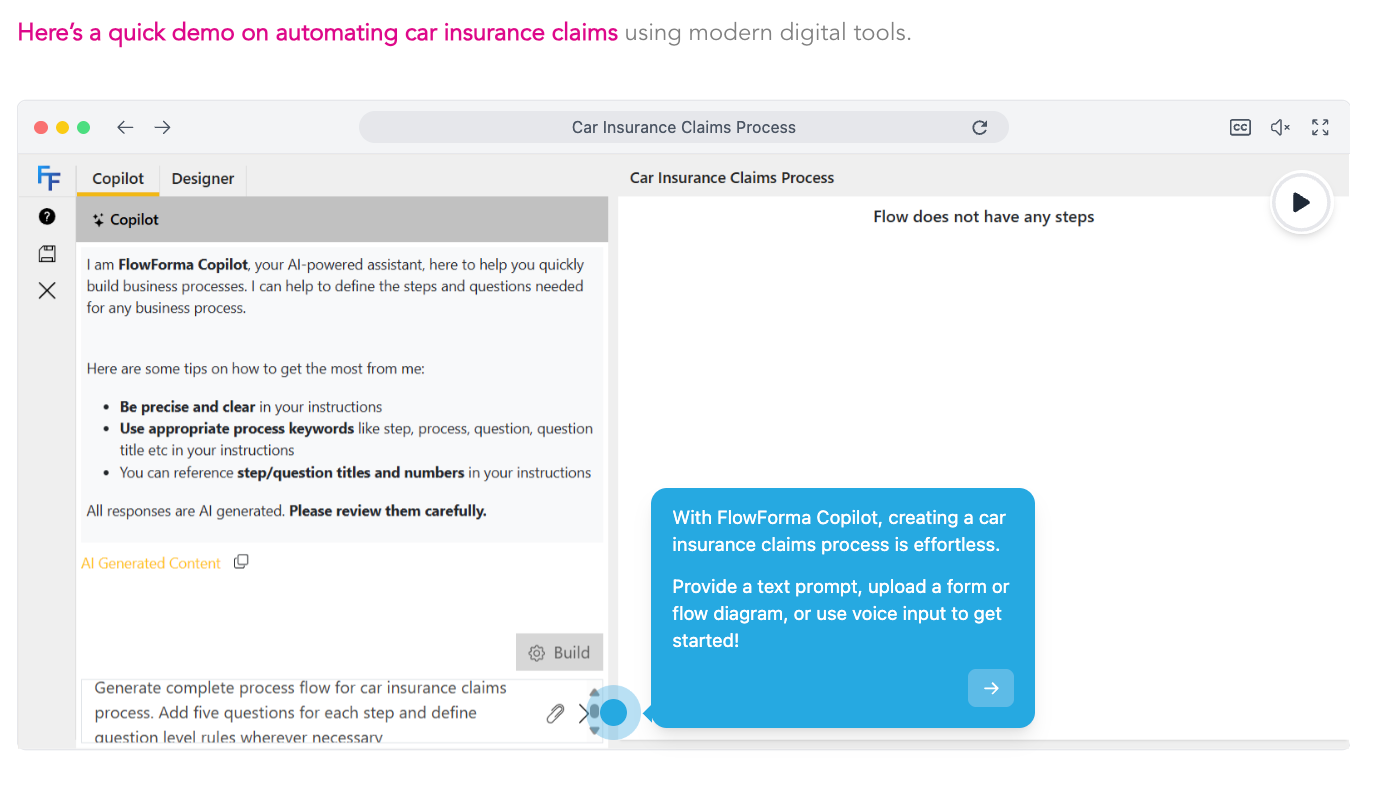
YouTube content got optimized for discovery through metadata, descriptions, and transcripts. We used visuals to break up text and reinforce key messages. We implemented use-case demonstrations in respective blogs to improve authority.
Key Takeaways: Content Optimization for GEO
- Audit existing content against GEO-specific criteria including structure, clarity, scannability, comprehensiveness, and schema implementation
- Reorganize content into Q&A formats with direct answers in the first two sentences, clear definitions, and scannable summaries
- Build trust signals through proper sourcing, verifiable data, expert perspectives, and case study evidence
- Develop comprehensive, in-depth articles rather than shorter promotional pieces—depth consistently outperforms brevity in AI citations
- Create content clusters around core topics to demonstrate topical expertise across multiple related angles
- Standardize GEO practices through writer guidelines, checklists, and content briefs that bake in AI-optimization from the start
- Prioritize bottom-of-funnel content for high-intent queries that are more likely to trigger AI responses
- Implement regular content refresh cycles—monthly updates for high-value pages and 45-60 day refreshes for evergreen content
- Expand multimedia content including optimized images, videos, and graphics to increase citation opportunities across AI platforms
Phase 3 – Technical Optimization
Step 1: Content Structure and Hierarchy
AI crawlers need to understand your content's organization to extract relevant information accurately.
We implemented clear H1-H5 heading hierarchy across priority pages and optimized internal linking to establish content relationships.
Creating logical content clusters around core topics made sure the content aligned with natural language search patterns commonly used in AI queries. We implemented semantic HTML structure throughout.
Here's an important point: server-side content rendering is essential for AI accessibility. JavaScript-rendered critical content stays invisible to many AI crawlers.
Step 2: Schema Markup Audit
Schema markup provides explicit signals to AI systems about your content's meaning, structure, and relationships.
We did a comprehensive schema markup audit across all FlowForma pages. We made sure accurate and complete implementation was in place for better search engine understanding and increased eligibility for rich results.
Step 3: Schema Types
A diverse schema implementation helps AI systems properly categorize your content, understand its purpose, and surface it for appropriate queries across various contexts.
We implemented diverse schema types:
- Content organization schemas (Article, Organization, Breadcrumb) to clarify page purpose and site structure
- Question-based schemas (FAQ, Q&A) to surface direct answers in AI and voice interfaces
- Product and service schemas for proper categorization
- Social proof schemas highlighting user feedback
- Custom schemas for specific use cases relevant to the brand
Step 4: FAQ Schema on High-Performing Content
FAQ schema directly maps to how users query AI platforms—as questions seeking answers.
We added FAQ schema to FlowForma's bottom-of-funnel and top-performing blogs. We implemented entity/use case schema to boost LLM-driven search visibility.
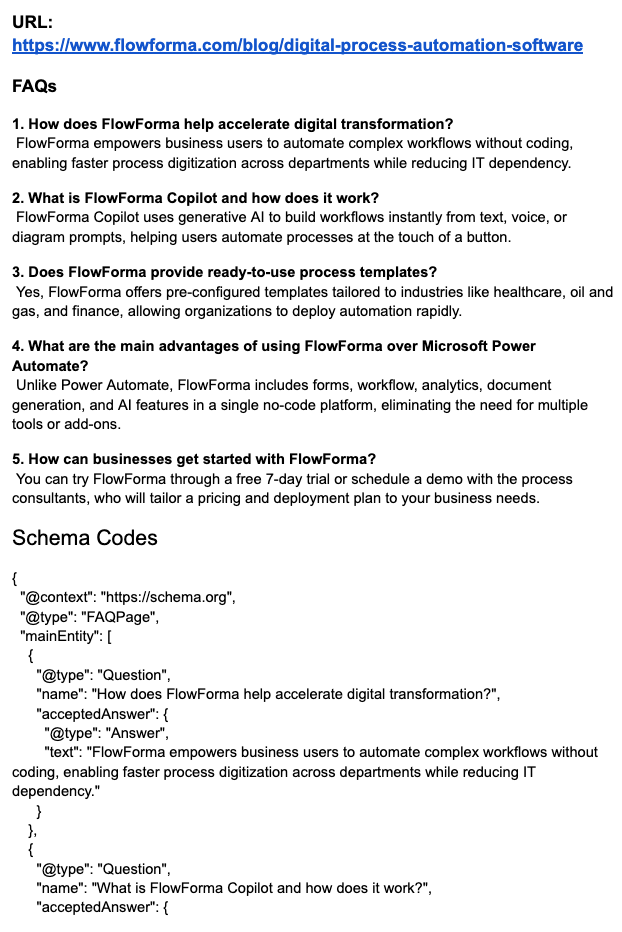
FAQ content pulled from sales transcript analysis contained real customer questions. This boosted eligibility for rich results and LLM-driven search visibility.
Step 5: Creating the Knowledge Base
Without a dedicated source of accurate brand information, AI systems may piece together your brand identity from scattered, potentially inaccurate sources.
We built a dedicated knowledge base specifically for LLMs to crawl accurate FlowForma information. This consolidated key brand facts, features, differentiators, and positioning.
We structured it for easy AI extraction and accurate brand representation. Dedicated pages like these control brand definition.
Step 6: Technical SEO Improvements
Slow pages, server errors, and poor mobile experience can prevent AI crawlers from accessing your content entirely.
We reduced page load times and cleaned up code for faster access. We fixed server issues, compressed images, and resolved broken links.
Secure connections and security best practices were ensured throughout. Site architecture was organized with clear hierarchy and logical internal links. We made sure all content worked seamlessly on mobile devices.
Key Takeaways: Technical GEO Optimization
- Implement clear heading hierarchy (H1-H5) and semantic HTML to help AI systems understand content structure and relationships
- Ensure critical content is server-side rendered—JavaScript-rendered content remains invisible to many AI crawlers
- Conduct comprehensive schema markup audits to identify implementation gaps that limit AI visibility
- Implement diverse schema types including content organization schemas, question-based schemas, product schemas, and social proof schemas
- Prioritize FAQ schema on high-performing and bottom-of-funnel content using real customer questions
- Create dedicated AI Information pages that consolidate accurate brand facts, features, and positioning for AI extraction
- Optimize technical foundations including page speed, security, mobile experience, and crawlability
- Focus crawl budget optimization on the content most valuable for conversions and AI citations
Phase 4 – Content Distribution
Step 1: Choosing the Right Distribution Channels
AI systems learn from content across the entire web. Distributing your content across multiple platforms where AI trains its models expands your citation opportunities and reinforces authority signals.
We identified platforms where target buyers spent time. We adapted content format and tone to match each platform's vibe.
Establishing regular publishing rhythm across channels built presence on multiple platforms. This reinforced credibility signals for AI.
Multi-platform content formatting increases discoverability—content needs optimization for retrieval across ChatGPT, Perplexity, Google AI Overviews, and other platforms.
Step 2: Reddit Engagement
AI systems weigh authentic community discussions higher than company-authored content in their training data. Active participation in relevant forums directly feeds into AI training data.
We implemented a brand mention strategy on Reddit for FlowForma. This strengthened brand authority and SEO by increasing and optimizing brand mentions across trusted digital channels.
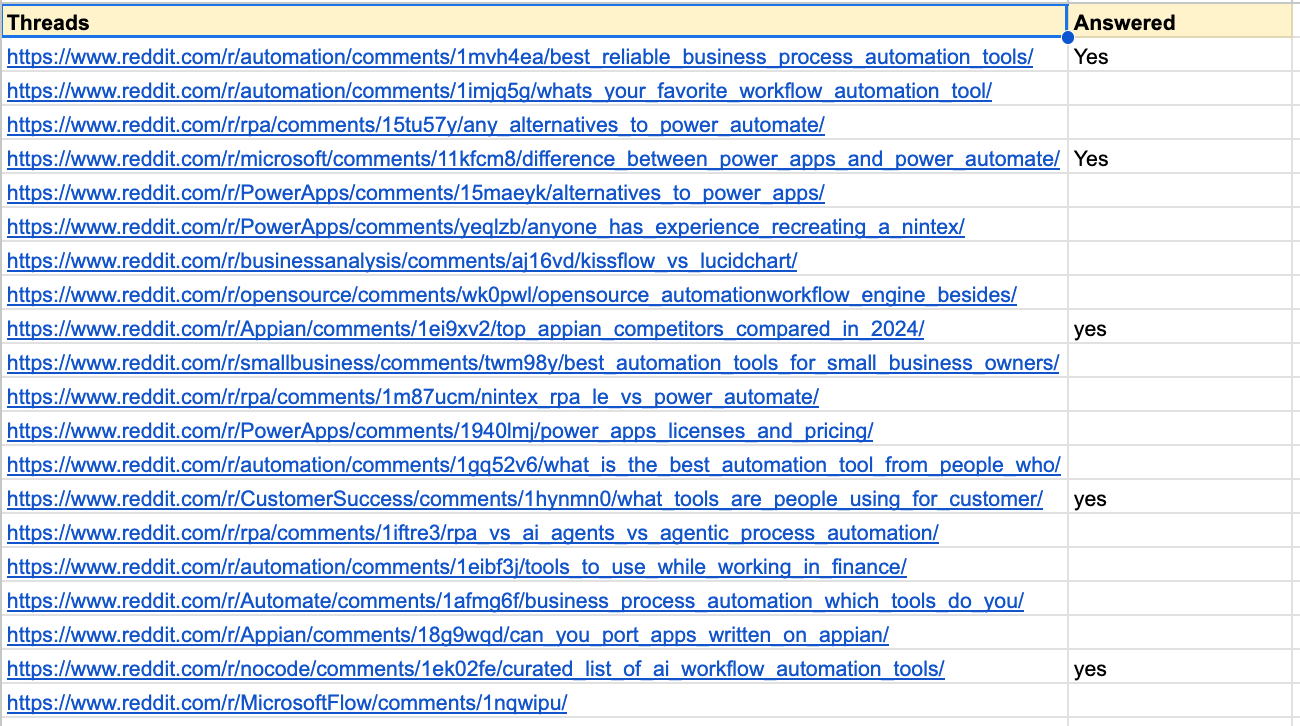
Value-driven participation in relevant subreddits (process automation, no-code, digital transformation) drove brand visibility and reduced gaps with competitors.
Step 3: Using Customer Content and Community Contributions
AI systems recognize and value genuine third-party endorsements over brand-generated claims.
We worked with the G2 team to improve customer reviews. We secured mentions in their reports and thought leadership articles.
Creating opportunities for customers to share experiences publicly and showcasing authentic user stories built trust through real customer voices.
Step 4: Building Quality Backlinks
Quality backlinks from authoritative sources serve as trust signals that influence AI's confidence in citing your content.
Prioritizing link quality over volume, we contributed expert content to respected industry publications. We formed partnerships with complementary brands and developed resources valuable enough for natural linking.
Additional Distribution Tricks
Active Community Participation
Consistent, valuable participation in online communities demonstrates ongoing relevance and expertise. AI systems observe engagement patterns and prioritize brands that contribute genuine expertise to conversations over those that only broadcast promotional content.
Getting Featured in Top Listicles
Industry roundups and "best of" listicles frequently get cited by AI when users ask for recommendations. Securing placement in these articles positions your brand as a reference source that AI systems use when generating comparative responses.
Wikipedia Page Creation
Wikipedia serves as a foundational reference source for LLM training data. Having a well-maintained Wikipedia page ensures your brand is included in AI knowledge bases with accurate, authoritative information that shapes how AI understands and describes your company.
PR and Earned Media
Coverage from respected publications creates independent authority signals that AI systems trust more than self-published content. Earned media expands your presence across sources AI references when forming and communicating brand perceptions.
Phase 5 – Results, Tracking, and Optimization
Traffic Tracking
Custom tracking systems let you attribute sessions to specific AI platforms and understand which content drives AI-referred conversions.
We built dedicated tracking systems for FlowForma using GA4 and Looker Studio. We deployed custom regex filters for AI referral sources.
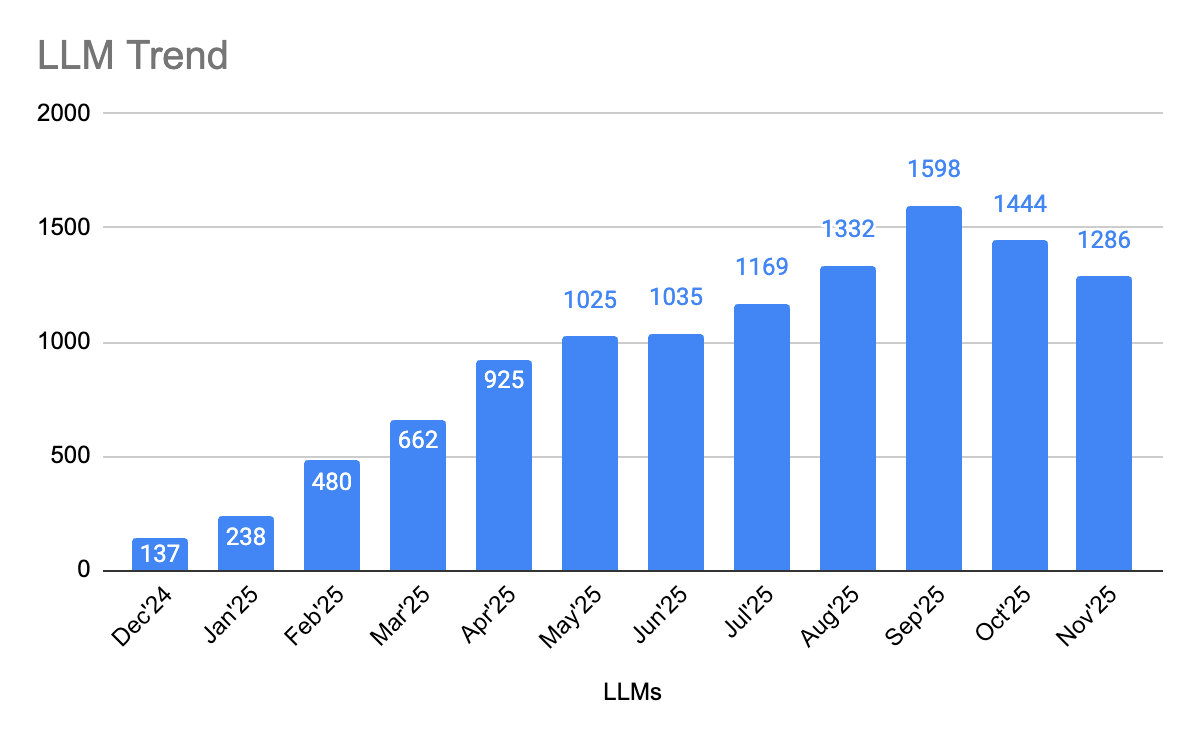
Segmenting sources—chat.openai.com, perplexity.com, gemini, copilot—created specialized dashboards. These showed which content performed best in AI environments.
AI Platform Visibility
Tracking citation frequency and appearance in AI responses provides direct feedback on strategy effectiveness.
Before/after comparisons of citations in AI platforms revealed big improvements. Using tools and methodology for tracking AI Overview appearances, we monitored brand mentions across ChatGPT, Perplexity, and other AI platforms systematically.
LLM-Attributed Sessions
Session data proves that AI visibility translates into actual website visitors and potential customers
FlowForma hit ~5.5x the number of sessions within nine months.
This shows that first-mover advantage exists in GEO. The landscape is still less saturated than traditional SEO, allowing focused efforts to achieve disproportionate visibility.
Source Diversification Across AI Platforms
Relying on a single AI platform creates risk if that platform changes algorithms or behavior.
Early traffic came mostly from ChatGPT. Later, Perplexity and Gemini became significant contributors.
This expansion across LLM ecosystems strengthened FlowForma's authority. It positioned them competitively against larger players.
Brand Perception Shifts
The ultimate goal of GEO is to control how AI represents your brand to prospects.
FlowForma now appears consistently in process automation recommendations. Accurate brand information gets cited thanks to the AI Information page.
Improvements in sentiment and accuracy of AI-generated summaries positioned FlowForma favorably in competitive comparison queries. We achieved stronger narrative control in AI-generated content.
GEO Maintenance
- AI platforms continuously evolve their algorithms and training approaches. Establishing sustainable maintenance processes ensures your visibility gains persist over time.
- Content refresh cadence directly impacts sustained visibility. Pages getting monthly updates maintain AI citations while static content sees visibility decline within weeks.
- Adapting to AI algorithm changes and new platform requirements requires ongoing attention. Keeping content fresh and relevant as AI evolves creates strong potential for further compounding growth.
- RevOps integration eliminates organizational silos. Successful GEO implementation requires breaking down departmental barriers between marketing, sales, and customer success.
Conclusion
This guide walked you through our five-phase GEO implementation framework: research and analysis, content optimization, technical infrastructure, distribution and authority building, and measurement. Using FlowForma as a real-world example, we demonstrated how each phase contributes to AI visibility—resulting in 5.5x growth in AI-attributed traffic within nine months.
With AI-attributed traffic converting at 4.4x higher rates and platforms like ChatGPT, Perplexity, and Google AI Overviews increasingly shaping buyer decisions, brands that invest in GEO now will capture disproportionate market share before the landscape becomes saturated.
At TripleDart, we help B2B SaaS companies implement comprehensive GEO strategies. We’ve helped over 50 companies solve their AI search architecture by building sustainable GEO systems.
If you're ready to make your brand the answer AI platforms recommend, get in touch with our GEO team to discuss your strategy.
And if you want to go a bit deeper into GEO, check out our workshop explaining what works and what doesn’t:
Frequently Asked Questions
What is GEO and how is it different from traditional SEO?
GEO (Generative Engine Optimization) focuses on getting your content cited and recommended by AI platforms like ChatGPT, Perplexity, and Google's AI Overviews, rather than just ranking in traditional search results. Unlike SEO which targets keyword rankings, GEO optimizes for AI extraction and citation through structured content, comprehensive topic coverage, and AI-friendly formatting.
How long does it take to see results from GEO efforts?
Initial improvements can be seen within 30-60 days of implementing proper content structure and schema markup. The key is consistent optimization and content freshness, as AI platforms prioritize recently updated content over aged content unlike traditional SEO.
Do I need technical expertise to implement GEO strategies?
While technical elements like schema markup and site structure are important, a lot of GEO success also comes from branding content optimization that any marketer can implement. The key technical requirements include FAQ schema implementation, proper heading hierarchy, and ensuring your content is server-side rendered rather than JavaScript-dependent.
How do you track AI-attributed traffic and measure GEO success?
You need custom tracking systems using GA4 and regex filters to identify traffic from AI platforms like chat.openai.com, perplexity.com, and gemini. Set up dedicated dashboards to segment AI traffic sources and monitor which content performs best in AI environments before launching your GEO efforts to establish baseline measurements.
How often should content be updated for GEO maintenance?
Content refresh cadence directly impacts sustained AI visibility—pages getting monthly updates maintain AI citations while static content sees visibility decline within weeks.
Can smaller companies compete with enterprise brands in AI search?
Yes, the AI search landscape is less saturated than traditional SEO, allowing focused GEO efforts to achieve disproportionate visibility against larger competitors.
.png)




.avif)