What is Content Distribution? (And Why Most SaaS Companies Get it Wrong)
Content distribution has always been around in SaaS.
But in 2026, when we’re all practically living online (and in AI engines), distribution is no longer a secondary source of traction.
Maximizing, or the lack of, content’s reach is impacting B2B SaaS marketing and, in turn, revenues, big time.
Today, spending hours and hours sculpting content is of little use if you don’t distribute it effectively. There’s so much content out there that if you need to get the word out, you have to knock on doors.
Otherwise, that amazing, meticulously researched, expertly written article is only going to be opened 20 times, 15 of which are by friends.
Distribution today has become the differentiator between content that search/answer engines cite and that gets buried.
We’re noticing that many marketers are struggling with it in 2026, and with this article, we hope to take your understanding of content distribution one step further.
We dive into channels, distribution logic, myths, and a solid strategy for 2026.
The Three Types of Content Distribution Channels
You've probably tried some, or all, of these already. But let’s tactically look at what each channel brings to the table.
Channels You Own (Website, Blog, Email, Social Profiles)
These are your home bases: your blog, email list, social media accounts.
The two best things about owned channels are:
- They are fully in your control; you get to take the calls
- They are free
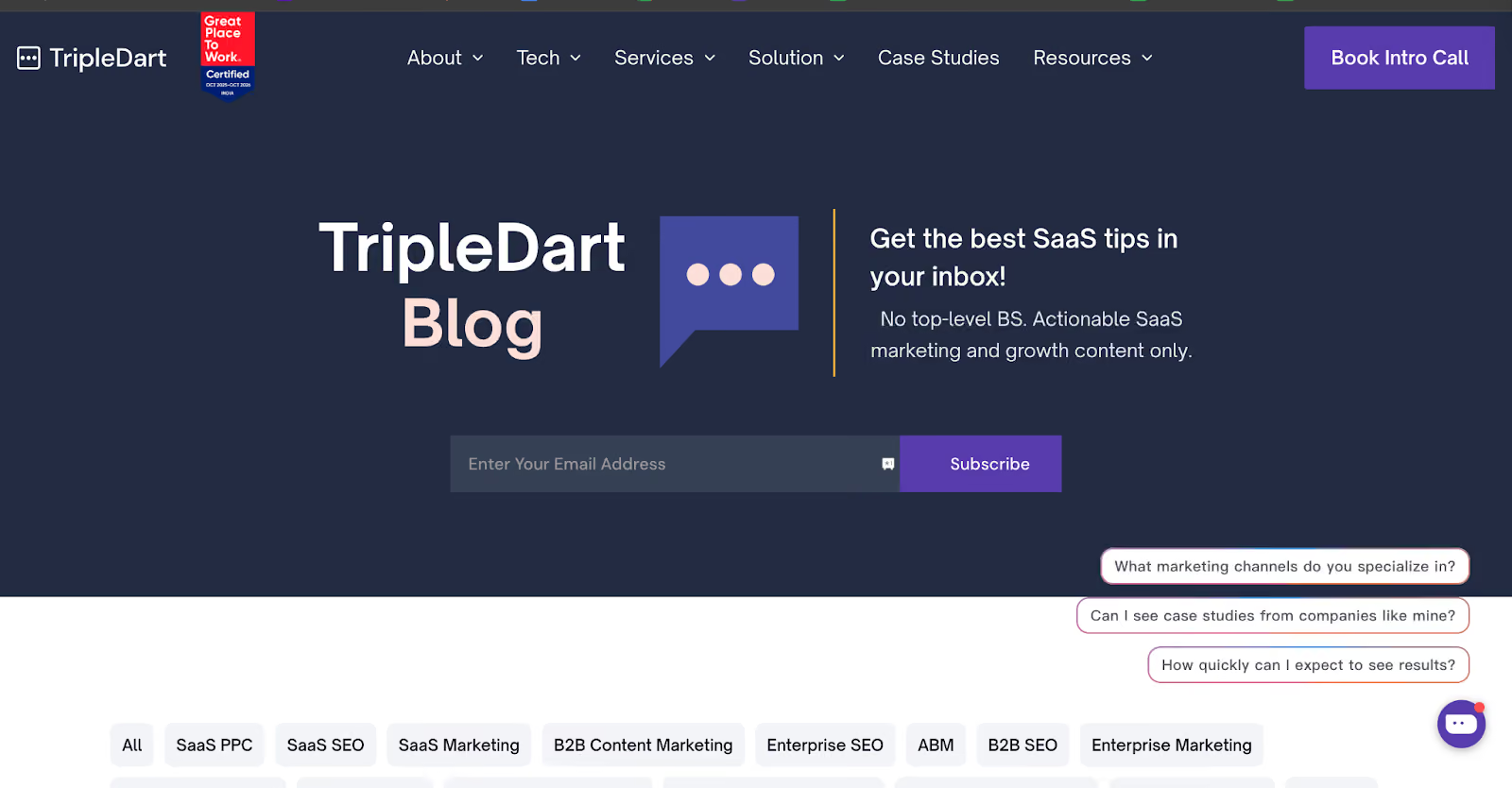
In most cases, your blog will be the foundation of everything, even though this is changing fast. AI engines hardly cite brand-owned pages, and that’s driving many marketers to diversify their content bases heavily.
Hence, this is now expanding to social media profiles, Reddit posting, YouTube, and other previously sidelined channels.
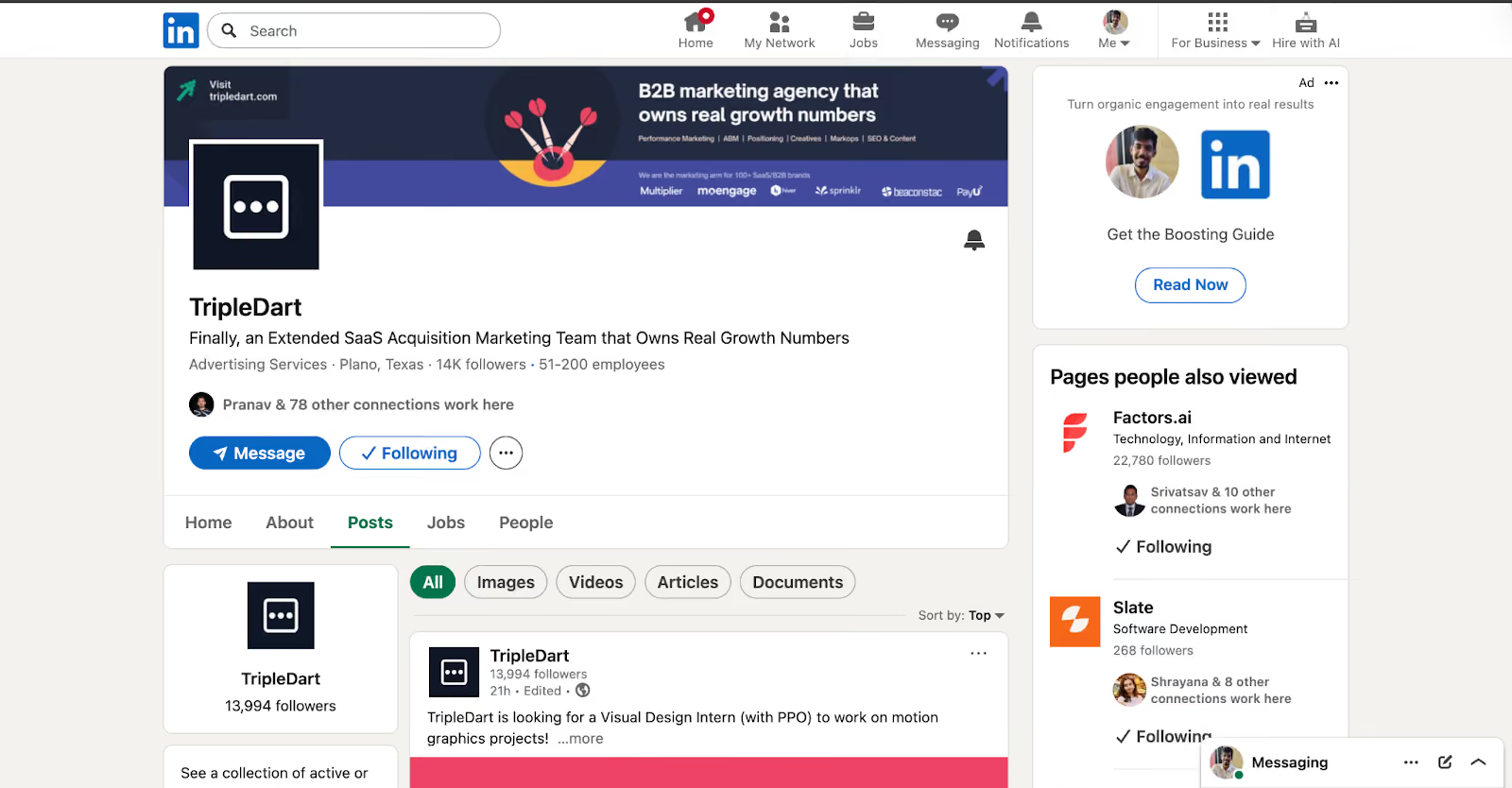
And then, there is the good ol’ mail, which is still the primary content distribution channel for over 70% of B2B marketers.
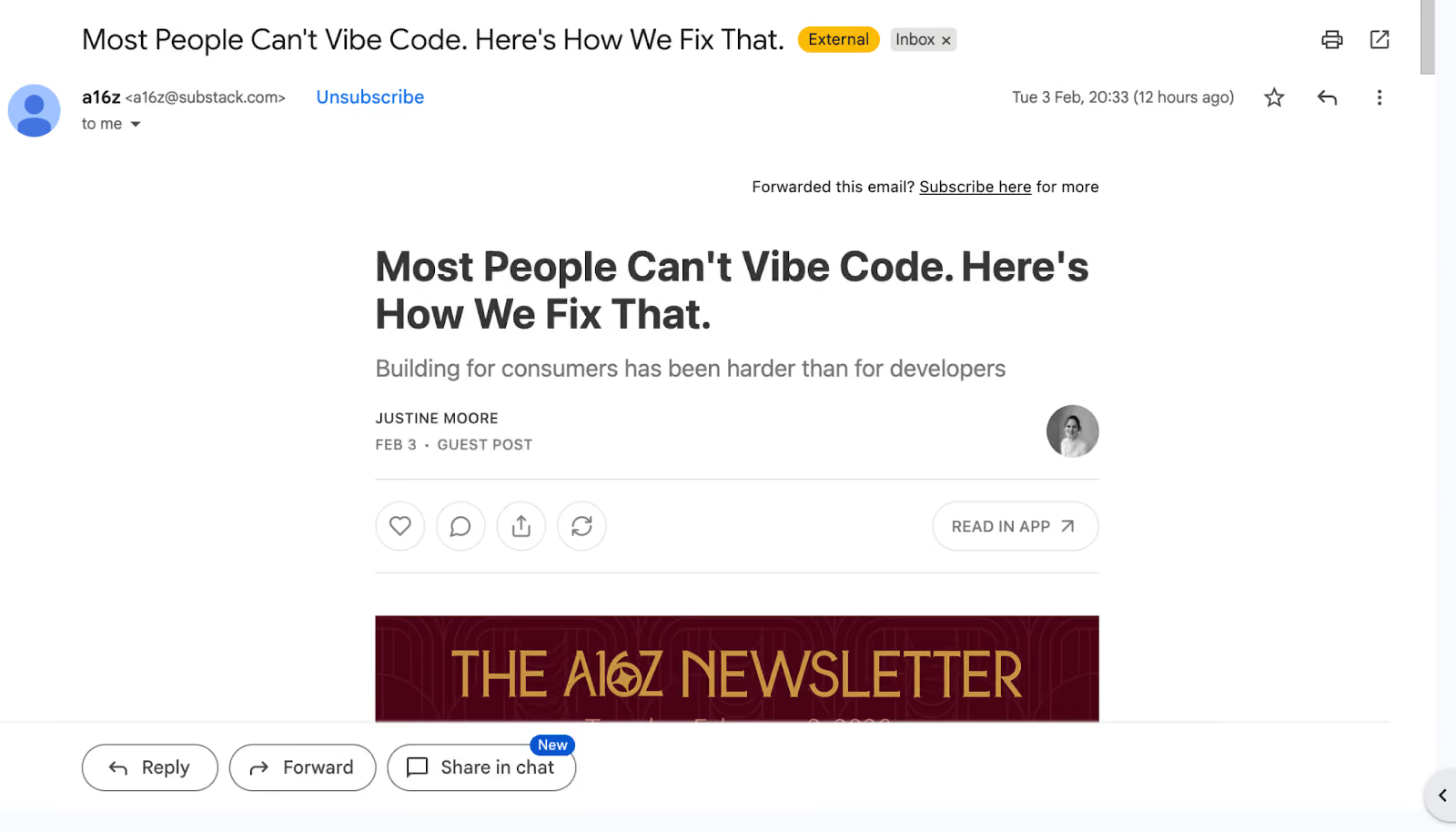
Channels You Get Featured in (Backlinks, Mentions, Shares, PR)
This is a broad channel, and includes everything that “shares” your content.
Guest posting, people resharing on LinkedIn, backlinks, PR coverage: these are a mix of free and paid distribution.
The great thing about this route is that once your content catches the eye, it catches fire through word-of-mouth. It gets that implicit endorsement from profiles that people trust.
The downside is that you can’t always know that for sure.
Paid Distribution Channels (PPC, Sponsored Content, Social Ads)
These are your standard ads, sponsored posts, and influencer marketing campaigns.

They offer the quickest way of gathering eyeballs, but at the risk of burning a hole in your pocket.
In the coming years, this avenue will be dominated by PR drives, with AI engines strongly sensing them as a citing factor.
Why Content Distribution Compounds (Not Just Adds)
The word “trend” has been done to death, but it’s crucial to distribution.
When you distribute your content to the right places at the right time, it starts to…trend.
People start looking up. Social media algorithms pick it up. More people look up and start backlinking your content. AI and Google see your brand and think, “this must be an expert.” Your SEO and GEO start seeing results.
And so many content teams are just one step away from achieving this, gating their genuinely exciting assets inside their websites.
Why Content Distribution Is Important for SEO in 2026
Let’s split this into four crucial factors.
AI Search Changed the Game
For every Google search, the first page had 10 results, and SEO teams competed for a spot in the first page to gain visibility, if not for the coveted top-three spot.
But with AI Search, this number is both smaller and unpredictable. LLMs only mention 2-7 sites when answering questions, and not everyone directly views the source link, let alone clicks on it.
This takes competition to the next level. To get AI to mention you, your content needs to be:
- Living where LLMs look (Reddit, Wikipedia, LinkedIn, big-name sites)
- Mentioned by trusted sources (that “earned distribution” we talked about)
- Easy for AI to understand (good structure, clear formatting)
Welcome to Generative Engine Optimization (GEO).
Distribution feeds directly into your GEO.
The Rise of AI Search and Zero-Click Discovery
Zero-click doesn’t account for one, or two, but six out of ten searches today. Combined with AI overviews, this can even reach more than eight out of ten searches.
There are two reasons for this: AI, and AI.
Circling back to our earlier point, this is exactly why distribution matters more than ever.
If users aren't clicking through to your blog, your content needs to already exist in the places where AI and users look for answers: Reddit threads, LinkedIn posts, industry newsletters, third-party publications.
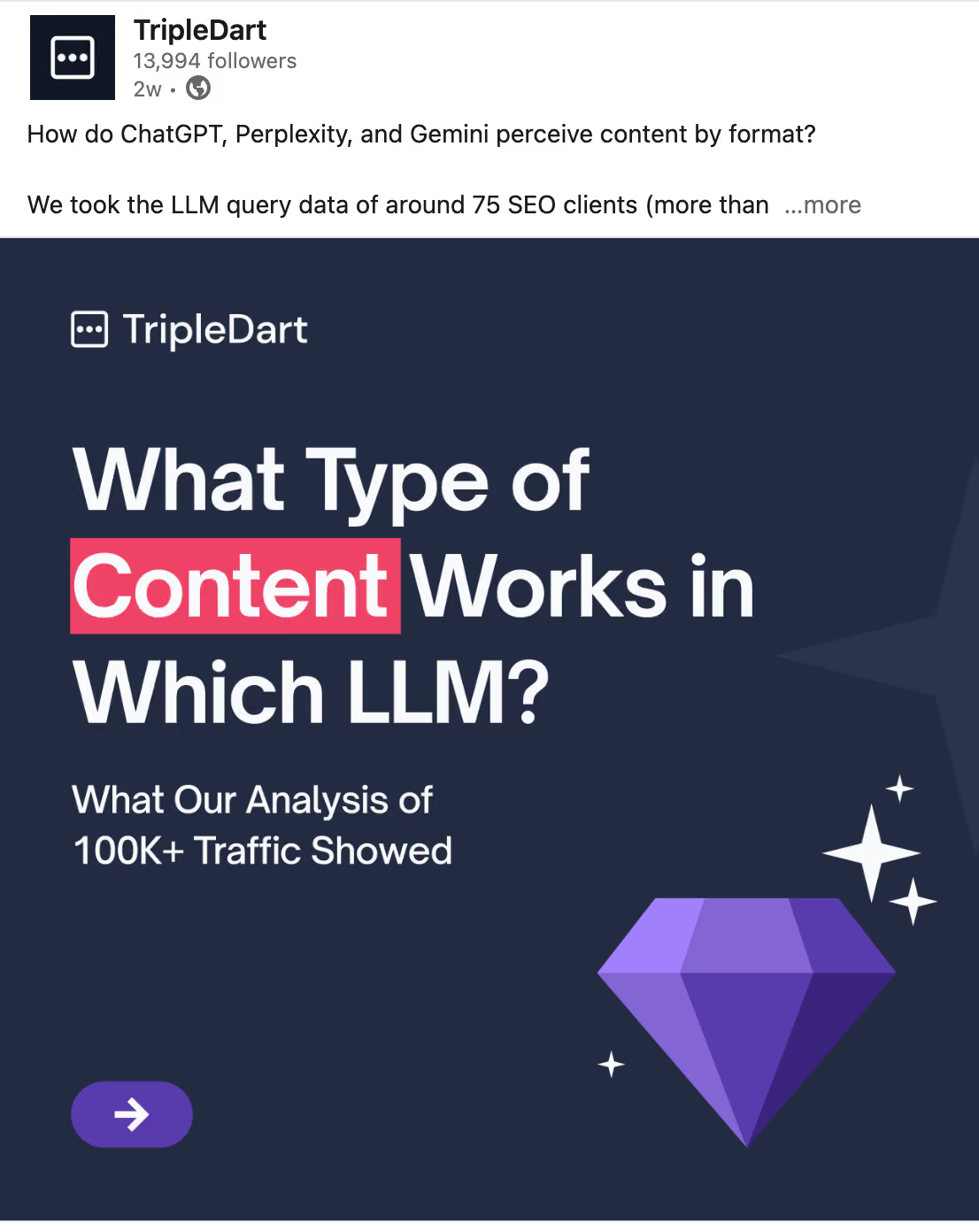
The content that gets distributed widely is the content that gets cited eventually, by both humans and machines.
So “zero-click” isn't exactly a “death sentence.” It's more of a distribution signal.
LLMs Pick From a Range of Sources
A Semrush study analyzing over 150,000 LLM citations found that Reddit was the most frequently cited web domain, showing up in roughly 40% of analyzed cases.
Now, we all love Reddit, but it is hardly the most “authoritative” site on the internet. What it does have is real conversations from real people, and that's exactly the kind of signal LLMs are trained to prioritize.
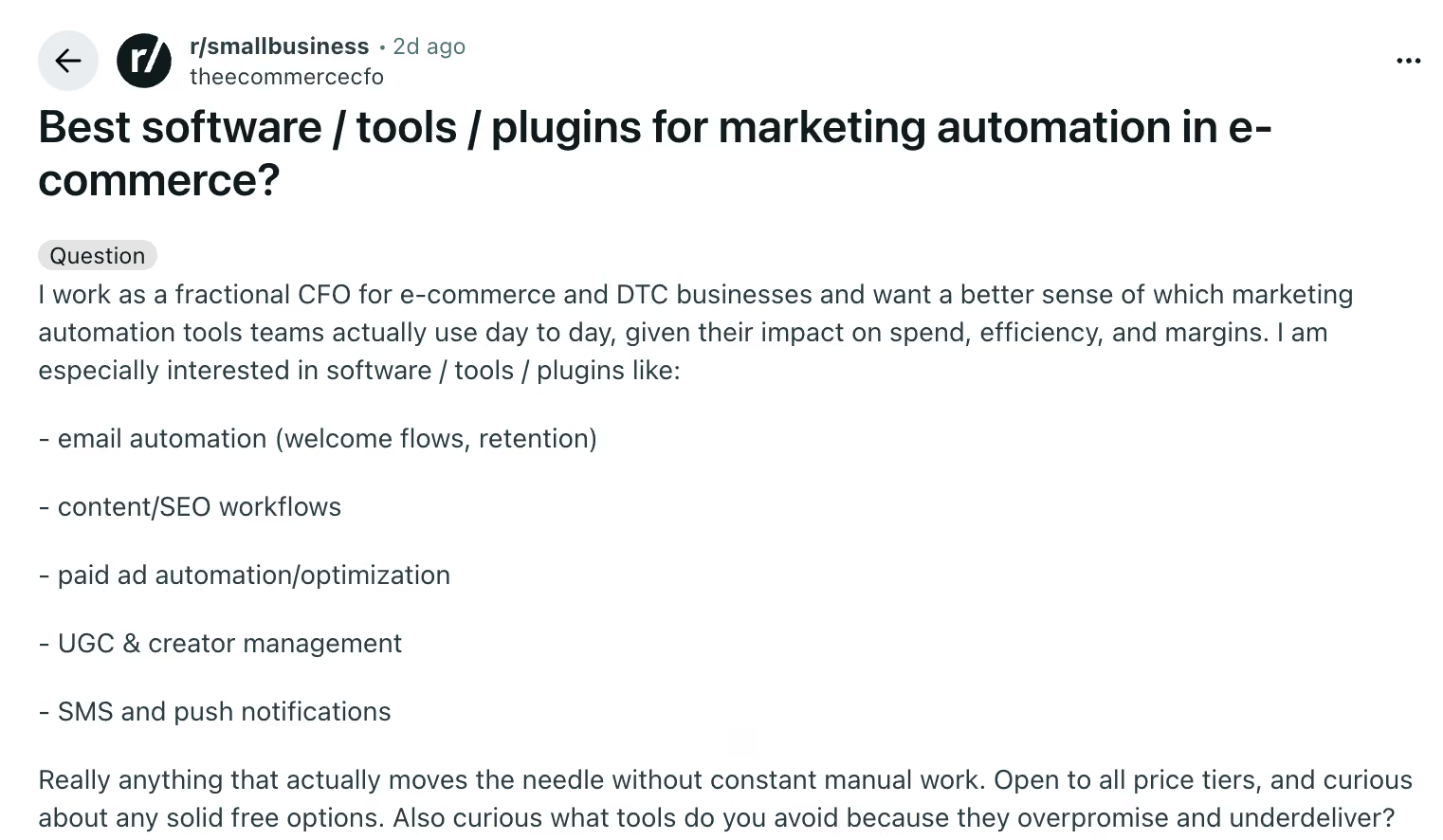
Wikipedia came in second at about 26%, with Google and YouTube both hovering around 23%.
When you look at LLM training data, it comes back to these platforms: ChatGPT relies heavily on Wikipedia, Perplexity emphasizes real-time Reddit content, and so on.
The one thing you didn’t see come up here was “blogs,” because LLMs hardly go there. Compare this with Google, where most searches used to end up inside brand websites.
When you distribute content across multiple trusted sources, you create what's being called "citation stacking," a pattern that tells AI your brand is legitimate and worth referencing.
Content freshness matters too (and here’s where platforms like Reddit score big). 65% of AI citations come from content published or updated within the past year, according to industry research.
Distribution Turbocharges Regular SEO Too
While we're talking GEO, don't forget: distribution supercharges traditional SEO.
Spreading content across platforms gets you natural backlinks, faster indexing through social signals, and traffic patterns that boost your search rankings.
Google today, much like LLMs, loves seeing engagement and authority across different platforms.
What Good Distribution Looks Like
Being everywhere isn't the goal, because you can never optimize your content for all channels.
Being strategic about where you show up and how you adapt your content for each channel is how content teams need to start thinking in 2026.
Here are four principles that define effective distribution in 2026:
1. Platform-native Content
The same message needs different packaging for different audiences.
A 2,000-word blog post becomes a LinkedIn carousel, a thread on X, a set of key stats dropped into a Reddit discussion, and a video summary on YouTube.
And each of these should feel like it was born on that platform, not copy-pasted from somewhere else.
2. Timing in Waves, Not All at Once
Roll out in phases.
For example:
- Launch week hits your owned channels: blog, email, social.
- Week two expands to community discussions and outreach.
- A month later, you're still pulling value through content updates, new angles, and seasonal relevance.
One piece of content can have a distribution lifespan of even several months if you plan it that way.
3. Authentic Participation
Semrush's analysis of Reddit posts shows that Q&A threads and comparison posts make up nearly three-quarters of all content cited by AI.
But a lot of B2B teams get this wrong, going into the black box of promoting their content softly on threads.
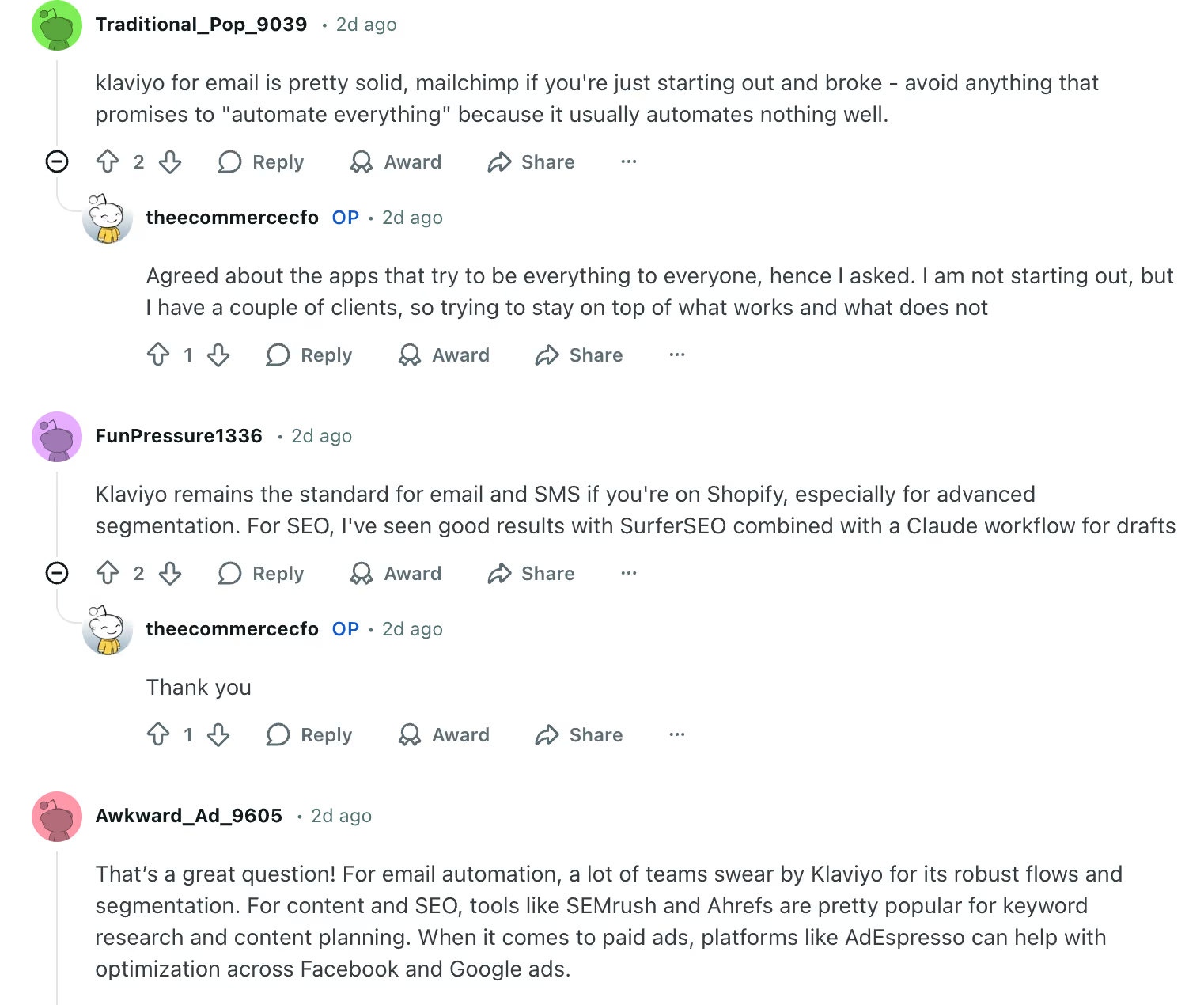
The best-performing Reddit content comes from genuine community discussions, not drive-by marketers under hoods. Under these discussions, when your solution fully fits the topic, it rings a bell with members.
Because that’s what fosters authenticity, and that’s one of AI’s most favorite items on the menu.
4. Measurement at Every Stage
“If tracking data for one article wasn’t enough, now they want me to make five mini-articles…”
Yes, we get it. For all the assets, you now have to track reach (impressions, unique visitors), engagement (comments, shares, time on page), and business outcomes (leads, pipeline, revenue).
What we suggest our clients do is build an automated tracking workflow that syncs content performance. The bulk of the job is just set it up. And the tracker takes care of the rest.
Distribution Channels That Work for B2B SaaS
Not every channel deserves your time equally.
Here's where to focus, based on what has worked best for our clients:
Brand Building Channels
- LinkedIn is the MVP, and it's not even close. 82% of B2B marketers consider LinkedIn the most valuable social media platform.
- Email has the highest ROI in B2B marketing, with $36 for every dollar spent. It's the one channel where no algorithm stands between you and your audience.
- Your blog is home base, no surprises there.
- YouTube builds authority through teaching. It’s highly favored by AI engines as a preferred source.
Experimental Channels
- TikTok is wide open for B2B. Only 8% of B2B marketers currently plan to increase investment in it. That may be an opportunity for a head start.
- YouTube Shorts and TikTok both show engagement rates above 5%, which is more than most "proven" channels deliver.
- Reddit is becoming essential for AI visibility (we've beaten this drum already, but it's worth repeating). Just keep in mind that Redditors can smell marketing from three subreddits away.
- Industry-specific Slack and Discord communities are the dark horse. These micro-communities have highly engaged members who are actively looking for solutions. Pure high-intent.
Paid Amplification
Depending on your budget, use:
- LinkedIn Ads for precise targeting
- Google Ads for capturing search intent
- Facebook/Instagram for retargeting
- Strategic PR for building the kind of authority that AI engines reward
Common Content Distribution Myths
This is perhaps the most important section in this article, because we see a lot of B2B teams operating on distribution assumptions that made sense in 2020.
Myth #1: "Build It, and They'll Come"
This is the single most expensive belief in content marketing.
We’ve heard of income disparity; now let’s look at content disparity.
65% of B2B content goes completely unused after creation. That’s a lot of money on the table.
On the other hand, 93% of content on B2B websites gets zero external links.
The bottleneck was never creation. It's always been distribution.
Myth #2: "Copy-Paste Everywhere"
Every platform speaks a different language. Your 2,000-word blog post “made concise by Claude” will potentially bomb on LinkedIn, where visual carousels dominate (apart from career updates and out-of-the-blue memes).
A detailed guide needs to become a punchy Reddit comment to earn any engagement there.
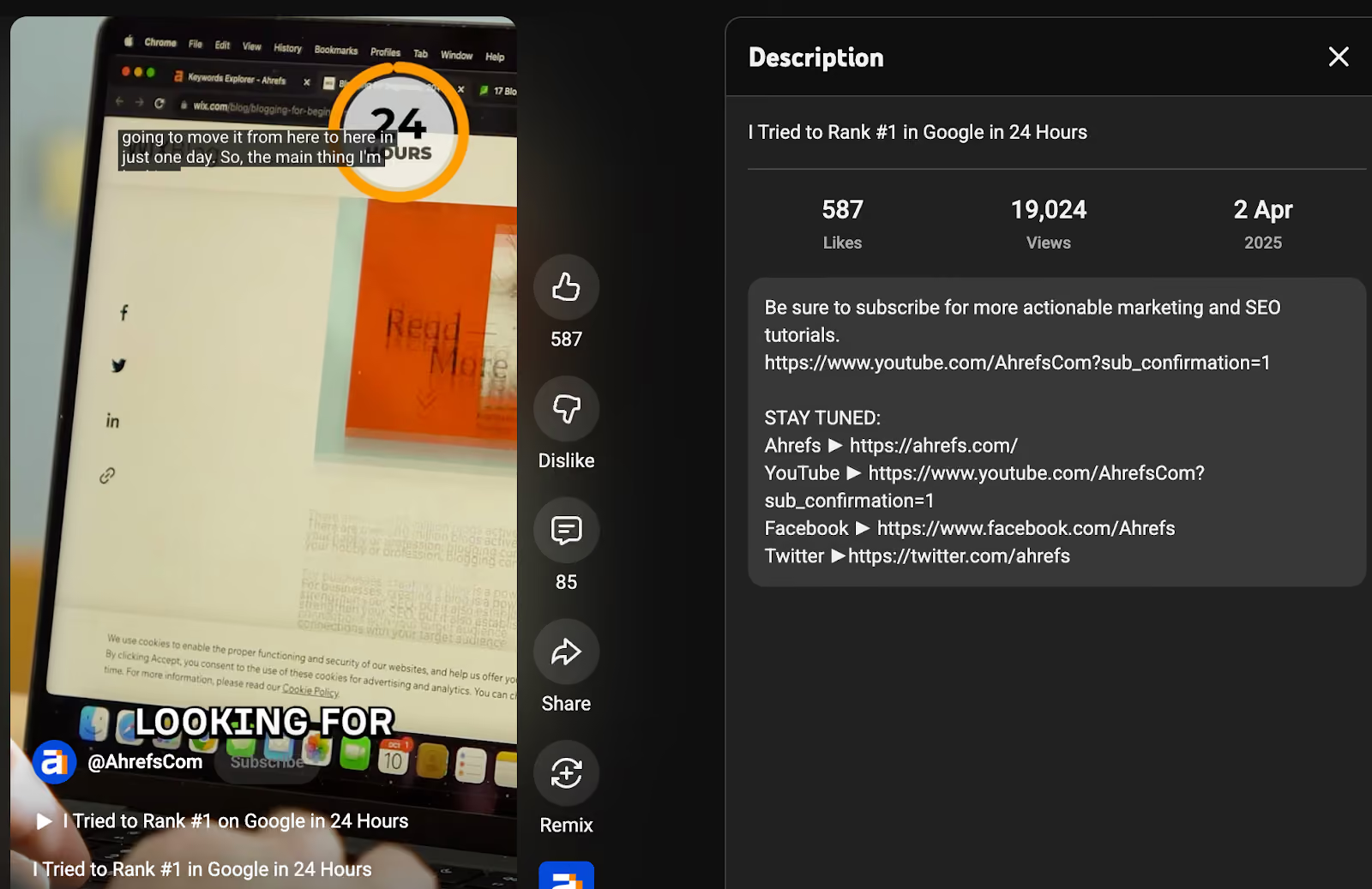
A YouTube short must take the underlying hook and convert it into a crisp video that makes them want to check your page out.
And so on.
Myth #3: "More Content = More Results"
There's a sweet spot here, and it can vary from one company to another.
One HubSpot data point says that companies publishing 16+ blog posts per month do see 3.5x more traffic. But beyond a certain volume, diminishing returns hit hard if quality drops.
At the end of the day, one well-distributed piece consistently outperforms five posts collecting dust on your blog.
Myth #4: "B2B People Don't Do Social"
75% of B2B buyers use social media to support purchase decisions. With C-level executives, the number only goes up to 84%.
The platforms just differ by role.
- Developers live on GitHub and Stack Overflow.
- Executives favor LinkedIn and industry publications.
- Younger decision makers use Instagram more often.
Myth #5: "Always Gate Your Content"
Gating creates friction. Friction kills distribution.
81% of potential customers decide not to download content because of a form requirement. And 39% admit to using fake info when they do fill one out. So you're not only losing reach, you're polluting your precious CRM too.
That said, gated content isn't dead. It just needs to be reserved for the right stuff: proprietary research, advanced toolkits, deep-funnel resources.
Basic educational content? Let the poor thing breathe.

Myth #6: "Email's Dead"
We hear this every single year. And every single year, the data disagrees. “The OG” of distribution is not going anywhere. 77% of B2B buyers prefer email as their primary communication channel with vendors.
Myth #7: "Results Happen Fast"
Distribution compounds over 3-6 months. That’s just the nature of organic growth.
Over 55% of marketing experts say it takes 3-9 months to gain initial traction for a new blog, and meaningful results can take over a year.
This timing gap is unfortunately why so many teams abandon distribution mid-way.
Myth #8: "We're Too Small"
This is no longer an excuse thanks to AI.
AI has done more to level the playing field than almost any shift in the last decade.
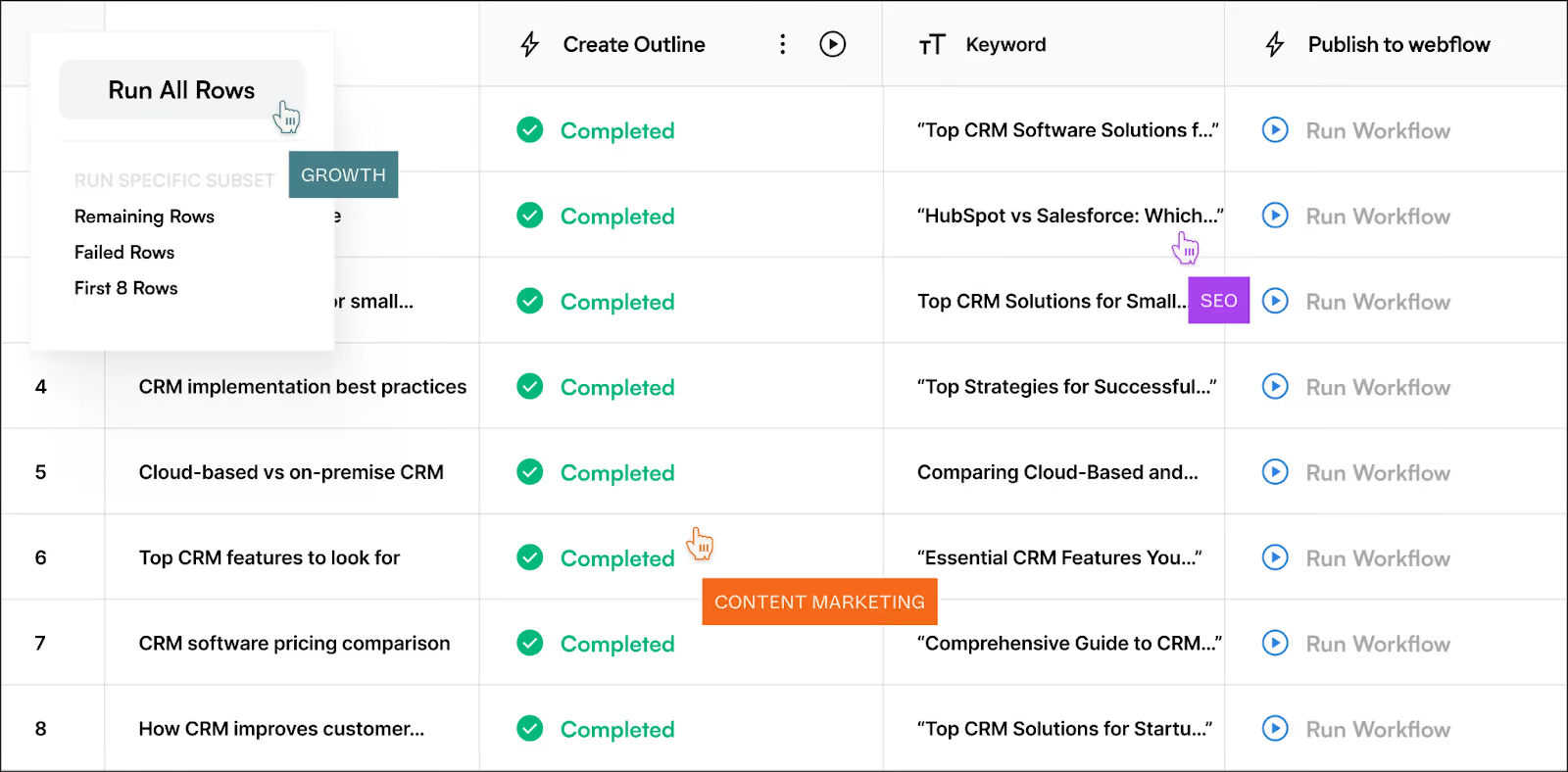
AI handles research, drafting, editing, and repurposing, letting small teams operate at the capacity of much larger ones.
Content Distribution Strategy: Ten-Step Game Plan
We’ve covered the theoretical base now.
Let’s look at how to build a content distribution engine that works.
Step 1: Start with Goals, not Channels
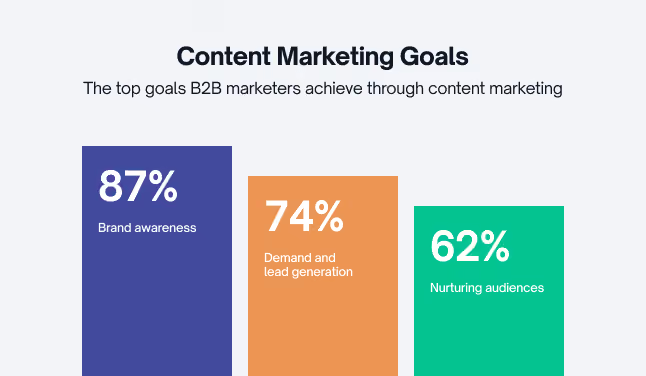
Demo requests? Thought leadership? MQLs? Your goal shapes every decision downstream. Channel selection, content format, measurement framework, all of it.
Here are the three most common content marketing goals in B2B:
Step 2: Map Where Your Audience Spends Time
Survey your customers and, in parallel, analyze where your competitors are showing up. Use social listening tools to find the conversations already happening without you. The data will almost certainly surprise you.
Step 3: Audit What You Already Have
Before creating anything new, inventory what you've already got.
You'll find winners worth resharing, outdated pieces worth refreshing, and gaps worth filling.
Use tools like Slate to automate this as a continuous process.
Most SaaS companies are sitting on a goldmine of content that's never been properly distributed.
Step 4: Choose 3-5 Channels and Commit
Spread it too thin and nothing works.
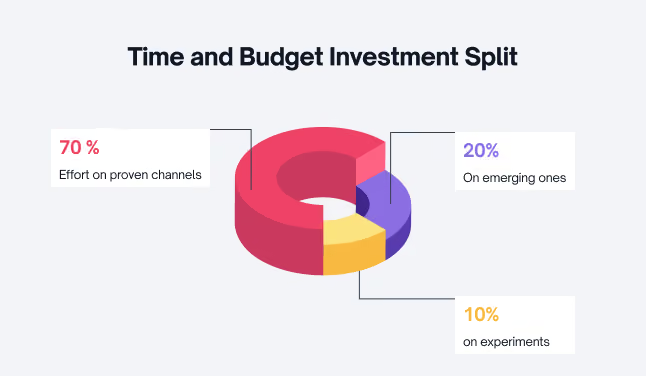
Pick 3-5 channels based on where your audience actually lives and what your team can realistically sustain.
A good rule of thumb for time and budget investment:
Step 5: Build a Distribution Calendar That Matches Creation
This is where many plans fall apart. They build a content calendar and treat distribution as something that happens "after."
Schedule distribution alongside creation, not as a follow-up task. Match content to buyer journey stages and seasonal trends. Leave room for jumping on trends when they show up.
Step 6: Customize for Each Platform
Turn one comprehensive guide into platform-native content: LinkedIn carousels, X threads, YouTube videos, email sequences. Format matters more than most teams realize.
For example, LinkedIn posts with images get 2x engagement. Blog posts with images receive 94% more views than text-only posts.
Step 7: Break Content Into Bite-Sized Pieces
Split every pillar piece into micro-content: key quotes for social, data visualizations for presentations, standout insights for newsletters.
One comprehensive guide can become 20+ distribution assets. Instead of producing 20 original pieces, produce one excellent piece and extract 20 distribution moments from it.
It’s also a great way for small teams to punch above their weight.
Step 8: Boost Winners With Paid Promotion
Put ad spend behind content that's already working organically. That's the lowest-risk, highest-return paid play in content marketing.
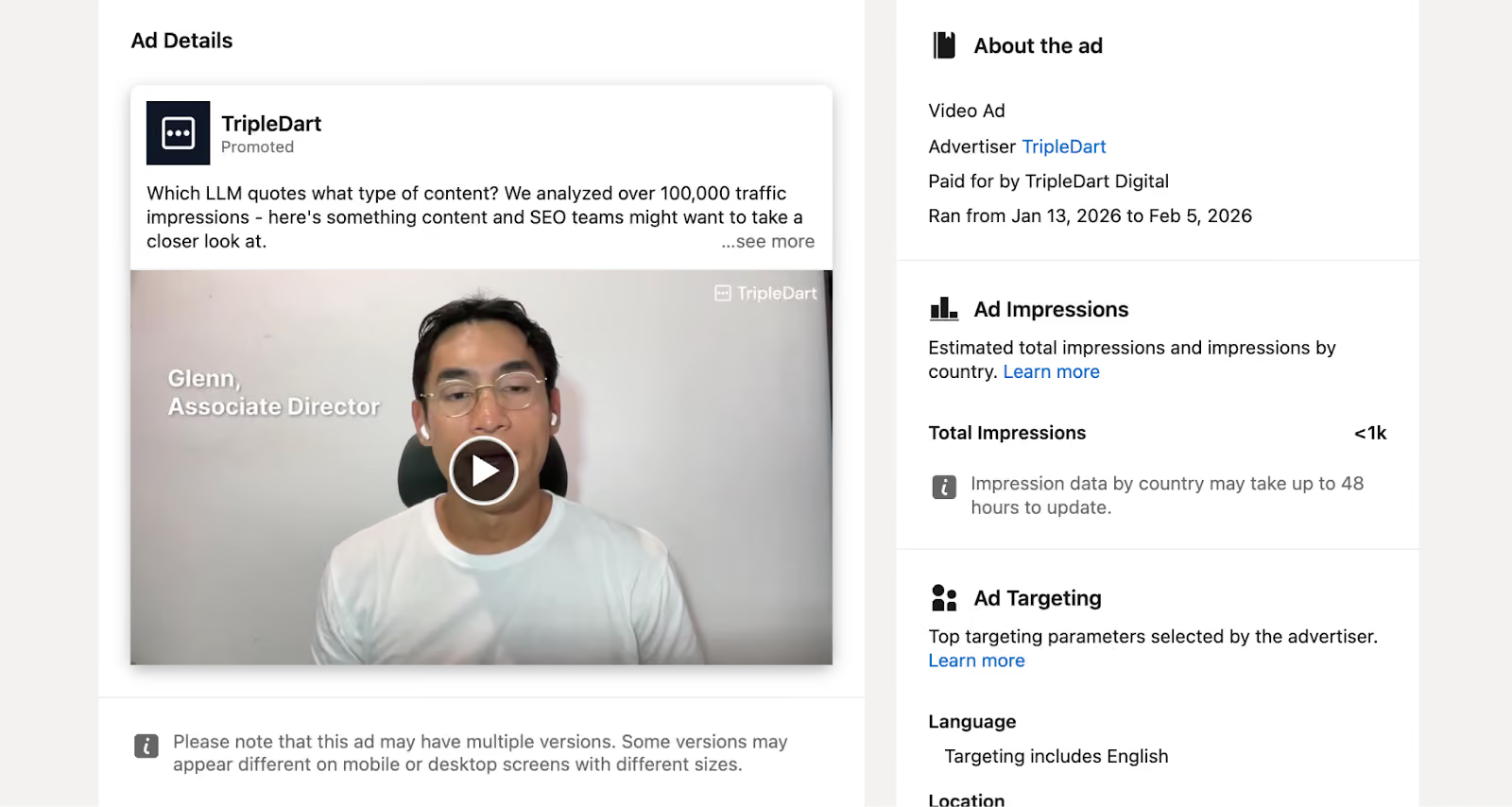
Retarget engaged visitors, use lookalike audiences to expand, and start small before scaling what works. For instance, LinkedIn ads can drive a 33% increase in purchase intent and a 2-3x lift in brand attributes.
Step 9: Track What Matters and Adjust
Watch leading indicators (shares, comments, time on page) alongside lagging ones (leads, pipeline, revenue). Use attribution to understand the full journey, not just the last click.
73% of B2B marketing experts say conversions are the top metric for assessing content performance, followed by website traffic and email engagement.
Set a cadence with your team: weekly for paid, monthly for owned, quarterly for earned.
Step 10: Set Yourself Up for AI Discovery
If you want AI to cite you, give it content that's structured, specific, and backed by evidence.
- Structure content with clear headers, semantic markup, and concise answer blocks
- Build topic authority through comprehensive coverage
- Get your brand mentioned on platforms where LLMs actively crawl
- Have statistical data and direct expert quotations
How to Know If Distribution Is Working
Track three buckets:
Reach metrics: Impressions, unique visitors, and share of voice show distribution effectiveness.
Engagement metrics: Comments, shares, and time spent reveal if content resonates. The average reader spends only 52 seconds on a blog post, so beating that benchmark signals genuine interest.
Business metrics: Pipeline influenced, CAC, and revenue attribution show real impact.
Additionally, check paid channels weekly, owned media monthly, and earned media quarterly.
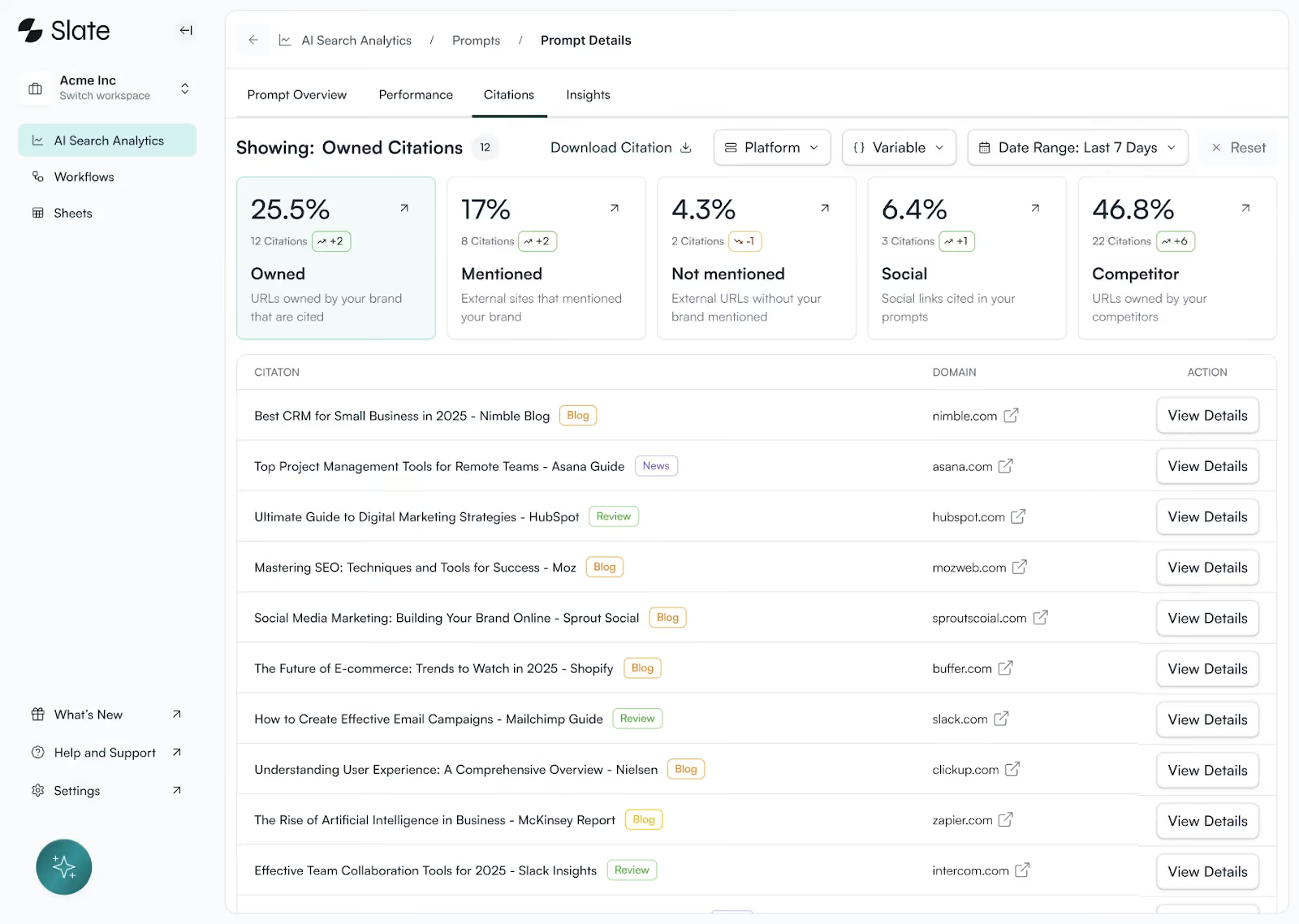
Finally, keep an eye on AI visibility through tools like Slate. Track how often your brand appears in LLM responses, which pages get cited, and how your share of AI-generated recommendations stacks up against competitors.
Conclusion
So, that’s the basics of content distribution in 2026.
It is no longer optional (“an additional initiative”); it's the engine that turns content into a pipeline. More B2B SaaS companies are waking up to this, shifting budgets from pure creation toward strategic, multi-channel distribution.
If you want to partner with a team that's already helped hundreds of B2B SaaS companies nail their channel mix and distribution strategy, book a call with TripleDart.
We deeply understand how each channel works; in fact, we have curated playbooks and data for each. Let’s take your work to your audiences.
FAQs
1. What is content distribution in B2B SaaS?
Content distribution is the process of promoting and sharing your content across owned, earned, and paid channels to get it in front of your target audience, because publishing alone doesn't generate pipeline.
2. Why is content distribution more important than content creation?
Because 65% of B2B content goes unused after creation and 93% gets zero external links. The bottleneck is almost never quality; it's getting your content seen by the right people.
3. What are the best content distribution channels for B2B SaaS?
LinkedIn, email, and your blog are the proven workhorses. LinkedIn leads in B2B lead generation, email delivers $36 ROI per $1 spent, and your blog acts as the home base for organic discovery and AI citations.
4. How long does it take for content distribution to show results?
Most B2B marketers say it takes three to nine months of consistent effort before content gains real traction, so quick wins are the exception, not the rule.
5. Should I gate or ungate my B2B content?
Ungate educational content to maximize reach, backlinks, and AI citations. Reserve gating for high-value assets like proprietary research or deep-funnel toolkits. 81% of prospects walk away when a form blocks basic content.
6. How do I optimize content for AI search engines like ChatGPT and Perplexity?
Use clear headers, semantic markup, concise answer blocks, and include stats with linked sources. Build presence on platforms LLMs crawl heavily, like Reddit, Wikipedia, and high-authority publications.
7. Is email marketing still effective for B2B content distribution?
Yes. 77% of B2B buyers prefer email for vendor communication. It's the one channel no algorithm can throttle.
8. How do I measure whether my content distribution is working?
Track three buckets: reach (impressions, unique visitors), engagement (shares, time on page), and business impact (pipeline influenced, revenue attributed). Add AI visibility tracking to stay ahead in 2026.