How Fyle Increased Demos by 34% While Reducing Cost per Demo by 27%

About Fyle
Fyle is an expense management platform that simplifies expense reporting and reimbursement by integrating directly with tools teams already use: QuickBooks, NetSuite, and corporate credit cards.
Their core audience is finance teams and operations leaders at small and mid-sized businesses looking for a modern alternative to legacy expense tools.
Fyle had already built a solid paid search foundation with significant monthly spend and steady lead volume. But they had hit a point where more spend was not producing more results. The team brought in TripleDart to figure out how to break through that ceiling and turn paid search into a scalable growth channel.
The Challenge
Fyle's paid marketing was working. The issue was that it had maxed out what its current structure could deliver.
No Room to Experiment
The in-house team was running lean. Keeping existing campaigns live and hitting targets consumed all the bandwidth, leaving little room to test new structures, keyword themes, or channels.
A Hard Ceiling on Growth
The keyword campaigns were mature and well-built. But every time the team tried to push spend beyond a certain point, costs climbed or performance thinned out. The campaign architecture was not set up to absorb more budget without losing efficiency.
Budget Without a Playbook
There was additional budget available, but no clear path for deploying it. Fyle needed new channels and strategies that could turn extra spend into demos and not just clicks.
What We Did
The engagement started by making the existing campaigns more efficient. From there, we expanded into new keyword themes, competitor campaigns, and eventually new channels, layering growth on top of a stabilized foundation.
Phase Overview
Phase 1: Getting More from What Already Existed
Before adding anything new, the first move was figuring out where existing budget was being wasted.
We audited every campaign and ad group. The ones consistently running above target CPA were paused, and that budget was moved into campaigns that were already converting well. We also cleaned up conversion tracking so Google's algorithm was optimizing toward qualified demos rather than generic form fills.
The goal was a leaner, more efficient account that could absorb future investment without dragging down blended performance.
Phase 2: Going After Untapped Search Intent
Fyle's paid search coverage was concentrated around a relatively narrow set of business keywords. Effective at a certain scale, but it meant large pockets of relevant search intent were being left on the table.
Coverage was expanded in a few targeted ways:
- Dynamic Search Ads opened up queries the team had not manually targeted, especially around expense tracking for verticals like non-profits and construction.
- New keyword themes around receipt tracking and expense reporting filled coverage gaps across the full buyer journey.
- Three keyword cohorts were established to organize the account: Cards (QB card searches), Expenses (general expense management), and Receipts (receipt tracking).
Each new campaign type was selected based on where there was clear, untapped commercial intent.
Portfolio Bid Strategy
To manage budget allocation across a growing number of campaigns without micromanaging each one, we introduced a portfolio bid strategy. Google's algorithm could now distribute spend toward campaigns and ad groups most likely to convert at or below the target CPA.
A set of leading metric guardrails kept things in check:
When these leading metrics stayed within guardrails, MQL outcomes were consistent regardless of day-to-day CPA swings.
This shifted the operating model. Instead of reacting to lagging CPA data, daily “6 AM reports” on impression share and click share enabled corrective action before spend was wasted.
Phase 3: Capturing Competitor Search Intent
With the foundation stable, the next layer was competitor campaigns targeting users actively evaluating alternatives. We launched campaigns across seven competitor brands, prioritized by US search volume and conversion potential.
The highest-intent competitor terms converted well from the start. Newer targets were added after evaluating search volume and bidding viability in the US market.
Solving the Search Term Waste Problem
A big chunk of search query spend was going to queries that drove zero conversions.
The most common offenders were:
- Generic navigational searches (people looking for integration partners, not the product itself)
- Consumer finance and budgeting app terms with no B2B relevance
- Broad brand queries with no buying intent
A structured negative keyword program was put in place, with blocklists updated multiple times per week. The cadence was adjusted based on spend levels and new campaign launches.
Operational Decisions That Moved the Needle
A few focused operational changes contributed to cost performance beyond campaign structure:
- Weekday scheduling: Fyle's B2B audience converted during business hours. Pausing weekend campaigns reduced wasted impressions and concentrated budget on peak-intent windows.
- Integration-led messaging: QuickBooks and NetSuite integration campaigns resonated with Fyle's core audience and became a consistent performer.
- Automated monitoring: An alert system built via Google Ads API and Make triggered notifications when key metrics fell outside guardrails. Real-time alerts paired with daily evening performance updates meant problems were caught early.
Navigating the Sage Rebrand
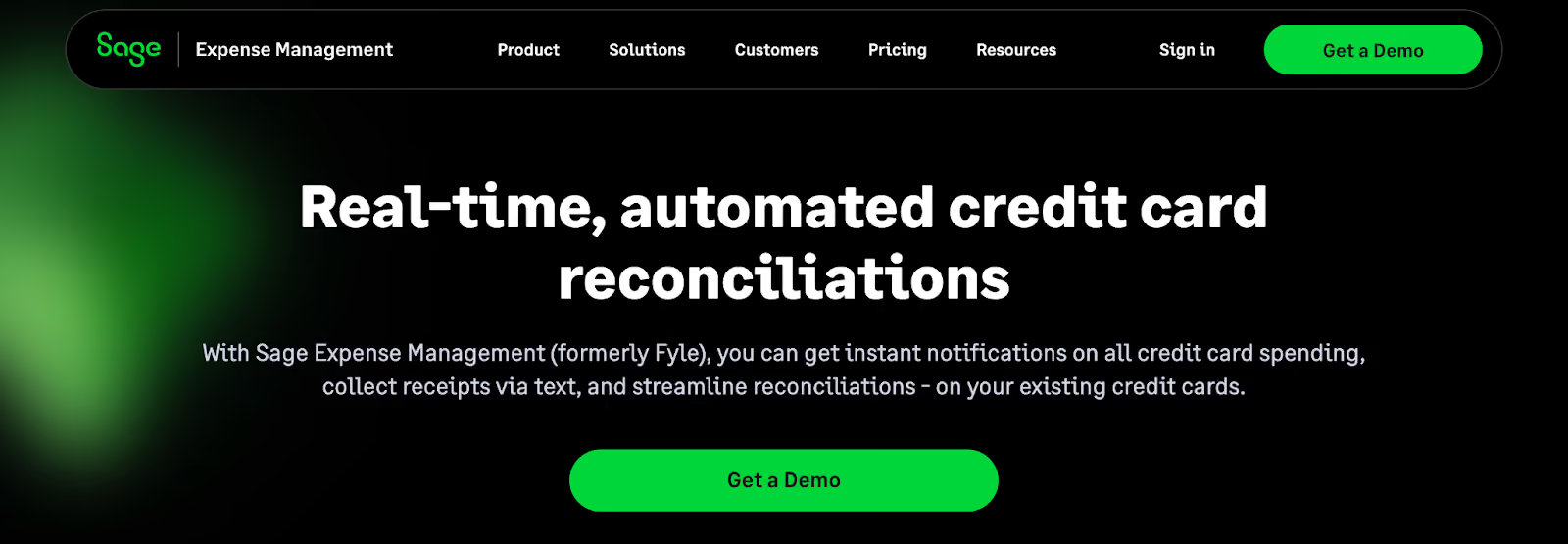
When Sage acquired Fyle in July 2025, the campaigns needed to transition to the new brand identity by October. This kind of mid-flight rebrand creates real complexity in paid search: trademark policies change, brand search behavior shifts, and CPCs can move unpredictably.
The team managed the transition by running multiple brand ad variants in parallel to isolate what was working under the new identity, diverting spend toward non-brand cohorts that were unaffected, and building daily performance checkpoints to catch and address shifts quickly.
Results (February - October 2025)
Our Team
- Mahesh Sundararaman, Account Manager
- Raghu Nandan, PPC Specialist
- Mehak Chawla, PPC Analyst
- Praveen Swaminathan, Project Manager
Found this case study interesting? We work with 250+ brands to solve their toughest growth problems. Connect with our team today!
"Every metric has moved in the right direction. Demo requests are up, we've actually nearly doubled our search budget from the time we started. We've had no down quarters. Outcomes have increased steadily but surely."
— Pulak S, Senior Manager at Sage Expense Management (formerly Fyle)