

.png)
.png)
FlowForma, an automation platform, was having visibility issues in AI-generated responses despite having a solid product and loyal enterprise customers. When prospects asked ChatGPT, Perplexity, or Google's AI Overviews about process automation solutions, competitors appeared—but FlowForma didn't.
In 9 months, we transformed their AI visibility—growing LLM-attributed sessions by 5.5x, securing consistent placement in AI recommendations for process automation, and establishing FlowForma as a credible, citable authority across ChatGPT, Perplexity, Gemini, Copilot, and Google AI Overviews.
Here's how we made FlowForma the answer AI platforms recommend.
About FlowForma
FlowForma is a no-code process automation platform that enables business users to digitize manual processes without IT involvement. Founded in 2016 and based in Dublin, Ireland, FlowForma serves enterprise clients across manufacturing, healthcare, financial services, and construction sectors.
Operating in the competitive workflow automation space, FlowForma targets operations teams, process managers, and business leaders looking to streamline workflows and improve efficiency without technical complexity.
They partnered with TripleDart to build visibility in the rapidly growing AI search landscape and ensure their brand appeared prominently when prospects asked AI platforms about process automation solutions.
The Challenge: Visibility in AI-Powered Search
Before working with TripleDart, FlowForma faced visibility problems in the emerging AI search landscape:
AI Presence
When prospects asked ChatGPT, Perplexity, or other AI platforms about process automation tools, competitors consistently appeared while FlowForma remained somewhat invisible.
AI Visibility Tracking
FlowForma had no systems in place to measure or monitor their presence across AI platforms. Without baseline metrics, they couldn't track progress or understand which content was being cited by AI systems.
Content Optimization for AI
Their existing content wasn't structured for AI comprehension and citation. Blog posts lacked the clear question-answer formats, structured data, and extraction-friendly formatting that AI systems prioritize.
Brand Authority
AI platforms weren't describing FlowForma accurately when they did appear. Without a dedicated knowledge base and strategic content distribution, FlowForma had no control over their brand narrative in AI responses.
GEO Strategy
FlowForma needed a systematic approach to Generative Engine Optimization—from keyword research aligned with conversational queries to technical infrastructure that made their content accessible to AI crawlers.
These gaps meant FlowForma was missing critical opportunities as buyer behavior shifted toward AI-powered search.
TripleDart's GEO Implementation Framework
We built FlowForma's AI visibility from the ground up through a five-phase GEO implementation that addressed research, content, technical infrastructure, distribution, and measurement.
Timeline of Impact
Here's how we executed each phase:
Phase 1: Research & Analysis
Understanding the Audience
AI platforms prioritize content addressing user intent through conversational queries.
We analyzed FlowForma's sales transcripts and customer conversations to understand how prospects naturally asked questions—capturing the longer, intent-heavy phrases people use when talking to AI rather than typing into search bars.
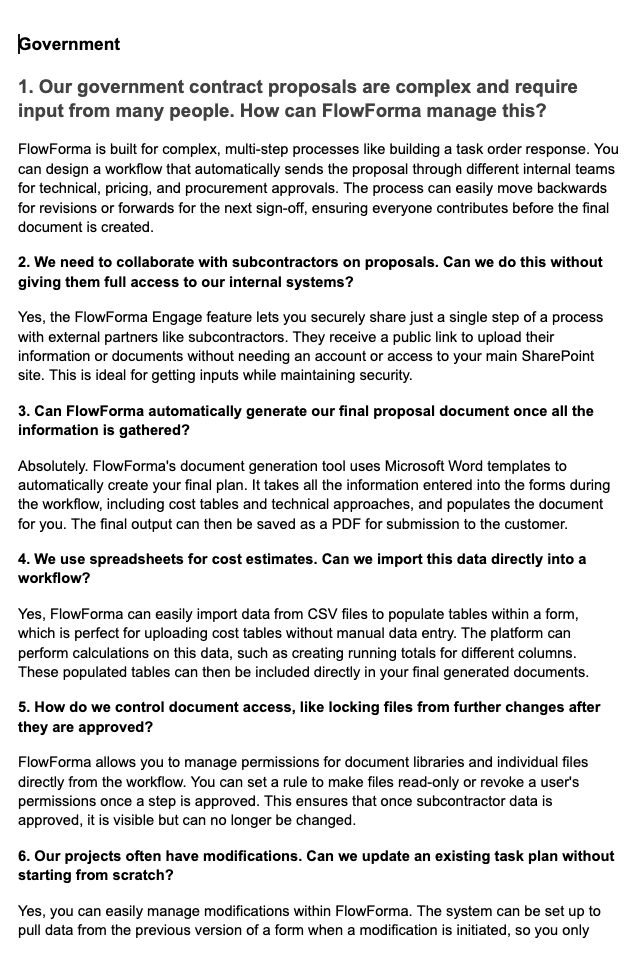
This revealed authentic customer language around integrations, use cases, and comparisons that became the foundation for FAQ pages and conversational content.
GEO Keyword Framework
We developed a theme-based keyword framework matching how AI systems process and retrieve information:
- Keywords frequently appearing in AI Overviews
- Longer conversational phrases mirroring natural questions
- Related terminology adding topical depth
Using the Query Fanout technique, we created comprehensive FAQs for each blog, tackling topics from multiple angles.
We organized queries based on buying journey stage and used ChatGPT, Google Autocomplete, People Also Ask, and AlsoAsked to uncover additional topic angles.
Response Analysis
We analyzed which queries generated AI-powered summaries in Google search using Semrush and Google Search Console. This revealed patterns in what topics and formats AI systems preferred—bullet formats, tables, embedded media, or paragraph summaries.
We filtered high-ranking queries to identify those most likely to generate AI responses, then optimized corresponding pages to increase citation likelihood.
Competitor Analysis
We identified competitors AI cited frequently and evaluated their content across multiple dimensions: information organization, topic depth, and consistent elements in AI-cited content.
This revealed a critical insight: topical authority clustering beats individual mega-articles. Twenty comprehensive articles on related topics generate more AI visibility than one perfect piece.
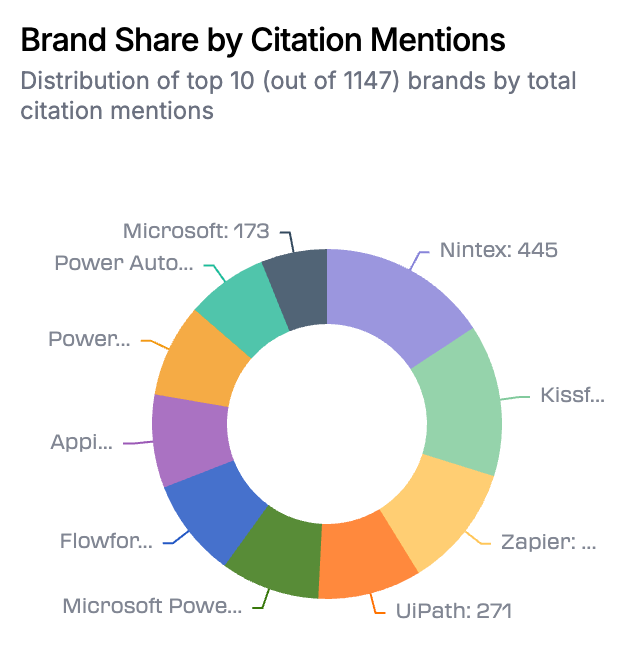
Brand Perception
We established baseline brand perception by querying AI platforms directly: "What is FlowForma?" and "FlowForma vs [Competitor]."
We focused on "competitor alternatives" keywords to position FlowForma as the top alternative to specific competitors, improving share of voice in this critical category. Regular monitoring tracked perception shifts and informed broader content decisions.
Mining Questions
We dug through FlowForma's sales call notes to extract common customer questions. We identified recurring themes around integrations, use cases, and comparisons.
Phase 2: Content Optimization
Content Audit
We audited existing content against GEO-specific criteria: structure, clarity, scannability, schema implementation, comprehensiveness, entity coverage, and freshness.
Content gap analysis compared FlowForma's assets against competitor pages getting cited, revealing improvement opportunities.
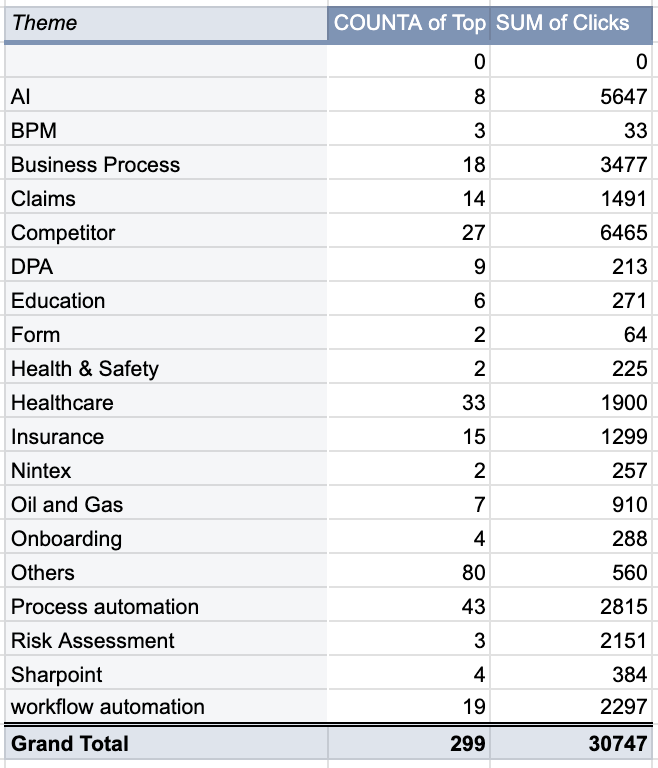
Restructuring
We restructured existing content to align with how LLMs extract and present information, optimizing about 20 blog posts monthly.
Content got reformatted with:
- Question-and-answer structures
- Clear definitions in the first two sentences
- Bullet-point summaries for scannability
- Digestible sections that AI models could easily process
- Direct answers without confusion
Building Trust and Authority
We backed every claim with references to reputable, current sources. We included perspectives from recognized industry voices and presented data in standout formats like visual charts and comparison tables.
This structured evidence increased citation confidence—AI systems are more confident citing sources with specific, verifiable claims backed by research and measurable results.
Content Clarity
We wrote in plain language, avoiding unnecessary technical jargon. We used shorter paragraphs, lists, and visual breaks for easier scanning. Critical points got highlighted through bold text, highlighted boxes, and section summaries.
We added images, charts, and diagrams to illustrate complex concepts and suggested a new wireframe to maintain a consistent blog structure across all content.
Topical Clusters
We initially prioritized bottom-of-funnel content for FlowForma: listicles, comparison pages, and "alternatives" blogs.
We then expanded into theme-based blog clusters around FlowForma's core topics:
- Process automation
- Workflow automation
- AI-driven business transformation
- No-code development
Consistent publishing on high-intent subtopics signaled subject matter depth to LLMs.
Content Refresh
We implemented six content refresh sprints monthly to keep information current. High-performing blogs got refined on-page SEO optimizations. Examples, statistics, and references were updated to reflect recent developments.
Visual Enhancement
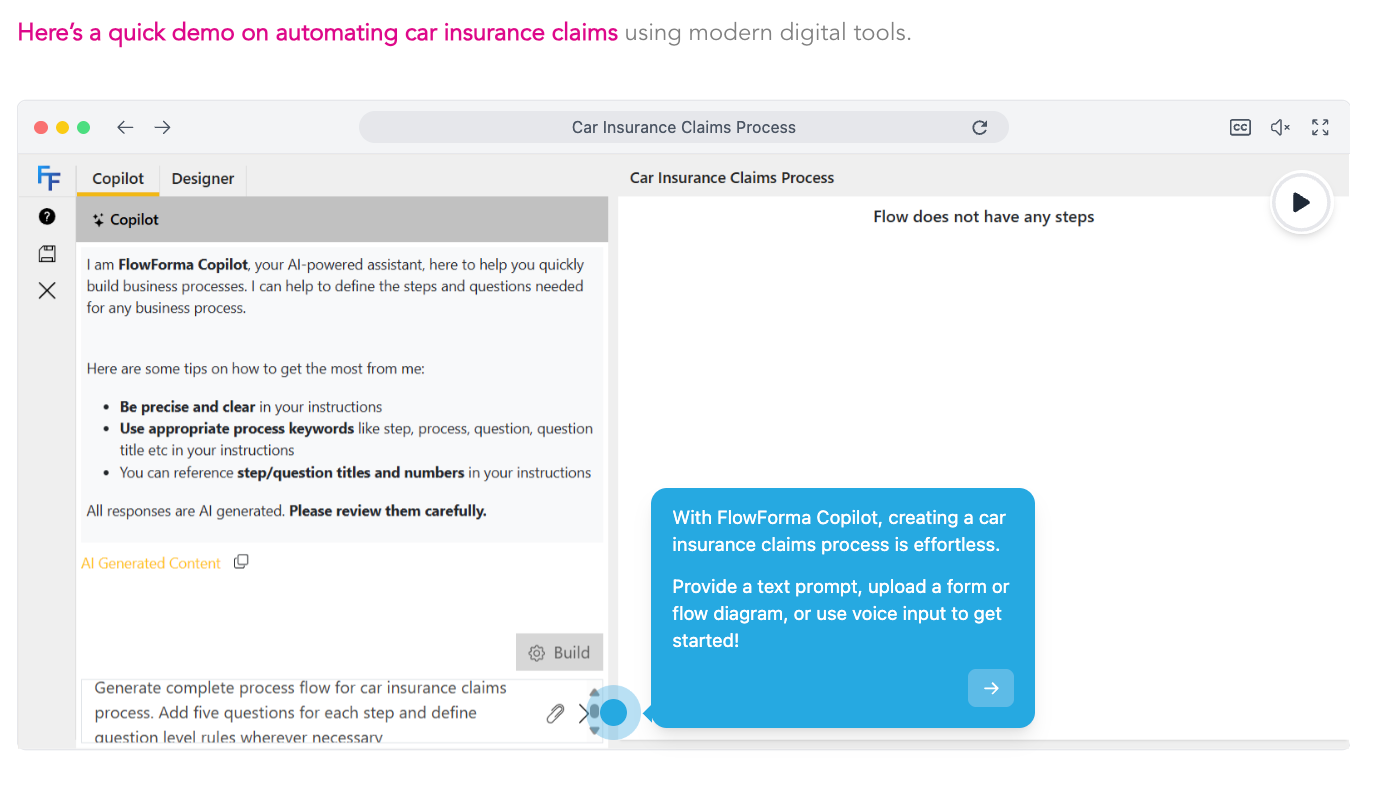
We added and optimized images, videos, and graphics across high-priority pages. YouTube content got optimized for discovery through metadata, descriptions, and transcripts. We implemented use-case demonstrations in respective blogs to improve authority.
Phase 3: Technical Optimization
Content Structure and Schema
We implemented a clear H1-H5 heading hierarchy across priority pages and optimized internal linking to establish content relationships. Creating logical content clusters around core topics ensured content aligned with natural language search patterns.
Server-side content rendering was essential—JavaScript-rendered critical content stays invisible to many AI crawlers.
Schema Implementation
We conducted a comprehensive schema markup audit and implemented diverse schema types:
- Content organization schemas (Article, Organization, Breadcrumb)
- Question-based schemas (FAQ, Q&A) to surface direct answers
- Product and service schemas for proper categorization
- Social proof schemas highlighting user feedback
FAQ schema was prioritized on FlowForma's bottom-of-funnel and top-performing blogs.
FAQ content pulled from sales transcript analysis contained real customer questions, boosting eligibility for LLM-driven search visibility.
AI Knowledge Base
We built a dedicated knowledge base specifically for LLMs to crawl accurate FlowForma information. This consolidated key brand facts, features, differentiators, and positioning, structured for easy AI extraction.
Technical Improvements
We reduced page load times and cleaned up code for faster access. We fixed server issues, compressed images, and resolved broken links. Secure connections and security best practices were ensured throughout.
Site architecture was organized with a clear hierarchy and logical internal links. All content worked seamlessly on mobile devices.
Phase 4: Content Distribution
Multi-Platform Strategy
We identified platforms where target buyers spent time and adapted content format and tone to match each platform. Establishing regular publishing rhythm across channels built presence and reinforced credibility signals for AI.
Reddit Engagement
We implemented a brand mention strategy on Reddit for FlowForma. Value-driven participation in relevant subreddits (process automation, no-code, digital transformation) drove brand visibility and reduced gaps with competitors.
AI systems weigh authentic community discussions higher than company-authored content in their training data. Active participation directly feeds into AI training data.
Customer Content
We worked with the G2 team to improve customer reviews. We secured mentions in their reports and thought leadership articles. Creating opportunities for customers to share experiences publicly built trust through real customer voices.
Link Building
Prioritizing link quality over volume, we contributed expert content to respected industry publications. We formed partnerships with complementary brands and developed resources valuable enough for natural linking.
Phase 5: Results Tracking & Optimization
AI Traffic Tracking
We built dedicated tracking systems for FlowForma using GA4 and Looker Studio. Custom regex filters identified AI referral sources, and we segmented traffic from chat.openai.com, perplexity.com, gemini, and copilot into specialized dashboards.
AI Visibility Monitoring
We systematically monitored brand mentions across ChatGPT, Perplexity, and other AI platforms. Before/after comparisons of citations in AI platforms revealed significant improvements.
We tracked citation frequency and appearance patterns to provide direct feedback on strategy effectiveness.
Results
Here's what happened after nine months of focused GEO implementation:
Our Team
Account Manager: Manoj
SEO Leads: Impana, Siddu, Pranav
Project Manager: Shraddha
Conculusion
FlowForma's transformation demonstrates that GEO success requires more than content optimization—it demands a systematic approach spanning research, technical infrastructure, distribution, and measurement.
Ready to make your brand the answer AI platforms recommend? Let's talk about how strategic GEO can transform your AI visibility.
.png)
.png)
.png)