How Atlas HXM, a Global Employer of Record Platform, Improved Deal Volume by 4x in Seven Months

4x
Deal volume in seven months
41% to 55%
MQL-to-opportunity rate, Q2 to Q4
+34%
Conversion rate
About Atlas HXM
Atlas HXM is a US-based pioneer in the direct-employer-of-record model. They help businesses hire talent anywhere in the world and expand globally—handling everything from compliance to payroll.
Their market is very competitive. More than 30 players fight for the same prospects, many with similar messaging and overlapping features. Standing out requires more than good ads—a marketing engine that converts the right people and not just more people.
Atlas HXM was spending on lead volume without matching returns in deal quality, and its funnel could not show which leads became deals. Over seven months (April to November 2025), TripleDart rebuilt its inbound engine, starting with CRM attribution and moving through paid media and SEO.
Deal quality and volume rose 4x against pre-partnership performance, the MQL-to-opportunity rate climbed from 41% in Q2 to 55% by Q4, and cost per opportunity fell by about 30%.
The Challenge: Funnel Incoherence Behind Rising Cost per Opportunity
When we started working with Atlas, the surface-level symptoms looked familiar: high cost per opportunity, inconsistent conversion rates, leads falling through cracks.
But when we dug deeper, we found that they didn't only have a lead quality problem; they also had a visibility problem.
Paid media and nurture programs were active and generating leads, but the setup had room to scale more efficiently:
- Campaign structures could benefit from tighter intent segmentation
- Conversion tracking needed to align with deeper funnel actions
- Nurture sequences had expanded over time and needed streamlining—clearer rules, fewer overlapd, and better suppression logic
As a result, Atlas was spending on volume without seeing proportional returns in deal quality or sales efficiency.
TripleDart’s Approach: Repairing the Data Before Rebuilding the Campaigns
Timeframe: 7+ months (Apr’25 to Nov’25). Services: Full-funnel engagement covering RevOps, paid media, SEO and content, and project management.
CRM Overhaul
Most agencies would have jumped straight into campaign optimization. We started with something less glamorous but more important: fixing the data.
Initial Attribution Fixes
We enabled UTM pass-through on meeting links, added new source categories like "AI Referrals," and fixed legacy database issues affecting 900K+ contacts.
Workflow Optimization
We audited every lead routing, nurture, scoring, and follow-up workflow—and found a tangle of conflicting logic.
We cleaned it up: removed outdated rules, eliminated overlapping enrollments, added time-zone-based sends and frequency limits, and built meeting-based suppression so booked leads stopped receiving nurture.
Partner Management
Atlas needed to track partner referrals and commissions. We built custom objects for partner entities, ownership tracking, commission monitoring, and automated deal handoff workflows.
Paid Media Restructure
With clean data flowing, we could optimize with confidence. The result was an EOR paid search strategy built on single-theme keyword clusters and opportunity-level conversion signals.
Campaign Architecture
The old structure mixed intent levels, making it difficult for Smart Bidding to learn effectively.
We rebuilt everything around:
- Single-theme keyword clusters with clean ad groups
- Geography and funnel stage organization
- Smarter budgets through conversion tracking and campaign structure efficiency
We shifted from fragmented campaign ops to a structured and predictable demand engine.
Conversion Signal Upgrades
Atlas had been optimizing toward form fills. We implemented HubSpot-to-Google offline conversion tracking and Enhanced Conversions. Now campaigns are optimized toward opportunity-intent actions.
We created feedback loops between marketing and sales data. Smart Bidding finally had the right targets.
Localized Landing Pages
Generic landing pages don't convert enterprise buyers researching specific needs. We built over 100 localized pages.
Competitor Displacement
We launched campaigns specifically targeting accounts already evaluating Atlas' competitors. The creative spoke directly to comparison-stage prospects with displacement-themed messaging.
Channel Diversification and ABM
LinkedIn Strategy
LinkedIn wasn't delivering efficient MQLs, so we repositioned it—shifting from direct MQL generation to mid-funnel warming and ABM support.
This meant:
- Precision targeting against high-priority account lists
- Industry-specific campaigns with hyper-personalized assets and case studies
- Competitor displacement ads aimed at competitors' existing customers.
We also fixed integration issues that had been silently breaking lead data mapping.
Multi-Channel Expansion
We expanded beyond Google, adding Bing Ads to capture high-intent searches at lower costs.
- Dynamic Search Ads campaigns opened up discovery opportunities
- Performance Max extended reach
- Display Ads drove awareness through custom intent audiences and remarketing
Each channel had a defined role in the funnel—nothing ran without purpose.
SEO and Content
Programmatic SEO
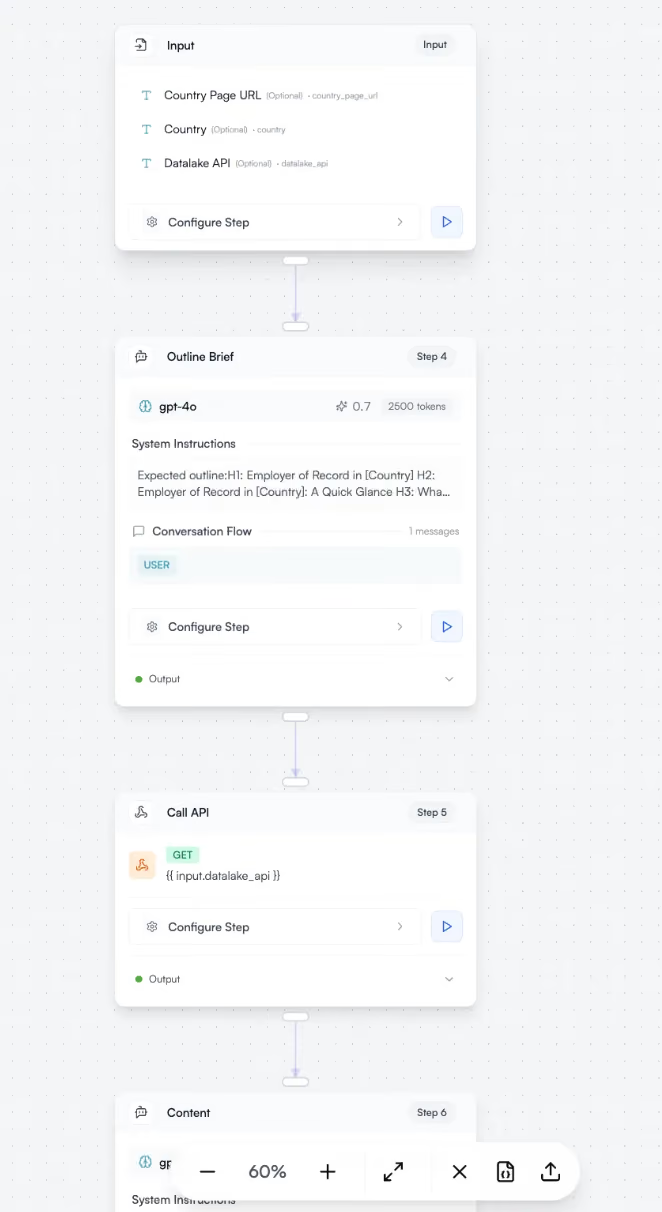
We identified two high-impact content clusters and built a semi-automated content workflow using Slate, integrated with Atlas's Data Lake.
The process worked like this:
- Automated research pulled relevant data
- SEO-first outlines were generated
- Editorial and content strategy teams refined them

AI Search Optimization
With AI-powered platforms capturing a growing share of search queries, we embedded AEO (AI Engine Optimization) and GEO (Generative Engine Optimization) into every content workflow.
Marketing Operations
Infrastructure
Atlas needed visibility across the full funnel.
And we built it:
- Factors.ai gave them website visitor deanonymization and account-level insights.
- Clay handled phone enrichment and lead qualification.
- Unified Looker dashboards brought paid, nurture, and sales metrics into a single view.
Event Management
Post-event lead handling was inconsistent—leads fell through cracks and follow-up timing varied. We built a complete SOP covering lead import, scoring, ownership assignment, and nurture entry, with templates for consistent tagging and campaign association.
Nurture Sequences
We built purpose-specific sequences:
- RTM (Return to Marketing) sequence for re-engaging stalled leads
- Competitor nurture for comparison-stage prospects
- Webinar and event-specific tracks
- Automated MQL enrollment
Each sequence had a defined trigger, audience, and goal.
Project Management
Weekly Rhythm
We established weekly syncs across PPC, SEO, RevOps, and Creative. Each had defined ownership and accountability tracking.
Unified Visibility
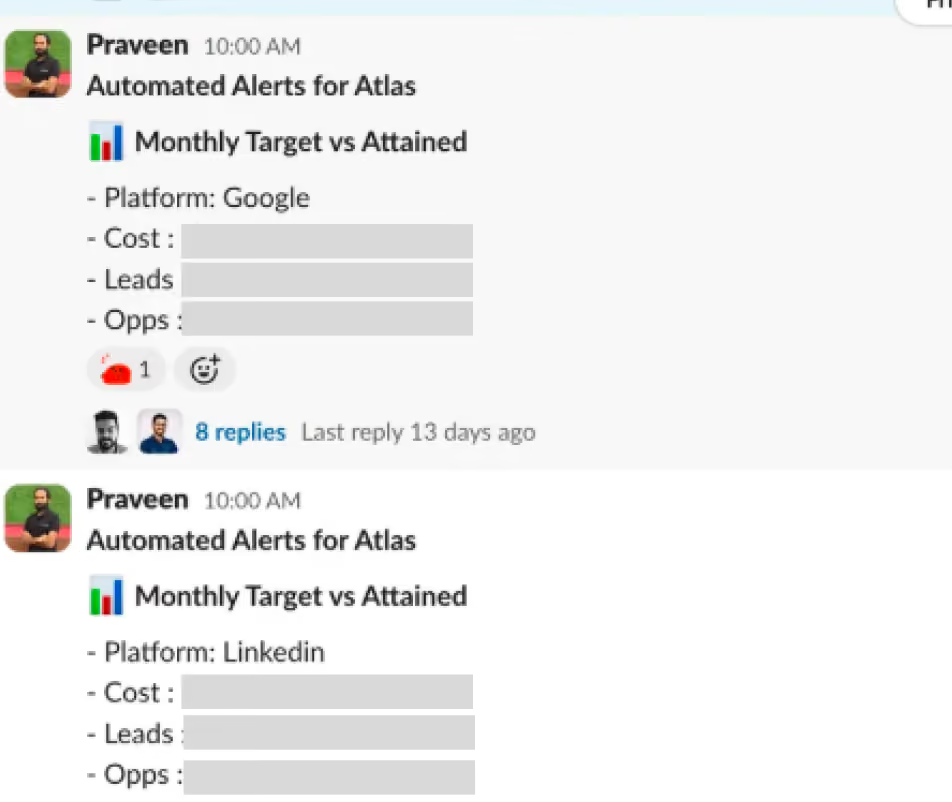
Shared dashboards gave everyone the same view of campaign performance. Automated Slack alerts tracked daily spend against targets.
Resource Optimization
To improve coordination and streamline operations, we added an Account Manager role to ensure daily alignment and responsiveness.
We also introduced a Dashboard Reporting Analyst, which enhanced campaign visibility and reporting accuracy.
A centralized Creative Feedback Dashboard was introduced, improving tone consistency and messaging alignment across teams.
Revision cycles dropped, and alignment across creative work improved.
If your CRM data and paid media reporting tell different stories about lead quality, a RevOps audit is the place to start. Book a strategy call.
The Results: 4x Deal Volume in Seven Months
Atlas HXM's inbound program was measured from April to November 2025 against pre-partnership performance; rate metrics compare Q2 with Q4.
The Team Behind the Results
- Account Manager: Sudharshan Narasimhan
- PPC Lead: Shony Cyriac
- SEO Lead: Varun
- RevOps Lead: JK
- Project Management: Nivedha
What Atlas HXM Says
"We get deep expertise across performance marketing, SEO, and CRM operations. Everything is an ecosystem, and there's a fluid connection between all these experts with senior oversight ensuring it comes together."
"What's different about TripleDart is they're really bringing that mix of both strategic and executional expertise. You listen to our business challenges, understand the industry, develop strategies, implement them efficiently, measure performance, and optimize results. That's pretty unique for an agency."
"When we ask for something, you give us what we ask for, but you also say, 'Just so you know, here's what I also found' or 'I think this would be a better way to do it.' An agency that can tell you things you don't know and elevate the client's ideas is very hard to find."
— Tina Robertson, VP of Global Growth Marketing at Atlas HXM
Key Takeaways
TripleDart worked as an extension of Atlas HXM’s team, owning everything from RevOps infrastructure to campaign strategy.
- Repairing attribution first made every later campaign change measurable.
- Each channel earned a defined funnel role: Search for intent, LinkedIn for mid-funnel warming and ABM, Display for awareness.
- A weekly cross-team rhythm kept PPC, SEO, RevOps, and Creative working from one set of dashboards.
Want a similar rebuild for your inbound engine? Book a strategy call and we will start with an attribution audit.