I have been working as the Content Lead at a SaaS growth agency for over 2 years now. In these past years, I have worked with some leading SaaS brands operating in the APAC and US.
After writing, editing, and publishing content for these SaaS brands, I have gained detailed knowledge on how to approach writing a SaaS content piece that drives results (by “results,” I mean generating and converting leads)
In this article, I aim to create a detailed guide explaining all my learnings related to SaaS content writing. This will be a no-BS guide of all the things I learned with experiential learning. No generic tips can be found with a simple Google search.
So, let’s get started!
What is SaaS Content Writing?
SaaS content writing is a style of writing that educates and communicates with your target audience about how various SaaS solutions can benefit their business operations. SaaS content should have all information the target audiences need to understand how a SaaS solution can make their lives easier and address their pain points.
For example, if you are writing about a project management tool like Trello, your content should explain:
- Which problems does Trello solve?
- Why exactly should they opt for Trello and not any other tool?
- What are the major features of Trello that can benefit the target audiences?
- How affordable is Trello for the target audiences?
And so on.
Trust me when I say that no one will buy a product until they are fully convinced that it will add value to their life. Content is key in SaaS as it bridges the gap between your target audiences and your product.
SaaS Content Writing vs. Other Forms of Content Writing - Are there any differences?
“Is SaaS content writing different from other forms of content writing?”
I have been asked this question countless times.
Well, in a word, the answer is - “Yes”.
But more than one word is needed to answer this question. If you are a content writer or marketer, you need to distinguish between SaaS content writing and other forms of writing.
Here are some pointers to help you:
- SaaS content pieces are highly product-led. And by “product-led”, I don’t mean adding a few product features. It means understanding the product and referring to its features wherever possible in the content. In short, there’s no place for generic narratives in SaaS content.
- SaaS content is intent and pain-point driven. For example, if the title of the content piece is “How to create an email list?”, the content should focus only on creating an email list. You cannot write unnecessary sections like “what is an email list” or “why do you need an email list” and so on. Because the user looking for this solution already knows an email list or its importance. They are just looking for the steps to create an email list, and you need to provide them with exactly that.
- SaaS content should include lots of use cases. Unlike any other form of content, SaaS content doesn’t support any form of preaching. It only focuses on the “Show don’t tell” framework. Whatever claims you make within the content, you should add sufficient examples and use cases to back that up.
- Finally, in SaaS content, there is no place for fluff. Each sentence you write should make sense and add value to the readers.
By the way, I wrote a LinkedIn post on the difference between SaaS content writing and other forms of content writing. Read it here - How is writing a SaaS content piece different?
Why should you take SaaS Content Writing Seriously as a Founder?
Let me answer this question with some numbers.
Did you know that there are currently approximately 30000 SaaS companies worldwide but 14 billion SaaS customers?
The global SaaS market will be worth $307 billion by 2026!
While you are reading this article, I am sure that hundreds of other founders are planning to start a SaaS business. And that makes the global SaaS landscape hugely competitive.
Salesforce is one of the first SaaS companies and currently holds 10% of the market shares of this market! Now you may wonder how Salesforce achieved this success.
While they had a set of strong products and solutions, Salesforce also focused on content marketing from the beginning.
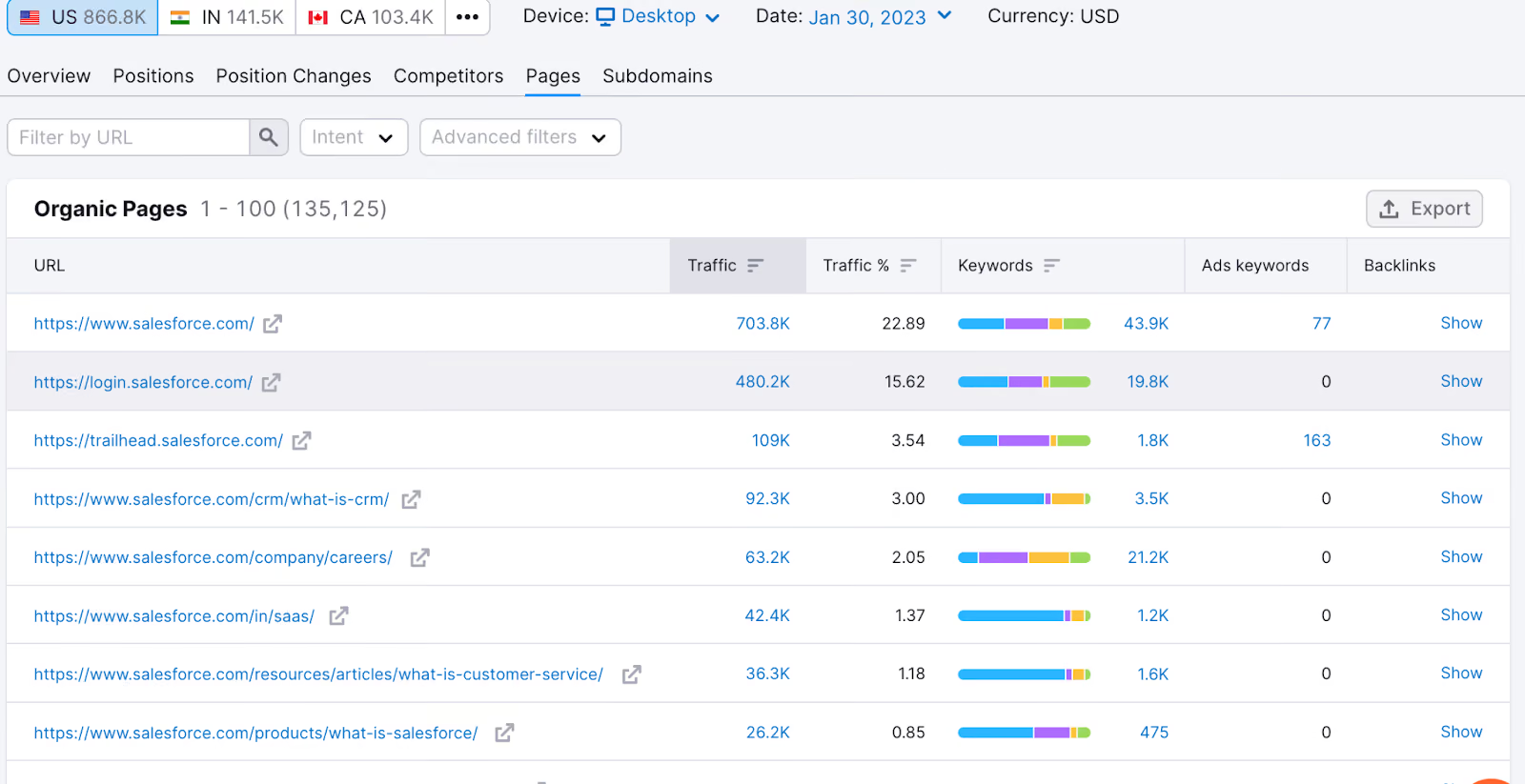
As of today, Salesforce has 135,125 indexed pages, which is awesome! This can give you some visibility on how serious Salesforce is about its content publishing efforts and how they publish 500+ new content pieces every year to stay at the top of its game.
The outcome of Salesforce’s dedicated content strategy is below:
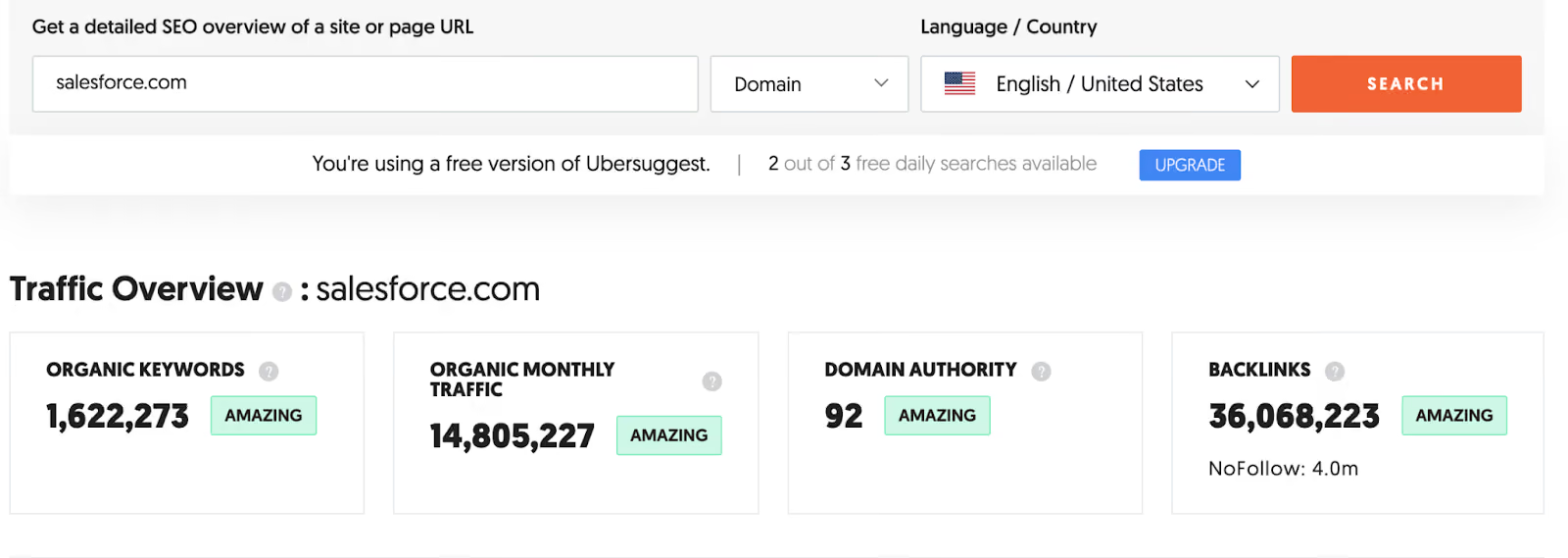
The fact that a big company like Salesforce, having a strong financial foundation, prioritizes organic traffic over paid traffic gives us one reassurance - content marketing has a long-term impact on SaaS businesses.
Hence, as a founder, you should either build an in-house content writing team or outsource your content from SaaS growth agencies like TripleDart Digital to reap the benefits of content marketing.
Our SaaS Content Writing Process - worked for 50+ B2B SaaS Businesses and counting…
After working for 50+ SaaS businesses, we have developed a formula that works best for our clients in different SaaS verticals. Let me take you through those strategies one by one:
Conduct in-depth SERP Analysis
SERP (Search Engine Ranking Page) analysis is the first step in approaching an article. As soon as I decide on a topic to write about, I start with an in-depth SERP analysis. It helps me to:
- Understand the search intent of the target users
- With SERP analysis, I get to read the articles that are already doing well in Google for a given keyword. Accordingly, I list the missing sections from these articles and how to include them to write an even better piece.
Let me explain the SERP analysis process with a quick example.
Step 1
Suppose, I am writing an article called - 10 Project Management Tips for SaaS Marketers. The primary keyword here is - “Project management tips for SaaS marketers.”
If I search for this keyword in Google, I will find the following top-ranking blogs:
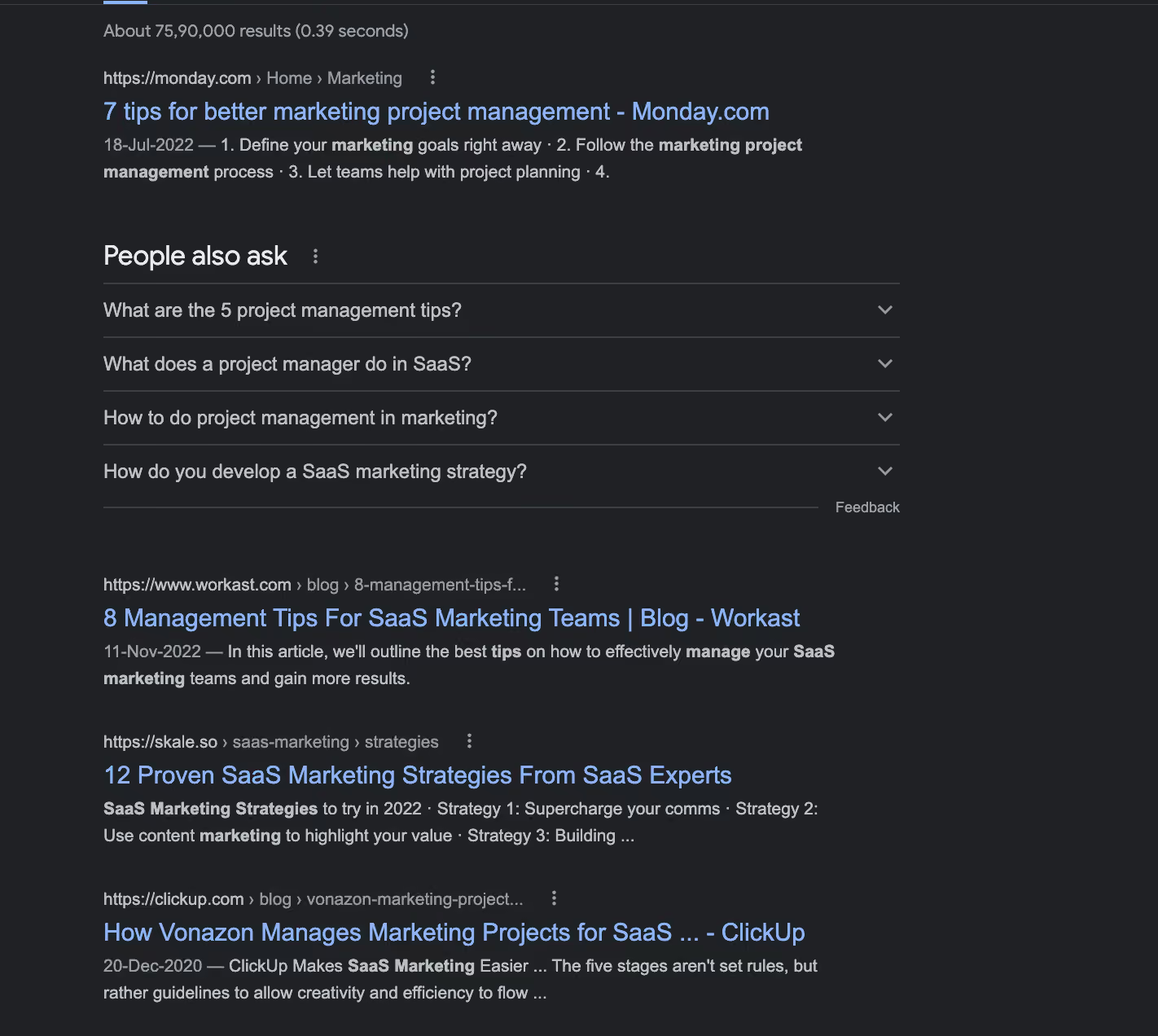
I can see that some of these articles ranking on the 1st page of Google are about project management tips for marketers, while some are specific to SaaS marketers.
This search will also give me an idea of which content types rank for this particular keyword. For example, I can see that all top-ranking pages are listicles. But if any other type of content will do justice to this keyword and my target audiences' intent, I can also create that.
Also, this SERP analysis tells me which sites I am competing with. For example, the top-ranking blogs for this particular keyword are from project management tools like Monday.com, ClickUp, Workast.
Step 2
Next, I will read each of the top-ranking articles to find out which sections they have included, which parts are written well, which require further revision, and so on. I will make a list of strengths and weaknesses for each article. Once that’s done, I will have clear differentiating factors for these articles and plan how to make my article stand out from these top-ranking keywords.
For example, for the above keyword, one of the top-ranking articles is - 8 Management Tips For SaaS Marketing Teams
Upon further assessment, I can find the following pros and cons for this article:
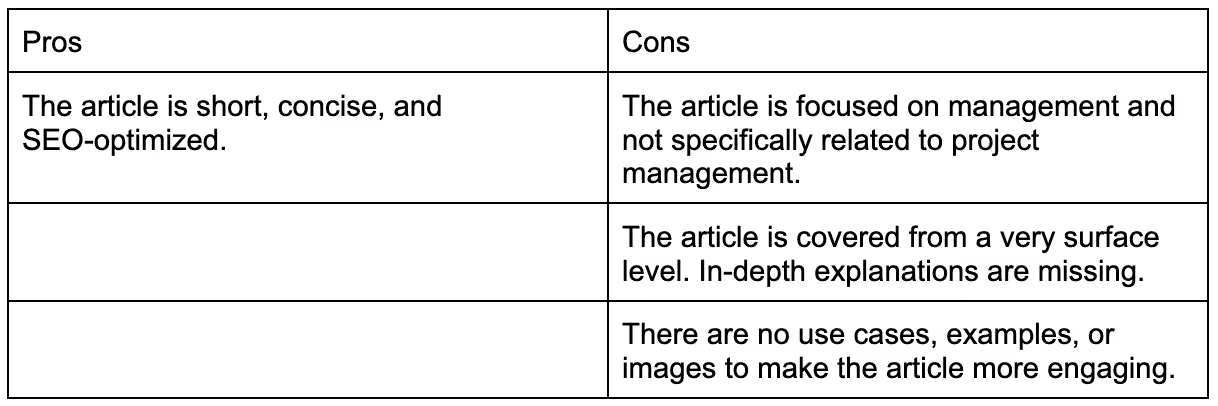
Therefore, when I am structuring my article, I will make sure that I don’t repeat the same set of cons.
Step 3
The final step of SERP analysis is to perform a search intent analysis of each article. For the keyword I used, the core intents of the top-ranking articles are:
- To help SaaS marketers with project management hacks
- To suggest SaaS marketers with proper project management tools.
When writing the article, I will also target the same core intent and plan the flow that satisfies the intent of the target audiences.
Interviewing subject-matter experts
Apart from SERP analysis, I also conduct interviews with experts. This is even more important when I am writing thought-leadership articles. The purpose of a thought-leadership article is to convey the thought leader’s experience through the content, and nobody can guide you better than the thought leader herself/himself.
So how do I do this?
Well, after the SERP analysis is completed, I create a set of questions for the expert based on the following aspects:
- What are the pain points faced by their target audiences, and how is the topic related to those pain points?
- What sub-topics does the expert want to cover in the content to ensure that it correctly addresses the target audiences' intents?
- What are the product's differentiators, and how are they unique from your competitors?
I typically schedule a 30-minute call with the subject matter expert and record our discussion for further requirements. This subject-matter expert can be anyone from the internal or client team who understands the product and the audience well and can help me with information unavailable on Google.
This step aims to leverage the expertise of the subject matter experts and draft an article with much more value than the top-ranking content pieces in Google.
BTW, I have written several LinkedIn posts on thought-leadership articles. You may give them a read:
Post 1: Tips to write a thought-leadership article
Post 2: Thought-leadership content sources
Post 3: Types of thought-leadership content assets
Create an outline for your article
There’s one more step before I start the draft, and that is - outline creation.
Up until now, I have all the things I need to write the article:
- I have the topic and the keywords
- I have target users’ search intent
- I have all the reference links to the top-performing blogs
- I have the inputs for the SME
However, before I start drafting the article, I need to streamline all this information in one place, called the outline.
Our outlines typically have the following information:
Title - This is the article's title. It is important because the article's intent is reflected a large extent in the title.
Keywords - I always add primary and secondary keywords in the outline. That way, I can remember to include the keywords in the article wherever possible (without overstuffing, obviously).
Target audience - I mention the target audience in the outline to ensure that I am reminded about who I am writing this content for.
Sections - The sections I want to include in the article. Under each section, I will add some overview of what all to be included in that section. That way, when I write the entire content, I will have more clarity on how I want to structure the content, and the writing process will be faster.
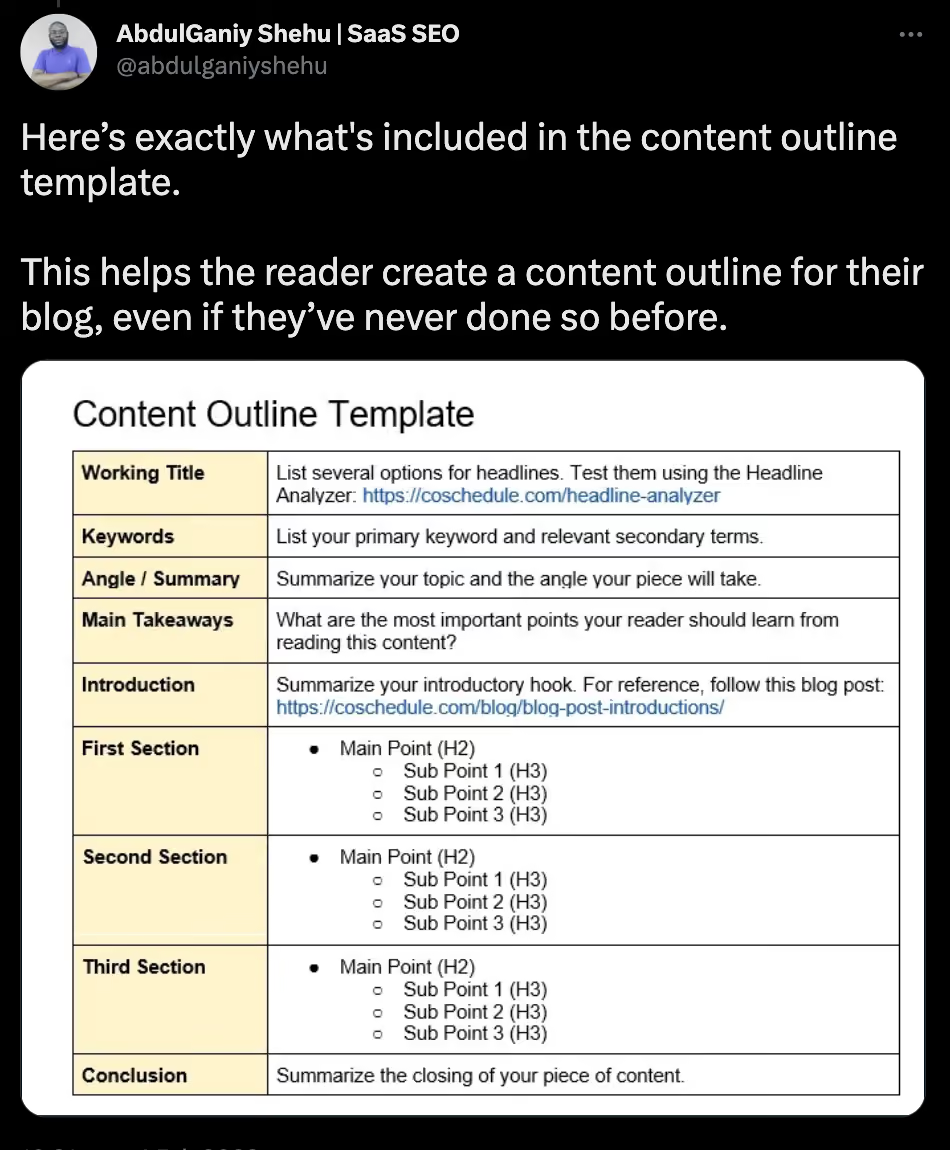
Reference links - I will also add links to reference articles, Twitter threads, Quora links, Reddit thread links, and anything else I may need to draft the article.
Other notes - I also added a section called “Notes” where I add any other relevant information that might be useful for the article.
Start your draft
Next, it is time to start writing. Now I segregate my writing process into three stages, namely:
- Adding an engaging introduction
- Keeping the article body authentic, data-backed, and in-depth
- Getting the product pitch right
Let me take you through each of these phases one by one:
Part 1: Adding an engaging introduction
My intros always follow the PAS approach. PAS stands for Problem-Agitate-Solution. I am not saying this is the only way to structure your introductions. But I strongly feel that it is one of the best and most effective ways to engage your audiences.
The introduction is a make-or-break part of your SaaS blog. If the audiences cannot reflect on your introduction, they will probably not read further and leave your article then and there. So, here is what I do:
- I talk about the problem in the very first sentence of the blog. For instance, if I am writing a blog on - “Email marketing best practices for freelancers”, my intro will start with the challenges a freelancer might face if they ignore email marketing.
- Then, I will agitate the problem and discuss a few implications. For instance, for the same article, I will explain the possible impacts of not adopting email marketing, like not getting good leads, not closing high-paying clients, etc.
- Finally, I will introduce a solution and explain what I am covering in the blog. For the same blog mentioned above, I will explain that email marketing is the solution and will also explain that the blog will include some tried and tested best practices for freelancers to uplift their email marketing game.
Part 2: Keeping the article body authentic, data-backed, and in-depth
Next, it's time to write the body of the content. The article's body is as important as the introduction. A lot of research goes into writing this part. So, I ensure that the article's body is well-formatted and properly presented and that the users don’t abandon the piece without reading till the end.
Some of my best practices here are:
- I stay as specific as possible. I remove fluff or repetitions as much as possible and ensure that each sentence in the article makes sense, adding value.
- I try to keep the content original. I refer to lots of reference articles, but when it comes to writing my piece, I derive an analogy of my own from those references and create content that’s not already there in the search engines.
- I try to keep the content detailed. By detailed, I don’t mean adding lots of unnecessary information. I just mean that my content covers anything that’s needed to be added to keep the piece relevant.
Part 3: Getting the product pitch right
Finally, I added the product pitch so that it doesn’t sound pushed. My approach always is to add the product pitch as a solution to the clients’ pain points. For that, I get on countless calls with the client team, get product demos, and collect as much knowledge and understanding of the product as possible. This helps me know the pain points the product is solving, and I can frame the pitch accordingly.
Make sure the blog is keyword-optimized
Finally, before submission, I edit the article and make sure that I follow the on-page SEO checklist. Some of the pointers that I follow include
- The meta title is 60 characters, and the meta description is 155 characters
- The primary keyword is present in the title, meta description, introduction, body (1.5% times the word count), and conclusion
- All possible pages are interlinked
This is the basic on-page SEO checklist that I have been diligently following, and guess what? It has helped me rank many blogs on the first page of Google.
Ready to Level Up Your SaaS Content?
In conclusion, SaaS content writing is crucial to your overall marketing strategy. By providing valuable and relevant information, you can establish yourself as an expert in your field and build trust with your target audience.
Remember to keep your target audience in mind when creating content, utilize data-driven strategies, and focus on delivering measurable results. By following the tips outlined in this ultimate guide, you will be well on your way to creating SaaS content that drives results and propels your business forward. Start writing and see the impact for yourself!
Also, if you are looking for any assistance with SaaS content writing, Book a call with us, and let’s discuss this further!
FAQs
Q1: What is SaaS content writing?
SaaS content writing involves creating educational and marketing materials—such as blog posts, white papers, case studies, landing pages, email sequences, and product documentation-designed to explain complex software products. It focuses on driving user acquisition, engagement, and retention by mapping content to the customer journey and translating technical features into clear benefits.
Q2: What types of content do SaaS writers create?
SaaS content writers typically create: blog posts and articles, white papers and ebooks, case studies and customer stories, landing pages and website copy, email sequences and newsletters, product documentation and help guides, and thought leadership content. The mix depends on your funnel stage and audience needs.
Q3: What skills do you need to be a SaaS content writer?
Successful SaaS writers need a blend of technical understanding (to grasp complex products), marketing savvy (to align content with business goals), and storytelling abilities (to connect with both technical and non-technical audiences). The role involves deep research into the product and its users' pain points, not just writing.
Q4: How is SaaS content writing different from other content writing?
SaaS content writing is highly product-led, intent-driven, and use-case focused. Unlike general content writing, there's no room for fluff or generic narratives. Every piece should address specific pain points, showcase product benefits through examples, and guide readers toward a solution-your software.
Q5: Should I hire in-house SaaS writers or outsource to an agency?
It depends on your scale and expertise needs. In-house writers offer deep product knowledge but require training and management. Agencies like TripleDart bring proven frameworks, diverse SaaS experience, and faster ramp-up. Many companies use a hybrid approach-in-house for product-heavy content, agency for scaled production.
Q6: How long does it take to see results from SaaS content writing?
Content marketing typically shows measurable results in 3-6 months, with compounding returns over 6-12 months. Initial wins include improved rankings and traffic; pipeline impact follows as content matures. Consistency and strategic topic selection accelerate results.