.png)


Key Takeaways
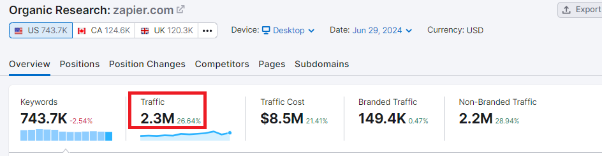
- What it is: Programmatic SEO for SaaS automates the creation of hundreds or thousands of pages, each targeting a specific long-tail keyword (seed term + modifier).
- Proven results: Zapier grew to 2.3M monthly visitors using pSEO for integration pages. B2B SaaS companies that invest in SEO generate a 702% ROI from organic search.
- Key page types: Integration pages, competitor alternatives, comparison pages, template libraries, industry-specific landing pages, and role-based use-case pages.
- 6-step process: Create seed terms → Design templates → Gather data → Build pillar pages → Index on Google → Track and update.
- Essential tools: Webflow (CMS), Clay (scraping), Zapier (automation), SEMrush (keywords), Jasper (content), Google Analytics (tracking).
- Critical success factors: Content accuracy, depth beyond basic templates, scalable patterns with unique value per page, and human review before publishing.
- Need expert help? TripleDart is an AI-native SaaS marketing agency that has implemented programmatic SEO strategies for 50+ B2B SaaS companies, driving measurable organic growth without thin content penalties.
Your B2B SaaS business has a narrower target audience than most B2C brands. McDonald's can reach a hundred million potential buyers on any given Tuesday. SaaS companies? You're often working with a few million prospects. Sometimes only a few thousand.
And here's the frustrating part: you're connecting with a fraction of even those numbers, despite maxing out your in-house enterprise SaaS SEO strategies. Algorithm changes, complex buyer journeys, fierce competition... they all chip away at your reach.
But what if you could capture demand from every variation of how your audience searches? Programmatic SEO makes that possible. We'll walk you through how to implement it the right way, with real examples, a step-by-step process, and the tools you need.
Let's get into it.
What Is Programmatic SEO and Why Does It Matter for SaaS?
Programmatic SEO automates the creation of hundreds or thousands of pages, each tailored to a specific query. Instead of stuffing every keyword variation onto one product page, each "keyword + modifier" gets its own dedicated page.
Here's what that looks like in practice:
The traditional approach: You sell CRM software. People search for "CRM software for marketing teams," "CRM software for sales teams," "CRM software for finance teams," and dozens of other variations. Traditional SEO tries to rank one page for all of them. That's like trying to answer fifty different questions with a single paragraph.
The programmatic approach: Each variation gets a dedicated page with content tailored to that specific audience. "CRM software for marketing teams" has its own page. "CRM software for sales teams" has its own page. When someone searches for a specific variation, they find a page built for their exact need.
The "programmatic" part means automation handles the heavy lifting. Using templates, databases, and workflow tools, you can create thousands of these pages in hours rather than months. Each page targets a long-tail keyword with lower competition but high purchase intent.
Why does this matter? Because 68% of all website traffic begins with a search query. If you're not showing up for the specific terms your buyers use, you're invisible to them.
How Did Programmatic SEO Become So Popular Among SaaS Companies?
Programmatic SEO isn't new. Brands like G2 and BeginDot have used it for years. But pSEO gained serious traction in 2025 and 2026 as automation tools matured and AI made content generation faster. The rapid adoption of automation in day-to-day SaaS marketing made pSEO accessible to companies of all sizes.
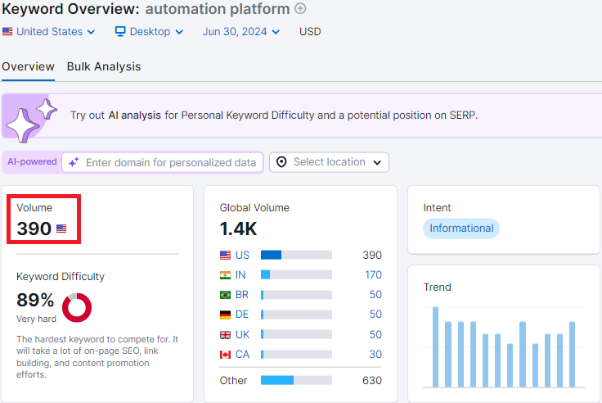
The Zapier case study is the one everyone talks about. Before implementing pSEO, Zapier's primary keyword "automation platform" had about 390 monthly searches. Nowhere near enough to reach their millions of potential customers.
So they pivoted to "integrations" as the primary seed keyword. With over 6,000 integration services, they launched thousands of integration pages. Each page (like "Slack integrations") pulled over 1,000 monthly visitors on its own.
The result: organic traffic grew to nearly 2.3 million monthly visitors, a 300% increase.
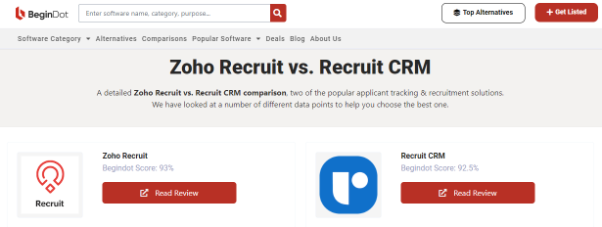
BeginDot took a different angle. They use pSEO for alternatives and comparison pages: "{product name} alternatives" and "{product A} vs {product B}" pages that capture high-intent buyers who are actively evaluating options.
Other scalable pSEO page types for SaaS include:
- Template libraries: Like Wrike's template pages (e.g., "time management templates," "project planning templates").
- Location-based pages: A compliance software company could create pages for "GDPR compliance software for UK businesses" or "HIPAA compliance tools for US healthcare."
- Role-specific landing pages: "CRM for sales managers," "CRM for marketing directors," and so on.
The Reddit community has been actively discussing what's working. One thread from r/SaaS captured the momentum well:
I finally did programmatic seo for my saas and got 10K new visits in ...
Does Programmatic SEO Actually Drive Revenue for SaaS Businesses?
Yes. And the math is straightforward.
More targeted traffic means more qualified leads. More qualified leads mean more conversions. More conversions mean more revenue.
Companies that build strong SEO programs generate 2x more revenue from organic search traffic than from other sources, including social media. The top three Google results capture 54.4% of all clicks, while page two results get just 0.63%.
Programmatic SEO helps SaaS businesses in three specific ways:
1. Captures high-intent, long-tail traffic at scale. Each page targets a specific query your audience is already searching for. These aren't vanity keywords. They're buying signals.
2. Builds topical authority. Creating comprehensive coverage of your product's use cases, integrations, and alternatives signals to Google that you're an authority in your space. Over time, this lifts rankings across your entire domain. Learn more about how to build topical authority for SaaS.
3. Keeps cost per page near zero. Most of the work is automated with your dataset. You don't need to hire a team of writers to create thousands of pages. The introductions and finishing touches need human input, but the bulk of content comes from structured data.
What Are the Key Fundamentals of Programmatic SEO for SaaS?
Three principles separate successful pSEO campaigns from those that get flagged as spam. Get these wrong, and you'll waste months building pages Google ignores.
1. Content Accuracy Is Non-Negotiable
Your target audience consists of decision makers, executives, and market leaders. They'll spot inaccurate data immediately. So will Google.
Every page must be 100% data-backed and human-vetted before it goes live.
Programmatic SEO pages don't require many words. You focus on headings, a tailored introduction, feature lists, clear CTAs, and related triggers. But every data point must be correct.
2. Depth Separates Ranking Pages from Ignored Pages
Google's John Mueller has warned that programmatic SEO is "often a fancy banner for spam." If your only differentiator between pages is a four-line intro and meta title, search engines will flag them as duplicate content.
Add depth by integrating:
- Customer reviews and testimonials
- Case study links and social proof
- Videos and product screenshots
- Proprietary data competitors can't replicate
- FAQ sections tailored to each page's specific audience
A good litmus test: "Would a user bookmark this page?" If the answer is no, add more value.
3. Your Pattern Must Be Scalable
You need to bulk-create pages in hundreds or thousands without losing relevance. This requires:
- A primary keyword that produces thousands of seed phrase variations
- A feature-rich template that can be reused across all pages
- Multiple robust datasets to populate pages with accuracy
BeginDot's "alternatives" keyword is a good example of scalability. As long as new B2B products launch, BeginDot can create new alternative pages. That's a pattern that compounds over time.
It's not scalable if you can't:
- Automate page creation in seconds
- Generate unique content for each page based on available data
- Maintain content accuracy across all pages
How Do You Create and Implement a Programmatic SEO Strategy Step by Step?
Here's the scenario: you create 5,000+ pages through pSEO and each receives 200 monthly visits. That's 1 million total visits.
Here's the step-by-step process to build that kind of B2B SaaS SEO strategy.
Step 1: Create Your Seed Terms
A common mistake is jumping straight into keyword research tools. What you'll get is a list of generic terms tied to your business that might not generate real demand. Zapier's "automation platform" keyword is a perfect example of that trap.
Instead, start with your audience:
- What pain points do they face daily?
- What questions are they asking online?
- What words do they use when searching for your type of product?
Use surveys, support tickets, and sales call transcripts to form your seed phrase. Then validate it with keyword tools to check search volume, difficulty, and variations.
Search volume alone doesn't tell the full story. Check Google Trends to see if the term is gaining momentum. You can also analyze competitors' seed phrases, especially those who have already implemented programmatic SEO successfully.
Common SaaS pSEO seed phrase formats:
- Comparisons: {product A} vs. {product B}
- Alternatives: {product} + alternatives
- How-to questions: How to {action} in {software}
- Integrations: {product} + integrations
- Templates: {JTBD} + templates
- Best for industry: Best {category} for {industry}
This thread from r/seogrowth offers practical ideas for building head terms and modifiers:
5 programmatic SEO ideas for B2B SaaS in 2026 - any other ideas?
byu/seogrowth inseogrowth
Step 2: Design a Structured Landing Page Template
Templates form the backbone of your page designs. We recommend using CMS tools like Webflow. It's a no-code platform with thousands of dynamic page templates you can customize and launch quickly. Learn more about building hybrid landing pages that convert.
Your template should include:
- H1 heading with the target keyword
- Subheading with a value proposition
- Software or product introduction (two to three sentences, unique per page)
- Feature comparison or key data points
- Social proof, testimonials, and review sections
- Clear CTAs
- Related blog or software section
- FAQ section specific to the page topic
Step 3: Gather Data and Populate Pages
Two main approaches here: use internal data (product databases, CRM data, usage analytics) or scrape from third-party sources. Combining both produces the strongest results.
Upload your data to your CMS. If you're using Webflow, you can import datasets directly from Airtable or other data management systems with Zapier.
You can use AI tools like Jasper to generate introductions and descriptions, but avoid generic AI output from tools like ChatGPT. Every AI-generated piece should be human-reviewed for accuracy and brand voice. One page per seed phrase variation.
Step 4: Create a Pillar Page and Start Linking
With thousands of pages live, you need a pillar page to stitch them together. This makes crawling easier for search engine bots and creates a traffic funnel to your hub.
Interconnect each page to related pages in a hierarchical structure. Proactively canonicalize every page. If you don't, Google will choose one as the original and redirect traffic from the rest.
After launch, invest in SaaS link building to channel quality backlinks to your pages. That boosts SEO authority and trust, which is essential for ranking on SERPs. Our SaaS SEO guide covers additional ranking tactics.
Step 5: Index on Google and Other Search Engines
Pushing out thousands of pages adds to your crawl rate and can slow indexing. Sometimes, search engines won't crawl your pages at all due to:
- Missing sitemap
- Robots.txt blocking
- Redirect and/or 404 errors
Use Google Search Console (not just Google Analytics) to check which pages are indexed. For those that aren't, Google will tell you why.
Fix blocking issues first. Remove robots.txt restrictions where indicated, create sitemaps if absent, and properly redirect broken pages. If pages remain unindexed despite no errors, manually request indexing and wait a day or two.
To reduce crawl load, exclude irrelevant web pages from crawling or indexing.
Step 6: Track, Update, and Iterate
Programmatic SEO is not a set-and-forget strategy. You need to continuously:
- Track page performance and indexing status
- Identify redundant or underperforming pages
- Find pages that need content refreshes
- Double down on pages that perform well
Use SEO tracking tools to monitor each metric. Analyze what's lacking. It could be a basic oversight like missing meta tags, broken links, or outdated data. Update pricing, feature comparisons, and integration details regularly to maintain freshness.
Which Tools Do You Need for Programmatic SEO in 2026?
Programmatic SEO is 90% automated. That's what makes it "programmatic." Here are the six tools we recommend for building and scaling your pSEO strategy.
Webflow: Low/No-Code CMS
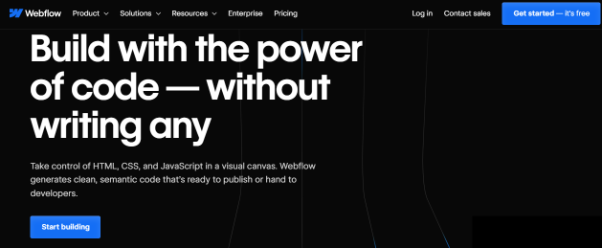
Webflow excels at creating custom databases you can use to populate template data fields. It's a no/low-code platform, so you can deploy thousands of pages without deep HTML or CSS knowledge. Any CMS will work, but Webflow's dynamic page capabilities make it a strong fit for pSEO.
Clay: Web Scraper
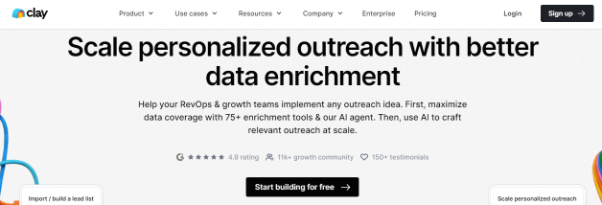
Clay pulls data from various sources, processes it, and creates automated workflows. Use it to scrape third-party data for your datasets before exporting to Airtable or directly to Webflow.
Zapier: Workflow Automation
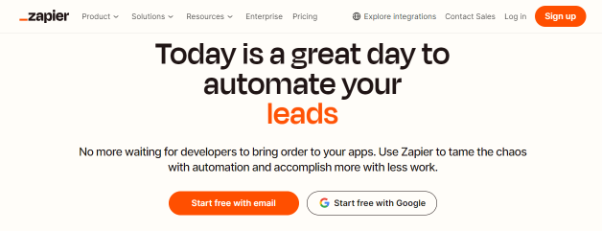
Zapier connects your data systems together. Link Airtable with Clay for data scraping, then connect Airtable directly with Webflow for CMS export. It's the glue that holds your pSEO tech stack together.
SEMrush: Keyword Research
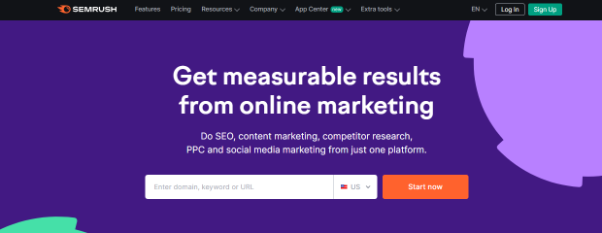
SEMrush helps analyze competitors' seed phrases, check search volumes, pre-validate terms, monitor traffic growth, analyze backlink profiles, and identify technical errors. It's essential for finding low-competition keywords that make pSEO profitable.
Jasper AI: Content Writing

Jasper is trained to provide brand-specific content based on prompts. Unlike generic AI tools, it can maintain your brand voice across thousands of pages. Use it for introductions, descriptions, and content suggestions, but always pair AI output with human review.
Google Search Console and GA4: Performance Tracking
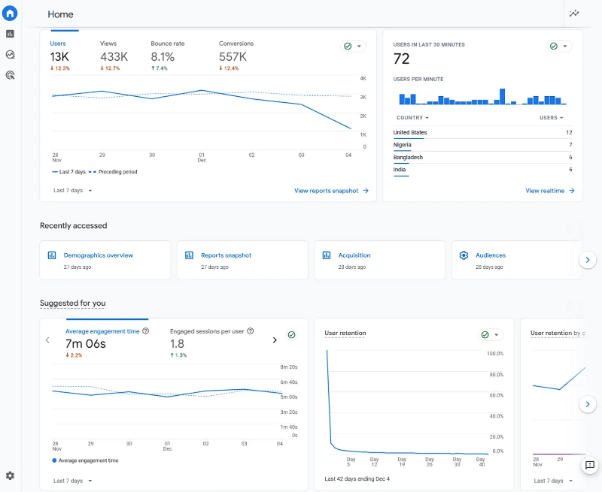
Track indexing status, page performance, and new search queries. Google Search Console shows you indexing issues before they become problems. GA4 reveals which pages drive conversions and which need improvement.
What Are the Best Programmatic SEO Examples for SaaS in 2026?
Beyond Zapier and BeginDot, several SaaS companies have built successful pSEO campaigns worth studying. Understanding these programmatic SEO examples helps you identify which page types fit your product.
Integration pages work for any SaaS product that connects with other tools. If your product integrates with 50+ apps, that's 50+ pages targeting high-intent queries like "{your product} + {app name} integration."
Competitor alternative pages capture buyers who are actively evaluating options. These pages rank for "{competitor} alternatives" and bring in visitors who are ready to switch.
Comparison pages target the "{product A} vs {product B}" queries that signal a buyer is in the final stages of their decision. These pages convert at higher rates because the visitor already knows what they want. They just need help choosing.
Template and resource libraries work for project management, design, and productivity tools. Each template page targets a specific job-to-be-done keyword.
Industry-specific landing pages capture vertical search intent. "Accounting software for construction companies" or "HIPAA-compliant messaging for healthcare" are examples of low-competition, high-intent terms.
The r/microsaas community has been sharing practical implementation guides:
Programmatic SEO guide for micro SaaS builders
byu/microsaas inmicrosaas
How Do You Avoid Google Penalties with Programmatic SEO?
Google's spam detection has gotten sharper. Here's how to stay on the right side of it while scaling your pSEO pages.
Use proprietary data. Pages built on data only you have (product usage stats, integration performance metrics, customer satisfaction scores) are inherently unique. Competitors can't replicate them.
Add genuine depth to every page. Reviews, testimonials, case study links, videos, and social proof make pages look human-created. They also provide real value to visitors.
Implement proper canonicalization. Without it, Google will pick one page as the original and suppress the rest. Set canonical tags on every programmatic page.
Prioritize high-intent keywords. Target terms that indicate users are looking for a specific answer, not browsing. "Best CRM for sales teams" has higher intent than "what is a CRM."
Maintain content freshness. Regularly update API integrations, pricing, and feature comparisons. Stale data erodes trust with both users and search engines.
Human-review every page before publishing. AI can generate content at scale, but a human needs to verify accuracy. One wrong data point can undermine trust across your entire pSEO program. Our guide on whether AI content hurts SEO covers this in detail.
How Can TripleDart Help You Scale SaaS Traffic with Programmatic SEO?
Building a programmatic SEO engine requires the right strategy, technical infrastructure, and ongoing optimization. The tools are accessible. Executing pSEO at scale without creating thin content or triggering spam signals? That takes hands-on expertise.
TripleDart is an AI-native SaaS marketing agency that builds and operates full-funnel inbound GTM engines for B2B Tech and SaaS companies. We act as your extended GTM team, with full accountability for pipeline and revenue results. For programmatic SEO specifically, we've implemented strategies for 50+ B2B SaaS companies, helping them:
- Identify scalable seed phrases aligned with high-intent search behavior
- Design conversion-optimized templates that provide genuine value
- Build robust data pipelines that populate pages with accurate, unique content
- Ensure proper indexing and avoid duplicate content penalties
- Track performance and iterate for continuous improvement
Our AI-powered workflows enhance the speed and quality of pSEO execution, from automated keyword clustering and content gap identification to bulk schema markup implementation. Senior experts lead the strategy; AI workflows enhance the output.
Whether you're launching your first pSEO campaign or scaling an existing one, we can help you turn organic traffic into predictable pipeline and revenue. Book a strategy call to discuss your goals.
FAQ
What are the benefits of programmatic SEO for SaaS?
Programmatic SEO helps you cover a wide range of search queries with individualized pages, ensuring your website shows up for high-intent keywords. This strategy boosts traffic generation and lead generation at scale. For SaaS businesses, more targeted traffic means more qualified leads and higher conversion rates. It also builds topical authority by creating comprehensive coverage of your product's use cases, integrations, and alternatives.
How do I use AI in programmatic SEO?
AI tools enhance programmatic SEO in several ways: analyzing large datasets to identify keyword opportunities, generating unique content variations for each page, and automating quality checks. Tools like Jasper create brand-consistent content at scale, while Clay scrapes and structures data from multiple sources. However, AI-generated content should always be human-reviewed to ensure accuracy and avoid thin content penalties. Our guide on AI-assisted vs. AI-generated content covers the nuances.
What types of pages work best for SaaS programmatic SEO?
The most effective pSEO page types for SaaS include: integration pages (e.g., "Connect HubSpot to Slack"), competitor comparison pages ("{Product A} vs {Product B}"), alternative pages ("{Competitor} alternatives"), template/resource libraries (e.g., "Free Invoice Templates"), industry-specific pages (e.g., "CRM for Healthcare"), and location-based pages for geo-targeted SaaS products. Choose page types based on your product's strengths and where users are searching.
How long does it take to see results from programmatic SEO?
Programmatic SEO typically shows initial indexing within two to four weeks, with ranking improvements appearing in two to three months. Meaningful traffic growth usually occurs between months four and six as pages gain authority. Zapier's pSEO strategy took several years to reach 2.3M monthly visitors, but smaller-scale implementations can see results within six months. Success depends on page quality, domain authority, and how well pages match search intent.
What's the difference between programmatic SEO and regular SEO?
Traditional SEO involves manually creating individual pages optimized for specific keywords. Programmatic SEO automates the creation of hundreds or thousands of pages using templates and databases, each targeting long-tail keyword variations. While regular SEO might target "CRM software," pSEO creates separate pages for "CRM software for sales teams," "CRM software for marketing teams," and so on. Both approaches work together: pSEO scales your reach while traditional SEO builds authority on pillar topics. Learn more in our SaaS SEO checklist.
How do I avoid Google penalties with programmatic SEO?
Ensure each page provides genuine, unique value beyond keyword variations. Use proprietary data that competitors can't replicate. Add depth with reviews, testimonials, case studies, and videos. Maintain content accuracy and freshness. Implement proper canonicalization to prevent duplicate content issues. Prioritize user experience over keyword stuffing. Google's John Mueller has warned that "programmatic SEO is often a fancy banner for spam." Quality is non-negotiable.
How does TripleDart help with programmatic SEO for SaaS?
TripleDart is an AI-native SaaS marketing agency that builds and operates full-funnel inbound GTM engines for B2B Tech and SaaS companies. For programmatic SEO, we handle the full lifecycle: seed phrase research, template design, data pipeline construction, content generation with human review, technical indexing, and ongoing performance optimization. We've implemented pSEO for 50+ B2B SaaS companies, consistently driving 3x organic traffic growth within six months. Our AI-powered workflows enhance speed and quality across the entire process, while senior experts lead strategy and ensure every page meets Google's quality standards. Book a strategy call to see how we can help your SaaS business turn organic traffic into predictable pipeline and revenue.

.png)



.webp)










.webp)





.webp)


.webp)
.png)





%20(1).png)


.webp)
.webp)
.webp)





%20Ads%20for%20SaaS%202026_%20Types%2C%20Strategies%20%26%20Best%20Practices%20(1).webp)




.webp)









.webp)





![Creating an Enterprise SaaS Marketing Strategy [Based on Industry Insights and Trends in 2026]](https://cdn.prod.website-files.com/632b673b055f4310bdb8637d/6a218bacea463474377dfd32_34%20-%20Creating%20an%20Enterprise%20SaaS%20Marketing%20Strategy.png)





































.webp)







%20Agencies%20for%20B2B%20SaaS%20Compared%20(2026).webp)

.webp)
%20with%20Hubspot.webp)


_%20Expert%20Reviews%20%26%20Comparisons.png)







.webp)






_%20Comparison%2C%20Strengths%2C%20and%20How%20to%20Choose.png)












.webp)




.webp)




.webp)




























%20Tools%20in%202026_%20Vetted%20List.webp)


![How to Measure AEO Success: 12 Metrics Beyond Clicks [2026 Framework]](https://cdn.prod.website-files.com/632b673b055f4310bdb8637d/6a0d664b326187e99b3d5960_6%20-%20The%20Ultimate%20Guide%20to%20Measuring%20AEO%20Success%20in%202026.png)
![7-Step Workflow for AEO-Ready Content [2026 Framework]](https://cdn.prod.website-files.com/632b673b055f4310bdb8637d/6a0d55ea88913ede1d3a7123_5%20-%20Workflows%20for%20Optimized%20AEO-Ready%20Content%20Creation.png)
.png)

![How to Structure Content for AEO and GEO [With Templates]](https://cdn.prod.website-files.com/632b673b055f4310bdb8637d/6a0c6a56eb700472e635ff33_1%20-%20How%20to%20Structure%20%20Content%20for%20AEO%20and%20GEO%20%20Summaries%20(2026).png)








.png)
.png)
















.webp)


%20Agencies%20in%202027.webp)
.webp)
![Top 9 AI SEO Content Generators for 2026 [Ranked & Reviewed]](https://cdn.prod.website-files.com/632b673b055f4310bdb8637d/6a2a3e3105bc1a127aae4e8e_34%20-%20Top%209%20AI%20SEO%20Content%20Generators%20for%202026%20%5BRanked%20%26%20Reviewed%5D.webp)