How myBiz by MakeMyTrip More Than Doubled Activations While Keeping Acquisition Costs Flat

2x
Signups
2x+
Activations
+15%
Branded search
About myBiz by MakeMyTrip
myBiz is the corporate travel arm of MakeMyTrip, India's largest online travel company. It gives businesses one place to book and manage travel for their teams, with negotiated corporate rates, GST recovery on every trip, policy approvals, and expense reporting built in.
Their buyers sit in finance, HR, and admin teams at companies that want to bring scattered business travel under a single system. The range runs from small and mid-sized businesses to large enterprises like Lenovo, HDFC, and IDFC.
Corporate travel in India is crowded and regionally concentrated. Yatra, FCM, and a handful of adjacent brands chase the same buyers, and most of the demand clusters in a few states.
myBiz partnered with TripleDart to scale paid acquisition without letting cost or lead quality slip.
The Challenge: Signups Were Growing Faster Than the Funnel Could Convert Them
The paid program could buy signups. But a signup is not a business that books travel. The gap between the two was where the program was leaking.
A Volume-to-Quality Gap
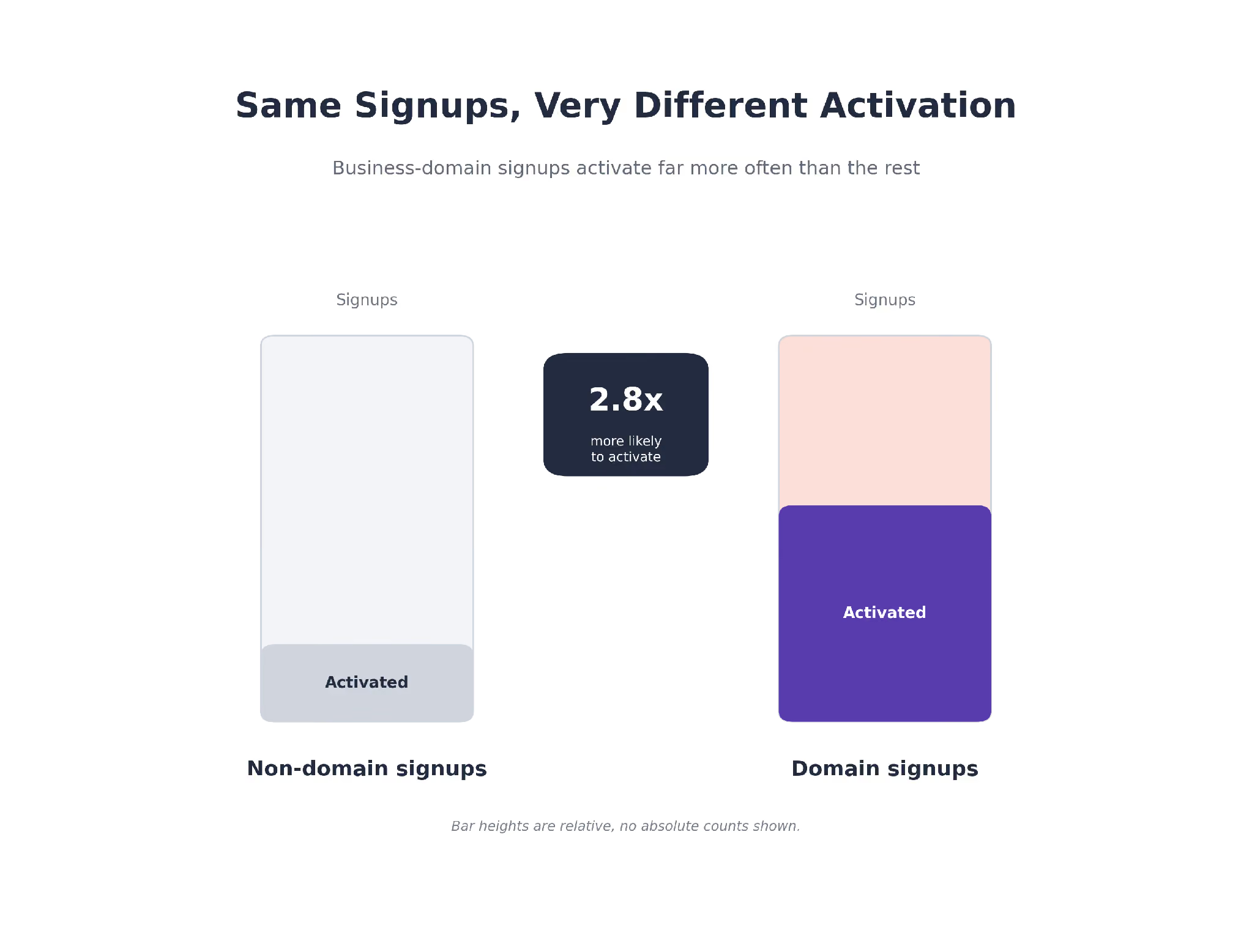
Signup counts were climbing, but a large share never activated. Business-domain signups (people using a company email) activated far more often than personal-email signups, and the program wasn't built to favor them.
Blurred Channel Roles
Meta and paid social poured in signups that rarely activated, while paid search quietly carried the conversion load. Budget didn't reflect which channel produced the businesses that book.
Undercapitalized Inventory
Google's display and demand-gen inventory was barely touched. Programmatic through DV360 ran thin, leaving a cheap awareness layer on the table.
Geographic Blind Spots
Demand, spend, and activation only lined up in two states, Maharashtra and Karnataka. Large corporate markets like Tamil Nadu and West Bengal showed real search intent but almost no myBiz brand recall.
Landing Page Leaks
The myBiz landing page converted well below its ceiling, with room to do 2-3x better. Five problem areas spanned messaging, UX, social proof, page structure, and competitive framing.
Creative Running Blind
Some high-CTR ads drove clicks that never signed up. Motion creative beat static on cost per acquisition, but spend hadn't followed the signal yet.
myBiz was scaling the top of the funnel faster than the funnel could turn it into activated businesses.
TripleDart's Playbook
Q3 FY25: Restructure META campaigns and Linkedin campaigns
Q4 FY25: Restructure Paid Search campaigns
Q1 FY26: Scaled Both Based on Learnings
We gave each channel a defined job, made activation (not raw signups) the yardstick, and pointed budget at the cohorts and geographies that book.
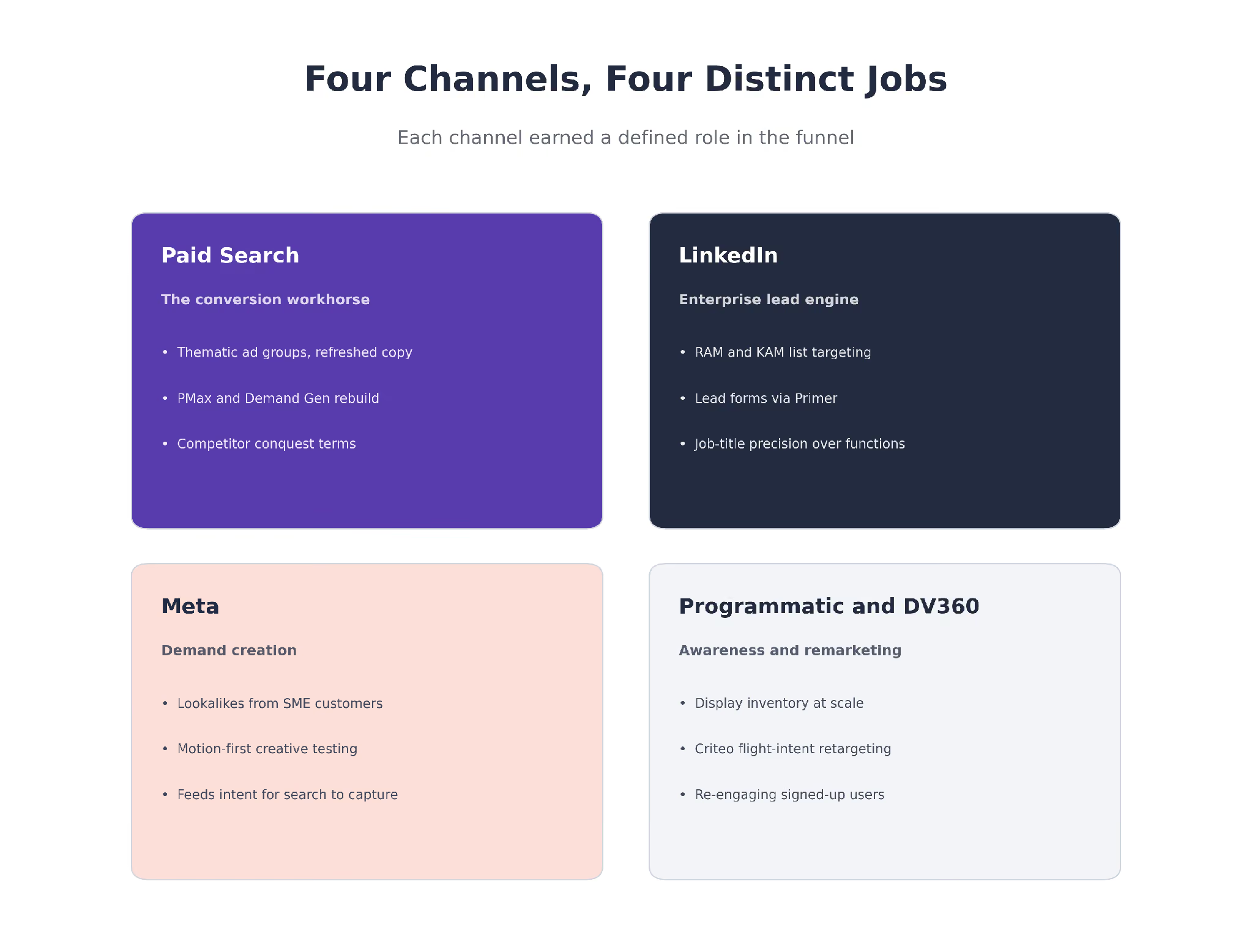
Paid Search Rebuild
- Consolidated generic keywords into thematic ad groups with refreshed copy, lifting relevance and Quality Score
- Rebuilt Performance Max for better asset coverage and conversion efficiency
- Turned on Demand Gen to capture upper-funnel intent and move people from awareness into consideration
- Opened SME outreach to new cohorts, including corporate travel agencies and competitor-conquest terms against Yatra, FCM, and adjacent brands
Paid search was already the workhorse. Tightening it gave us the most efficient room to scale.
LinkedIn for Enterprise Demand
- Moved targeting from broad job functions to granular job titles, which lifted signup volume
- Switched to list-based targeting against RAM and KAM account lists to back sales outreach directly
- Launched lead-form campaigns built for RAM and KAM personas through Primer for higher-intent capture
Enterprise deals are high-ticket, and LinkedIn forms are where that demand surfaces. The list-based approach yielded a first wave of qualified leads and booked sales meetings.
Meta as a Demand Channel, Not a Closer
- Activated lookalike audiences seeded from the SME customer list to reach high-fit prospects
- Ran multi-variant creative testing across offer types to find the messaging and formats that worked
- Repositioned paid social as a demand-creation layer that feeds intent for search to capture
The data was honest about paid social. It builds demand; it doesn't close. So we stopped asking it to.
Programmatic and Remarketing
- Leaned into Google's display inventory through PMax after early signal showed it was undercapitalized
- Built Criteo dynamic remarketing to retarget signed-up users who browsed flights but hadn't booked
A signed-up user who already browsed flights is the cheapest activation available. The program wasn't chasing them yet.
Quality Over Raw Volume
- Pointed the bidding target toward business-domain signups, the cohort that activates about 2.8x more than personal-email signups
- Used activation, not signup count, as the measure of what was working
Two campaigns can post identical signup numbers and deliver very different businesses. The domain signal sorted them.
Geographic Focus
- Mapped demand, spend, and activation by state and found full alignment in only two markets
- Prioritized the six states where India's corporate travel demand concentrates
- Flagged the largest demand-to-awareness gaps, Tamil Nadu and West Bengal, for brand investment
Landing Page and Creative
- Audited the landing page across messaging, UX, social proof, structure, and competitive benchmarking, finding room to convert 2-3x better
- Moved budget toward motion creative (GIFs and video) after it delivered lower cost per acquisition than static
- Pruned expensive placements like Audience Network and pushed spend toward Instagram, which produced the best cost per acquisition
Results
The funnel started converting at the rate the spend deserved.
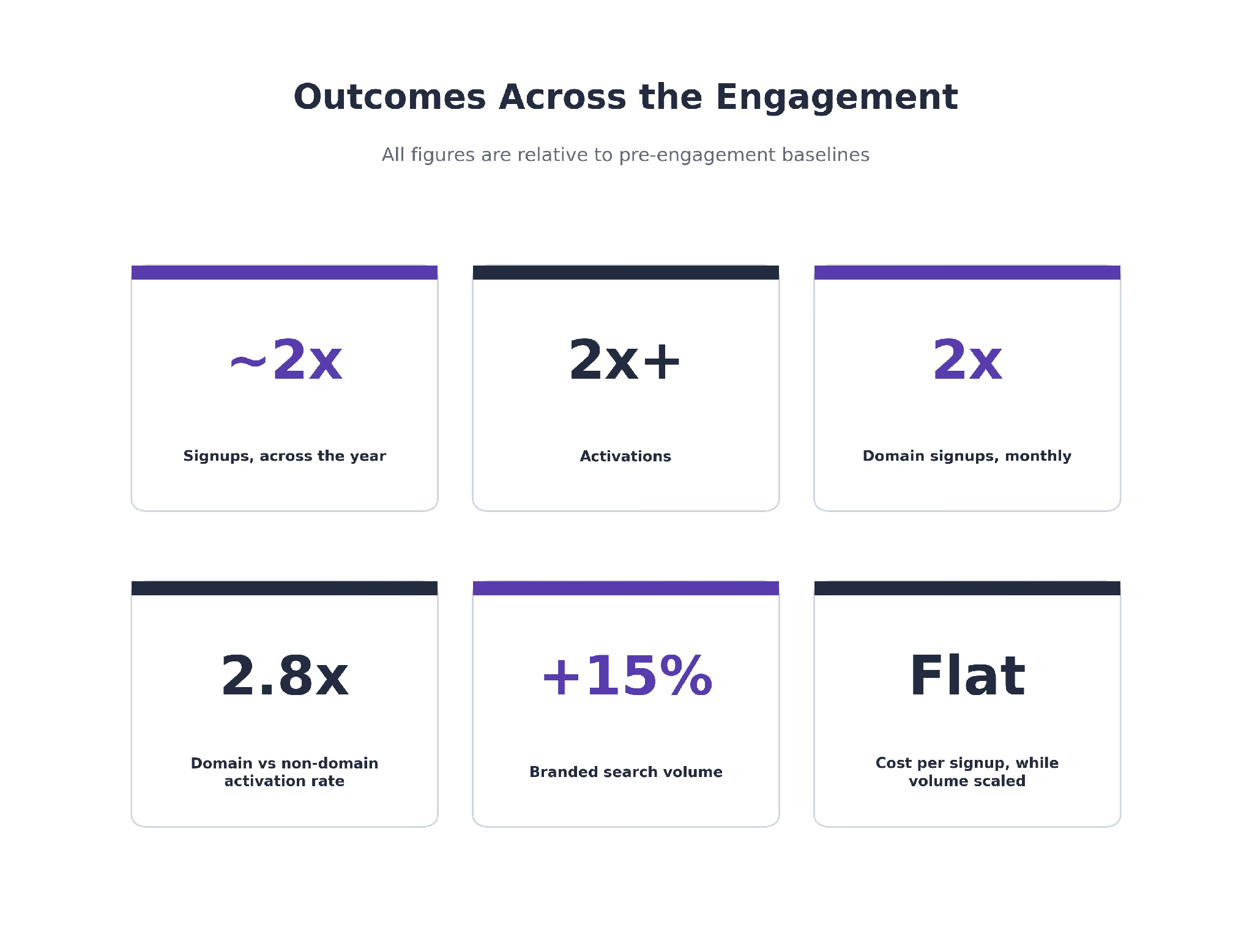
- Signups nearly doubled from the start of the engagement to the most recent quarter, growing around 20% quarter over quarter
- Activations more than doubled across the same window
- Monthly business-domain signups roughly doubled, with domain activations rising alongside
- Business-domain signups kept activating about 2.8x more than non-domain signups
- Branded search volume grew about 15% and direct signups rose about 16% QoQ as brand demand strengthened
- Cost per signup held roughly flat as volume scaled, and dropped in the strongest quarter
TripleDart’s Team
Sabarinathan - Founder Guidance
Basavaraj - Team Lead
Praveen G - PPC Expert
Dhiyanesh - PPC Analyst
Conclusion
The myBiz program now runs as one system across paid search, paid social, LinkedIn, and programmatic, with each channel doing the job it's good at and activation, not signup count, as the north star. Quality leads the spend, then geography and remarketing decide where it lands.
The FY26-27 roadmap builds on that base. A lean test-then-scale model runs in two phases: get signal on what drives quality signups first, then double down on the winners across new channels, geographies, and segments. Brand investment is going into the high-demand, low-recall states the data surfaced, an IPL 2026 awareness push is aimed at corporate travelers in airport and business-district zones, and Criteo remarketing keeps working the highest-intent segment myBiz already owns.
The engine that came out of FY25 sorts for the businesses that book, then puts budget where they are.