How Locus Doubled Organic Pipeline Through an SEO and GEO Rebuild

~2x
Organic pipeline vs target
+73%
AI brand mentions
-74%
Junk lead share
About Locus
Locus is an AI-powered logistics platform that runs the full fulfillment chain for retailers, FMCG and CPG manufacturers, 3PLs, and big-and-bulky operators. The product line covers dispatch planning, route optimization, delivery orchestration, hub operations, fulfillment automation, and track-and-trace, with deployments across more than 30 countries and recognition as a Gartner Leader five years running.
Their buyers are operations and supply chain leaders shopping a crowded category. Incumbents like DispatchTrack and FarEye hold large slices of the fleet-management and route-optimization search markets, while specialist tools like Onfleet and Routific pull demand on the dispatch side. Every category Locus wants to win in is already covered by two or three well-funded competitors with deep aggregator presence.
Locus partnered with TripleDart to rebuild discoverability across both classical search and the newer AI surfaces, with a single shared goal: turn organic into a predictable pipeline channel.
The Challenge: A Stalled Discoverability Engine
By the time we picked up the engagement in late 2025, the organic engine was stuck. Traffic had dipped in Q3, a chunk of editorial sat unpublished and unranked, and the AI surfaces were drifting without an owner. The symptoms looked like a content slowdown. The root cause was wider.
Low Share of Category Search
Across the money categories, Locus held single-digit search share while named incumbents sat in the 20-40% range. Fleet management was the widest gap. Route optimization, dispatch management, and delivery management all looked the same. The category-level demand was there; Locus simply wasn't being seen on the surfaces where buyers shopped.
No AEO or GEO Layer
Brand mentions inside AI Overviews, ChatGPT, and Gemini were untracked and unmanaged. There was no AI info page, no query fan-out logic in the content briefs, no FAQ injection, no AI-friendly schema. LLM traffic was showing up as direct sessions and slipping through analytics, so the team couldn't even see it eroding.
Editorial Backlog and Cadence Drift
Pieces drafted in August were still sitting in review by mid-October. Publishing delays were costing months of ranking. The calendar had themes, but the operating rhythm to publish on time had drifted.
Underdeveloped Aggregator Surfaces
G2, Capterra, and Gartner profiles were thin. Many category listings either pointed to outdated descriptions or skipped the integrations and use-case details that influence both buyer shortlists and LLM citation choices.
Lead Quality Mix
Inbound was running, but spam and junk took up close to half of the contact set. Sales spent cycles filtering rather than working real opportunities.
Off-Page Authority Gaps
Backlink production was inconsistent. Reddit, where competitor mentions were piling up in routing, dispatch, and TMS threads, had no Locus presence at all.
Localization Holes
Middle East demand was growing for the TMS line, but the pages serving Arabic-language buyers didn't exist. Persona and industry-specific routes into the product were also missing.
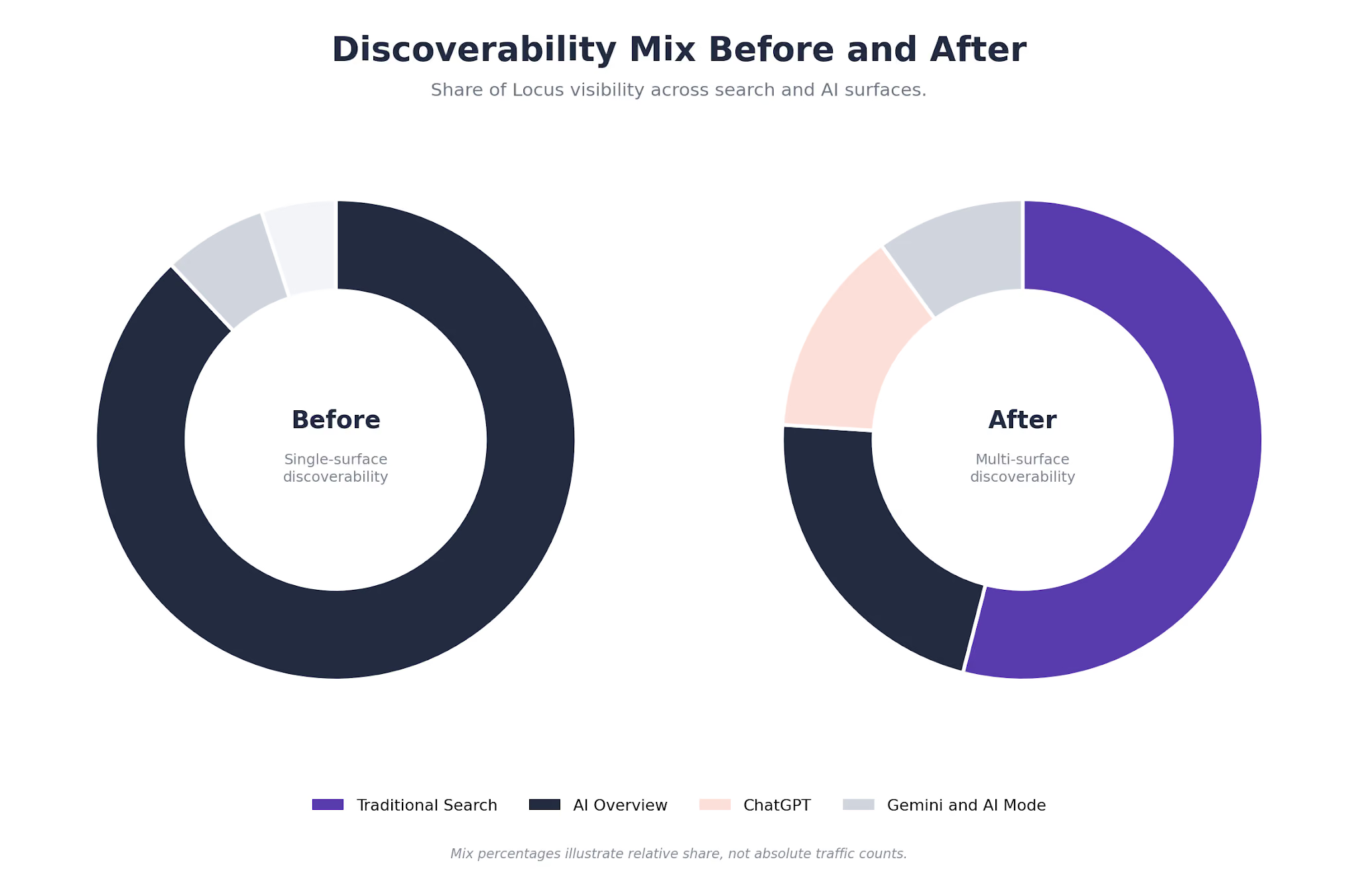
Locus was running a single-surface discoverability program at a time when the surface itself was splintering. The brief was to rebuild the foundation and add the new layers in the same engagement.
TripleDart's Playbook
We treated this as one connected system, not six parallel projects. SEO fed AEO, aggregator profiles fed brand mentions, content cadence fed every other surface. The work split into six strategic plays.
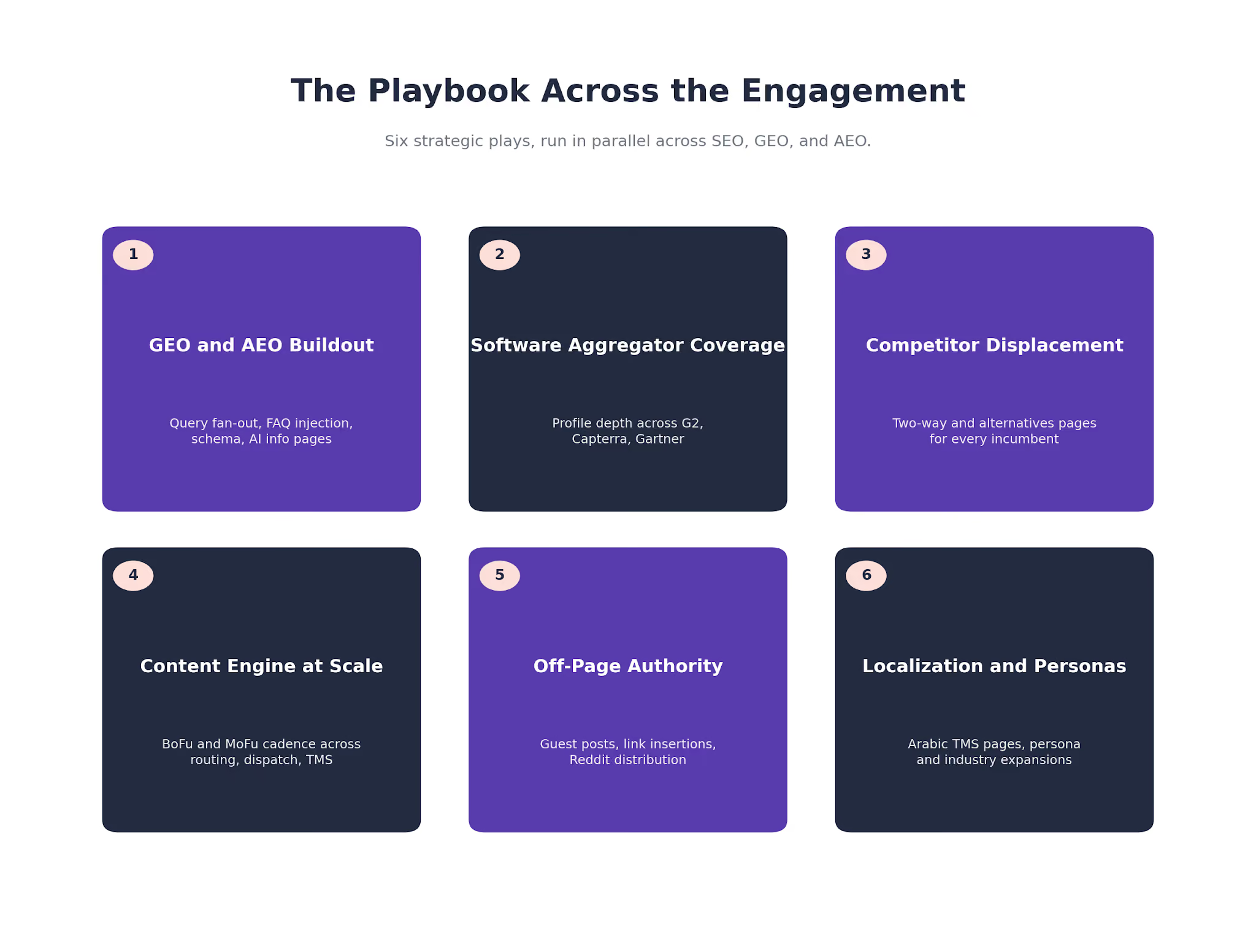
GEO and AEO Buildout
- Published a dedicated AI info page describing the company in the structured language LLMs prefer.
- Ran a query fan-out exercise across every priority theme (who, what, where, when, why, how), then injected the resulting FAQ blocks into 10-15 high-intent pages at a time.
- Pushed product schema across the blog and added stat blocks, author profiles, and citation-friendly summaries to lift EEAT signals.
- Rewrote H2s as question forms targeting People Also Ask and prompt-style queries.
- Set up Bing Webmasters and resubmitted sitemaps so that Copilot and other Bing-fed LLMs had a clean pull.
- Shared an AI Search Optimization checklist with the editorial team, baked into every new brief.
Software Aggregator Coverage
- Built out profiles across the software aggregator surface (G2, Capterra, Gartner) with full feature, integration, and use-case detail.
- Sequenced category submissions so that Locus showed up in route optimization, dispatch management, TMS, and fleet management filters where it had been thinly listed before.
- Tied aggregator updates to the brand mention campaign, since these profiles are some of the most cited sources LLMs pull when comparing logistics tools.
Competitor Displacement Pages
- Built a wireframe library covering two-way, three-way, and alternatives-page formats.
- Launched dedicated comparison and alternatives pages against FarEye, DispatchTrack, Routific, Onfleet, and Shipsy.
- Led with feature parity, pricing positioning, and use-case fit, so the page worked for both Google rankings and LLM citation pulls.
- Folded the comparison pages into the broader content cluster so they reinforced category authority instead of sitting as one-offs.
Content Engine at Scale
- Rebuilt the editorial cadence around a 75-25 split: blog content for category coverage, website pages for personas, use cases, and sub-industries.
- Shipped a high-cadence pipeline of new pieces every quarter across the priority themes: route planning, dispatch, route optimization, delivery management, logistics planning, TMS, fleet management, and vehicle scheduling.
- Ran a parallel refresh program against existing content, working through dozens of pieces per quarter to lift cited-page count and rankings on already-indexed URLs.
- Anchored topic selection to Profound prompt research, so the briefs covered the questions competitors were getting cited for inside LLMs.
- Cleared the editorial backlog within the first quarter and held a steady weekly publish rhythm afterward.
Off-Page Authority
- Ran a steady backlink program at quarterly cadence, split between guest posts for the hardest commercial keywords and link insertions for faster authority wins.
- Pointed the high-value links at revenue pages first (route optimization, TMS, delivery management, fleet tracking, shipment tracking) before scaling to mid-funnel assets.
- Launched a Reddit distribution program using a three-account system: a brand subreddit, an official Locus account, and a team-member persona. Karma was built first, then commenting, then native posts.
- Used Boringlaunch and similar SaaS distribution surfaces to capture aggregator and directory mentions at scale.
- Layered in targeted digital PR around recognition moments (G2 Momentum Leader, Enterprise Leader badges) so the wins traveled across third-party citation surfaces.
Localization and Persona Coverage
- Built and translated TMS pages into Arabic to capture Middle East buyers who had been falling through the cracks.
- Shipped a first wave of persona-led website pages aimed at the specific decision makers Locus sells into.
- Added sub-industry and use-case routes into the product so the same Locus capability could be discovered from multiple buyer entry points.
Technical SEO and CRO Layer
- Ran monthly technical audits, working through indexability, schema, and crawl issues each cycle.
- Removed conversion-blocking elements from the high-intent blog template (legacy newsletter banner, redundant LLM buttons) and tested new right-rail banners against the cleaned-up layout.
- Ran a dedicated CRO campaign every month against the historically top-converting pages.
- Built a BoFu CRO analysis layer to identify which blog and landing pages were doing the conversion work, then concentrated CRO effort there.
Results
Two quarters into the engagement, the discoverability engine was compounding across both surfaces. Pipeline, mention volume, and lead quality moved together.
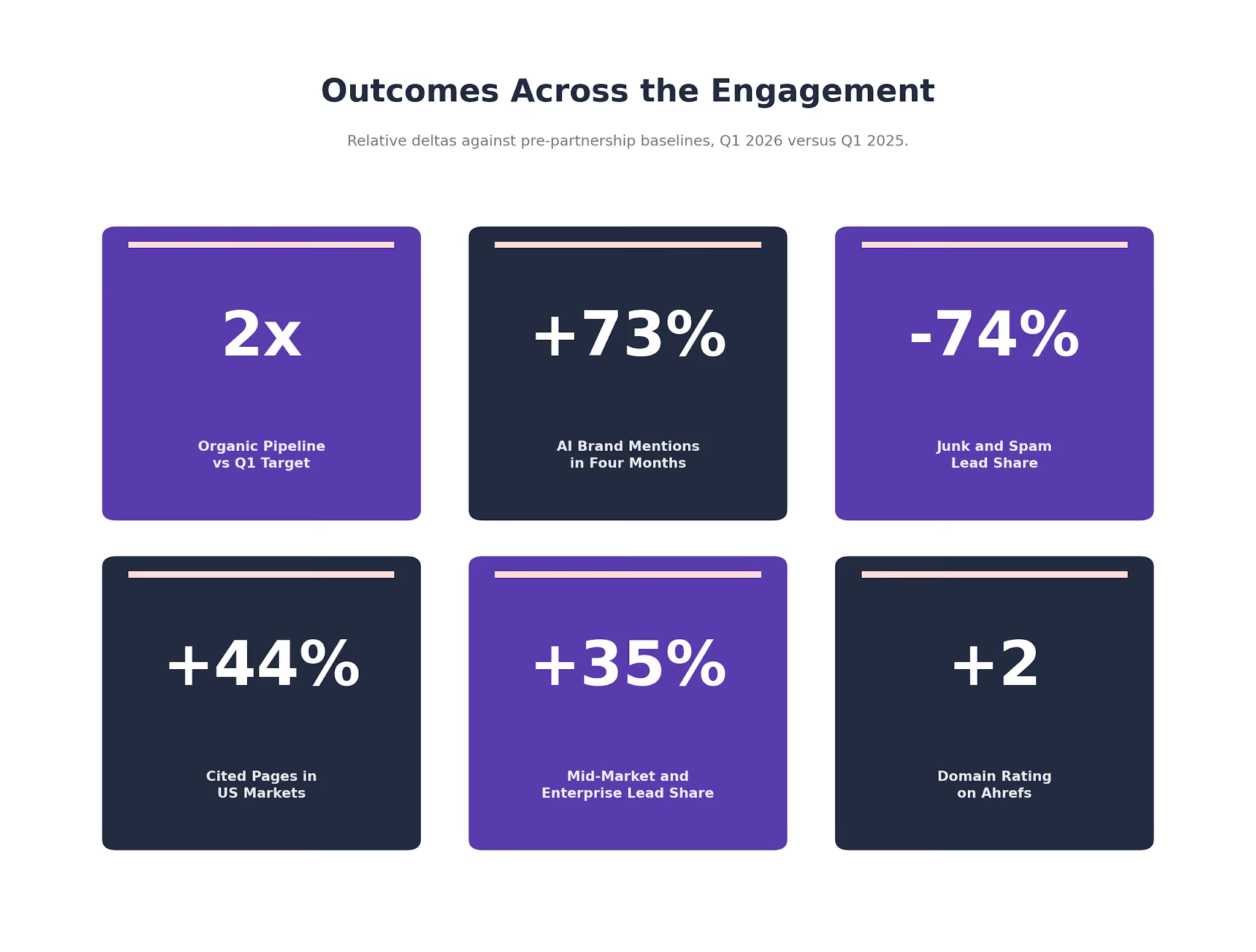
Figure 3. Outcome cards across the engagement. Every figure is a relative delta against pre-partnership baselines.
- Organic pipeline came in at roughly 2x the Q1 target, and grew by about 43% year-over-year against Q1 2025.
- AI brand mentions climbed by roughly 73% across the first four months of the engagement.
- Cited pages in US markets grew by 44%; cited pages overall grew by 21%.
- Junk and spam lead share dropped by nearly three-quarters between Q1 2025 and Q1 2026, freeing sales to work the clean set.
- Mid-market and enterprise lead share grew by 35%, pulling the inbound mix toward higher-revenue accounts.
- Top 3 commercial and transactional rankings on SEMrush US climbed meaningfully across the keyword universe.
- Domain Rating on Ahrefs improved by 2 points across the quarter.
- AI Visibility share in the US held steady through the LLM volatility of the period, with month-on-month climbs on AI Overview and Gemini.
- Software aggregator profile coverage expanded across G2, Capterra, and Gartner, with category listings tied to live profile updates.
Conclusion
The Locus engagement is a discoverability rebuild that treats search and AI as one surface, not two. Classical SEO still does the heavy lifting on indexable demand. The AEO and GEO layer captures the intent that's moving into ChatGPT, AI Overviews, Gemini, and Copilot before it ever shows up in a click-through report.
We sit as an extension of the in-house team across SEO, GEO, AEO, content, off-page, CRO, and technical operations. The cadence is weekly, the deliverables are owned end-to-end, and the metrics roll up to a single pipeline number rather than a list of channel reports.
Locus now operates a pipeline engine where every new piece of content, every aggregator update, and every backlink reinforces the next. The compounding is what the team felt first; the metrics caught up shortly after.