How Infobip Lifted Pipeline Opportunities by 55% Across India and APAC While Cutting Cost per Opportunity by 35%

+55%
pipeline opportunities,
-35%
Cost per opportunity
+114%
WhatsApp API conversions
About Infobip
Infobip is a global Communications Platform as a Service company. Their stack covers WhatsApp Business API, RCS, SMS, Viber, Voice, and Apple Messaging for Business, sold to enterprises that need every channel a customer might touch.
The buyer is technical and pragmatic. Marketing leaders, IT directors, and product owners stack Infobip up against Twilio, MessageBird, Vonage, Gupshup, and a growing list of regional challengers like wati.io, qontak.com, and Sleekflow before committing.
India and APAC are two of Infobip's fastest-moving markets. India runs as a single high-velocity account spanning multiple products. APAC runs across eleven country markets that each behave differently on intent, language, and price elasticity.
They brought us in to take ownership of the paid search engine across both accounts and turn it into a predictable source of qualified pipeline.
The Challenge: Two Accounts, Six Products, Twelve Markets
Pre-engagement, the two accounts had the same problem at different scales. Spend was being deployed against every product in every market through a campaign structure that did not know which prospect it was talking to. The ad copy was generic, the landing pages were shared across products, and audience and device targeting were inherited from old defaults.
Additionally, the theme level performance saw only brand driving most of the opportunities and qualified leads
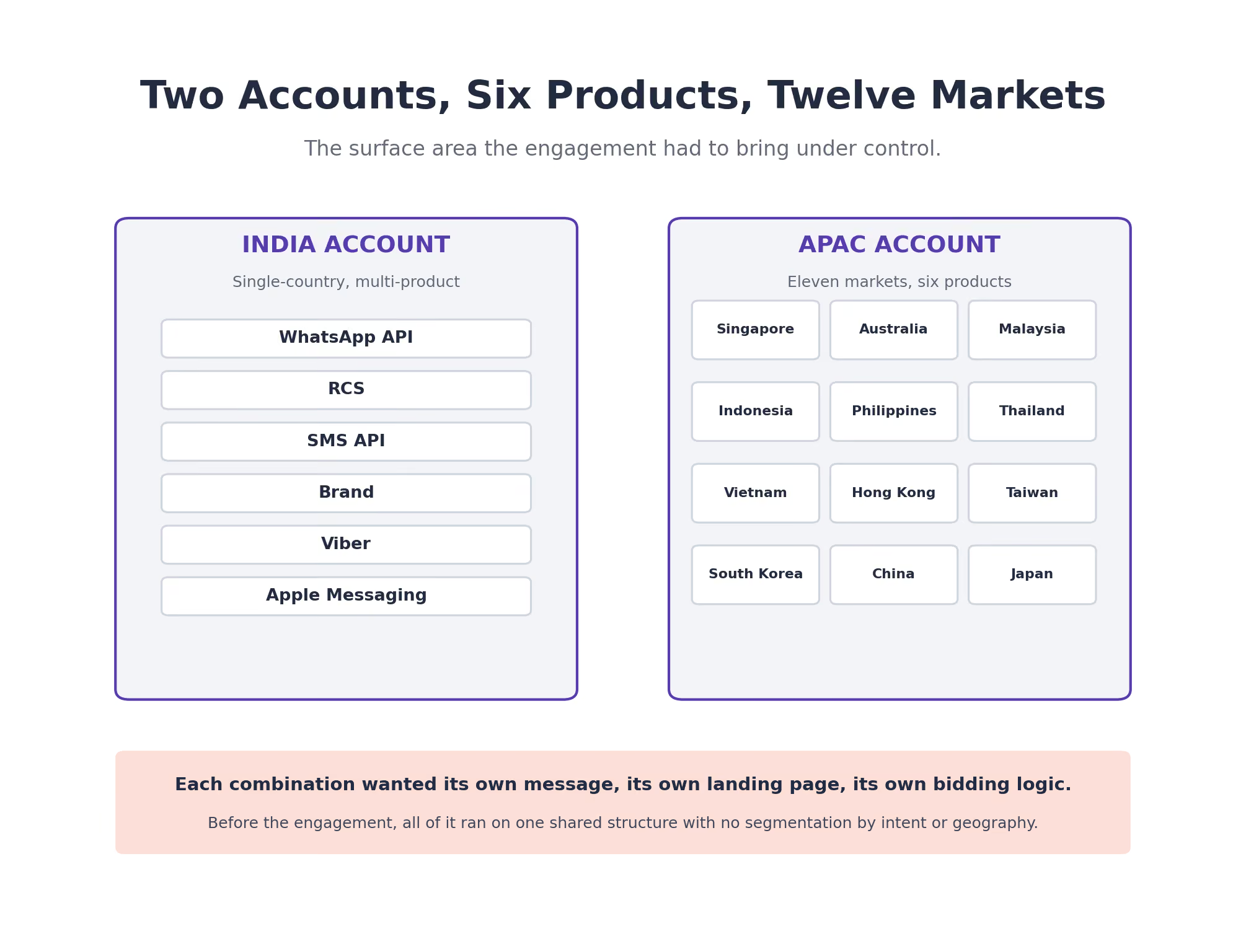
Figure 1. The surface area both accounts had to cover. Each combination of product and market wanted its own message and bidding logic.
Campaign Sprawl Across Products and Markets
Single campaigns were carrying WhatsApp API, OTP, Chatbot, and Business Calling traffic at the same time. RCS Branded, Pricing, and Marketing intent sat inside one bucket. APAC SMS ran the same shell across eleven markets with no separation between API buyers, 2FA buyers, and bulk-blast bottom feeders.
Low Quality Score and Match-Type Drift
Roughly 37% of APAC spend was sitting on Quality Score 3 keywords on broad match. The Phrase pool in four brand markets, Thailand, Hong Kong, Korea, and the Philippines, was pulling navigational and bulk-software queries at a cost per acquisition more than ten times the Exact-match pool in the same market.
Generic Landing Pages With No Pricing
Pricing was the number one clicked element on the SMS page in India, yet the page had only a Pay-as-you-go strip with no per-message rates and no volume tiers. Pricing-intent searchers were arriving in volume, finding nothing, and leaving for Twilio's transparent rate card.
Wasted Hours, Wasted Devices
Roughly forty to seventy-eight percent of spend was hitting zero-conversion hours, late nights for APAC SMS, mid-mornings for India RCS. Mobile bids were running flat across six APAC markets that had not produced a single mobile conversion in a quarter.
Limited Visibility Across the Funnel
Click to qualified-lead rates and cost per opportunity were tracked at the account level but not at the keyword or ad-group level. The marketing team knew the numbers were soft. They could not see which sub-themes inside WhatsApp API or RCS were responsible.
The brief was direct. Bring the surface area under control. Cut the cost per opportunity. Make pipeline movements predictable enough that the global team could plan around them.
What We Did
We rebuilt the paid search engine around one principle: every campaign should know which buyer it is talking to. Six plays drove the engagement.
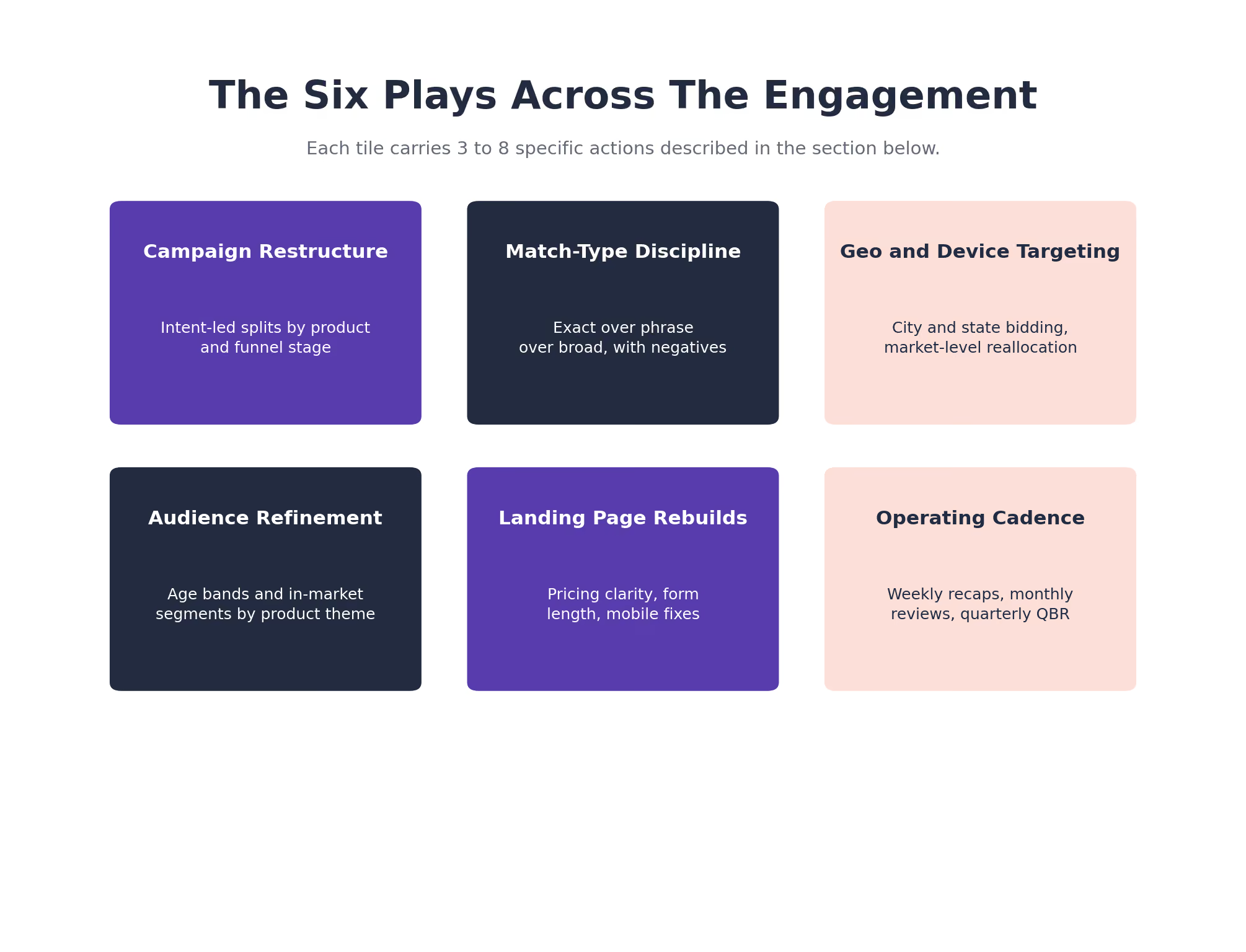
Campaign Restructure By Intent
- Split the India WhatsApp API campaign into separate Chatbot, OTP, and WhatsApp Business Calling campaigns, each with its own ad group set and budget.
- Split the India RCS bucket into Branded, Pricing, and Marketing campaigns, mirroring the three distinct intents that were colliding inside one campaign.
- Rebuilt APAC SMS into two campaigns by market cluster: ID/PH/MY/VN/TH against SG/HK/AU/CH, since search intent and price tolerance diverged sharply between the two groups.
- Carved Low-Cost 2FA and Expensive 2FA into separate APAC campaigns so the bidding strategy could match the cost structure of each.
- Launched dedicated Viber Philippines and Apple Messaging campaigns once the SMS and WhatsApp programs were stable.
The WhatsApp API split was the single biggest structural move of the engagement. Conversions grew 114% post-split and CPA dropped 22% against the same two-week window before the change.
Match-Type Discipline and Negative Keyword Architecture
- Audited every Phrase and Broad-match keyword across both accounts against Quality Score and conversion data.
- Moved high-converting terms from Broad to Exact and Phrase, and paused the long tail of zero-conversion variants.
- Built universal negative lists for both accounts covering tool/competitor pollution, including wati, ultramsg, whapi, wasender, sendwo, callmebot, virtual-number, free, demo, jobs, and intern.
- Added product-level negatives so the WhatsApp campaign stopped pulling SMS queries, the SMS campaign stopped pulling WhatsApp queries, and the RCS campaign stopped picking up generic 'rcs messaging' bulk-blast traffic.
- Set Target CPA constraints on Max Conversions strategies in markets where they were drifting into low-intent inventory.
Geographic and Device Targeting
- Reallocated APAC budget toward Singapore, Australia, Taiwan, and Vietnam, where Exact-match CPAs were running between eleven and eighteen euros against Phrase CPAs an order of magnitude higher.
- Cut or paused waste in markets that had been running on autopilot: Japan brand, Taiwan brand zero-conversion ad groups, and Hong Kong WhatsApp.
- Applied desktop-favoured value rules on the India WhatsApp API campaign once the data showed desktop driving a materially higher qualified-lead rate than mobile despite mobile carrying most of the traffic.
- Layered city-level bid adjustments in the higher-revenue markets, and cut mobile bids 50% to 90% across six APAC markets that had produced zero mobile conversions in the prior quarter.
- Built day-parting schedules on every campaign that did not have one, with bid reductions on the hours that had historically converted at zero.
Audience Refinement and Lifecycle Bidding
- Excluded the 18 to 24 age band from India WhatsApp API and RCS after observing it generating spend with no qualified leads for two consecutive months.
- Layered in-market segments by product theme: Enterprise Software and CRM Solutions for RCS, Mobile Marketing for WhatsApp Business, and Customer Engagement Software for omnichannel.
- Imported lifecycle stage events from the CRM so Google could bid toward Researching, Validating, and Qualified actions rather than raw form fills.
- Tested Maximize Conversion Value with qualified-lead as the primary conversion action, weighted five to ten times higher than top-of-funnel sign-ups.
Landing Page Rebuilds
- Audited every PPC landing page with Microsoft Clarity heatmaps, scroll-depth tracking, and session recordings.
- Built a dedicated Viber landing page after observing the shared template was bleeding 99% of pricing-intent visitors before the form.
- Rebuilt separate landing pages for all themes WA (API, chatbot, otp), SMS (API, 2FA), RCS (Marketing, pricing), and brand.
- Wrote a Pricing Clarity report on RCS, SMS, and WhatsApp pages, mapping the click distribution to show that 'Pricing' was the number one clicked element on every page yet pricing was nowhere visible on the page itself.
- Building A/B test plans for a four-field PPC form variant across the WhatsApp API and SMS API pages, since the existing twelve-field form was converting at 9.6% form to submit.
The Viber rebuild told the cleanest story: Conversion rate moved from 0.42% to 2.70% on the same traffic, cost per lead dropped 82%, and the campaign generated its first opportunity within weeks of the launch.
Operating Cadence and Reporting Infrastructure
- Established a weekly performance recap covering both accounts, with campaign-level CTR, CVR, CPA, and qualified-lead movement.
- Built a monthly funnel report tracking total leads, signup leads, contact-sales leads, qualified leads, opportunities, cost per opportunity, and pipeline value side by side for India and APAC.
- Standardised a quarterly business review covering Q-over-Q deltas on every campaign, a Highlights and Lowlights summary per region, and a four-week initiative pipeline.
- Owned the experiment log: Performance Max trials, AI Max enablement on SMS and RCS, portfolio bid strategies, and shopping-season creative tests, each with a clear pause or scale decision attached.
'Twilio Costs Too High? Scale Smarter with Infobip' was the kind of competitor-displacement angle we rotated into the WhatsApp, SMS, and RCS ads once the structural work landed. Generic positioning was the first thing to go.
Results
The cleanest signal arrived in the most recent month: the strongest pipeline-opportunity month on record for both India and APAC, with cost per opportunity at the lowest point of the engagement.
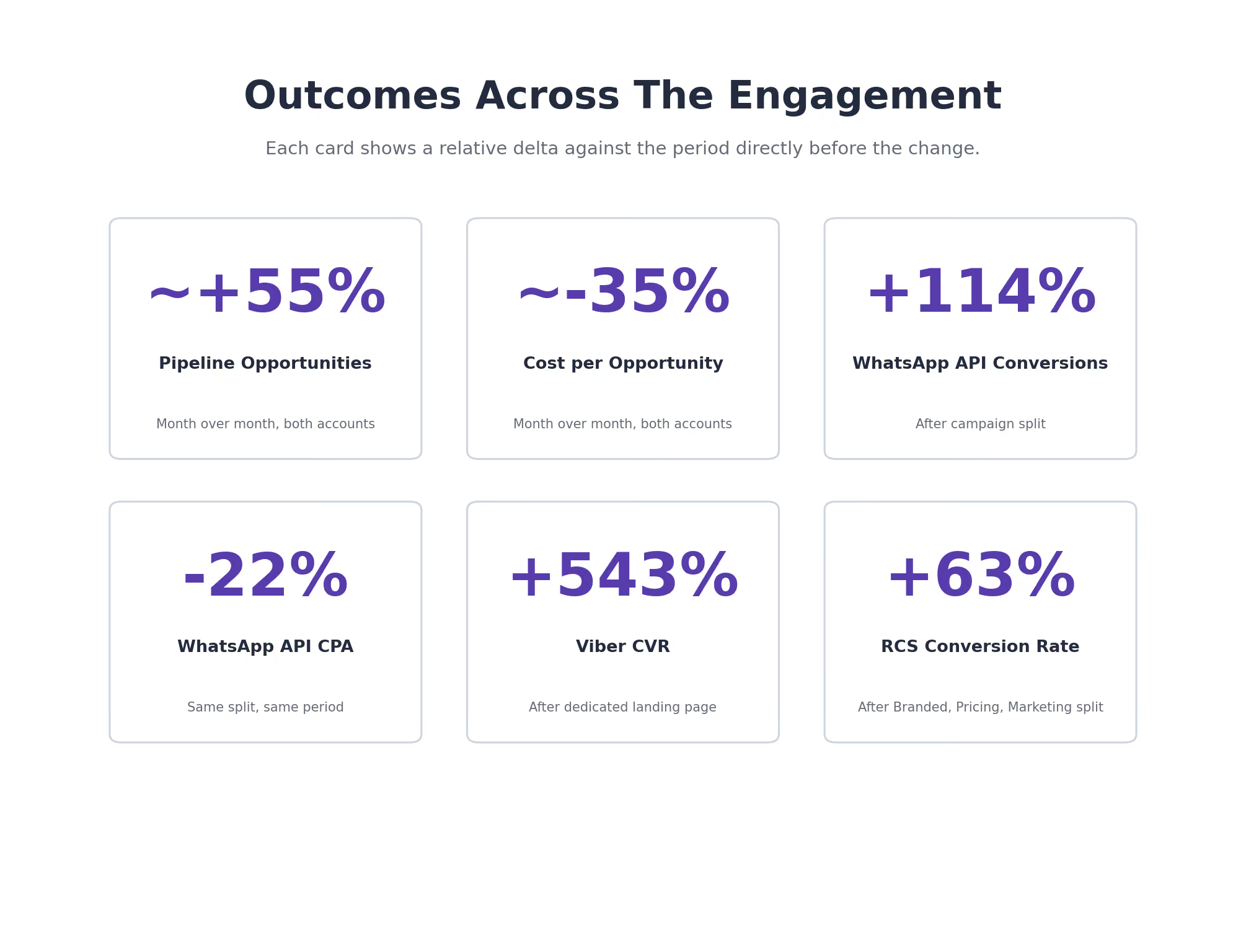
- Pipeline opportunities lifted by roughly 55% month over month across the two accounts in the most recent reporting period.
- Cost per opportunity improved by roughly 35% on average across India and APAC.
- WhatsApp API in India: conversions up 114%, CPA down 22%, conversion rate up 75%, and cost per qualified lead down 35% after the Chatbot, OTP, and WhatsApp Business Calling split.
- RCS in India: conversion rate up 63% and cost per conversion down 24% after the Branded, Pricing, and Marketing split.
- Viber in APAC: conversion rate climbed from 0.42% to 2.70%, cost per lead down 82%, first opportunity generated within weeks of the dedicated landing page launch.
- Brand campaigns across APAC: cost per acquisition down between 18% and 50% in Singapore, Australia, Taiwan, and Vietnam, with conversions up between 42% and 183%.
- WhatsApp Malaysia and Indonesia: CPA down 70% to 72% after match-type and audience cleanup.
- Low-Cost 2FA in APAC: CPA improved 41% before the program was paused to redirect budget toward Apple Messaging.
The TripleDart Team
- Director of Growth: Mahesh
- Co-Founder oversight: Shiyam
- Project Management: Praveen Swaminathan
- Senior Paid Media Specialist: Aarthi
- Paid Media Specialist: Raghu
- Paid Media Analyst: Mehak
Conclusion
The Infobip engagement is a paid-search program at heart, but the work that moved the numbers was structural. Splitting campaigns by intent, tightening match types, putting the right ads in front of the right markets at the right hours, and rebuilding the pages those ads landed on, each of those reinforced the next.
What used to be a single noisy account in India and a sprawling eleven-market account in APAC now runs as a disciplined portfolio. The marketing team can see which sub-themes inside WhatsApp, RCS, SMS, and Viber are producing opportunities, which markets are pulling their weight, and which experiments are worth pushing into the next quarter.
The engine is operating, the cadence is set, and the next quarter is already mapped against influencer-intent scraping, on-page AI chat, and Wynter-led message testing on the three highest-traffic pages.