How Edmingle More Than Doubled MQL → SQL Quality While Cutting CAC by 15%

2x+
MQL to SQL quality
+33%
Customers QoQ
−15%
CAC
About Edmingle
Edmingle is an LMS built for training companies. Their platform helps coaching institutes, professional education providers, and corporate L&D teams run online programs end to end, from course delivery to learner management.
The ICP is sharp: Teams of 3 to 100 employees, tech-comfortable, with a real software budget. Founders, heads of operations, heads of L&D, course managers, product owners. Solo creators and hobby teachers sit outside the buyer profile.
The category is crowded - ClassPlus, Kajabi, Moodle, Learnyst, Exly, Tagmango, and a long tail of regional LMS players all compete for the same coaching and training audiences. Edmingle came to TripleDart with a paid program that was generating volume without proportional quality.
The Challenge: A Paid Engine Generating Volume Without Quality
Edmingle's paid program was running. The machine underneath was not compounding.
Attribution Gaps
Tracking and attribution were not properly set up. Zoho CRM held the lead data, but down-funnel events (MQL, SQL, Opportunity, Customer) never made it back into Google Ads. The bidding engine had no signal on opportunities, so it bid against form fills instead.
Sprawling Campaign Structure
Campaigns had grown organically across themes (generic, competitor, brand, feature, PMax) with overlapping intent and no clean budget logic. The budget flowed by bid pressure rather than by closed-deal contribution.
High Spend on Low-Intent Keywords
A meaningful share of the budget was spent on informational TOFU queries like "online teacher training platform" and "online platform to teach students". The volume looked healthy. The leads did not move through the funnel.
Non-ICP Lead Share Too High
Creator and hobby-teacher audiences were drawing budget through generic and PMax campaigns. Demographic spread pulled in audiences (especially 18 to 24) that weren't buyers. Lead quality dragged across every campaign that touched them.
Brand Search Undefended
Branded queries were unprotected. Competitors picked off intent at the top of the funnel and Edmingle paid for the click downstream.
Limited Channel Mix
Almost every paid rupee sat in Google Search. A single-channel program limits where lead quality can come from.
Going into the engagement, MQL → SQL conversion sat at 33%, CPL was high, CP-Opp was higher, and the team had no clean view of which campaigns were feeding pipeline.
What We Did
We rebuilt the paid acquisition engine in seven moves. The lift came from sequencing them and running every change against closed-loop conversion data.
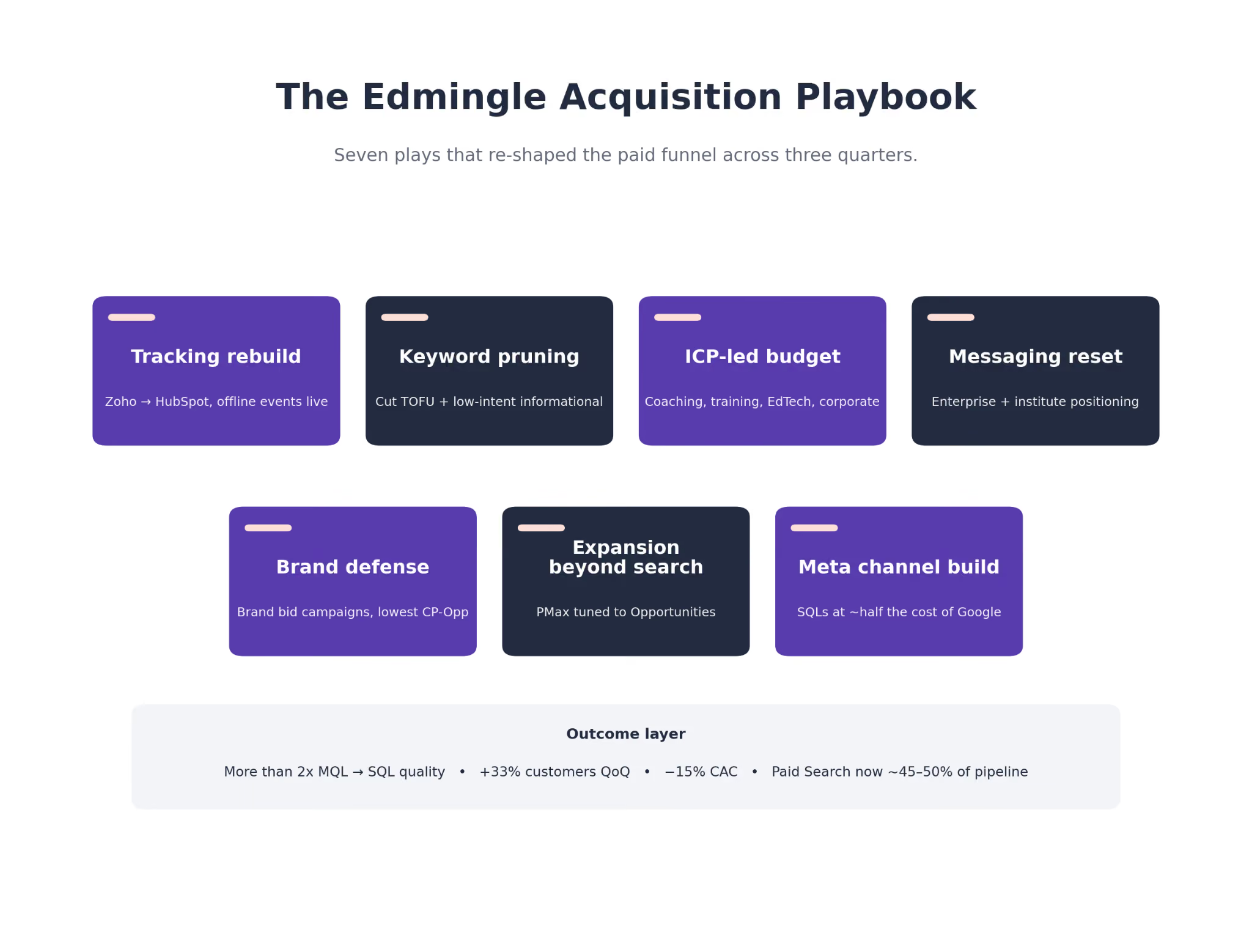
Figure 1. The seven plays sequenced across the engagement, with the outcome layer they produced.
Tracking and Attribution Rebuild
- Migrated lead data from Zoho CRM to HubSpot
- Restructured funnel stages, ownership, and attribution model
- Wired offline conversion data (MQL, SQL, Opportunity, Customer) back into Google Ads via the HubSpot integration
- Built a single funnel view across campaigns
The bidding engine could now train against Opportunities instead of raw form fills. This one change re-shaped what the rest of the playbook could do.
Pruning Low-Intent Keyword Spend
- Paused high-spend, low-converting informational keywords (online teacher training platform, online platform to teach students, creator-focused searches)
- Moved ClassPlus competitor terms into a dedicated lower-budget campaign once the data showed they generated MQLs but weak Opp conversion (lower intent, lower price point against Edmingle)
- Rerouted budget toward higher-intent competitors (Learnyst, Kajabi, Moodle) and to ICP-fit theme buckets
ICP-Focused Budget Allocation
- Pushed budget toward keywords mapped to coaching institutes, professional training businesses, and corporate EdTech buyers
- Cut spend on creator queries, hobby-teacher audiences, and non-priority ICP segments
- Trimmed bids on the 18 to 24 age segment where the conversion data showed weak quality
Core ICP (Coaching + EdTech) lead share grew from 36.8% in Q4'25 to 44.1% in Q1'26. Opportunity share crossed 56%. Corporate, despite contributing a smaller slice of leads, converted to opportunity at the highest rate of any segment.
Ad Messaging Reset
- Repositioned ads around enterprises, coaching institutes, and EdTech companies
- Pulled back on creator-flavored messaging that was attracting hobby teachers and low-budget course creators
- Aligned headlines with the buyer pain of the actual ICP
Higher-intent traffic followed. The same channels started bringing in qualitatively different leads.
Brand Search Defense
- Launched dedicated branded Search campaigns that had not been running before
- Captured the demand that had been leaking to competitor bidders on Edmingle's own brand terms
- Brand campaigns now deliver the lowest CP-Opp across all Search campaigns and a steady monthly opportunity flow
PMax Efficiency Rebuild
- Switched the PMax conversion goal from MQL to Opportunity
- Seeded custom intent audiences using high-intent Search terms
- Layered first-party data: customer lists and website visitors
- Held campaign settings steady for three to twelve weeks per change so the learning phase could stabilize
At a similar monthly PMax spend, MQL volume came down (junk leads dropped out) while Opportunities tripled. CP-Opp dropped roughly 3x.
Meta Ads Channel Build-Out
- Started with retargeting to validate creative and audience response
- Generated SQLs at roughly half the cost of Google Ads in Q1'26
- Set up to expand into new-user acquisition with AI-feature creatives in Q2
Results
Outcomes measured against the pre-engagement baseline and against the most recent quarter-over-quarter comparison.
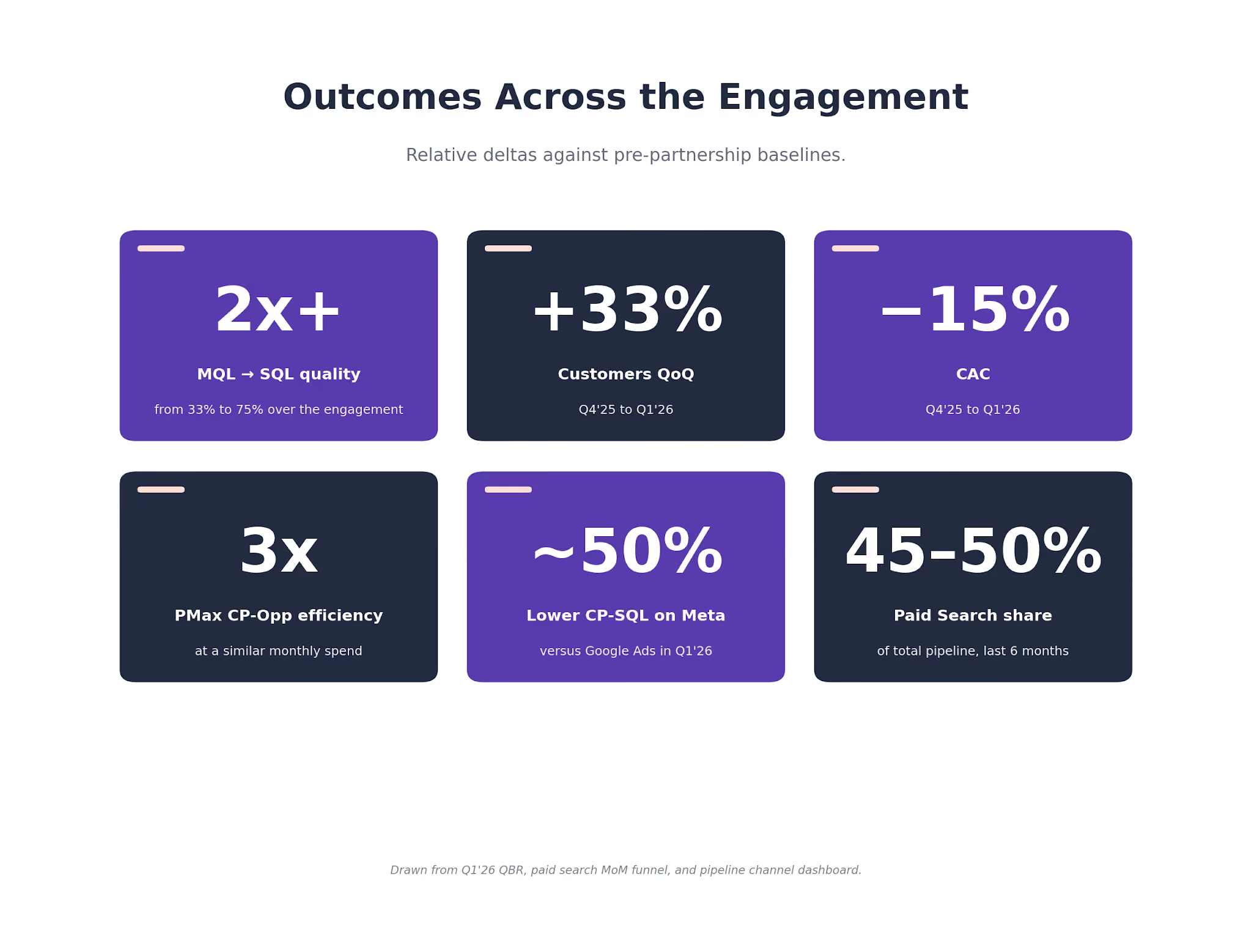
Figure 2. Outcome cards across the engagement. All figures are relative deltas against pre-partnership baselines.
- MQL → SQL conversion more than doubled, from a pre-engagement baseline of 33% to 75%
- Customers grew 33% quarter-over-quarter (Q4'25 to Q1'26) while CAC dropped 15% in the same window
- Opp → Customer rate climbed from 8.6% to 11.5%, lifting Lead → Customer from 1.60% to 1.82%
- Brand campaigns deliver the lowest CP-Opp across all Search campaigns
- PMax CP-Opp dropped roughly 3x at a similar monthly spend, with Opportunities tripling as junk MQLs were squeezed out
- Meta drove SQLs at roughly half the cost of Google Ads in Q1'26
- Paid Search now contributes 45 to 50% of total pipeline across the trailing six months
- Core ICP (Coaching + EdTech) lead share grew from 36.8% to 44.1% and opportunity share crossed 56%
Conclusion
The Edmingle engagement runs as a multi-channel acquisition engine. Google Search, PMax, Brand defense, and Meta each carry the role they do best, and the funnel runs on closed-loop conversion data flowing from HubSpot back into Google Ads. Bid decisions now reflect what the sales team closes, not what fills a form.
Q2 picks up two new fronts. A regional expansion into the US (California first, NYC second) targets the EdTech and creator ecosystem there. A corporate-ICP build-out launches once the dedicated landing pages are ready. Both rest on the same operating logic that carried Q1: ICP-led budget, tight attribution, patient learning windows on every new campaign.